

The Spanish Civil War still has lessons for us today
Ed Stubbs
I believe it was Mark Twain who said that history never repeats itself, but it rhymes. That is to say, we can learn from it, and we clearly should.
This year marks 90 years since the Spanish Civil War began, and with the rise of the far right and increasingly open fascism, it is an event we should reflect upon.
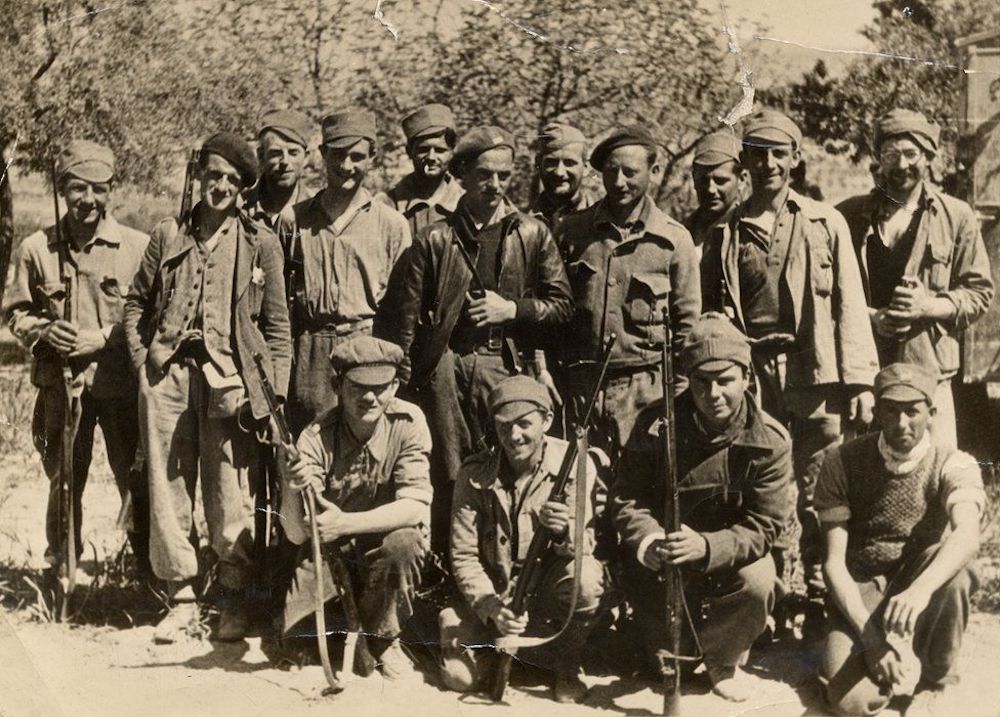
I am also reflecting because my paternal grandad was an International Brigade volunteer. I never met him, as in 1955 he took his own life. I am reliably informed that the trauma of the conflict deeply affected him.
I am, however, immensely proud that while governments faltered in their response to Franco and his Italian Fascist- and German Nazi-backed forces, this young working-class machine operator did not.
The failure to confront Hitler before he became powerful and emboldened is often discussed.
Appeasement and Chamberlain’s agreement over Czechoslovakia are widely cited, what government or journalist arguing for a conflict has not invoked it?
What is less discussed is Spain. For readers who are not aware, the Popular Front, a coalition of left-wing parties, won the Spanish election in early 1936. The reaction of conservative political forces to this result was almost immediate, and in July 1936 Generals Mola and Franco led a military uprising against the people’s government.
Beginning with troops in Morocco, they moved first to the Canary Islands and then to mainland Spain.
Franco was a fascist. His background was that of a conservative, religious Spanish nationalist, but he quickly adopted fascist ideology at the start of the conflict, merging his conservative forces with the Falange, Spain’s fascist party.
Franco was also backed by very wealthy elements of Spanish society. The 1930s, like today, were a very unequal time. Some extremely wealthy people across Europe saw the rise of working-class politics as a threat to their power and wealth.
In Spain, as in other countries, they viewed the election of a Popular Front government that sought to redistribute wealth and power as a danger. They chose to side with fascist forces to protect their interests, seeing them as the best means to attack and divide working people.
So what did all this have to do with a Manchester engineer in his early twenties, whose young wife was expecting their first child? One word, really, solidarity.
The Spanish working class and their elected government were under attack, particularly the organised labour movement.
My grandad was an active member of the AEU union, and he believed that just as he stood with members in his workplace, he should stand with his brothers and sisters in Spain.
He joined thousands of others, making the perilous journey to Spain when he had likely never travelled far from his home town.
Against the wishes of his government, he travelled there and confronted the fascist threat. He was injured fighting in the famous Battle of the Ebro and was scarred not only by the conflict but by the defeat of him and his comrades by the fascists. We all know what followed.
My grandad’s grit and determination stand in stark contrast to the actions of European democracies.
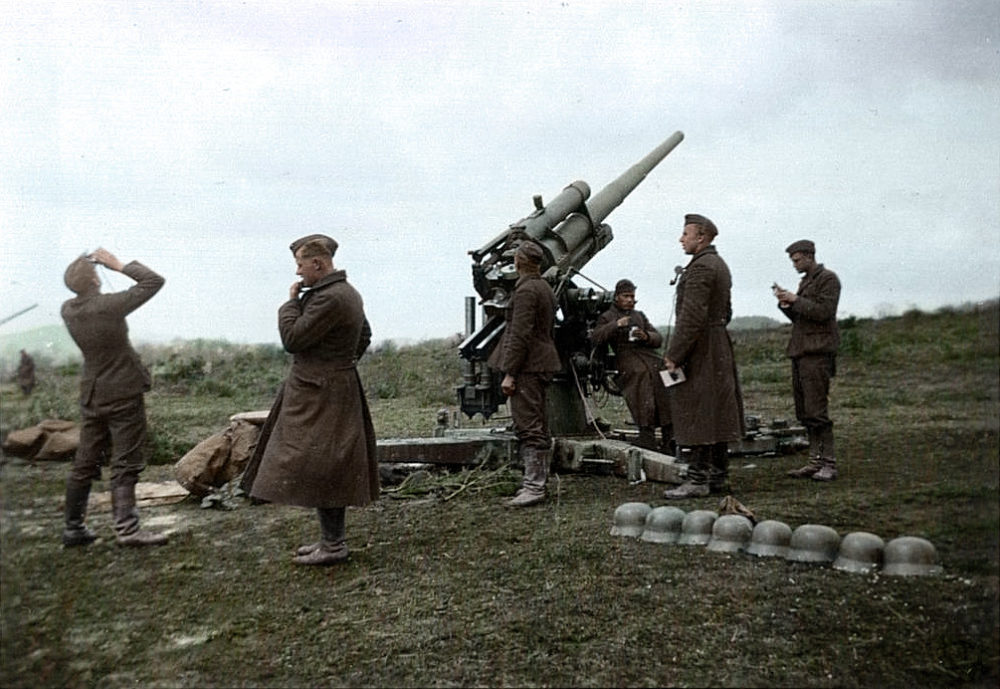
They appeased and emboldened fascism by refusing to confront it in Spain. There were 80,000 of Mussolini’s troops in Spain, along with a significant portion of Hitler’s Luftwaffe, which mercilessly bombed Spanish cities—captured famously in Picasso’s masterpiece Guernica.
Their success in Spain emboldened them to move against other targets, confident in their belief that elected governments in the UK and elsewhere would not confront them until it was too late.
I have often reflected on my grandad, what he did, and how my grandmother and father kept the flame of his ideas alive to pass on to me.
As the far right and fascists feel emboldened today, we need to look to people like him and learn. The ultra-wealthy are funding them again, and they are deploying the same tactics of division. We cannot simply appease this; we must instead adopt the courage of that young man from Manchester and resist.
On a personal note, I will finish by reflecting on the nature of conflict. My grandad took his own life when my dad was 16. I can trace a clear line of trauma through my family back to the conflict in Spain. So I am also clear that, when young people are placed in harm’s way during conflict, we have a moral duty to support them afterwards.
Support our Nation today
For the price of a cup of coffee a month you can help us create an independent, not-for-profit, national news service for the people of Wales, by the people of Wales.
Get more trusted Welsh news
Choose Nation.Cymru as a preferred source in Google News to see more of our journalism.



No mention of the Catholic Church’s role I note
Your post sparked me to research this and you are right. I believe that the basic teachings of all religious books promote good. Sadly, all of them have been corrupted by their heirarchies with their indoctrinated foot soldiers creating hell on Earth for the rest of us. The majority of these books’ followers, however, remain decent human beings. I get the feeling though that if i were to ask a false Christian faith hijacker carrying a KKK cross at last Septembers’ AND YESTERDAYS’ UTK hate march which church they go to on a Sunday to worship their ‘God’, they would… Read more »
Precisely. I bloody love Christians! – I meet so few
A wonderful article that asks is history repeating itself? The brave sacrifice of a few & the contemptible appeasement that played into the hands of fascists. The world must say no to fascism & genocide. Starts here with Cymru divesting from Israel & stating our total opposition to imperialism!
The moral duty, surely, is not to place our and others young people into conflict in the first place.
To this end we must resist the Westminster executive’s intention to introduce conscription.
The inter war years brought a global pandemic and economic depression, then the politics became polarised with a demand for one of the two extremes. The 1930s ended with the most extreme (Nazi Germany & Communist Russia) signing up to the Ribbentrop – Molotov Pact; powerful extremists countries agreeing to annex another country withy no reason other than commercial gain that brought the Second World War.
Sound familiar?
Totalitarianism can be achieved by either extreme, but both obviously state that only the other is the evil one.
Agreed, the internal conflict in Spain started decades before 1936. Factions were already fighting by striking ,police repression and pistolero assassinations by both sides . It is not a lesson in we must fight the extreme right or the extreme left because that will simply increase the polarisation. Rather it is a lesson in rejecting extremism on both sides.
Also the author omits to mention that Stalin was very active in supplying weapons and armour to the conflict.
Not cut and dry this one as the Republican side were no angels to say the least – nearly 7000 priests murdered, political executions, desecrating churches etc. Certainly Franco was the arch baddie but the Republicans were pretty unpleasant too.