


The Summer of Love – and now for the Other 1360 Days
Desmond Clifford
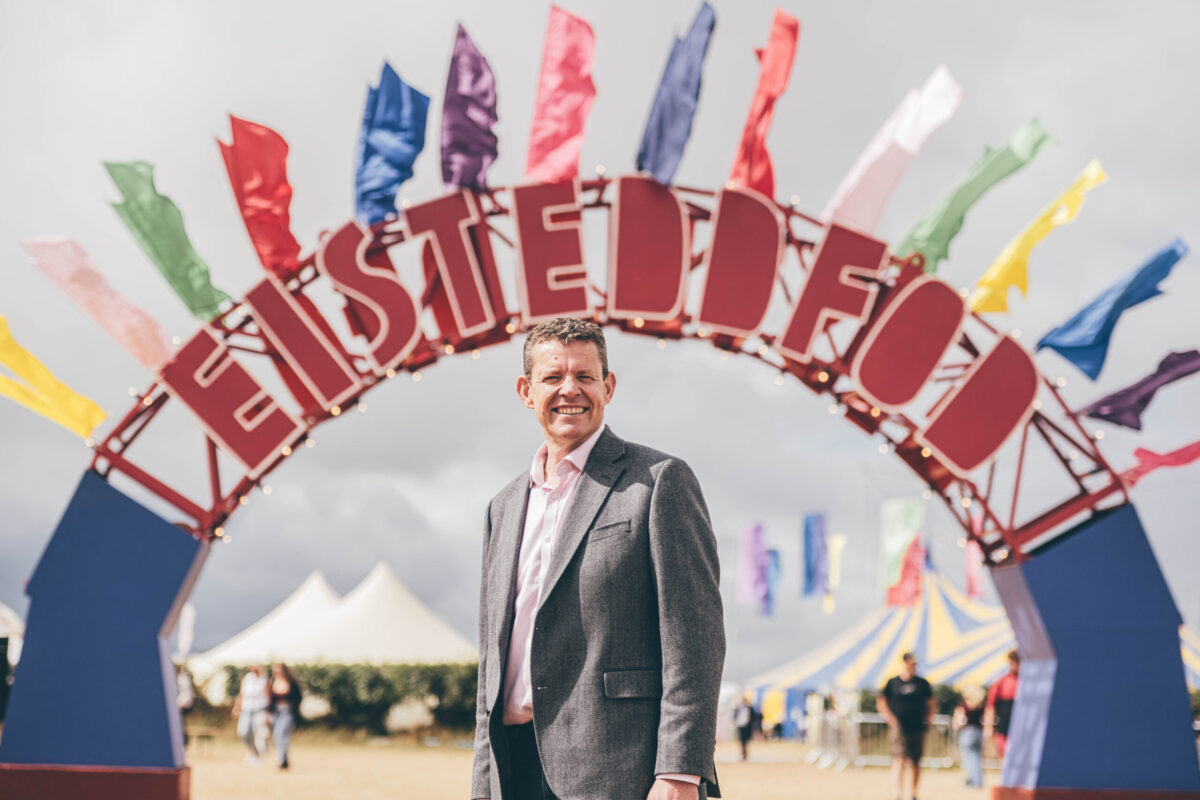
Summer loving – what a blast! At the last night of the National Eisteddfod in Aberteifi, First Minister Rhun ap Iorwerth took the stage at a concert gig to an audience of mostly young people and was greeted with something like adulation.
Jeremy Corbyn evoked excitement at Glastonbury some years back, as did Boris Johnson at Hyde Park ahead of the Olympics. I don’t, though, recall a comparable scene in Welsh politics in modern times.
A politician cheered anywhere outside of a party conference is rare these days but, in this case, not wholly surprising. Plaid Cymru was founded a century ago by the ancestors of some of today’s eisteddfodwyr and the First Minister was very much on home turf.
Labour’s Ken Skates was in Aberteifi too, along with his dog Junior, which I was pleased to note.
There’s little approval for politicians on offer anywhere now so they should take the plaudits where they can.
Even so, by summer’s end the First Minister might have felt an embarrassment of approbation. It started at Sesiwn Fawr Dolgellau. He had a decent hearing at the Royal Welsh Show. The Eisteddfod was always going to be a happy homecoming. He was dubbed “King of Ynys Môn” at his local gig, Sioe Môn, which he deflected gracefully before tucking into the lamb burgers.
Oh, those summer nights!
In Roman victory parades a slave stood behind the triumphant general on his chariot. The slave’s job was to chant, “Hominem te esse memento – Remember man is mortal”.
The idea was to stop the general getting carried away by the cheers. In contemporary Wales, week one of the Senedd’s new term will perform the same function.
There’s nothing like questions on dental provision in Powys to wipe the smile off a First Minister’s face. By the end of September, the sun’s rays will have dimmed and the acclaim of Aberteifi’s cheering youth will be as a dream.
This Senedd term is what Alistair Campbell called, a few months after Blair’s 1997 landslide, “the post-euphoria, pre-delivery phase”. Plaid’s first 100 Days is up. On balance, the device worked well enough. It set in train their manifesto, even if some elements came across a bit bureaucratic. Now phase two starts: the Other 1360 Days.
Policies must convert into tangible outcomes. The annual budget is the biggest challenge. The UK Budget is set for 28 October, and only then will we learn exactly how much money the Welsh Government has for 2026/27. The prospects aren’t great.
The UK public sector debt is massive, about 94% of GDP. The Treasury must pay £110 billion in interest before it does anything else – that’s about four times the entire annual Welsh budget.
The UK Government needs to increase defence spending and wants to create a comprehensive care system. They won’t cut health, but anything else in the devolved formula is vulnerable.
The Welsh Government already faces budget pressure with its enhanced childcare offer. That’s their top manifesto commitment, but they’ll struggle to broaden their ambitions. They’ll also need to put “unallocated” money on the table for discussion with other parties.
Plaid Cymru needs Labour help in some form to pass a budget. The stand-off on the Supplementary Budget at the end of last term didn’t show either party in a great light. Plaid leads a minority administration and must show generosity to attract support. Labour is a rump and has lost the confidence of voters: it won’t win them back through swagger and truculence.
Both parties must adjust to new positions. Plaid can’t overplay a strength it doesn’t have. Labour has no future as a wrecking ball if it wants to rebuild trust with voters.
The political autumn may be distracting. Andy Burnham had a good summer too and there’s a chance (quite a good one, I think) he’ll call a snap election in, say, October. This would throw budget planning out of kilter but may presage a bigger ask, such as a tax increase for a universal care offer or defence – a potential game-changer in UK politics.
Farage and Reform are, for now, somewhat on the back foot after their incredible post-2024 growth. The Clacton by-election was silly and the rich guy’s £5million gift to Farage still troubles many.
For Burnham, things may never be so good again. If the polls favour him through September, he’ll face a dilemma. The maths of a divided right works well for Labour but will Burnham have the nerve?
An election carries risk but the chance to grab his own mandate surely has attractions? In reaching a decision, he must choose between the spectres of Gordon Brown and Theresa May.
The alternative is three years on Starmer’s mandate while Burnham’s own political capital probably declines steadily.
Critical
The First Minister, meanwhile, can’t get distracted. This Senedd term is critical. Get it right and the first 100 Days shifts gear to government-at-full- speed. Get it wrong and there’s the charge of drift, from which governments can struggle to recover.
If a new Menai bridge is to be commissioned, for example, a decision is needed soon to help with the new Wylfa power station. Likewise, the “road-based solution” to the M4 bottleneck at Brynglas: if diggers are to appear before 2030, it’s time to crack on.
It is predicted that 90,000 finance jobs will shift from London to other UK locations in the years ahead; the Newport-Cardiff-Swansea corridor can make an attractive pitch for a slice of this with the right infrastructure in place.
At their first meeting, both the First Minister and Prime Minister said they want a constructive relationship. Burnham’s comments in Port Talbot last week struck a better tone than his predecessor – not difficult, frankly – and he is “open to the conversation” on devolving policing in Wales (in keeping with Welsh Labour policy). The governments will meet again at an economic summit in October, if not before.
Good will
It shouldn’t be like this; Welsh interests shouldn’t hang on the good will of whoever happens to reside in Downing St at a given time. Even so, when the door is open, the First Minister should walk through it.
Might Burnham’s better tone improve the atmosphere for co-operation in the Senedd? That would be a dividend worth having.
If Plaid is smart, ministers will have been trying to speak informally with their Labour opposite numbers. Relationships and respect matter in politics; to some extent, you reap what you sow.
It would be odd for Plaid to develop positive relationships in Whitehall without trying to do the same in Cardiff Bay. If Labour thinks its job in the Senedd is always to make life as hard as possible for Plaid, that dismal mission will return to haunt them down the line.
The First Minister is a gifted communicator, much better than his opponents. The quality of Senedd opposition is poor, worse than it has ever been.
Reform has failed, so far, to find a coherent or credible pitch. Labour remains traumatised and unfocussed. Counterintuitively, this is actually bad news for the Welsh Government. Quality opposition keeps a government on point and honest. Mediocre opposition leads to complacency and arrogance.
Raising expectations
Government is a collective business. Anna Brychan comes across well, but raising expectations is the easy bit, raising education standards is the toughest job around.
Mabon ap Gwynfor needs to demonstrate that political change can make a difference to NHS delivery. Llyr Huws Gruffydd has built solid credentials and communicates well; the Welsh Government has a rare chance to unite town and country.
Culture is a field of comparative advantage for Plaid Cymru, and supporters expect to see the dial shift permanently. Heledd Fychan has set out some interesting thoughts, but can she get the money to follow the rhetoric?
Adam Price has been a little quieter so far than might be expected. Wales has struggled to develop economic buoyancy and a compelling pitch, and the mooted development agency is a means, not an end. We need to see and hear more about the economy.
Of the things inside its control, the Welsh Government has started well enough. It needs now to build up a steady record of achievement it can bring back to voters in 2030.
The country needs to see and feel the difference. Good vibes have a limited life unless renewed and boosted by good outcomes.
The Other 1360 Days begins now.
Support our Nation today
For the price of a cup of coffee a month you can help us create an independent, not-for-profit, national news service for the people of Wales, by the people of Wales.
Get more trusted Welsh news
Choose Nation.Cymru as a preferred source in Google News to see more of our journalism.


