

The time for one Welsh place name is now
Stephen Price
Wales’ place names offer a source of endless fascination for me – our rich history plotted across the nation in pure poetic form. Each hamlet, village, town, city and everything in between hinting at past industry, owner, local flora, and so much more.
Wales’ place names, as well as being poetic, also lay bare conflicts that have raged for over a thousand years, and the impact on Wales’ status as England’s first colony – a land that has resisted, defied, and stood firm, but one that is undeniably bruised, both culturally, economically and linguistically.
This tension plays out across our place names in a multitude of ways – from alternate English names with completely different sources of inspiration (e.g. Swansea/Abertawe), to new settlements with English names only (e.g. Fairbourne), locations with shared Welsh and English names (e.g. Brynmawr), or quite often a Welsh name and an Anglicised version thereof (Caerdydd/Cardiff).. We’ve even got plenty of English names made Welsh (e.g. Niwbwrch).
A delightful mix? That’s up for debate.
If you’re anything like me, or the much-more-clued-up and brilliant historian, Josef Roberts from Tirlun however, it’s a constant source of joy to mine, with every road trip or map search offering new inspiration and history to discover.
Aberdâr/Aberdare.. Blaenafon/Blaenavon.. Aberpennar/Mountain Ash, Beaufort/Cendl, Aberteifi/Cardigan.. Endless decoding, delving and untangling of complex histories – many of which have been lost to time.
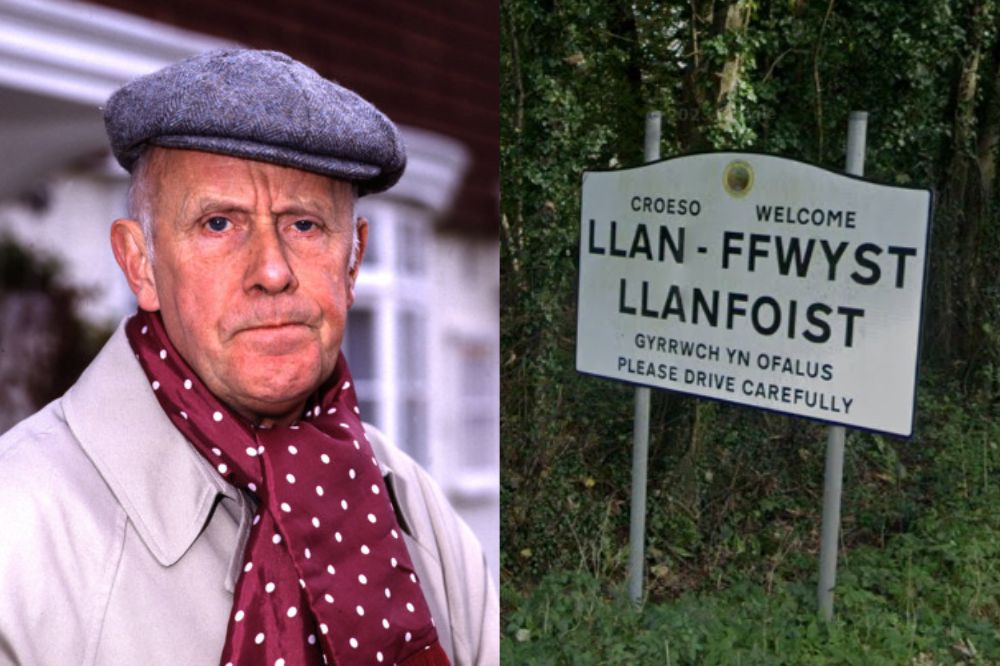
Welsh place names are a hot topic and hit the press time and time again – be it a mistranslation of a sign, or a petition to rename our very land, and only last month there was (mostly) widespread approval when North Wales Wildlife Trust announced that its nature reserve near Tal-y-bont, Bangor, will once again be known by its historic Welsh name, ‘Llyn Celanedd’, replacing the more recent (and rather ugly) title ‘Spinnies Aberogwen’.
With the New York Times praising y Bannau Brycheiniog in January 2024’s list of the best places in the world to visit, we were given clear proof of the impact made by a nation reclaiming its pride and confidence in one of its most important components – its language.
The recognition gloriously confirmed the right decision was made to use an authentic name for the national park and, just as North Wales Wildlife Trust has proven almost two years later, that a precedent has now been set.
The New York Times praised the park for the decision to use its Welsh name only, and for ‘conserving Welsh culture amongst scenic mountains’.
Journalist Susanne Masters wrote: “Reclaiming the name Bannau Brycheiniog for a beloved national park in Wales last year was more than a linguistic change to Welsh from English; it was a shift to spotlight the Welsh culture of the 520-square-mile park, formerly known as Brecon Beacons. The park’s emphasis on the relationship between nature and local culture is also shown in a new logo.”
Welsh actor, Michael Sheen featured in a moving short film to launch the name switch from Brecon Beacon’s National Park to Bannau Brycheiniog back in April 2023 – describing it as “a name from our past, to take us into our future.”
Outdated
Looking back at articles featuring the name Brecon Beacons, its use couldn’t look more outdated or more inappropriate for the Cymru of today. And don’t get me started on the trend from people over the border who Christened it ‘the Brecons’.
Back then, articles appeared in print and online with businesses claiming it would damage the region and its ‘Beacons’ named businesses – and yet, here we are today with one of our national parks featuring in one of the most important and most-read news publications worldwide.
A priceless PR move, with y Bannau firmly planted in the minds of American and worldwide tourists and their deep pockets.
To me, there’s something so refreshing, so ‘right’ about calling it ‘y Bannau’ or ‘y Bannau Brycheiniog’. It’s the original name, after all.
Subjugation
As for the popular Senedd petition calling for us to change the name of Wales to Cymru, Labour have ignored it as they do, and we’ve heard nothing since. Off the agenda, a distracted nation, and an unaccountable government dancing to the tune of Westminster.
Will Plaid be brave enough if they take power in 2026? I really hope so.
Back to the dual names, and parallel lives, we’re all currently accepting with our place names. Again, why is no one making it more of a priority?
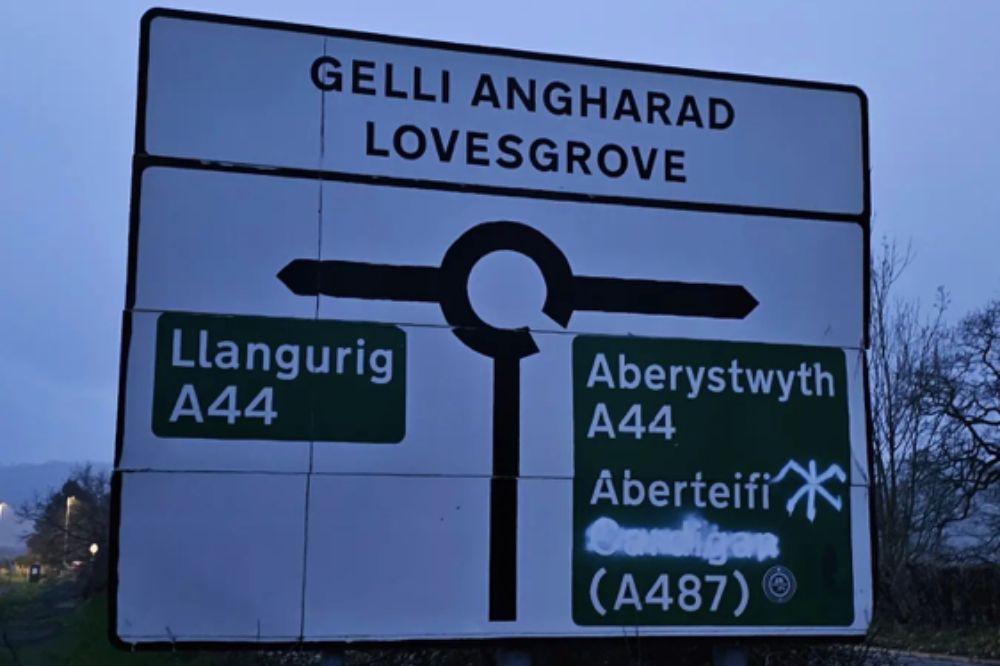
As it stands, it’s taking the likes of groups such as the youth-led campaign group, Mudiad Eryr Wen, to show the strength of feeling particularly among the young who have simply had enough of this accepted idiocy and subjugation.
In August 2024, the protesters targeted the Anglicised names ’St Asaph’, ‘Ruthun’ and ‘Denbigh’, leaving behind only the indigenous Welsh names (Llanelwy, Dinbych and Rhuthun).
A representative from Eryr Wen told Nation.Cymru: “We believe it to be necessary and reasonable to remove imposed English place-names from road signs within Wales.
“As is often the case, many of the names targeted are wholly unnecessary and meaningless, being mere bastardisations of the original Welsh names.
“Following on from the official name change of Eryri and Bannau Brycheiniog last year, there is a growing movement to de-anglicise names within Wales.
“It certainly isn’t without precedent; similar acts of direct action from the likes of Cymdeithas yr Iaith Gymraeg have resulted in the removal of ‘Carnarvon’, ‘Portmadoc’, ‘Cardigan’, ‘Dolgelley’, ‘Conway’ and ‘Llanelly’ already.
“The names are nothing more than a bad hangover from England’s historic conquest and failed attempts at forced assimilation in Wales.
“Some may attempt to argue that because most of Wales cannot presently speak the language fluently, that it therefore simply isn’t fair or appropriate to de-anglicise the names.
“However, this is complete and utter nonsense. No one struggles with the aforementioned examples of places in Wales that have already been de-anglicised, do they?
“Indeed, there also are no complaints about other Welsh place-names either. Non-speakers and speakers alike have no issue with the likes of Llangollen, Llandudno, Pwllheli, Abersoch, Pontypridd, Aberystwyth or any of the countless other places within Wales with Welsh names.
“It’s time for Wales to wholly reclaim its rich linguistic heritage, and there is no simpler starting point than by first reclaiming the names of its many towns, villages and cities.”
Matt Howells, summed things up thus: “The etymology of Welsh place names isn’t a black-and-white affair. There are examples of English place names in Wales that predate the Welsh names such as Rhyl (originally ‘The Hill’) and ‘Prestatyn’ (originally ‘Priest’s Town).
“Having Swansea and Abertawe, for example, gives us two histories. One of the Island of an unknown Viking called Svein, and another denoting the mouth of the river Tawe.
“But when it comes to insulting, garbled, derisional spellings of Welsh places such as Cardigan and the notorious Llantwit Major, we need to make a stand now and revert them all to Welsh. We don’t need a Kidwelly and a Cydweli, or a Caerphilly or Caerffili. And Peterston-super-Ely makes my blood boil!
“I totally support the reintroduction of Welsh-only place names except for those where the English has developed in tandem and has a unique meaning.
“The Welsh Language Commissioner has been too toothless in this regard and things need to change.”
If not now, then when? It’s going to happen, so why wait when the time is now.
Josef Roberts from Tirlun writes: “I love place names because they combine several interesting things like languages, history, culture and geography into one parcel.
“I believe if people understand the stories, history, and meaning behind our place names, then maybe they will be more inclined to support protecting and promoting them as part of our national heritage.”
As it stands, Wales thinks, looks and acts like a colony while we continue the silly and offensive acceptance of two names for one location. If we want a place on the world stage, we need to believe in ourselves and our language. If we can’t, why should anyone else?
Just imagine the reset using our own language, and only our own language, for our own places would give Wales. And just like the switch to Bannau, the opportunity to gain wider recognition (and with it investment, for those that can only see value in economics) across the world.
This is a bruise we could heal overnight – a united nation, with Welsh and English speakers singing from the same hymn sheet geographically and linguistically, in a land where the place names are “of this soil, this island..”
Where they are, call me biased if you must, pure poetry, and truly beautiful.
Where they belong to us.
Support our Nation today
For the price of a cup of coffee a month you can help us create an independent, not-for-profit, national news service for the people of Wales, by the people of Wales.



Well written and I agree with Matt Howells.
Welsh placenames have been Angicised because the English were and still are too lazy, rude and disrespectful to learn how to correctly pronounce them. Now when it comes to foreign far-away places they can get their pronunciations spot-on. Funny how the Cymry don’t have the same problem with placenames across the border. That’s called ‘respect’.
Using Welsh place names in Wales isn’t about offending anyone — it’s about respecting our own history. Every normal country uses its native place names. Welsh names are the originals. If people can learn Barcelona, Kraków or Reykjavík, they can manage Welsh.
Hear hear.
Yes
Assuming we adopt Polska, Espana, etc., as a sign of respect to the languages of other nations.
People complain Welsh names are ‘too hard’ — meanwhile England has places like Towcester (TOE-ster), Worcestershire (WUSS-tuh-shuh), and Wymondham (WIND-um). The issue isn’t difficulty. It’s willingness to respect the language
Even more eccentrically, maybe, the village of Cholmondeley in the west of Cheshire is pronounced ‘Chum-ley’.
First to face the firing squad should be ‘Lake Australia’.
The road to independence starts with fully reclaiming our language and ridding ourselves of any English version and primary that means ditching Wales for Cymru. Our identity is so important, preserving it from our rogue neighbour hasn’t been easy but now the path is easier. If Plaid gains power it surely must be one of its first acts.
I would dispute the author’s suggestion that ‘Bannau’ etc is firmly entrenched in the minds of any foreign tourist – especially Americans who barely recognise what and where Wales is, particularly in comparison to England, Ireland and Scotland. We must be bilingual in everything we do as Welsh is a unique language that is particularly hard for many Welsh people to grasp, let alone an international audience. Being bilingual also sets a more welcoming tone for visitors – note that Thailand and similar destinations have been using the Western alphabet on signs in ‘tourist’ areas for years to help people… Read more »
Barry with a Y or Barri with an I. When I pronounce them, they both sound the same to me. Others visiting will enjoy figuring out the correct pronunciation.
I think this is a pretty weak argument.
“We’re not very well known so best not use our own language or we won’t be very well known” what a load of rubbish. The Thailand point is totally irrelevant too. They’re not changing the place names, they’re writing in a script the tourists can read, it’s still Thai. They’re not changing Nonthaburi to Northbury on the off chance Barry from Runcorn gets upset at having to try a bit, are they?
What does what we call our places have anything to do with international trade? 🤣
Well, doing this would certainly eliminate the problem of those ‘lethally dangerous’ bi-lingual road signs that confuse English people so much that they crash their cars into a tree…
There is no need to ask the Senedd or the UK government to change the name Wales to Cymru because ‘Cymru’ already exists and probably existed long before the English disrespectfully changed it without consultation to ‘Wales’. All we need do is for all of us just to call it ‘Cymru’ especially in schools, local newspapers, television news etc. Job done!! It’s up to us not someone else. I hate this ‘having to ask permission’. Who the hell are these people we have to seek permission from? Are they some sort of superior beings or even gods? They probably like… Read more »
Cymru is a no brainer, the only true name for our country, in meaning as well as language.
The Wales ‘outsider’ insult can be utilised to describe those ‘outsiders’ who see another country as more important as ours. Hence there should be no translation for ‘the Prince of Wales/Outsiders’, the same as we have no need to be associated with that union jack with all its colonial atrocities.
We’ve won Caernarfon a Conwy (F not V and no A), got Y Bannau ac Eryri/Yr Wyddfa but my God, there is some way to go. Three urgent changes most necessary for me are for Rhos Goch (Red Roses? Not even translated properly), Llanddewi Felffre (Velfrey? Why only bastardise half of it?) and Aberchwiler (Aberwheeler? Even maps have Wheelered the river). ‘The more you impose your bogus names, the faster we’ll rewrite’ because there’s ‘Something inside so strong’.
You know it’s the right thing to do when the mere suggestion of it trggers a certain type.
Must nearly every image take us back to the seventies in one way or another…
This is bendigedig iawn! Fantastic article.
Plus, the potential benefit of seeing pretend farmer RT Davies explode with fury
Here in Québec if English is to be on a sign (and most road signs are only written in French) or public notice (for instance, in a university or gym) the font of the English words must be at least 50% smaller than the Québécois French.
Québec’s language laws, particularly the final provisions of Bill 96 (2025), introduced stricter rules for public signs, product labelling, and business franchise requirements for companies with 25 or more employees.
Could this be the way forward for Cymru ?
That’s a very good idea. Good balance, rather than one eyed nationalism that has much in common with Farage.
You’re being disingenuous, no one is talking about making Welsh the only language on all our signage. You try anglecising a place name in Quebec and see how quick you get your head kicked in.
If our national movement is to succeed it needs to embrace the simple and immutable fact that English is our primary language. It never held back the Americans, Irish, Australians, etc. These people are idiots and do those of us who want a free and independent Cymru no favours whatsoever.
Y Bermo, or Abermaw
Both used but which one?
Formal names are either Abermaw or Abermawddach.
Y Bermo is a colloquial version.so not appropriate for official purposes.
Barmouth is just an imposition by outsiders.
But Bermo is used on the Railway Station signage. I agree that Abermaw is the formal name. Not come across Abermawddach before.
Maybe ‘Y Bermo’ was chosen so as not to upset tourists of a certain disposition with ‘Abermawddach’.