


To pee or not to pee? I asked my Labour MP where trans women are supposed to go
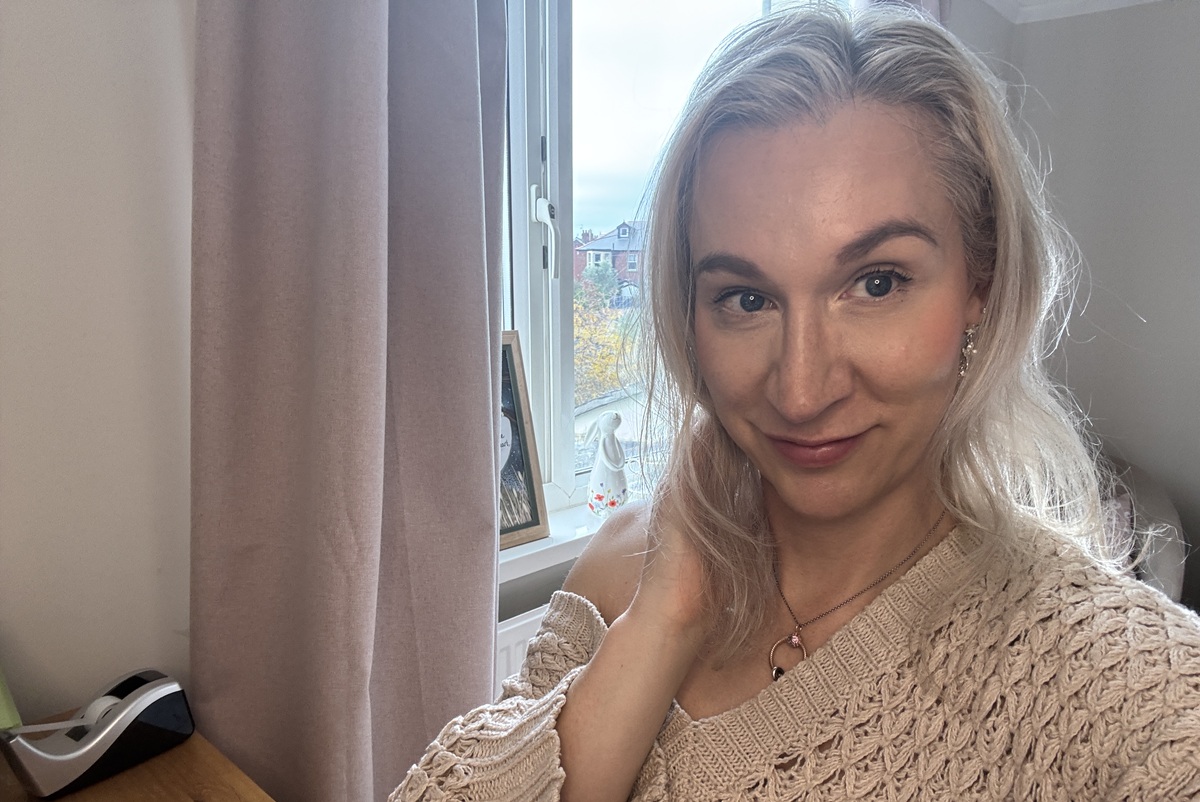
Chloe Kelly
Up until two years ago, I had no idea what it was like to be “other”. I was a straight, white cis male and I had no comprehension of how heavily the cards were stacked in my favour.
Two years later, I can now speak with weary experience and say that I very much know what it’s like to be othered.
Let me just state that I’m happier now than I’ve ever been in my entire life. I finally get to live as me, even if that means that my safe place in society no longer exists. It’s this safety of fitting in with the “white, straight, able-bodied majority” that most people in the majority take for granted. I know I did.
You see, I’m a trans woman and have been living full time as a woman for two years. This means I now have first-hand experience of misogyny, sex discrimination and transphobia. Quite the charming cocktail. And what’s more, I now no longer even know where I can go for a pee in the UK.
The past 18 months or so have seen such vitriol and incessant press attention around the “trans debate” that I felt so unnerved I did something I’d never done before. I wrote to my MP to ask for help.
I first wrote to my MP, Jo Stevens, last spring, back when the whole Supreme Court judgment was announced and… she never replied.
Then, when the EHRC published its draft statutory Code of Practice earlier this year, I wrote to her again. This time I got a generic Labour Party reply. I wrote back saying I didn’t want the government’s official position. I wanted to meet with her to discuss my concerns as one of her constituents.
Nearly three months later, I finally got that meeting.
I had expected to be angry with my MP going into this call. It hadn’t been easy to secure the meeting and then I was stuck waiting on the Teams call for 15 minutes before we even started. But you know what? On first impressions, I liked her.
At the start of the conversation, I explained that I had never written to an MP before and I really wasn’t sure how it all worked. This might sound like a stupid question, but I asked her what an MP actually does for an individual constituent and what sort of things people normally come to her for help with.
You may already know this, but she explained that the primary purpose of MPs is to make laws and change laws and that, as my MP, she can raise concerns for me in various debates, committees, meetings and so on.
Jo herself has a very strong background as a lawyer, including in equality law, as she explained to me. She was also proud to point out that in her law career she was always the “David” in the David and Goliath battles with big firms. This actually filled me with a little bit of optimism.
In one of the emails she, rather than her assistant, had sent me, she included the entire EHRC guidelines and somewhat abrasively stated that she “assumed” I’d read them.
I asked her about this and explained that I don’t have a law degree, that it wasn’t at all clear and that I had tried to read it. She answered that no, her constituents aren’t expected to have a law degree to converse on these matters and, when I asked her to explain it in simple terms, she told me that the law has not changed since the introduction of the Equality Act 2010. The Supreme Court restated the existing law and the EHRC statutory Code of Practice has been updated this year, but the law itself has not changed.
She went on to say that, quite simply, if a service or club is single-sex, then it must only be for one sex. If it includes more than one sex or transgender people, then it is not a single-sex service or club. She was clear that this has been the law since 2010 and remains the law.
I asked if other trans constituents had contacted her, and she said they had and that she’d read lots and lots about this and the various points of view. It’s important for her to have an informed view.
Judge Dredd
If you’re wondering where she stands on trans rights, she answered by saying she firmly supports the Equality Act and equality before the law. She said that protected characteristics must be protected and the law must be complied with. She was like an office-based Judge Dredd when it came to the law.
Innocently, I asked if the law could sometimes be wrong.
“Well yes, sure.”
Legislators try to do their best, but she’s certainly fought against laws she disagreed with under the previous government. You don’t have to agree with it, but you have to abide by it.
I fought the temptation to facetiously say that silence is complicity.
One thing she did want to raise, somewhat triumphantly, was Labour’s pledge to ban conversion therapy. A proper journalist would probably have asked why the heck this was only being done in the second quarter of the 21st century.
What’s more, from my own experience, I didn’t have conversion therapy because I didn’t need it. Societal discrimination in my lifetime made me terrified to admit to myself I was trans, and I spent 45 years desperately trying to convert myself to a cis male.
Equality
Despite being well versed in the law around equality, Jo didn’t seem to have as much of an understanding about the complexity of how gender identity develops. In fact, I asked if she was aware that people are born this way and don’t choose it.
No. She wasn’t aware of that. She clearly hadn’t read my other piece in The Independent.
Seriously, though, she used the words biology and science, and phrases like “biological male” are being written into law when the science around sex and gender is far more complex than those labels suggest. Well, that seems dangerous to me.
It seems that faith in the law should be absolute, even when the law is clearly a construct of human minds and is ever changing. Gender, though, which is a naturally occurring phenomenon that has had the same variations throughout humanity, past and present, needs to be moulded to fit legal definitions because “the law is the law”.
My well-read MP, though, was sympathetic, but our conversation about sex, gender and biology left me feeling that we were coming at the subject from very different starting points.
Jo was focused on the legal distinction between sex and gender. I was trying to talk about the biological and developmental complexity underneath those categories. What troubled me was how often words like “science” and “biology” were used as though the legal definitions settled the matter, when the actual complexity and nuance go far beyond that interpretation. She was clearly far more comfortable discussing the law than the science.
I’d better talk about toilets then, I suppose.
I had to ask, because that’s what everyone in the UK wants to talk about, and her response was again that nothing has changed. The law is the same now as it was in 2010. So even back in 2010, if it was a single-sex toilet for men, it should have been used by “biological men”, and likewise for women. The new guidelines just restate the law.
Her trump card here, and I’m not sure why I’m arguing with my MP about this when all I want is dignity, is that I should use the single cubicle that is available for everyone. In many places, of course, that likely means the disabled toilet.
I did ask and apparently disabled people are not now annoyed that they have to queue for longer for their bathroom or that able-bodied people are using their toilet. It seems that anyone can legally use the disabled toilet. Perhaps I shouldn’t advertise that.
Lightning rod
The legislation isn’t about toilets, though, and Jo suggested this entire debate is a lightning rod for populist politicians who want to stir up division, and they do this with gender, race, immigration and so on.
I nearly cheered at this point.
I think she’s right on this, but she didn’t seem to have an answer for how we stop this hate and people stirring all this up.
She went on to say that the government can’t legislate culture. It’s too nebulous to legislate. People can have opinions we don’t agree with, but it’s not a criminal act and the world would be boring if everyone agreed.
What’s more, it’s not just the job of government, and I agree with that. It’s up to parents and schools too. Everybody has a responsibility, but shouldn’t the government be the leading light on this?
Toilets are one thing, though, and we Brits love the weather, queueing and toilet humour, but the fact is this can probably be navigated, as Jo says, with common sense. As she said, there aren’t security guards in toilets and there are unlikely to be any time soon.
I guess eventually people will stop giving a crap about where I take a crap.
Sorry, there’s that toilet humour.
But joking aside, what genuinely terrifies me is what this might mean for hospital wards. If I am in some kind of accident, what type of ward am I going to wake up on?
She said that without knowing which hospital I would be admitted to, it was impossible for her to answer the question, but she imagined that I would be in an individual room.
Again, hindsight is an amazing thing, but I should have asked whether it was fair for trans people to get their own private room in a crumbling NHS.
And seriously, when people are being treated in corridors, where are these single rooms magically appearing from?
Having now spoken to my MP, I don’t feel like she’s going to help me.
Corrections
For full transparency, I sent Jo a draft of this article afterwards and asked her to flag anything she believed I had misquoted, misrepresented or got factually wrong. She did, and I made those corrections. I hadn’t been permitted to record our conversation, so where our recollections differed, I deferred to hers. What she didn’t challenge in her factual corrections, though, was my conclusion that I had come away feeling no more confident that my MP or my government was actually going to help me.
Her point, which I guess is in line with the government’s, is that the EHRC guidelines haven’t changed anything. And she was adamant that one minority group can’t be elevated above others.
I agree with the rhetoric that all minority groups should be helped equally, but one thing that has changed dramatically is that it’s a hell of a lot scarier now in 2026 to be trans than it was back in 2010. According to Stonewall, police-recorded hate crime based on trans identity has risen 50% over the previous five years.
Self-determination
I asked her how we are seemingly now, as a country, lagging significantly behind more progressive countries when it comes to trans rights and why we don’t even have self-determination. It’s something that a number of progressive countries around the world have, including New Zealand, Ireland, Germany, Spain, Argentina and Denmark.
Well, the “David” of the “David and Goliath” here said that there are too many practical problems with self-identification because it complicates current law.
I guess “the law” is othering trans people because we’re an uncomfortable anomaly. We don’t fit into neat and tidy boxes. Biology and sex and gender don’t fit into those boxes either, but the law seems to have constructed “biological male” and “biological female” and it’s bloody well doubling down on that now.
The good news is I can use the single-cubicle toilet and go about my life as “othered”. And there’s legislation to protect me once I’ve been discriminated against for being othered. Isn’t prevention better than cure, though?
I did also point out that in my previous life I rarely had to queue to use the bathroom. See, cis males really are privileged.
Chloe is a Cardiff-based trans writer whose work has appeared in The Independent, Metro and PinkNews.
Support our Nation today
For the price of a cup of coffee a month you can help us create an independent, not-for-profit, national news service for the people of Wales, by the people of Wales.
Get more trusted Welsh news
Choose Nation.Cymru as a preferred source in Google News to see more of our journalism.


