


To save sharks, whales, turtles and birds, we must all do one thing
Kate Werner
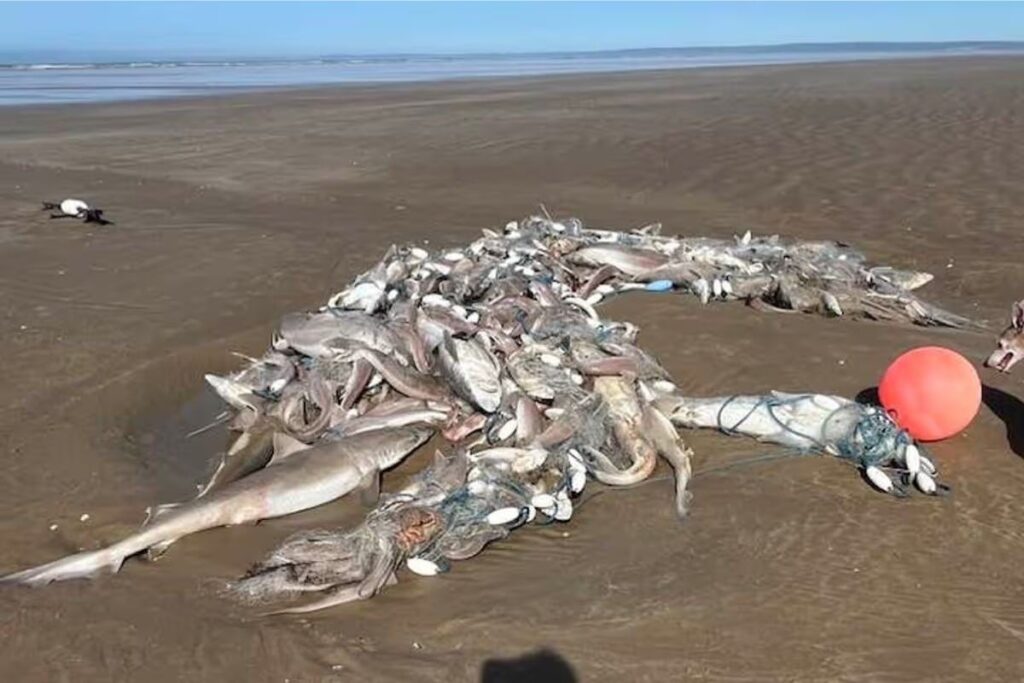
As the sun rose over the bank holiday long weekend, it illuminated a devastating sight: dozens of glassy-eyed catsharks and fish lying limp on Pembrey Beach, tangled in a fishing net, decaying in the sun. One walker who stumbled upon the massacre said it ‘put her off eating fish’, and you know what? It should.
Sights like the one reported in Carmarthenshire aren’t rare; they’re the collateral damage of the fish suppers eaten all over the world.
Last June, visitors to Layan Beach, Phuket, worked frantically to untangle two sea turtles from a fishing net.
This week, New Zealanders raced to free a southern right whale from fishing line, and the world mourned when Timmy, a humpback whale twice ensnared in a fish-killing apparatus, was pronounced dead.
The animals washing up on our shores are the visible casualties of a global fishing industry. In fact, every year, trillions of fish suffer an agonising death as they’re dragged from their ocean homes, gasping for air, before being bludgeoned and beheaded.
Alongside them, more than 300,000 “non-target” marine mammals, such as whales and dolphins, plus millions of seals, sharks, turtles, and seabirds, are also caught and killed.
To meet our appetite for their flesh, fish are killed in numbers so immense, it’s measured in tonnes.
As David Attenborough noted in the documentary Ocean, commercial fishing is violent and indiscriminate.
Bottom trawlers decimate the ocean floor, swallowing schools of terrified fish and destroying an area of seabed larger than the Amazon rainforest every year, while releasing over 370 million metric tonnes of carbon dioxide.
But it’s more than a conservation concern. Every single fish killed was a thinking, feeling individual. Some fish make art to attract a mate; others use logic and tools. Every single one of them feels emotions and pain.
Ocean plastic scapegoats
It’s not only active fishing that’s deadly. You likely recall the heartbreaking video of a sea turtle with a plastic straw jammed in its nostril, which sparked global bans on plastic straws.
While positive, straw avoidance ignores that fishing gear is the single biggest contributor to ocean plastic and continues killing long after fishing’s victims are gutted.
Called ghost gear, abandoned nets and lines comprise almost 90% of marine debris in the Great Pacific Garbage Patch and litter the seas worldwide. One study of 870 ghost nets recovered from Puget Sound found that they contained more than 32,000 marine animals.
The great news is, we’re powerful. We can save sea life simply by going vegan.
Nowadays, there’s everything from vegan fish fingers to satiate the fussiest toddler, through to vegan caviar to please the grandest gourmand – and dozens of animal-free crab cake and ‘calamari’ ring options in between.
Vivera’s vegan salmon fillets can be flaked and mixed with potatoes for delicious ‘salmon’ fishcakes, and you can get your chippy fix from Milton Fish & Chips in Pembrokeshire to Barnacles in Llandudno.
Washed-up sea animal bodies should remind us that our actions have consequences.
Every time we eat fish, we pay to empty the sea of life. Individuals who deserve to live, but who also sustain the ocean ecosystem that humans rely on for survival.
It’s not enough to mourn marine mammals; we must realise that their corpses lie on beaches only because we lay the corpses of other fish on our plates.
If you’re sickened when you see the shore strewn with the victims of nets, go vegan, and help stop the killing beneath the surface.
Kate Werner is Senior Campaigns Manager at People for the Ethical Treatment of Animals, PETA.
Support our Nation today
For the price of a cup of coffee a month you can help us create an independent, not-for-profit, national news service for the people of Wales, by the people of Wales.
Get more trusted Welsh news
Choose Nation.Cymru as a preferred source in Google News to see more of our journalism.



Add Lobsters to that…
It’s been known for decades that bottom trawling is a totaly destructive method of fishing. Ban it now while we still have fish in the sea
Great article. If we could see the destruction that industrial fishing, particularly trawling does then it’s likely far less people would contribute to it. Unfortunately it’s often a case of “out of sight, out of mind”. British seas were once abundant with unimaginable numbers of fish, sharks, whales and all sorts of marine life. We have decimated our oceans.
Put web cams on trawler decks and witness the carnage as an undersea world is dumped out of the ‘cod end’ displayed in real time on the fishmonger’s wall. As for scallop dredging it should be totally illegal…
Teach your children about the environmental damage a fish supper and the Sunday chicken creates and they might challenge mum’s menu…