


Trespassing in my local reservoir – why I’m done being gaslit by Dŵr Cymru (and you should be, too)
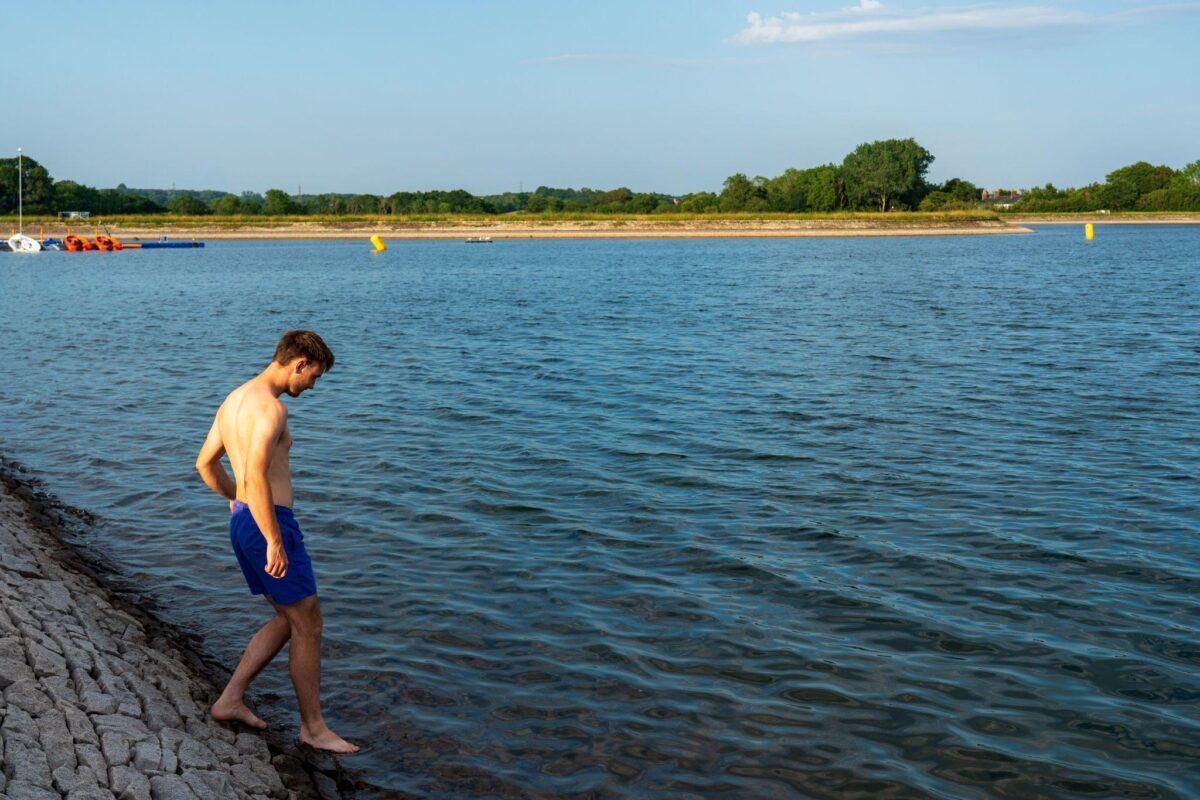
Eben Myrddin Muse
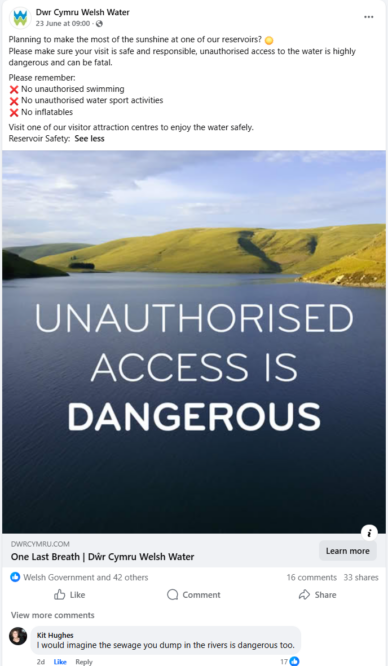
Beautiful, but deadly. On average, 45 people in Wales lose their lives to drowning each year: Unauthorised swimming in reservoirs can kill.
Those are the words that flash darkly across a Dŵr Cymru (Welsh Water) Instagram reel aiming to deter would-be swimmers from cooling down in bodies of water during a record-breaking June heatwave.
It follows from a number of similar posts highlighting the potential fatality of ‘unauthorised’ swimming in any of the 90 or so reservoirs managed by the company.
You could call it effective comms — it sure evokes a primal fear of death. Many of us know or know of people who have drowned. I certainly do. Why not stay alive? Stay dry! But all is not as it seems.
Forty five people drowning (on average) is too many. One person drowning is too many. Each is a terrible loss to a family, a community.
But to wave this number around devoid of context as Dŵr Cymru has, is to wash its hands of its responsibility to the public and amounts to corporate gaslighting.
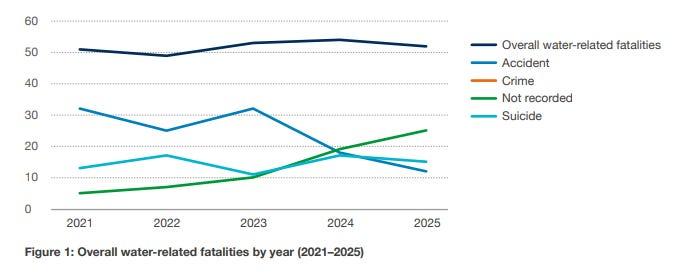
That’s because this number doesn’t show what it purports to: according to the WaID (Water Incidence Dataset, the body responsible for collecting this information) data for 2025, of the 27 categorised
drowning deaths in Wales, more than half were due to suicide. Not unauthorised swimming. Suicide.
As someone whose family (like many others) has been affected over multiple generations of suicide, often by water, this feels like a particularly warped manipulation of data.
Of the remaining categorised deaths on record, around half (45%) took place on the coast – well away from any reservoirs.
For the few that remain (around six), three are on the public record as occurring in flowing water — rivers (a tragic case of two sisters, Hajra and Haleema Zahid who drowned in the Watkin Pools on Yr Wyddfa, and Lord Lipsey, a Labour Peer in the River Wye).
We simply don’t know how many (or if any) of the deaths unaccounted for occurred in lakes or reservoirs.
The misuse of such a serious statistic to carry water for a continued blanket prohibition is offensive, reprehensible, and incorrect. It is a flagrant misuse of data, and it doesn’t save lives.
Now, let’s not be unfairly harsh; Dŵr Cymru do manage a few sites for outdoor access, three for swimming. One happens just a couple of miles from where I live, at Llanishen Reservoir. I thought I’d pay them (literally) a visit to check out the facilities.
Only one session was available for me to book — the 15 minute ‘splash’ session at 8:30am, costing four pounds. I arrived just in time, and was informed I needed to don a special swimming cap and be strapped to a flotation device before I’d be unleashed on the 30m square cordoned corner of the reservoir allocated for my slot.
The water was perfect — no cold water shock here. I was told by one of the friendly older women who made up a majority of the rest of the attendees that the temperature had been measured at 25 degrees that morning.
I bobbed around, swam a few short laps, and chatted to the others. One woman said she was a regular visitor, but gushed about her experiences swimming for free in Bavarian lakes, revelling in the freedom offered.
At fifteen minutes, we were informed that our time was up and that we should exit with haste.
“Can I swim out the long way around?” I asked my new friend, who had her grandchildren in tow.
“No. You have to get out now,” came the flat response from our bored overseers.
As I obediently paddled to shore and changed, another woman reached the slipway, breathless.
“Oh! I’m too late! I slept in!” she exclaimed.
I suggested that, alone, she might not be detected down the far end of the pond.
“Better not” she replied, clearly deflated, before wandering off, despondent.
I settled into the cafe to work, but noticed that no more sessions were being run after ours. That oh-so-appealing water, totally empty.
I couldn’t help thinking that it was a terrible waste. I’d still be in there if I could, and if this was an open, free, swim spot, you could be sure that the water would be teeming with people, all having an amazing time and a much needed cool-off.
But no — I suspect that the booking system is as much about reducing the numbers that Dŵr Cymru have to deal with, as it is about making money. Is it their job to artificially limit the number of people who get to enjoy swimming in this way? I don’t think it is.
The other part of Dŵr Cymru’s attitude towards recreation that many of us in Wales find objectionable is the emphasis on the language of authorisation. “Unauthorised swimming is never allowed” is a tautology — but even so, authorisation doesn’t automatically confer safety. Responsible management and education do.
As it stands, Dŵr Cymru are happy to provide basically none of that unless strictly controlled, and commodified. Prohibition is a cop out — a dirty company washing its hands of their responsibilities to the public.
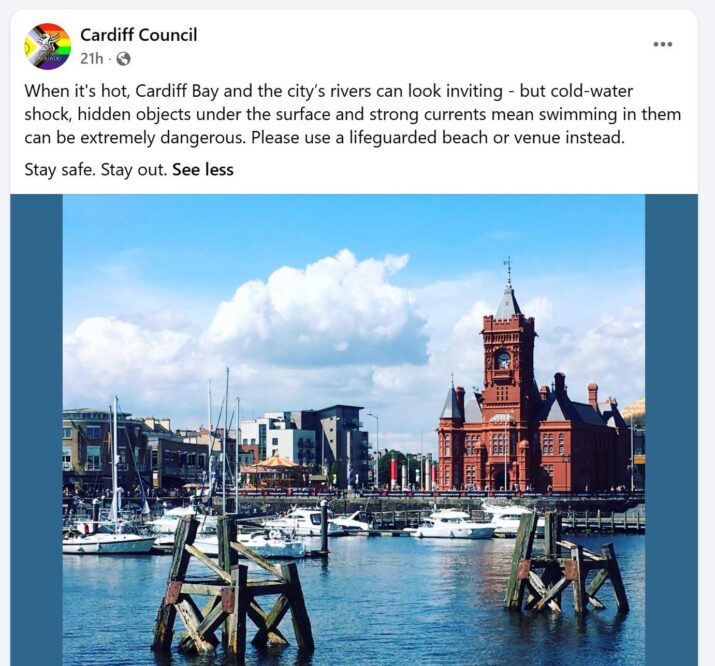
Meanwhile, another significant institution, Cardiff Council, are content to signpost the public over to lifeguarded sites that do not, in fact, exist.
At the time of writing, it just posted another statement saying that “three times as many accidental drownings occur when water temperature exceeds 25 degrees”. Perhaps those drownings would be fewer if you could point us to lifeguarded venues that are real? Or if you facilitated safe entry and exit points to water?
But back to Dŵr Cymru; I’d like to do something futile and make an appeal to the conscience of a corporation that doesn’t seem to possess one.
Our summers are getting hot, and they’ll only get hotter — in fact, they are already unbearable. As I type, three million Welsh people sit in homes ill-prepared for this weather, surrounded by cool bodies of water we are prohibited from, we are told, for our own good.
Probably, some are swimming at this moment, without (gasp) authorisation.
People deserve the opportunity to cool off, and to do so safely, without fear of reprisals. To connect there with nature. Water, cold or otherwise, provides enormous wellbeing benefits, and safety concerns are problems to be solved. Not shirked. Managed.
I challenge Dŵr Cymru (and the Welsh Government) to take on that task, not only because it is their job, but because it’s absolutely the right thing to do.
There is no innate, insurmountable physical danger that precludes us from swimming in Welsh reservoirs, or lakes for that matter. In Scotland, there is a legal right to swim in in rivers, lochs, reservoirs and other inland waters. All over the country, from the urban fringe to the loftiest loch.
And Scottish Water? Far from weaponising suicide statistics to scare folk, they invest in schemes aimed at teaching hundreds of thousands of Scottish children to swim. As it says on the water company website: “Scotland is a nation of rivers, reservoirs, coastal waters and lochs – and being able to enjoy these environments safely is important.”
I wonder which approach to public safety is more effective in saving lives?
Make no bones about it — people already swim in their thousands in hot weather all across Wales. Many swim in the cold. Whether that’s in the River Taff, or on the crowded beaches, or in the many reservoirs across Wales.
The people of Hay on Wye campaigned hard to achieve bathing status for the Warren, one of only three inland sites of this kind, monitored for water pollution. They can now swim, informed of physical risks, something not many communities in Wales can boast of.
The main factor which prevents people from swimming in Welsh rivers and other non-reservoir bodies of water in Wales is an overwhelming fear of catching a horrible pollution related disease, and we can largely lay this at the door of Dŵr Cymru, too.
Other than the aforementioned Llanishen Reservoir, the only other official bathing spot in the interior of Wales is the lagoon at Llyn Padarn, which I am intimately familiar with, having grown up down the road.
The pontoons there (seen here being cleaned by scuba divers, bottom right) act as a sort of welcome mat for swimmers.
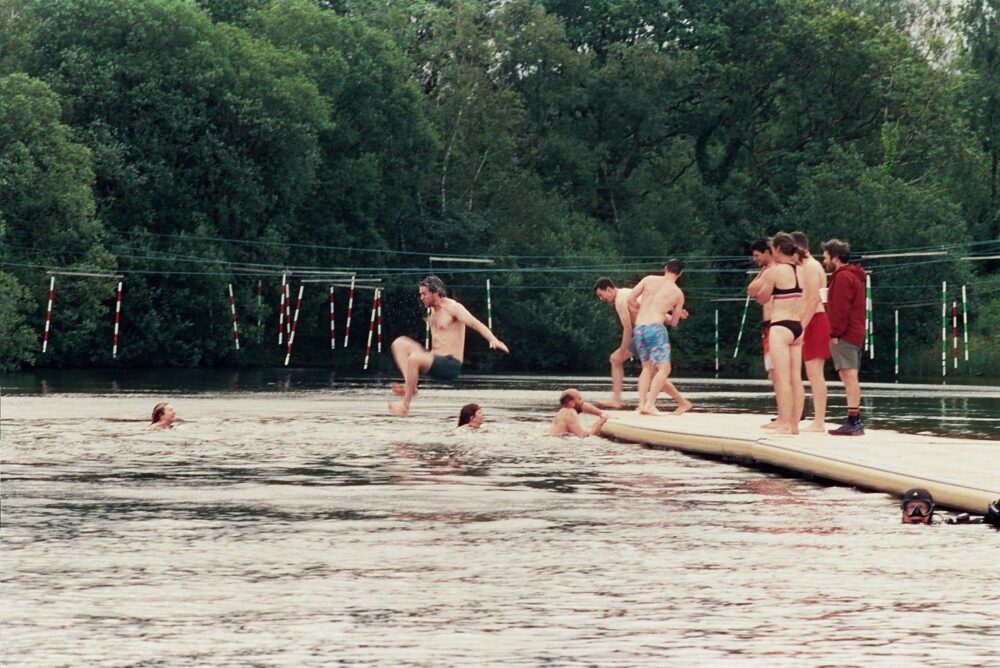
There’s no need for lifeguards in a high chair. There’s no £4 for fifteen minutes. Just a safe entry and exit point, some safety equipment, and water quality monitoring. It’s also a pillar that supports several major parts of the local economy, as beloved in its use by locals year-round as it is by tourists.
This could be the scene at Dŵr Cymru reservoirs across Wales, a substantial portion of which were developed from natural lakes, just like Llyn Padarn.
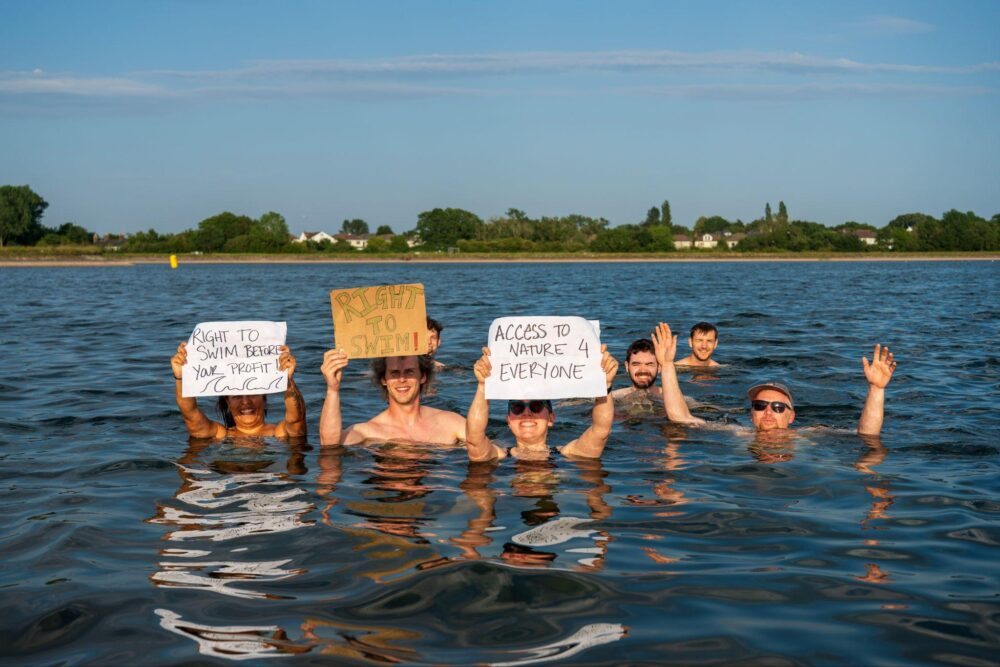
I returned to Llanishen Reservoir on the hottest day of the year – June the 25th, this time in the company of some friends, and with a couple of protest placards. A cooling breeze blew across the open surface of the reservoir, and my friend bought me a rhubarb and custard ice cream.
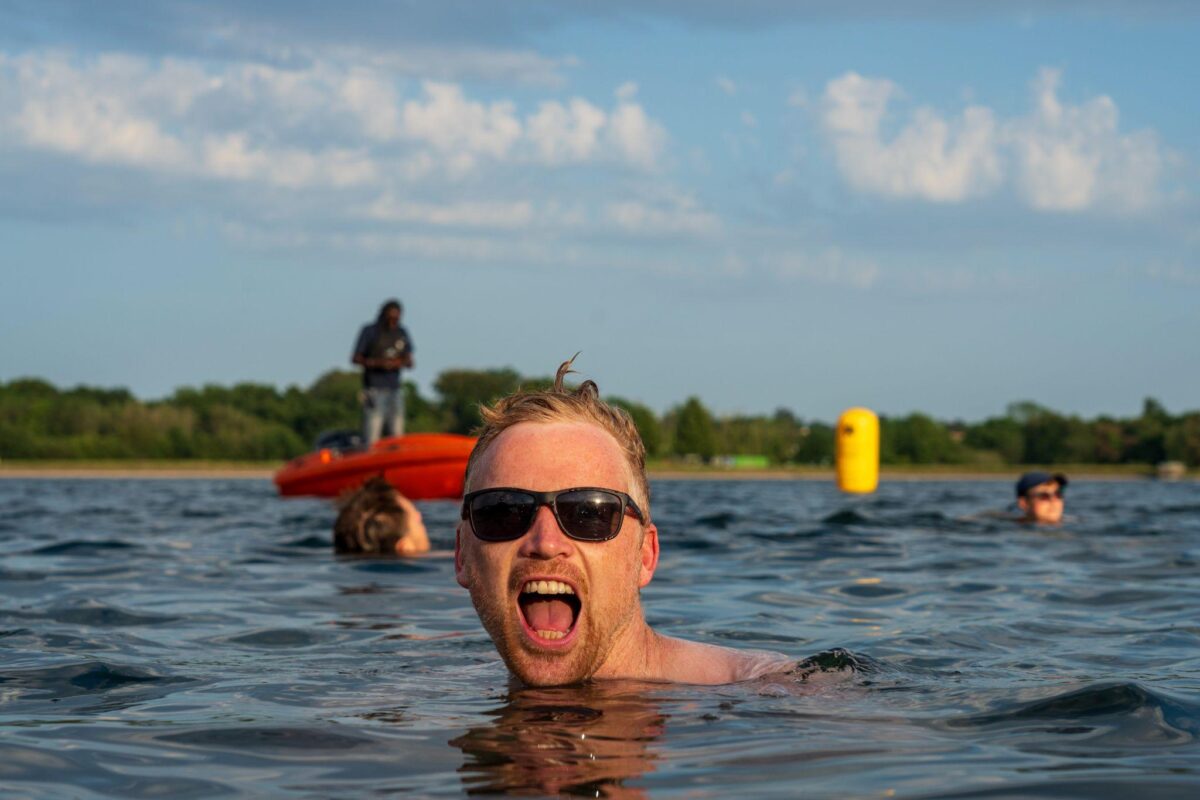
Waiting awhile for the others to arrive, we watched a staff member throw on a buoyancy aid, hop in a little orange motorboat, and zoom around the reservoir to tell some swimmers off at the other end of the reservoir.
Clearly bored, his boat took a zig-zag path, showboating for the small crowd of soon-to-be trespassers on the cafe balcony.
It was midsummer, and the place was eerily empty. And with that great big body of water in front of us, just begging to be swum in.
I know of a way they could sell a lot more ice creams.
Once all had arrived, we made our way around the perimeter path, had a quick safety briefing, and stepped carefully over the narrow wildflower threshold that separated us from the water.
A large, safe swimming area is conveniently marked out by yellow buoys, and we agreed to stay within this zone. Carefully, down slippery cobbles, we waded in (or butt-slid, in some cases). We were prepared to be shooed off within minutes, but it seemed we were out of view – managing to splash around contentedly for nearly half an hour before a man (seemingly unwilling to walk the 100m or so over to us from the visitor centre) slowly got into his plastic boat and whirred out to warn us:
“No unauthorised swimming. You all need to get out,” he said, with a certain kind of sadness in his eyes.
Already refreshed, and resisting the urge to wise crack or invite him in, we shuffled ashore – the car park was about to shut anyway.
We also learned that a byelaw passed in 2025 makes trespassing in Llanishen Reservoir a possible criminal offence.
A criminal offence to swim in the only fresh body of water within miles that I know, with certainty, is safe to swim in. What a joke.
My final appeal — assuming that my appeal to their humanity fell on deaf ears, is a direct one to those running Dŵr Cymru. If you won’t do it for us, do it for yourselves. Do it because you’re incredibly despised in communities across Wales — hated for the high bills you make us pay, hated for discharging sewage into the environment 94,974 times in 2025, for the milky effluent flowing down to busy beaches, for the dead fish I found floating belly up in a local brook, for the gaslighting misinformation you pump into our social media feeds, and for the executive pay approaching half a million pounds.
Do it so that we all have a reason to hate you a little less. Because doing so is exhausting in this awful heat!
Support our Nation today
For the price of a cup of coffee a month you can help us create an independent, not-for-profit, national news service for the people of Wales, by the people of Wales.
Get more trusted Welsh news
Choose Nation.Cymru as a preferred source in Google News to see more of our journalism.



I completely agree with you. Why are they so determined to hoard a public resource rather than encouraging wider use and the development of swimming skills?
Just wanted to put a correction in here: a fourth inland bathing spot was added in 2026 at Swing Bridge, Llandeilo.
It was bizzare indeed that on the hottest day of the year, this stunning, well maintained, clean water reservoir was empty. This place should be heaving, and people should be enjoying this amazing resource available to us. Instead it was empty, likely because of the £4 for 15 minutes booking system and the paid car park.
Make it free and accessible for all I’d wager the cafe alone could cover the cost of the whole thing. But most importantly it would actually be used and enjoyed by the people of Cardiff.
A couple of bathing spots that I’ve been to recently
Llyn Geirionydd (swimming permitted by Natural Resources Wales)
Llyn Cwm Llwch – popular, with no attempt by the park authority or the landowner (National Trust) to discourage swimming
Good to know and good on Natural Resources Wales and National Trust!
This article is so on point and perfectly illustrates the two-faced hypocritical private water sector. I’m no nationalising socialist, but this H&S halo polishing corporate facism makes me furious. Tokenism based on lies no less. It’s no different across the bridge, here in England the water companies close footpaths around reservoirs as soon as temperatures hit a magic 28 degrees as if the public are lemmings needing to be saved from a watery demise. You’ve inspired me to start swim trespassing just for the hell of it. Perhaps the swimmers version of the Kinder Scout trespass is what’s needed!
The way they lie is a disgrace. Imagine using suicide statistics like that.
nothing new here about DCWW. The company’s drift down to corporate scumbag status has gone on for years. Now running for the benefit of the few while waving its other halo – “not for profit” as though we can’t see through its distraction
Welsh Water says reservoirs aren’t safe to swim in, but the water they pollute with sewage is safe to drink. Quite an amazing janus-faced position.
Dŵr cymru just doesn’t work for Wales and never has done.
They’ve destroyed our rivers and lakes whilst pilfering money from the public and now theyre fiddling the figures in rather a sick manner. Come on WG, sort this mess out.
I’ve swam in Llanishen many times because it’s what’s available to me. But if it didn’t cost, or they were able to accommodate more sessions, I’d be there a lot more.
It would be nice to see WG force DC’s hand.
I would not recommend swimming in Cardiff bay, I seriously question the water quality there. That example aside. It’s worth noting that the dangers are real, reservoirs typically… are not built for public use. The banks are notoriously steep and may contain infrastructure that can catch the unwary out such as aerators. That’s not to say the risks are not being wildly overstated, they are and Dwr Cymru are getting away with a lot in terms of their duties to provide access to proper water. We in the UK are a bit weird our continental cousins have none of these… Read more »
None of this overcomes the fact that in Scotland you can swim in any reservoir you like. And in Llanishen they seem capable of marking a (very large) safe, swimmable area. They don’t even draw drinking water from it any longer, and haven’t since the 1970s.
Great article, you are not alone !
Access is not “free” – it is paid for by someone. It may be that several bodies contribute to the costs of access – the owner, whose fishing income reduces; the ghillie, who attempts to manage the river and nurture his beat, whilst suffering disturbance from other uses; government bodies, who fund educational resources about rights and responsibilities; and access authorities, who attempt to resolve conflict and difficulty without the back up of clear rights and responsibilities, powers of enforcement or dispute resolution. Nor is access a “right”. It is a privilege, and one to be used responsibly, with due… Read more »