

Two-tier justice: a case study about a bandwagon, a contrived pile-on, and its reporting
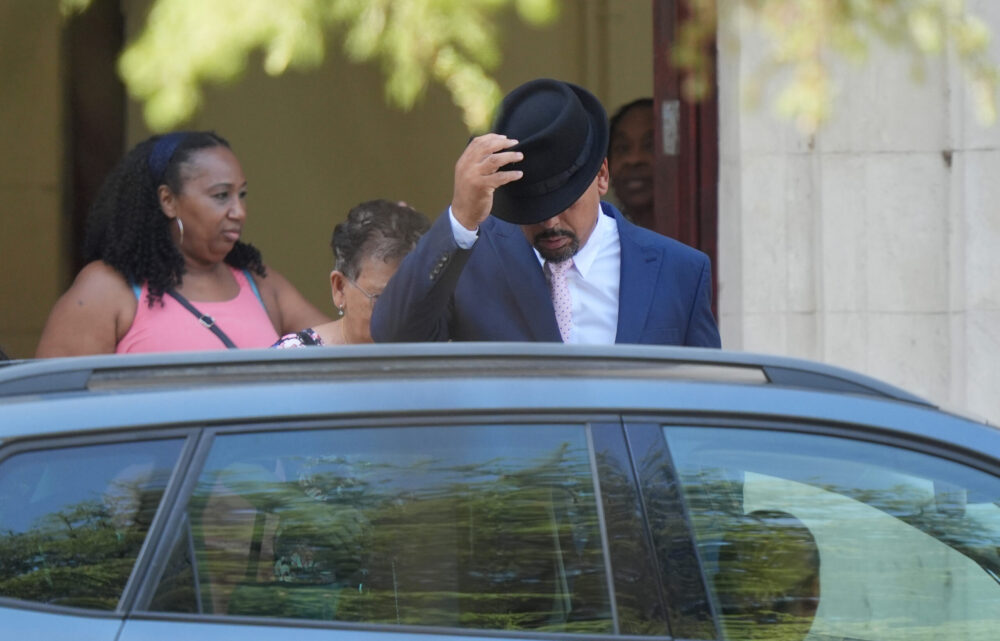
Dr Huw Evans
Ricky Jones’ acquittal for encouraging violent disorder has led to a claim of two-tier justice when compared with Lucy Connolly’s prison sentence of 31 months for stirring up racial hatred. That claim is baseless, yet some press reporting has helped promote the claim.
Jones and Connelly cases
Jones, a labour councillor, was acquitted last week. The prosecution case was that, at an anti-racism rally, Jones had called for the throats of far-right activists to be cut. Lucy Connelly, a Tory councillor’s wife, admitted her offence in which she posted an on-line message calling for setting fire to hotels housing asylum seekers. She was sentenced in October 2024.
The Jones acquittal prompted shadow Home Secretary Chris Philp to say: ‘It is astonishing that this Labour councillor, who was caught on video calling for throats to be slit, is let off scot-free, whereas Lucy Connolly got 31 months prison for posting something no worse.’
He also said: ‘The development of two-tier justice is becoming increasingly alarming…This Labour government seems to be quite happy with two-tier justice’. Nigel Farage, leader of Reform UK, chipped in too, claiming the acquittal was ‘another outrageous example of two-tier justice’.
But the Jones and Connelly cases are different. Jones pleaded not guilty and was found not guilty. Connelly was found guilty because she pleaded guilty.
This is not two-tier justice
Two-tier justice means that people appearing before a court in similar situations are treated differently without justification. Unless it is suggested that acquitted and convicted people should be treated the same way (and that would be an interesting proposition), claiming that the differing outcomes amount to two-tier justice is baseless.
This is a fact, not a nuanced view. Or as barrister Joanna Hardy-Susskind more pithily put it: ‘Th[is] is not two-tier justice’ and to argue otherwise is ‘legally illiterate’.
But the likes of Philp and Farage are not letting that fact get in the way of furthering their narrative about two-tier justice. Jumping on the two-tier justice bandwagon (more on that below) is contrived and without justification.
Press reporting
As the claim that this was two-tier justice is false, it might reasonably have been expected that this would have been exposed in the press coverage. But this has not necessarily happened. By way of illustration, I refer to three online reports taken from platforms occupying different value positions: The Independent’s ‘Ricky Jones case should not be compared to Lucy Connolly, lawyer says’; The Daily Mail Online’s ”Two tier justice is out of control’: Fury as Labour councillor who called for Southport protesters’ throats to be cut is cleared of encouraging violent disorder’; and the BBC’s ‘Councillor cleared of encouraging violent behaviour’.
The Independent focusses on exposing the claim’s falsity. It goes into depth. It distinguishes between the two outcomes and the subject matter of each case (there was racial aggravation in Connelly’s case) and debunks the two-tier justice claim.
It is the opposite with the Daily Mail Online, as its headline suggests. The report highlights the two-tier injustice claims and the quotes from Philp and Farage are given prominence, as is a quote in a similar vein from former Reform UK chair, Zia Yusef. Joanna Hardy-Susskind’s counterview is quoted but there is no attempt to analyse the irreconcilability of the two positions and establish where the truth lies. The way the article is framed shows an intention to peddle the two-tier justice narrative
The BBC report is imbalanced. It reports about the acquittal. It sets out the Philp and Farage quotes and the claim about two-tier justice. But this is uncontested. At least in the Mail Online report, Hardy-Susskind’s counterview is mentioned. Because it is unchallenged, by default the BBC promotes the two-tier justice narrative.
A core value of journalism is accuracy. This is reflected in journalist codes such as the Impress, IPSO and Ofcom codes. Because the Jones and Connolly cases do not amount two-tier justice, to suggest otherwise (whether expressly, or by inference or omission) means endorsing inaccuracy. On this test, the Mail Online and the BBC have endorsed inaccuracy. Facts matter and their presence is essential in a functioning democracy, of which a genuine free press is a key part.
Two-tier justice bandwagon
This bandwagon has grown in response to the Sentencing Council’s updated guidelines which took effect from April 2025 and in which it was suggested that judges should consider defendants’ ethnicity before sentencing. In response, shadow Justice Secretary Robert Jenrick said: ‘To me, this seems like blatant bias, particularly against Christians, and against straight white men.’ He also said that the rules make ‘a custodial sentence less likely for those from an ethnic minority, cultural minority, and/or faith minority community’.
The Sentencing Council is independent of government and the UK Government, itself, has expressed concern about the guidelines and said how it might override them with emergency legislation if necessary. Nevertheless, the bandwagon’s supporters have consistently aligned the alleged tilt to two-tier justice with Keir Starmer’s Labour government. For example, Robert Jenrick wrote about ‘two-tier justice under two-tier Keir’.
A bandwagon might be popular because it has merit. But assessment of that merit should be based on evidence and rational arguments, not on baseless claims. Two-tier justice is wrong. And the Sentencing Council’s guidelines need to be assessed robustly about whether they might lead to that outcome.
On the other hand, the new guidelines have been made in part to address historic two-tier justice because of over-representation of ethnic minorities in the criminal justice system. I stand to be corrected but I do not recall the likes of Farage, Jenrick and Philp railing against two-tier justice prior to the new Sentencing Council guidelines.
Support our Nation today
For the price of a cup of coffee a month you can help us create an independent, not-for-profit, national news service for the people of Wales, by the people of Wales.



What a mistake these unduly privileged false elites have made by pushing the ‘two tier’ term which many of us will remember as the two tier society created by their beloved Maggie and even though they stand safely on the top one, it still isn’t good enough for them.
I think many these false elites of yours were Red Wall and totally anti Maggie but have now abandoned Labour.
Yet when it comes to inquiries that target one ethnic group and let the rest off scot-free, two-tier justice is the order of the day for this lot.
He got a trial by jury.
The others pled guilty before trial.
The point was about the right demanding national inquiries, selectively.
My apologies. Mis read.