


Wales and the BBC
Desmond Clifford
BBC crises are common enough, but this one has existential undertones. The latest cutbacks – redundancies, programmes axed, services discontinued – point to more than hard times.
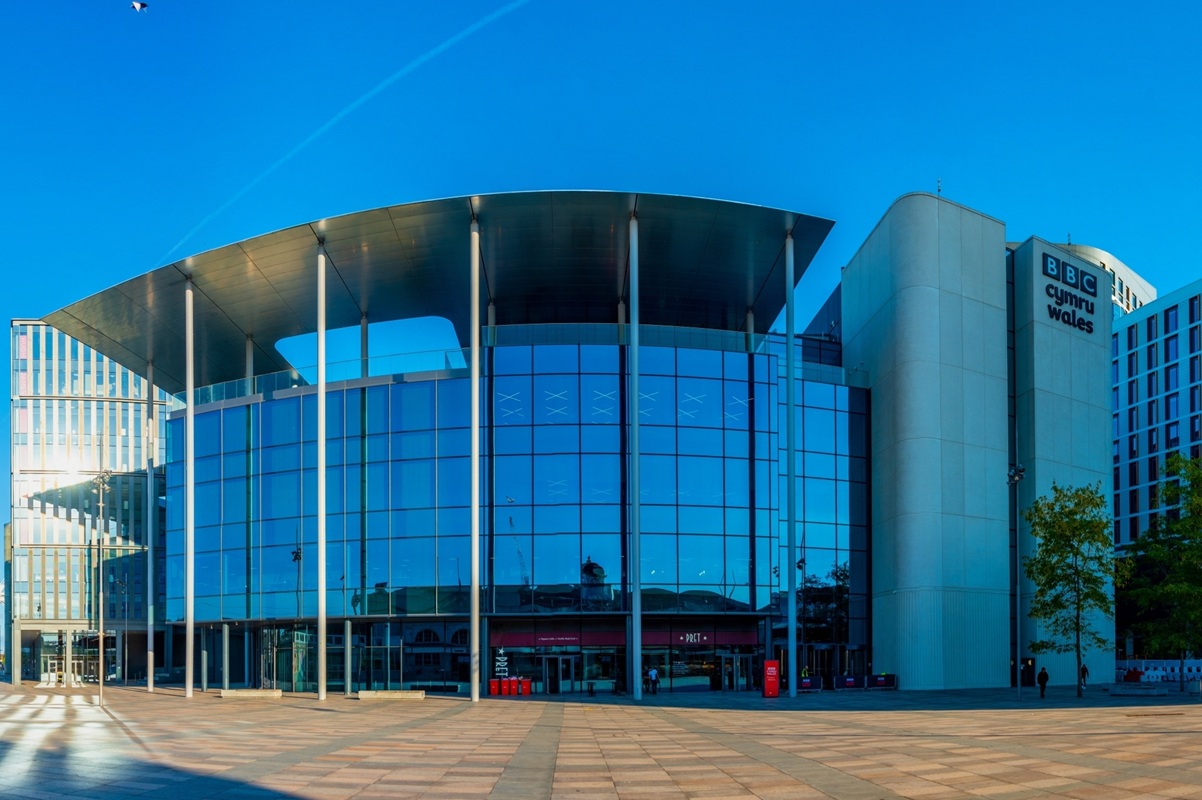
It must save £500 million over two years. At BBC Wales, around 60 jobs are going, 20 from the newsroom; the echo around its cavernous Cardiff headquarters will ring a little louder.
Some radio programmes are disappearing and there’ll be less television.
The BBC just can’t do what it used to do and no longer has the same presence in our lives. This matters because the BBC is one of few institutions holding a crumbling United Kingdom together.
If I can see that, why can’t the UK ministers who make the decisions? Or perhaps they can, and that’s the point?
I should declare that I worked for the BBC for about a decade thirty years ago. I was proud to do so, even if, as an employer, it was sometimes annoying. I still contribute occasionally to BBC programmes, usually in Welsh around dawn.
BBC funding has been systematically eroded. The real value of the licence fee has been chiselled away and fewer people pay it. Once, if you owned a TV set, you needed a licence. These days, you can watch on-demand output (Disney+, Netflix etc) without one.
Many people think nothing much will happen if they don’t pay. Breaking news: fewer people pay if there’s no sanction. Try making income tax voluntary and see what happens!
Cutbacks leave Wales worse off. Newspaper coverage here was always scrappy and the BBC filled the void with programmes for radio and television in two languages.
During long decades when politics was uninterested, or actively hostile, to things Welsh, the BBC pursued its mission seriously. A clear BBC function is to mitigate “market failure” and there is no market provider for most of what it does in Wales.
It’s impossible to imagine Welsh culture over the last hundred years without the BBC.
One of a curiously small number of UK institutions with “British” in its title, the BBC projected Wales long before the country had a political voice. BBC Cymru Wales is one of our paramount national institutions.
Radio Cymru is a beating heart for the Welsh language community. Its schedules convey an immense variety of human experience, attitudes, interests, eccentricities and culture. The station covers a wide political spectrum with Rhun ap Iorwerth at one end and Helen Jenner at the other. If, as Alun Ffred Jones, a former culture minister, fears, it becomes a diet of music linked by bland chitchat, the chasm will be wide and deep.
The BBC must live within budgets and adapt. Change is sometimes painful. The BBC can live without some things which are provided elsewhere. Radio Cymru and Radio Wales are not among them, and neither is a properly resourced newsroom supplying Wales, the network and S4C. Welsh politics needs scrutiny and accountability. If not the BBC, who will deliver this comprehensively, with objectivity and fairness?
The state broadcaster shouldn’t limp like a wounded survivor. The BBC needs its head up, without being arrogant. How else can it stand up to government and politicians?
Culture wars
Even during the Second World War the BBC resisted government bullying. Right now, confidence is low. No other institution is so traduced. It has been dragged to the epicentre of Britain’s culture wars. When it gets things wrong, as it does, inevitably, it’s never just a mistake but conclusive proof of a liberal conspiracy – controlled from an underground bunker by Gary Lineker in Eco-Loon Central.
The feeble response to the BBC crisis is among the disappointments of the Labour UK Government. I accept that the licence fee’s days are done; I don’t accept that the BBC is done.
In a fracturing Britain, it is still how most of us learn what’s happening, how we live, and what it means to be a citizen in this country.
The BBC charter runs out next year. The government might shock me and boost BBC spending, and perhaps Burnham is more sympathetic than Starmer, but I’m not holding my breath. If it does, that would be a valuable investment, for Wales and Britain as a whole.
Britain has an exceptional “soft power” offer, exporting language, culture, sport, values, education and ideas at a scale only a few countries can manage.
Nothing shouts Britain abroad like the BBC. Honestly, I’d close the Foreign Office before the BBC. Around 30 years ago I travelled around Iran. In a remote town, far from anywhere important, some young guys stopped to shake my hand and offer me drinks, as is common there. They spoke little English – and I, no Farsi – but through big smiles they repeated, “BBC, BBC!”. It is loved and admired around the world, yet undermined and undervalued at home. What bizarre, parochial politics we have.
Cutbacks
Cutbacks have already had an effect. The BBC News Channel is now unreliable; it has great difficulty coping with breaking news outside office hours. They love to say in defence, “the BBC doesn’t have to be first, it has to be right”. Well, the two aren’t incompatible and the combination has been the basis of good daily news output forever. But fine, take a little time to get it right – but at least do it today, not tomorrow. At the same time, without any sense of irony, they have just appointed a new director of news at a salary of £400,000, well over double the Prime Minister’s pay.
The BBC’s political teams, in Cardiff and London, are excellent. There are some superb Welsh patch reporters. Cardiff’s Jeremy Bowen is a model of clarity and sanity reporting Israel and Palestine, the toughest beat in journalism. These journalists don’t appear fully formed from a cupboard. They begin as cub reporters and make a few mistakes. They learn a craft, become expert over time, and bit by bit, build trust and authority with viewers and listeners. This is what’s at risk – and once it’s lost, it’s lost.
The UK Government shows little understanding of what’s at stake if the BBC slides further. Politicians need to wake up. In a slowly disintegrating Britain, the BBC is still capable of mapping common ground. It puts Brand Britain in the global top league for truth and cultural influence.
I will be accused of looking backwards: “The future’s about YouTube, Substack, brands, AI…”. Yes, and I have no quarrel with technology. Programmes and services come and go. One day, today’s exciting new technologies will be museum memories. The BBC’s past was determined by available technology, and its future will be too. Viewing habits will go on changing. But here’s the important thing: we’ll still watch stuff and we’ll still listen. And who we listen to, who writes it, who makes it, and where it’s made will still matter.
Protected
Radio Cymru and Radio Wales should be protected and resourced properly. The private sector can’t do what they do. I like podcasts – they’re liberating and democratic – but crafted radio programmes give us something else. The Welsh Language Commissioner warns about reduced service on Radio Cymru and she’s right; it’s essential to the ecosystem holding the language community together.
Now is not the time to shrink the BBC. It’s never been more important to listen to each other. The government needs to fix the finance and put it on a sustainable footing. I’m unclear why the over-75s automatically get free service (actually, I am clear; it was political populism) especially since they use the BBC more than anyone else, and the number of people living to 100 rises every year! As we know, not all elderly people are poor – and most young people are certainly not rich. Let’s at least be a bit more nuanced about it.
As for the rest of us: next year’s Glastonbury sold out in 45 minutes at £400 a ticket. A season ticket for Cardiff City is around £350; Wrexham nearer £450; Man Utd is £650 minimum. A mid-range opera ticket is maybe £50–£60. A prestige Wales rugby international (er…) maybe £100. The BBC licence is £180. BBC iPlayer and BBC Sounds mean you can listen or watch practically anything anywhere. We need to link value with output more realistically and the rich should pay a greater share.
Clever
The new BBC Director-General, Matt Brittin, is clever and fluent. He must use his talents to stick up for BBC services, not rationalise their decline. I heard Rhondda’s MP Chris Bryant waxing lyrical about the BBC on Any Questions the other week. I agreed with every word and hope he’s saying the same things to his colleague at DCMS.
The BBC’s leaders should resist decline. Viewers and listeners should resist it too. The less money it has, the fewer programmes it makes, and the less we’ll watch and listen. That’s exactly what’s happening. There are those who’d like to do the same to the NHS and with the same motive – to grow the private sector.
Decline is not inevitable; it’s a consequence of government policy. If the Prime Minister truly believes in public service Britain, here’s one place he can prove it. The government needs to fix the BBC before it declines irreversibly. The BBC is a proxy for so many things in Britain. If it fails, it’s hard to see what else will succeed.
Support our Nation today
For the price of a cup of coffee a month you can help us create an independent, not-for-profit, national news service for the people of Wales, by the people of Wales.
Get more trusted Welsh news
Choose Nation.Cymru as a preferred source in Google News to see more of our journalism.



Remember also how much S4C depends on the BBC!