


Wales needs more ambition to fight back against the climate crisis
Future Generations Commissioner for Wales Derek Walker
We know more droughts, floods and wildfires are coming. The question is – how decisive is Wales prepared to be to protect us from the worst of their impacts?
We’re not living in normal times. The world is getting hotter because of our over-reliance on fossil fuels, and extreme weather, a direct cause, is happening now and will only get worse.
From extreme heat across Wales to devastating flash flooding in Nepal and Super El Niño disproportionately impacting the Global South and threatening our food system, the impacts of the climate crisis are being felt around the world.
The need to act to protect our planet has never been more urgent.
So what are we going to do?
One thing we can all agree on is we’re at least talking more about the climate crisis. A major Climate Resilience Summit is happening in Wales today, after a request to the Welsh Government by the Fire Brigades Union.
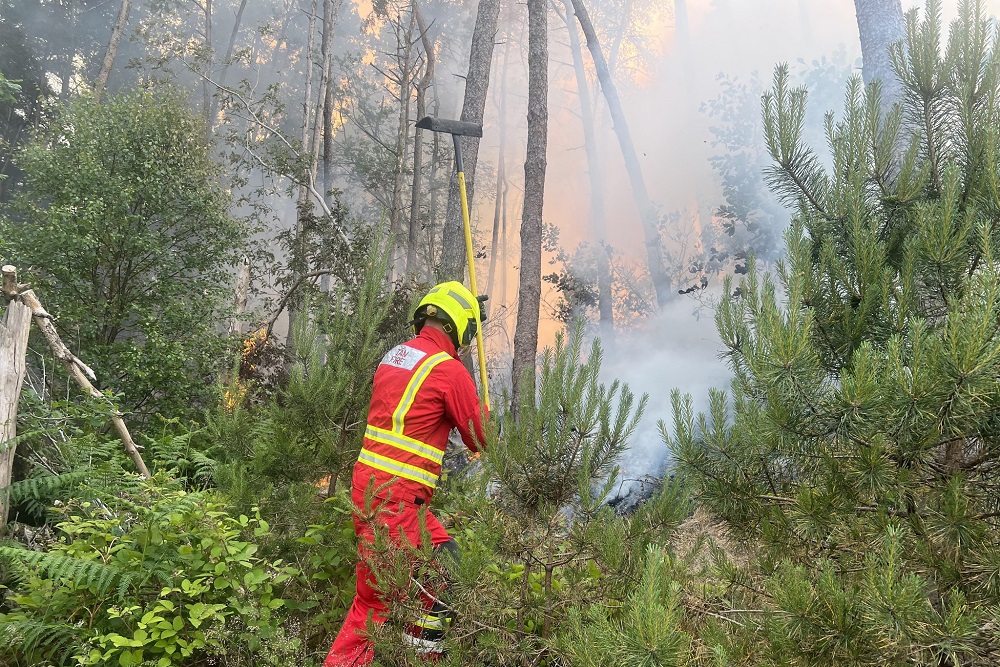
But the firefighters who stood on hillsides in full PPE in the glaring heat of the day keeping our communities safe, will want more than talk from today’s event, where Welsh public leaders will get together to learn lessons from this summer.
At the peak of the June heatwave, and before the wildfires, I wrote to our public sector leaders to ask about how they responded to the hottest summer on record, at a time when 700 schools were fully or partially closed, rail services were cancelled, businesses forced to shut, with thousands of excess deaths across England and Wales.
The responses I received described the work of their staff to maintain services and manage the immediate impacts of the extreme temperatures.
However, it was also clear that many organisations experienced significant pressures in doing so, especially on infrastructure, staff well-being, service delivery and public facilities.
While all organisations reported responding effectively to the immediate heatwave through emergency planning, business continuity arrangements, staff welfare measures and communication activities, many organisations said they would have struggled under an extended period of extreme heat.
So what now?
The setting for today’s climate summit should be significant. Merthyr Tydfil is one of the UK’s most biologically diverse areas, home to more than 7,000 recorded species, diverse river ecosystems, and extensive protected woodlands.
Climate experts have warned for years that many of the solutions already exist. Yet we continue to underinvest in nature-based solutions and fail to do enough to protect and restore the woodlands, peatlands, wetlands, rivers and seagrass meadows, which can help repair the planet’s broken climate.
When we retore nature and allow natural processes to recover, wetlands can help retain water in the landscape, reducing drought and wildfire risk; trees and green spaces can cool our towns and cities; and rivers reconnected to their floodplains can slow and store water before it reaches our homes.
Caring for nature can also help bring people together, supporting the emotional benefits of climate action, including increased hope and connection.
So what can places like nature-rich Merthyr do to better protect its communities, Wales, and the globe?
We need our public sector leaders in every area of Wales to do a number of things:
*Do everything they can to keep their teams, our communities and our environment safe, both now and in the future.
*Invest in nature protection and restoration.
*Learn from their communities about how climate change is impacting them to inform their organisations’ actions
*Invest in passive and active cooling (eg shutters, blinds and external shading with air conditioning installed where necessary) for key public services like hospitals, schools, care homes and prisons.
*Invest more in long-term flood defence programmes and work collaboratively to identify approaches to managing risks, especially for critical infrastructure like power plants and transport networks.
These actions have been demonstrated by the Climate Change Committee to be cost-beneficial, primarily through avoided costs and also through the benefits of the activities in themselves.
Swansea, Torfaen, Blaenau Gwent and Powys councils are investing in tree canopy expansion and green infrastructure to reduce heat risks and improve resilience against flooding.
Swansea is leading the way with 10 green roofs (with seven more planned), soaking up rain, reducing flooding, cooling the air and keeping buildings cooler in summer and warmer in winter.
The climate action we need to take will also make our communities healthier, richer and safer, and nature is a powerful mechanism.
And this is where the Welsh Government needs to show it is strong enough on the climate and nature crisis.
Destruction of nature isn’t the price we should pay for prosperity.
The Future Generations Act doesn’t exist to provide a justification for making the same old trade-offs.
We need decisive governance that keeps Wales strong.
The Well-being of Future Generations Act is about resilience – and requires long-term action, to prevent problems before they arise and to involve people in the decisions that affect them.
When we build homes, the question should not simply be how many we can deliver but whether those homes will remain safe, comfortable and insurable during future heatwaves and flooding.
When we invest in transport, we should ask whether those networks will continue to function during more frequent extreme weather events we know are coming.
When we seek to improve economic productivity, we should ask whether businesses and supply chains will be able to cope with climate shocks, and that it’s not at the cost of the nature that will protect us.
If we want children to continue learning during extreme weather, for older people to be safe during a heatwave, healthcare maintained and communities supported, we have to be bold and make the right decisions.
As we gather at the Climate Resilience Summit, my call to action is simple: Make climate resilience part of every budget discussion, every business case, every infrastructure project, every policy decision.
The climate crisis should keep our leaders awake at night and we shouldn’t rest until we know we’re doing everything we can.
Support our Nation today
For the price of a cup of coffee a month you can help us create an independent, not-for-profit, national news service for the people of Wales, by the people of Wales.
Get more trusted Welsh news
Choose Nation.Cymru as a preferred source in Google News to see more of our journalism.



As long as reform and it’s fuhrer keep denying that man made carbon dioxide is 3% and not a poison in the atmosphere, Wales won’t get far with tackling local climate issues.