


Wales turned upside down
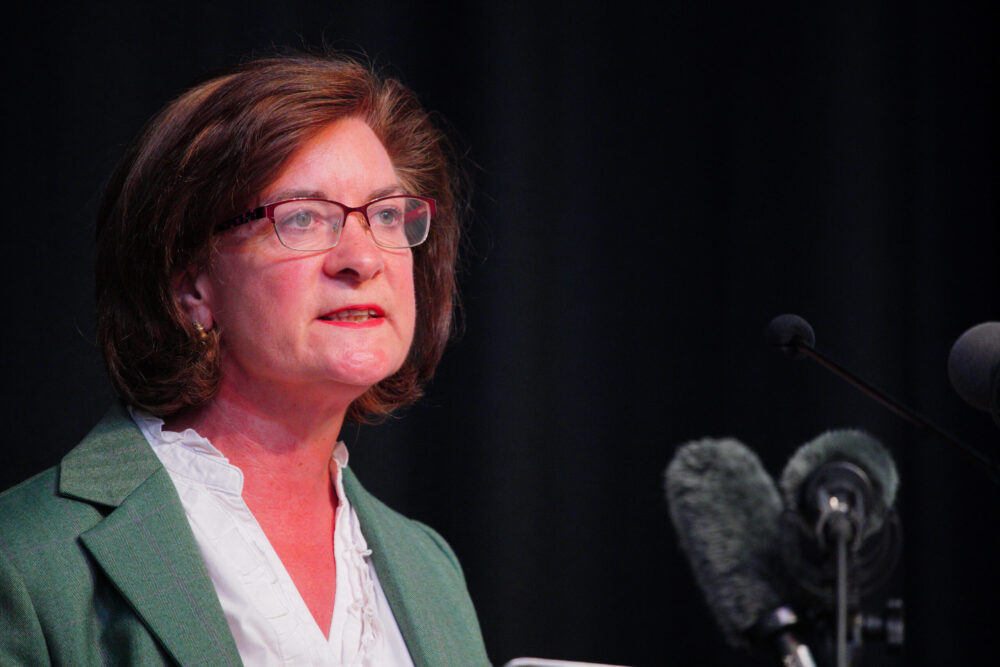
Desmond Clifford
The fall was brutal. Labour was left for dead. Think Gettysburg, Hastings and the Battle of Marathon.
Imagine Pheidippides running 26 miles, say from Merthyr to Cardiff Bay, to break the news – the Persians are defeated! Exhausted by the effort, Pheidippides drops dead a happy man. King Xerxes, surveying the Persian army at the Hellespont, weeps in despair, overcome by transitory life and earthly power.
On the Senedd’s steps, Rhun ap Iorwerth plays the Athenian. As Pericles, he addresses the metropolis, for the nation’s capital is now a Plaid Cymru city.
The citizens sing Hen Wlad fy Nhadau, like a chorus from Sophocles. Rhun will be laurelled as First Minister subject to a Senedd vote, the King’s signature and a right hand placed on the Beibl in front of a High Court judge.
But lo! who are these ragged and disparate soldiers, bloodied and weary, staggering into the capital from the smoking shires and valleys? I see Leonidas, Dan Thomas, general of the Spartans, fresh from Thermopylae and soaked in Persian sweat and tears. O Lacrimae Cambriae!
Enough! The practical impact of Labour’s defeat is huge. They governed Wales since devolution began in 1999. The country is shaped by its imprint.
Every appointment, every public board and every programme was devised under Labour’s gaze. National policy was shaped by them – schools, hospitals, forests, farms. Everyone’s life has been affected by Labour’s rule.
Shortly after Labour’s first election victory in Wales in 1922, Plaid Cymru was founded by a small group of idealists. Their original mission was to save the Welsh language. For years they toiled without success.
Over time, Plaid developed a national agenda and gradually broadened its base. They could only win Wales by replacing Labour.
Until recently that seemed as likely as the sun forgetting to set on Cardiff Bay.
Labour has appointed Ken Skates as interim leader. He’s personable and decent, and now has the gloomiest job in Welsh politics.
Keir Starmer can’t survive long; it’s surely only a matter of when and how. It would be best if he declared an intention to step down and a timetable for doing so. Gordon Brown and Harriet Harman, bizarrely appointed as advisors, aren’t going to save him (Change?).
All the same, will Gordon Brown’s “Report of the Commission on the UK’s Future” now be adopted and implemented by the UK Government?
It recommends, among other things, a radical and “irreversible” shift of power away from Westminster to the nations and regions.
If the UK Government doesn’t shift policy now that he’s on board, there’ll be some credibility issues for the widely respected Brown to address. Otherwise, what’s he playing at?
Ken Skates’ first job is to oversee enquiry into Welsh Labour’s calamity. There’s lots of talk about “listening”, so here goes.
You were in power for a long time and the ideas bucket was empty; in the end you were running on fumes. he leadership contest after Mark Drakeford’s departure was a dog’s breakfast. It led Labour into a muddy trench and bequeathed a time-bomb which detonated on 7 May.
The wider dysfunction of the Labour Party was exposed after the 2024 UK election. After an apparently stunning victory, loyal Labour voters in Wales, not unreasonably, expected to see a dividend.
They were told repeatedly by the First Minister to expect “a partnership in power”.
Eluned Morgan was unwise to place her fate, needlessly, in Keir Starmer’s hands. He gave her nothing and his Secretary of State for Anti-Wales is a catastrophe.
Can Labour hope to recover? And what does “recover” now mean?
Honest inquiry
The first challenge: is Labour even capable of honest inquiry into its defeat? If voters don’t believe that Wales is your priority, they won’t vote for you. Welsh Labour needs to be pro-Wales, or it is nothing – and nothing really is an option now.
When it created devolution Labour changed Britain; what it didn’t change was itself.
Labour needs to shift from its centralised, Stalinist mentality. The Welsh party should be autonomous, forming its own agenda for devolved affairs which should be respected by the UK party in return for the support of Welsh MPs.
Welsh MPs should sit unambiguously at the service of the Welsh Labour Party. Wales has changed for good – whether Labour can change too is an open question.
A Labour commentator accused me recently of being “obsessed” with “niche” constitutional questions.
I’m not offended but, Guys – Plaid Cymru just took all your seats! The only thing that’s “niche” right now is Welsh Labour! Someone needs to smell the coffee.
Labour’s long hegemony is over. They’ll have better elections, yes, but things will never again be like they were.
Labour talent
Labour stands in the market square now alongside the other parties competing for attention. On the plus side, the Senedd group has two new and talented members, Huw Thomas and Shav Taj, either (or both) of whom could be future leaders.
For now, they need to help draw a line under the past and develop a fresh voice for Labour.
Meanwhile, Rhun’s weekend appearance outside the Senedd in glorious sunshine, and the spontaneous national anthem, symbolised real change. This moment for Wales compares with the famous pictures of Blair arriving in Downing St in 1997.
It’s a very long time since there was any joy in Welsh politics and it’s good to see it, even for a fleeting moment. I was in Cardiff Bay for devolution’s first day of business in 1999 and there was little sense of celebration, only the sound of no hands clapping.
How will Reform position itself? I bumped into James Evans MS at the weekend, and he said he’d never even met most of his new Reform colleagues!
They’re new to the Senedd and most are new to politics. James and Laura Anne Jones are the Old Hands now and will be showing Dan Thomas where to hang his coat.
Dan’s refusal to take a call from Rhun at the weekend felt like an ungracious misstep though, in fairness, Reform and Plaid offer different accounts of what happened.
Discipline
Can Reform become a solid and coherent block, and act with discipline? If so, they have the numbers to be an effective Official Opposition representing a broad opinion – something the Conservatives never managed.
The alternative is the spectre of UKIP whose Senedd group, elected in 2016, quickly foundered into faction, flakiness and downright weirdness.
As a new party, Reform says it has tried to vet candidates to screen out miscreants and nut-jobs. Time will tell how successful this has been.
Plaid has the numbers to form a strong administration, albeit in minority form. Rhun has already struck a positive note in reaching out to the other parties.
Labour was generally pretty good at this aspect of government and leaves a legacy of co-operation styles Plaid could usefully draw from.
Leadership qualities
Government isn’t a one-man show, of course. Rhun has demonstrated exceptional leadership qualities as party leader and his election as First Minister will add gravitas and the aura of office. Will his communication and motivational skills translate into executive ability? He’ll find out soon, and so will we.
He’ll appoint his Cabinet this week. Not every minister will be a star, but he needs a core of four or five top performers in the key profile jobs.
He has a solid Senedd team who did well in opposition and who should translate competently into office. There will also be fresh talent among the sea of new and, so far, unfamiliar faces.
It’s been quite a weekend for Welsh politics. Everything’s changed; changed utterly. The parties that were first and second are now third and fourth. From a standing start, Reform UK polled strongly and is the official opposition.
Plaid Cymru’s glacial climb to power has come at last, after a hundred years. The world turns: Wales is turned upside down.
Support our Nation today
For the price of a cup of coffee a month you can help us create an independent, not-for-profit, national news service for the people of Wales, by the people of Wales.
Get more trusted Welsh news
Choose Nation.Cymru as a preferred source in Google News to see more of our journalism.



Love some of your references Des, although I’m not quite sure this is a Yeatsian moment. We shall see!
The Council Elections in May 2026 are not far away … London does not care about Labour in Wales, Starmer was clear and the SoS for Wales is as right wing as they come … It is not the real Labour Party of the people. Plaid Cymru proved efficient and effective and have a fine Team.
Sometimes things end abruptly – look at the dinosaurs, dominant one day virtually extinct the next. However, it took a while for life to establish itself again and so it will be with a new Plaid government. Things are not going to all happen overnight but if the new shoots of life are to be established this time round – the public will still need to see and feel some sort of change over the next four years if Rhun is to prevent himself becoming another Starmer.
Labour’s downfall is due to the last 25-odd years of mis-management of Wales, where every meaningful statistic is comparatively worse than pre-devolution, not Kier Starmer. This has resulted in Reform becoming the biggest party if tactical voting is accounted for. Plaid have 5-years to make a difference to working people by focussing on the basics, education and health, not trees in Africa or woke policies.
Nailed it. I’d add business to that list too. Our economy is woefully inadequate when we need it to be thriving so we have money to spend on healthcare, education etc. Good to see that Starmer looks like he’s going as obviously a proper settlement re: Barnet, HS2, Crown estates etc is also important.
I doubt you even know what woke means.
As I have told his ilk before woke is only something you do after sleeping and nothing more.
I’m not of any iIk, and it’s about time you invested in a new dictionary. My point is that Labour lost the working person’s vote by losing focus on what mattered and getting drawn into side quests.
71% didn’t vote for Reform.
Great article Des….
Very on point – a wise, witty and insightful piece, as always. 300 points to Des.
“The Welsh party should be, forming its own agenda for devolved affairs”. On a serious note, to what extent has it not been up to now. When one thinks of the renting homes Acts, the curriculum Act, the social care reform legislation the Covid Legislation (for better and worse) elections and Senedd reform (which the uk party mostly thought was a stupid idea). To what extent were those agendas formed by the UK wide party? It’s mentioned frequently but never evidenced. Hasn’t actually the main complaint over the last couple of years centred around those matters that aren’t ‘devolved affairs’.