


Wales was the biggest casualty of First Past the Post in 2024
Alberto Smith, Director of Policy and Public Affairs, Make Votes Matter
What sort of democracy do we want to live in? When people go to the polls in Wales, their vote should count. But in 2024, as in every general election under First Past the Post, millions were left unheard.
Wales, more than any other part of the UK, feels the consequences of our broken voting system. It’s a year since the 2024 general election, in which First Past the Post (FPTP) distorted the result in Wales more so than in any other area of the country.
In Wales, Labour’s share of the vote fell by four percentage points. And yet, thanks to the warped logic of FPTP, they gained nine additional seats. As a result, Labour now holds 84% of Welsh seats in Westminster, despite receiving just 37% of the vote.
Meanwhile, the Conservatives—who secured nearly one in five votes across Wales—won not a single seat.
Voters for Plaid Cymru, Reform UK and the Liberal Democrats faced similar distortions.
Unfit
This isn’t a system malfunctioning, it’s doing exactly what it is supposed to. And increasingly, people are waking up to how unfit this system is for a modern, multi-party democracy. No matter the views of the public, or the way that they choose to vote, FPTP has one job: to straightjacket our politics at any cost, even trust in democracy itself.
It’s a system that prevents pluralism and locks entire communities out of meaningful representation. Is it any wonder that the recent British Social Attitudes survey found that a record 60% of the public now back changing our voting system? How can the public trust a system that shortchanges most of them?
Wales has long recognised the dangers of FPTP — and has taken steps to improve the link between voting and representation. Representation has been part of the political conversation in Wales since the Senedd’s first election in 1999 under the Additional Member System, as well as in the latest Senedd reforms.
This latest round of reform has had its critics, and though I also identified improvements that could be made — such as open or flexible lists — when I was invited to give evidence in the Senedd committee hearings, First Past the Post has been catastrophic for Welsh voters, and no one is asking for its return.
At its heart, the Senedd reforms are being driven by an understanding that good governance is underpinned by a political system that accurately represents the views of the people. When people have more effective representation they are more likely to trust and engage with the political system that governs them. Restoring trust means when you tell people they can have a say over who represents them, you mean it.
Consensus
Restoring trust means putting consensus and long-term strategy ahead of short-term partisan point scoring. It means cooperation in the interests of the public, not confrontational parliamentary theatrics. It means when saying you’ll put country before party, you make good on that commitment.
For the first time ever, a majority of the public are in favour of parties working together in coalition, with the British Social Attitudes survey also finding that 52% of them prefer it to single party government.
This system of cooperation and collaboration is nothing new for Wales. There is a long established precedent of the need for cross-party support for legislation to be passed here, leading to a more durable policy landscape, and a government more honestly reflective of its populace.
Wales isn’t alone here either, all of our devolved chambers, in Scotland, Northern Ireland and London elect their representatives using fairer systems, And other democracies have also made the switch in their National Parliament. New Zealand, for example, abandoned FPTP in the 1990s after similar distortions — and has never looked back. So why is Westminster lagging behind?
Across the UK we have a system in which five parties are regularly polling above 10%, and in Wales, Plaid Cymru’s strength makes this a six-party system. But across both polities, no one party can come close to claiming to represent Britain — or Wales. This points at the most fundamental problem with our current politics. No one group can say they speak for Britain, so why do we have a voting system that allows them to?
Distorted politics
The way we elect our politicians really matters. Getting it wrong matters. The cost of distorted politics is distorted outcomes. It’s being led by values and policies out of step with the broad views of our communities. It’s locking out voices that should be shaping the future of our country. It’s undermining the already fragile trust in our institutions.
This distortion doesn’t always benefit the same party. In past Westminster elections, historically it’s benefited the Conservatives—turning minority support into huge majorities. However in 2024, it handed Labour a landslide victory on 34% of the vote. Perhaps the next beneficiary will be a new rising force, or Reform UK, who some polls say could take total control on less than 30% of the vote. It’s simple: no one should be able to take total power on a minority of public support.
Under FPTP, whichever party is the winner, the voter is always the loser. We need to recentre this debate away from the narrative of the horse race in Westminster, and back towards those it is meant to serve.
To do that, we need a new social contract, with Proportional Representation at the centre of it. First Past the Post disenfranchises more election participants than it enfranchises, and it stands in the way of fixing trust in politics. We deserve better. We deserve a politics in which all voices are heard. We deserve for all votes to matter.
The public knows that FPTP is busted. It’s time Westminster caught up.
Support our Nation today
For the price of a cup of coffee a month you can help us create an independent, not-for-profit, national news service for the people of Wales, by the people of Wales.



The bitter lesson from next year might be that proportionality isn’t enough, if voters feel just as powerless with a single nontransferable vote and see the party lists as a stitch-up.
Thats the catch, FPTP or secretly selected lists.
It needs to be STV.
In the 2024 UK General Election Labour gained 33.7% of the overall vote which gave the party 63.4% of the 650 MPs – a ratio of almost 2 – 1. In Wales Labour gained 37% of the vote which yielded 84% of Wales’ 32 MPs – a ratio of well over 2 – 1. These disparities are so large that they have surely become indefensible even for the Labour and Tory parties who have unfairly benefited from the unfair FPTP voting system for over 100 years. Changing it to the fairest voting system available – the “Single Transferable Vote” –… Read more »
The system needs to change.
Vote for indy Wales, it’s the only way it will change
Someone down voted, but you’re not wrong. The UK needs to Federalize and actually devolve significant powers and rights to the newly created Federal Monarchy (no I don’t propose giving up the crown).
The greatest abuse of first past the post was the Brexit vote where a minority of just over 1/3 of the electorate was able to effect a major constitutional change. In most countries an absolute majority in excess of 2/3 is required for such a change. More strange is the way it has been marketed as a massive majority in favour whereas in reality 2/3 either voted against or expressed no opinion (about 1/2 or each). I suppose one advantage is that it got rid of Cameron.
It’s a very good point. I’m amazed Cameron approached the election in the way he did. Overconfidence?
But by the same token, MSs might be elected next year with the support of 5-7% of the electorate in their constituency.
Especially when some of these MSs would have been placed high up the party list with less 20 votes from their local party in some cases!
In serious grownup states constitutional change indeed requires a super majority.
Very interesting article. While moving from FPTP to a PR system can enhance representation and reduce wasted votes, any transition should be approached with caution. In my view, the UK could do with a period of political stability. From my experience abroad, proportional systems almost always lead to coalition governments, which can also introduce political instability. In fact, I have often spoken with colleagues abroad who lament PR and are actually jealous of the UK FPTP system, as it leads to slower decision-making, difficulties in holding parties accountable and months of negotiations before governmetns are even formed. FPTP allows someone… Read more »
I agree. I get the argument for proportional representation; but the closed list system is worse than FPTP for me. If we get a Reform government in Wales next year or a paralysed Senedd with them as the largest party, I hope the purists will be happy. I won’t be. The assumption, for example, that politicians will put short-term partisan points to one side in favour of long-term strategy is frankly naive.
In regards to voting reform i oscillate between jury selection or Roman voting. If we go government by Jury selection that might be give the civil service too much power but normal random people will be in charge. If we go Roman style where we vote based on wealth and if the rich voters decide on a supermajority then the poor aren’t needed to vote, it would at least be open, honest and transparent. Depending how we count wealth or tax paid the billionaires wouldn’t have a vote because all their wealth doesn’t belong” to them but a trust. Then… Read more »
The argument justifying FPTP is that PR lets ‘extremists in through the back door’. However if anyone has followed politics over the last decade or so extremists have infiltrated mainstream parties. The Tories were taken over by hardliners who should have been in UKIP all along which led to Boris Johnson purging all the moderates, and the Republicans is the US have been taken over by MAGA Trump cultists. The AFD in Germany may have won 30% of the vote but that will never be enough for them to control the Bundestag. Compare that to Westminster where Reform could win… Read more »
I would argue that FPTP has let in plenty of extremists. Thatcherism, for example.
Westminster is the biggest waste of money for Wales. We vote to have no voice, no say and money stolen from us
It’s a waste of money for everyone. £10m for a new front door on the Lords that doesn’t even work. £22bn+++ to update the Palace and it still won’t have a modern voting system.
Ever since seeing CGP’s video on it and digging a little deeper into it, nothing has been able to convince me that a Multi-Member Constituency with STV ranked choice wouldn’t be the best possible system of voting.
It better represents the actual voting intentions of the public by political leaning, while retaining an element of local representation (like FPTP) and the ability for a popular individual candidate to be selected in their constituency (unlike closed lists).
Basically the system we used for EU elections.
There ‘are’ some disadvantages with STV, for example it’s harder to hold a specific rep accountable. It also reduces the connection they have with the constituency or makes the constituency very large…
Those disadvantages apply to multi-member constituencies, not STV. Why we call STV with one winner AV I don’t know because it confuses the voting experience with the structure of the constituency and we should be promoting “preference voting” because that’s what empowers voters.
FPTP is pretty much rotten, it was rotten to begin with, it remained rotten and what we have today is also rotten. There are millions of people in England and Wales and it is frankly absurd to believe you could represent anywhere near the sheer breadth of public opinion, never mind in a race where the victor doesn’t even have to get 30% of the vote to win as long as they get more votes than the next ‘popular’ guy. Vulnerable to gerrymandering, the voting system is routinely used as a political football and it just make every unhappy… the… Read more »
Why is a government made up of representatives that the majority of voters don’t choose a good democratic outcome?
If Reform became the largest party but with just 30% of the vote that means 70% did not vote for them.
Trust a Nu New Labour 0.2 supporter to support the current system.
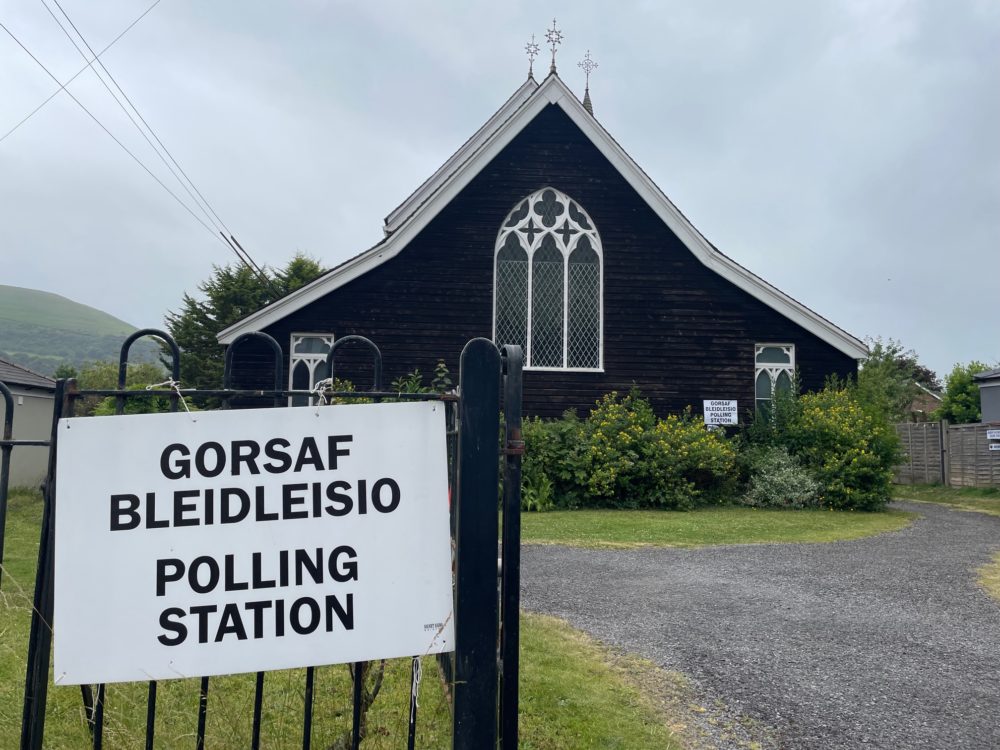
Very off topic, but does anyone know where the photo at the top of the article was taken?
A very beautiful building / church(?)
Hiya! It’s Christchurch on North Street, Abergavenny. Was formerly clad with corrugated tin which I think would have been much more interesting. Very Nordic looking isn’t it. https://abergavenny.church/churches/christchurch-north-street/
Diolch.