


Waymo Trouble Ahead
Ben Wildsmith
I had a quintessential 2025 moment yesterday. My car was in for its MOT, so when it was ready to collect, I called a taxi.
The driver was a friendly guy who had the conversational skills that mark out all good cabbies. We started with the weather, obviously that’s the law, but were soon on to crippling rises in motor insurance and how difficult it is for working drones like he and I to keep up with the cost of living.
We agreed, though, that we’re lucky to have jobs, however tight things are.
We’d both seen recent interviews with experts on AI that suggested mass unemployment could be round the corner as everyone from accountants to music producers are replaced by a technology that trains itself and never goes on the sick.
‘In three or four years, there’ll be driverless taxis,’ my new friend worried. ‘I’ve done this for years, God knows what I’ll do.’
Radio 4
Wishing him luck, I picked up my jalopy and turned on the radio – Radio 4 so as to maximise my rage for these columns.
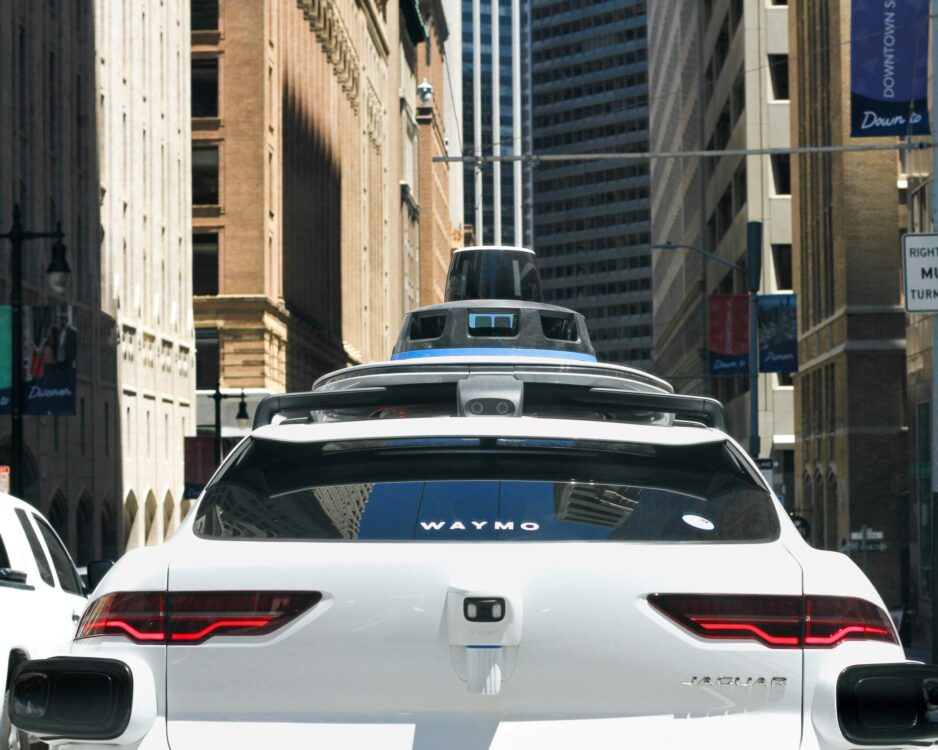
The very first item on the news announced that the American subsidiary of Google, Waymo, would be launching in London next year. So much for my pal’s hopes of three- or four-years’ grace.
A representative of the company was on the programme to field questions, all of which related to safety. There was no need to worry, he assured the presenter. For the first six months the cars would be supervised by a driver as they collected real-world conditions on the roads and fed it into the AI model that would guide the vehicle once drivers were dispensed with.
Well, that’s a relief, isn’t it? Waymo might be eliminating an entire sector of UK employment, but they’ll try not to kill their customers in the process.
As our politics sinks into toxic rancour, essentially reduced to a choice between scapegoats, we are facing monumental change that is proceeding with little or no democratic input.
Ethical
When did you last hear a UK politician engage with the ethical and social issues thrown up by the onset of artificial intelligence?
As they squabble over who can appear toughest on relatively small numbers of undocumented immigrants, foreign companies are preparing to unleash unprecedented job cuts without a word of dissent.
For ordinary people, who can’t afford the fetishised, boutique experiences beloved of the wealthy, activities like shopping and eating out are becoming dehumanised and animalistic.
We queue up to scan our own groceries, filmed from all angles, before being released from the shop’s automatic gates once our purchases have been verified. Our clothes arrive without us trying them on, hurled into the garden by overworked delivery drivers who will then pick them up when they don’t fit.
How long until they are replaced? We bark our lunch requests into a machine before picking up the food at the next window and eating it in silence, alone in the car park.
It doesn’t sound much like progress to me, and I can find nobody in politics who seems even remotely concerned.
Keir Starmer, of course, is convinced that siting data centres in the UK to serve the needs of AI will save our economy. As with absolutely everything the Prime Minister supports, this is short-term thinking that lacks any ethical framework on which we can rely to mitigate societal harm.
Unemployment
Automation and AI are striking at the heart of how we value ourselves as human beings. The social cost of unemployment that wrecked industrial communities in the 1980s is now coming for everyone, and unless democratic control is imposed over the owners of this technology, we will be entirely at their mercy.
Astonishingly, Stephen Kinnock, the Minister for Care (!), announced yesterday that specialist job advisers will be deployed to GP surgeries to ‘help’ the sick and disabled back into work.
On the precipice of work becoming obsolete for much of the population, the intellectual pygmies who govern us are dreaming up ways to harass us into jobs when we are unwell. Ask Chat GPT how well that’s likely to go. You won’t be discussing it with your cabbie for much longer.
Support our Nation today
For the price of a cup of coffee a month you can help us create an independent, not-for-profit, national news service for the people of Wales, by the people of Wales.



To give some credit to Alphabet, Waymo is demonstrably safer than some other technologies as it’s based on LiDAR and radar that can see through many obstacles or hazards (think mirages, fog and such).
I can’t see Waymo being everywhere all at once, but it will begin to roll out as data is collected.
Your piece reminds me of a time when the leisure industry was on the rise and the talk was that this was going to be the new industry to save Britain because everyone was going to have more leisure time so there would be a rise in the number of jobs involved with everyone having more spare time. I couldn’t work out how we could earn more money by doing less work so that we’d have more time to spend money on leisure activities. But when you think about it, it ‘sort of’ has happened. But it seems to have… Read more »
With respect, Paul, the ‘huge national debt’ has not come about because of the rise of the leisure industry. The so-called national debt is merely the accumulation of annual deficits in the current account, usually as budgeted by the government. In 80-odd (sic) years of otherwise so pious Tory governments, 76 were in deficit, 4 in surplus… On the other side of the ledger, there is a credit of course (double column accounting) which plays a major role in the economy. This is not widely understood but provides the liquidity that our businesses and communities need to keep operating. That… Read more »
Bravo!
I agree. I wasn’t meaning that the leisure industry was responsible for our national debt. But the principle of being able to work less for more. I do think that nowadays credit is more acceptable than it was (not that long ago ) when we were encouraged to ‘neither a borrower nor a a lender be’ which I’m sure has been brought about by the ‘other side of the ledger’.
Artificial Intelligence has benefits, but only if there is an existing process to follow.
Strong growth may slow https://www.bbc.co.uk/news/articles/cz69qy760weo.amp
I remember the millenium bug / BlackBerry / Lastminute.com over-subscribed launch, the list goes on and on…
Labour Party wants to renationalise England’s railway – so Department for Transport focuses on driverless cars, new train franchises, a new clock https://www.theguardian.com/uk-news/2025/oct/16/great-british-railways-clock-launches-london-bridge HS2, more and more vanity projects; while nationalisation is delayed!!!
“for working drones like he and I”. Why? You wouldn’t say “for working drones like he”: you’d say “him”. You wouldn’t say “for working drones like I”; you’d say “me”. So why change from the correct accusative/dative to an incorrect nominative when there are two people joined by “and”? Not to pick on Ben. You hear all the time, from people with as much education as you can reasonably or even unreasonably get, things like “He gave it to my partner and I” when you’d never hear “He gave it to I”. I recall when I was very young we… Read more »
Beth am beidio plismona iaith pobl?
Nice article Ben. Who would have thought that Stephen Kinnock would have gone over to the dark side. If he really cared for disabled and less able people, he would reopen Remploy factories.
Everything here is spot-on, but we all also need to be aware of the enormously destructive environmental effect of these power-hungry data centres – they use a tremendous amount of energy and water
Given the abysmal standards of driving that you see on many ‘Light Commercials’ I suggest that the sooner some sort of intelligence replaces the people currently driving them the better