

We say we want Welsh place names… so why aren’t we using them?
Stephen Rule (Doctor Cymraeg)
There’s a certain type of post that does the rounds on social media every few months; along the lines of: “We should be using Welsh place-names in Wales.”
And… yes. We should. But I always find myself wondering the same thing. Who exactly are we waiting for? Because the truth, for me, is slightly uncomfortable.
For most of us, most of the time, nothing is actually stopping us. If you live in Wales and you believe in using Welsh place-names… you can just use them. On your letters. On your parcels. On your delivery apps. Websites, invoices, official forms…
No law is stopping you. No system is rejecting you. No one is confiscating your post because you wrote Caerdydd instead of Cardiff.
And yet… we don’t. Or at least, not consistently.
We talk about Welsh place-names like they’re something that needs to be “restored” or “given back” to us, as if they’re locked away somewhere, waiting for permission. But many of them aren’t locked away at all. We’ve just… stopped using them.
Now, to be clear, this isn’t about pretending the English names don’t exist.
Places like Cardiff or Wrexham didn’t appear out of nowhere. They’re part of the historical layering of Wales. Languages have met, overlapped, and left their marks.
For better or worse, those names are part of our story now. But preserving them doesn’t mean defaulting to them. It doesn’t mean they have to be the names we use in our own lives, in our own writing, in our own day-to-day choices.
Because the moment you switch from Cardiff to Caerdydd, or from Wrexham to Wrecsam, nothing breaks. The letter still arrives. The parcel still turns up. The world keeps spinning.
Quick side note on Wrecsam seeing as it’s the place I first saw daylight: Yes, it comes from an English word, but it was Wryhtel[hamm], not Wrexham! At some point, people decided to call it Wrexham… and we are just as entitled now to start calling it Wrecsam IF WE CHOOSE TO.
It doesn’t matter where it came from. It’s where we want to take it into the future. And if that’s a Welshified version of a modern English version of an Old English name… I’m here for it! But I digress…
There’s also a part that we don’t really like to admit. If we can’t be bothered to click “enter address manually” when a website auto-fills the English version… This probably isn’t for you.
Because rather than waiting for systems to change, this is about whether you’re willing to make the smallest possible decision, over and over again, until it becomes normal.
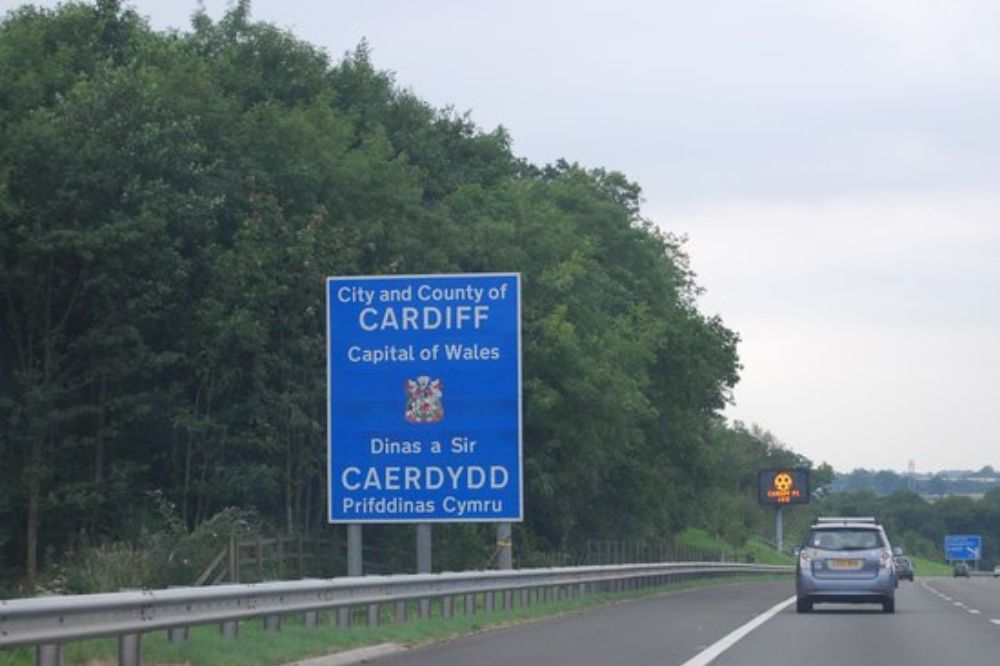
There’s another slightly awkward truth as well. If you go on Wikipædia and look up places like Caerdydd or Wrecsam, you’ll notice something. Outside of Wales, almost every language in the world uses the English forms. “Cardiff.” “Wrexham.” Etc.
The only languages that consistently use the Welsh names? The Celtic ones. Which means… if we’re not using them, there aren’t many others who will either.
And even now, as I’m writing this, I can feel it happening. Autocomplete offers me “Wrexham.” Clean. Easy. Done. Wrexham doesn’t even take an extra second. It takes a choice. And that choice… is where our language lives or dies.
And you don’t have to be fluent in Welsh to be part of this. In fact, choosing the place-names we gave ourselves over the English ones is one of the simplest ways of supporting the language. You don’t need ‘perfect grammar.’ You don’t need confidence speaking. You don’t need to “be a Welsh speaker”. You just need to choose.
Because every time you write Caerdydd instead of Cardiff, or Abertawe instead of Swansea, you’re putting Welsh back into the public space. You’re saying: this still exists. We’re still here.
This isn’t really about policy. It’s about habit. It’s about what we type without thinking. What we default to. What we feel is “normal”.
And habits don’t change because of posts. They change because of use. Quiet, boring, everyday use. Not as a statement. Not as a performance. Just… as the name.
Because if we say we support Welsh place-names, but only use them in theory or online or when it feels appropriate, then it’s not really a movement. It’s just branding.
Find out more about Doctor Cymraeg’s books and lessons via his website, or follow him on X and Instagram.
Support our Nation today
For the price of a cup of coffee a month you can help us create an independent, not-for-profit, national news service for the people of Wales, by the people of Wales.
Get more trusted Welsh news
Choose Nation.Cymru as a preferred source in Google News to see more of our journalism.



I think the only way to help people to only use the Cymraeg placenames is to do away with bi-lingual signs and only use the original and of course the correct ones. It will probably take a generation or maybe two to return to the time before a foreign language was forced upon our ancestors. Only we can do this. Let’s at least try and pull together for a change and correct this misjustice. Let’s pretend it’s a rugby match against England.
What are the “originals” tough? For example; Prestatyn, Mostyn and Flint all derive from (Old) English roots, as does Wrexham. On the reverse side of this place names in England such as Crewe are of old Welsh origin, as ultimately what’s now Welsh is the native language of England. Ironically there are numerous Welsh village names in use in Shropshire with no English equivalent which have just carried on in use by locals for centuries. I personally feel that place names are abstract words to most people, the presence of a mountain called Pen Y Ghent doesn’t make the locals… Read more »
Diolch am eich cyfraniad. Thank you for your contribution. Any form of educating us to revert to our native language is a plus. You are right about placenames in England being in Cymraeg. Unfortunately a large proportion of them have been corrupted to make it simple for the English tongue to manage. One example is the much-used ‘v’ instead of ‘f’. It’s strange how so many of our cross-border neighbours have so many problems with other countries’ languages and are rudely surprised when someone abroad cannot speak English.
Together with the huge financial costs, just to please the minority!
The only Minority is The Anti Welsh Language Minority
Yes, usage is the key. Llandudoch is known as St. Dogs, not even St. Dogmaels!
Agree, there’s nothing stopping us from saying Caerdydd or Abertawe and there’s also nothing wrong with saying Cardiff or Swansea when speaking English either. Historic bilingual names like Bridgend/Penybont are fine – we just need push back against daft Anglicisations like ‘Lake Australia’.
I always put Caerdydd on my address.
Sadly, the legacy of the “Welsh Not” still lingers on, even among those fortunate enough to speak our precious language, many of whom remain self‑conscious about using Welsh place‑names, preferring instead their English counterparts or shortened, slang versions of the original Welsh. We often forget that our Welsh place‑names are our linguistic link to the past, where the land itself tells a story of a time likely recorded orally during the Iron Age, the Bronze Age, or earlier…. Personally, I want to see the restoration of Welsh place‑names and their everyday use. Our capital, Cardiff, should return to its original… Read more »
And while we’re at it – Cymru is my gwlad: not Wales.
ie ie ie, yes yes yes …. Cymru am byth.
Yes, agreed. I also wish that the derogatory term Welsh, would also be consigned to the history books. I, you, we are not foreigners in our own native land. #Cymry #Cymro #Cymraes
I recently took a bus from Hwlffordd to Llangwm, and was told off by the driver ( a local, judging by his accent) for giving the Cymraeg pronunciation of that village name. He then trotted out the “little england beyond Wales” cliche, and seemed desperately proud of that. Hopefully youngsters in Sir Benfro will embrace their identity as Cymry in the future, but all I can say for now is, does dim moddion yn erbyn twpdra.
I once had a similar response when asking for directions from a ‘local’ for Marloes beach.
Ignorance is bliss and he sounds blissfully ignorant.
The reason we have Anglicised or English equivalents in the first place is because the English are proud monoglots and mangle everything outside a small subset of phonics. We can insist on Snowdon to Yr Wyddfa and Brecon Beacons to Bannau Brycheiniog, but it’s going to be car crash. BTW I am very much in favour of it, but poor Johnny Sais is going to be even more indignant. Tourists won’t care too much. The in-migrants and their anti-Welsh “Welsh” lackeys will be all over this.
Sure, those who are against it will be hostile to change; you’ll always have haters. But, like most changes, where there’s initial fear, acceptance will follow.
The article is written in English. The commenters are all replying in English. We all make our own choices, even when they clearly betray our stated ambition.
If I wrote a comment in Cymraeg how many of the loyal “only proud of being Welsh on international rugby days” would understand it? So until things change drastically we have to write in a “foreign language” for a large number of Cymry to understand. How embarrassing is that eh? Farage got away with saying that about the oldest language in Britain.
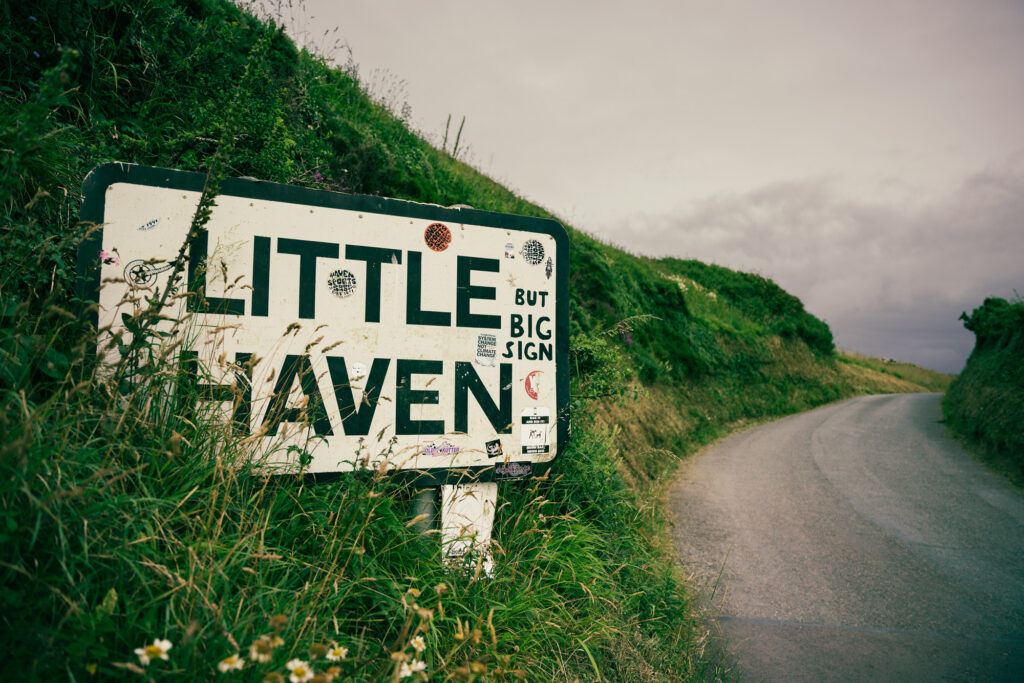
But some places have never had or been called by a Welsh name. Take your picture of little haven in Pembrokeshire. The lower half of the county in which Little Haven is was historically Flemmish, remained loyal to the crown during the Welsh revolt and as such you find almost no places with Welsh names. By right and because of the history these places should have French names before Welsh. The whole thing is a collosal waste of money which should be put towards improving a number of the UN’s human development markers, of which Wales are near the bottom… Read more »
Yes, we could save millions if all placename signs in Cymru were only in one language …… Cymraeg!!
There are loads of Welsh place names in southern Pembrokeshire! Not least of which is Penfro, the one that gave the whole county its name! Yes, Flemings (whose language was at the time mutually intelligible with English) settled the area on the orders of the English king many hundreds of years ago. It’s pretty much the only non-border area that has an English cultural tradition that dates back more than two centuries. Even so, a good chunk of the place names are Welsh, including Tenby (Dinbych) and Manorbier (Maenorbŷr). It’s all part of a rich Welsh cultural tapestry.
What were those places named before the Flemish arrived?
Truth is, far more Welsh people are English-speaking monolinguals than Welsh speakers. Welsh speakers demanding they start using Caerdydd and Abertawe when it is not natural to them is no better than what was done to Welsh speakers in the past.
The fact our nation is bilingual is something to be cherished, not derided.
Nobody is stopping you using Casnewydd and Wrecsam. Signs are bilingual. As they should be in a bilingual society.
Basically, your argument is that two wrongs don’t make a right, and that Wales is a bilingual nation — something to be cherished, not derided. All of that sounds good in principle. Take the energy company OVO, for example. It ended its bilingual services and told customers to use Google Translate instead. Then there are retailers such as Sainsbury’s, M&S, Waitrose, Asda, and Iceland, whose Wrexham headquarters lack Welsh signage, self‑service machines, and Welsh‑language communication. And yes, before you say it — private companies aren’t legally obliged to use Welsh. But they’re certainly happy to take the money of Welsh… Read more »
“this is about whether you’re willing to make the smallest possible decision, over and over again, until it becomes normal”
This is it in a nutshell
Welsh should be taught in English schools.
The very many undignified, so-called, “English” names of places, rivers, mountains, etc, in Wales are merely brazenly anglicised corruptions of the original Welsh names imposed by the English establishment centuries ago. For example Rhuthun has been anglicised to Ruthin, Rhaeadr to Rhayader, Tywi to Towy, Cydweli (that has meaning) to Kidwelly (that doesn’t) etc, etc. The next Welsh Government should produce and implement a plan to eliminate them over the coming years.
If BBC ITV Wales are now confidently using the proper Welsh names for Brecon and Snowdon surely they can now start saying Ynys Mon instead of Anglesey. and gradually move on to trickier names like Ceredigion instead of Cardigan (English for a jumper) We will get there in the end.
How about starting with changing the English names that genuinely cause confusion because there’s two or more of them? E.g.
Newport (Sir Benfro) > Trefdraeth
Newport (Gwent) > Casnewydd
New Quay (Ceredigion) > Cei Newydd
Yes. But Trefdraeth, Sir Benfro, should be ‘Tydrâth’. That’s the local usage. Plus it means we’re not in Môn
Well they’re both better than Newport
Seeing and hearing more Cymraeg normalises and encourages more use of the language, but who sees the address on a letter or package is limited to the postie or delivery guy -and hopefully the addressee
I’ve been told that the name Cyncoed for the area of Caerdydd is a Cymricisation of the Norman burgess Adam Kingot who once ruled the land there.