


Welsh Government’s rollover budget could harm local communities
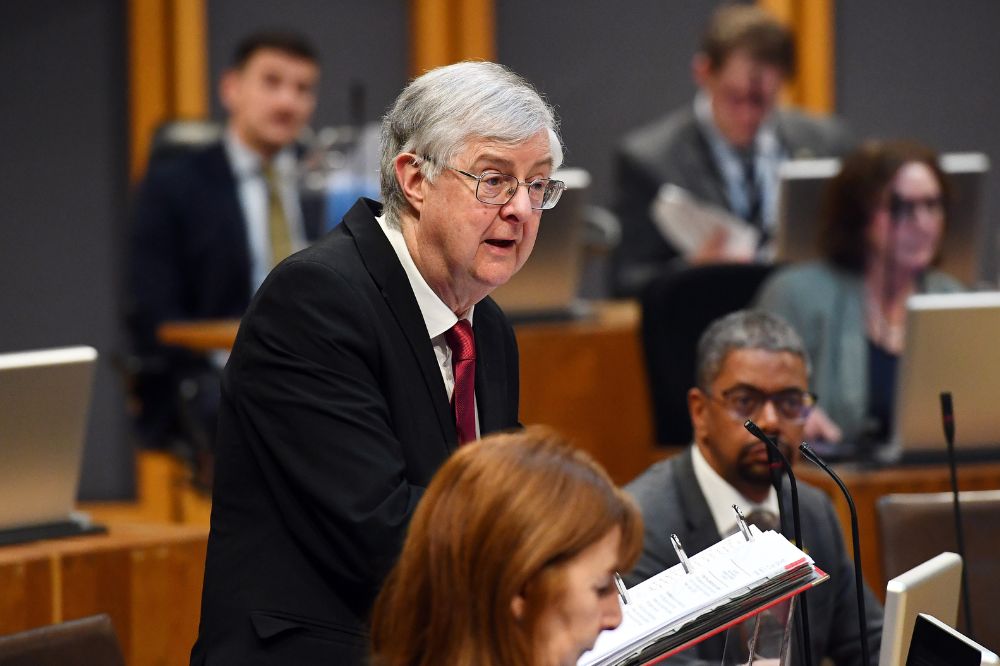
Mike Hedges – Member of the Senedd for Swansea East
I agree with the Cabinet Secretary for Finance’s view that setting a budget that is effectively a roll over budget is a sensible thing to do in the final year of the Senedd.
As currently suggested however, a rollover budget would mean that councils would have to prepare for a combination of very high council tax rises, cuts to services and/or job reductions to avoid significant budget shortfalls, which could harm our local communities.
A roll over budget must consider the budgetary pressures on local authorities and not be a simplistic mathematical exercise.
The Senedd’s finance committee have received evidence from witnesses about the differential rates at which inflation makes an impact on their budgets.
The Cabinet Secretary for Finance, Mark Drakeford, said when introducing the draft budget that he was particularly alert to the special circumstances of local government because of the legislative constraints they are under in setting their own budgets or more specifically the council tax for next year.
It needs to be the inflationary pressures on local government not CPI that generates the increase. Local government in Wales has many financial pressures outside its control.
Education is the major area of expenditure and teacher’s pay increases need to be met in full. Education is the key to moving children out of poverty.
It’s my opinion that there a three major financial pressures on local government.
The estimated pressure across local government services for 2025-26 is £559m. Social services alone account for 45% of these anticipated pressures for the next year, equating to a £106m additional overspend.
Key
The provision of social care is critical to the health and care system operating effectively and plays a key role in achieving positive health outcomes.
Investment in social care leads directly to reducing pressure on the NHS, both in terms of keeping people out of hospital and helping people to return home at the appropriate time, reducing delayed transfers of care
Wales has an ageing population, and people are living for longer with complex care needs and dementia, this will continue to increase pressure on care services.
Councils in Wales are continuing to deliver support for children and young people with additional learning needs but rising demand and costs are making it harder to sustain.
Figures from the Welsh Local Government Association show that spending on additional learning needs and early years support is expected to rise by around 6 per cent in 2026/27, which amounts to an increase of around £46 million across Wales. Individual councils predict increases of up to 14 per cent.
Spending
A record number of households in Wales are living in temporary accommodation, as rising demand for homelessness support has driven council spending on homelessness up more than 600% over the past decade.
The amount of money that councils spend on dealing with homelessness has jumped from around £13 million in 2016-17 to £101 million in 2025-26, an increase that has far outpaced local government funding and forced councils to divert money from other vital services.
These are areas which local government has very little ability to reduce the demand.
A simple look at Swansea Council’s 2024/25 budget and rolling it forward considering estimates on the above. I estimate a roll over standstill budget for local government needs an increase of between 5%.
What has happened in recent years is that council tax has increased whilst services have reduced, and council taxpayers have had a variety of reactions varying between anger and confusion.
This is because council tax pays for less than a quarter of the total council services with the rest being mainly funded by the rate support grant and the Councils’ share of business rates both provided by the Welsh Government.
The percentage increase in Welsh Government help for each local authority is debated regularly but the actual amount per person varies substantially.
We know that Monmouthshire has the largest number of properties in band D and above whilst Blaenau Gwent has over half its properties in band A consequently Monmouthshire has the leas and Blaenau Gwent the most financial support from the Welsh government.
There are two things I know about the grant being provided. Firstly, it is mainly based upon a council’s ability to raise money from council tax and relative population change.
Minor changes to the formula can have major implications. The highways part of the formula was fifty-two% population and 48% road length.
It was changed to 50% of each which led to millions of pounds moved from urban areas to rural areas.
We all need local government to be adequately funded to protect the services that all the public rely on.
Support our Nation today
For the price of a cup of coffee a month you can help us create an independent, not-for-profit, national news service for the people of Wales, by the people of Wales.



Why does ‘homelessness’ cost the Welsh budget, via local councils, £101 million?
Rent and benefits is paid for by DWP not the Welsh Government. There IS a problem of people claiming to be homeless who arrive in Wales to partake in third sector provision and to stop this there needs to be strict application of the 5yr residency rule before a local authority shoulders the burden and for those that are actually Welsh to be provided with council housing, with the privatised (by Labour) housing associations bought into line.
These are the main pressures on local authority budgets; but what the author fails to mention is that Welsh Labour promised to reform social care, council tax and council structures; but delivered none of it. Meanwhile, they fail to pass on Barnett funding for education. The simple truth is that more and more money is pumped into the NHS (again with no meaningful reform and thus no great effect) and there is very little left for anything else.