

Welsh Marches: A colonial term Wales should rethink embracing
Stephen Price
In news this week, Powys County Council is helping to lead a major cross-border initiative to boost tourism across “the Marches”, as part of a new strategy aimed at revitalising the region’s visitor economy over the next five years.
The Marches Forward Partnership (MFP), which brings together councils from Powys, Shropshire, Herefordshire and Monmouthshire, has commissioned a feasibility study outlining a series of proposals designed to improve access, promote heritage and highlight local food and landscapes.
Prepared by Rieth Consulting, the study sets out a roadmap to strengthen the Marches’ identity and attract more visitors to an area frequently praised for its scenery and tranquillity but often overlooked by tourists.
According to MFP, consumer research carried out as part of the work found that although respondents described “the region” as “beautiful, peaceful, relaxing, scenic, quiet, green, historic, rural, interesting and natural”, half had never visited.
Analysts say the findings point to the need for more targeted marketing, better transport links and enhanced visitor experiences.
Key proposals include a coordinated marketing campaign under the banner “Marketing the Marches” to increase the region’s visibility, using cross-border branding and data-driven promotion.
Plans under the “Walking with Offa / March the Marches” theme focus on conserving Offa’s Dyke, improving surrounding paths and enhancing access to walking trails.
Other suggested projects aim to improve sustainable transport options, making it easier to reach countryside destinations without a car. A lifestyle-focused campaign — “Pure Marches” — would celebrate local produce and gentle walking routes, while “The Marches Story” proposes digital and physical interpretation of the area’s historical assets. The study also recommends better coordination of existing festivals and events through a unified Marches Festival branding strategy.
Tourism potential
Cllr Glyn Preston, Powys County Council’s Cabinet Member for a More Prosperous Powys, said the proposals demonstrate the benefits of working collaboratively across administrative boundaries.
“Enhancing, improving and marketing the Marches is a vital step forward in unlocking the tourism potential of the region,” he said. “The study offers a clear and ambitious vision for how we can work together across borders to create a thriving visitor economy that benefits our communities, protects our landscapes, and celebrates our shared heritage. I’m proud that Powys is leading on this work and look forward to seeing these ideas come to life.”
The feasibility study will be discussed at a dedicated Marches Forward Partnership workshop later this month.
Back in May, Monmouthshire’s Cabinet member Sara Burch said she thought the partnership is a “real opportunity” for the food economy and tourism.
Monmouthshire’s cabinet also agreed to a partnership board, from the member councils intended as a “light touch governance arrangement” and to an evaluation of the partnership’s progress after 12 months.
The four councils have contributed around £100,000 each with Monmouthshire’s contribution to date just over £95,000 which it took from its allocation from the UK Government Shared Prosperity Fund.
My issue, you ask?
In a nutshell, I have a few issues, but they can chiefly be summed up as:
- Should we in Wales be comfortable with the term “Marches”?
And
- Why are Welsh councils spending our time and money looking east, when they could be looking west?
To the first point.. I, for my sins, live in Monmouthshire, an exile from the county council next door, Blaenau Gwent, thanks to a “Council Swap” my parents had before I joined a now-closed village primary school.
Having lived in what is now Monmouthshire since the age of four, my close-to-40-years as a resident have witnessed not one local person refer to themselves as living in “The Marches”.

What I have, and continue to witness, however, is a denial of Monmouthshire’s distinct Welshness – from overbuilding to accommodate the number of incomers to Wales choosing Monmouthshire as a nice “not quite Welsh” place to settle, close to Bristol and a run to London.
News reports a few years ago jumped on an estate agent’s claims that the county is “Wales-lite”, and anecdotally, many who make the move do so, to quote an English staff member to my sister in Waitrose, Llanfoist as “Monmouthshire isn’t really Wales…”
A few years ago, a now-closed ‘Marches Deli’ popped up in Abergavenny’s charming Nevill Street, which now has its sole branch in Monmouth.
Seeing its signage soon after opening felt alien in Y Fenni, although perhaps less-so in the much more Anglicised Monmouth with its criss-crossing of the border a much more daily occurrence for the locals.
The Welsh Marches is described as “an imprecisely defined area along the border between England and Wales in the United Kingdom”. The precise meaning of the term has varied at different periods.
The English term Welsh March (in Medieval Latin Marchia Walliae) was originally used in the Middle Ages to denote the marches “between England and the Principality of Wales”, in which Marcher lords had specific rights, exercised to some extent independently of the king of England.
In modern usage, “the Marches” is often used to describe those English counties which lie along the border with Wales, particularly Shropshire and Herefordshire, and sometimes adjoining areas of Wales. However, at one time the Marches included all of the historic counties of Cheshire, Shropshire, Herefordshire, Worcestershire and Gloucestershire.
Now call me a pedant, but note the “between” England and Wales. To label a place in Wales “The Marches” therefore, is, to my mind, to deny its place in Wales.
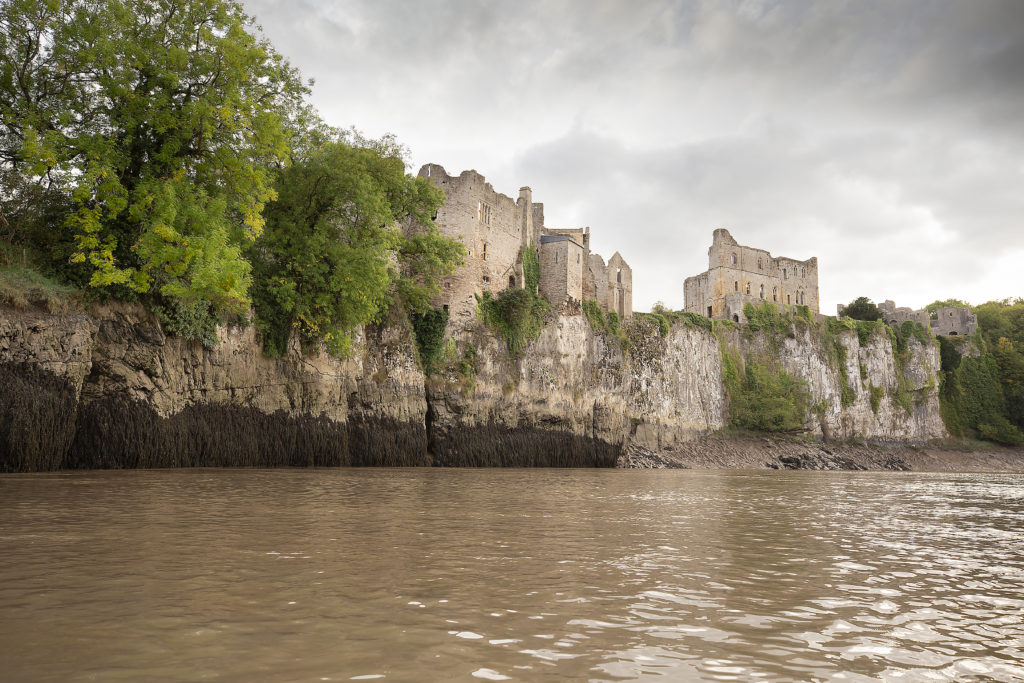
Of course, the border has shifted numerous times, and places within Wales now came under the term “Marches” – Chepstow Castle being an obvious reminder.
I know plenty of people from Herefordshire, and I see many, particularly in the arts that side of the border affectionately using the term “Marches” to denote where they live, or “Welsh borders” and the like. To them, it has a poetic air, and adds an exotic touch to their Englishness, a nice touch of branding for their wares. Welsh folk even within an inch of the border, on the other hand, are proudly and fully within Wales.
So where do our “border” councils in Monmouthshire and Powys, with many of those representing us reflecting the cosmopolitan Wales-lite of today, get off on bringing the term into use today?
No doubt it doesn’t matter to most of the commonfolk on either side of the border, and it’s just a nice term for everyone to unite behind, but to me it’s more than a loaded term.
Immediately after the Norman Conquest, King William of England installed three of his most trusted confidants, Hugh d’Avranches, Roger de Montgomerie, and William FitzOsbern, as Earls of Chester, Shrewsbury and Hereford respectively, with responsibilities for containing and subduing the Welsh. The process took a century and was never permanently effective.
The term “March of Wales” was first used in the Domesday Book of 1086. Over the next four centuries, Norman lords established mostly small marcher lordships between the Dee and Severn, and further west. Military adventurers went to Wales from Normandy and elsewhere and after raiding an area of Wales, then fortified it and granted land to some of their supporters.
Are we really supposed to embrace that within modern Wales?
Really?
Looking west
Terminology aside, and acknowledging that terminology matters and says much about those using said terminology, now let’s turn to the counties in the new pact.
On its website, the partnership gives its rationale for how we are all so very similar in our four border counties:
- Rurality – (population density 0.9 people per hectare)- longer and more expensive access to services
- Ageing population -(more than 30% of the population 65+ by 2043) – changing service demands, especially the provision of adult social care, and a squeezing of the available labour force.
- Low levels of productivity – (approx. 25% lower than UK average) – impacted by older population, net out-commuting and the sector mix in the area
- Low employment growth – (below national levels by 2031)- growth is concentrated in a few urban areas but very muted in the more rural areas.
- Costly and challenging connectivity – (fewer than 40% of premises in Shropshire, Monmouthshire and Powys can access Gigabit infrastructure) – infrastructure is more costly and more challenging to deliver.
So that’s it, is it? We’re bound to each other, more than we might be with, say, those in our own nation with pretty much the same shared experiences?
Reminiscent of the Bristol and Welsh cities “powerhouse” that was touted back in 2019, I (whether right or wrong) feel a strong discomfort in parts of Wales being excluded from benefit that others will gain from, and links with English areas that diminish Wales’ status as anything other than a region itself.
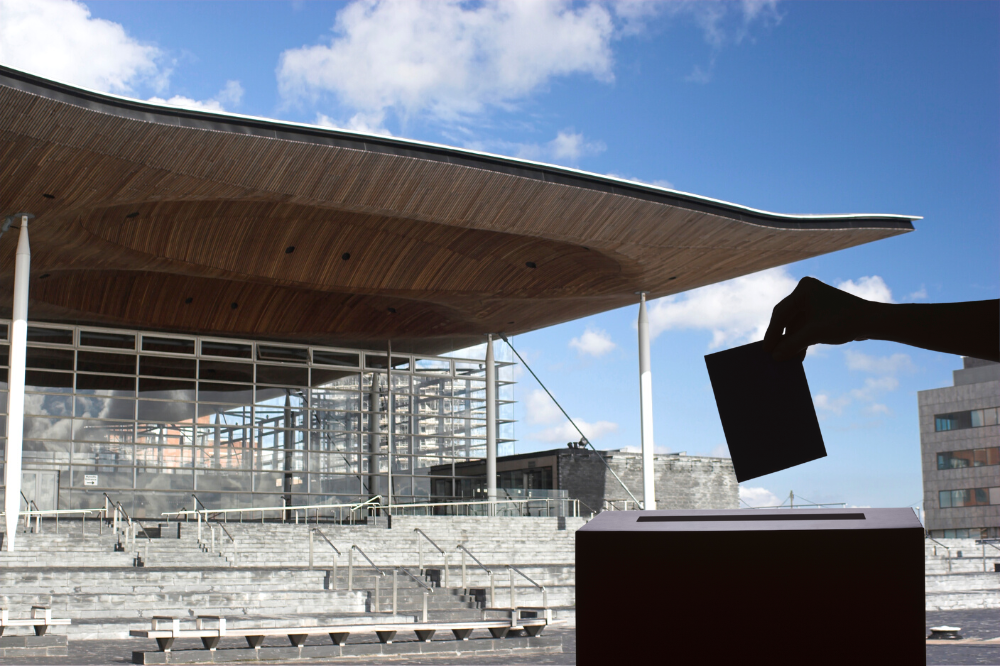
With a devolved Government, Wales should indeed be looking at how it works with England collectively, and our councils in the east of the nation will have their roads to consider and the like, but an “us and them” simply doesn’t sit well – it also hints at a “going rogue” in the face of Welsh devolution, and our primary focus in Wales which should be about bringing us all up together.
Of course, people living near either border will shop on either side, move between and beyond, and will continue to do so freely – there’s no hard border.
As a Welsh county, in Wales, very much in Wales, Monmouthshire’s neighbouring counties of Blaenau Gwent, Torfaen and Newport could do with a pact I’m sure.
Blaenau Gwent, with its unfortunate title of one of the most economically deprived counties in the entire UK, would benefit enormously from being on the radar of the better-to-do in Monmouthshire, but no, their eyes are focused on the east, the land of origin which reflects many of the councillors themselves. How this hasn’t been raised as a potential issue to date baffles me.
As a non-chicken-eating Wye and Usk River hopping environmentalist, of course I’m glad to see that there might be some collaboration on environmental issues – but for our rivers to be shit-free and alive again is a common goal that we should share with everyone across the UK anyway, surely?
As for transport, again, great to have it all working together nicely, but under a “Marches” group? Sort out the chaos that is driving in Hereford and perhaps we could talk.
Anyone with any common sense on either side of the border would be on the same page on all these matters wouldn’t they? Or do they lack said common sense?
It’s the councillors themselves that keep green-lighting factory farms and buggering up our roads left right and centre, after all.
Castle walls
According to Archaeology-travel.com: “The Welsh Marches contain the highest concentration of motte-and-bailey castles in both England and Wales. This is not that surprising given that the border, known as the Marches, has long been a source of contention between the two nations.”
But no contention now, of course, our councils have reclaimed the name. It’s for them to decide what to do with our money, and where to focus it, be it in Wales or not.
Only, I for one don’t feel I live in a “border county” with more shared heritage with someone in Shropshire or Herefordshire – indeed, in my vision of one Wales, my affinity lies with every county and person in Wales – from Môn i Mynwy.
An alliance, vision and ambition for a global Wales, and Wales alone.
The Marches Forward Partnership hints at something bigger underlying the rapidly changing identity of both Powys and Monmouthshire, with its ‘agreed vision and collective ambition’.
Our councils should be working together within, and not without, and it wouldn’t hurt for them to remember which country they are in.
It also wouldn’t hurt to remember the colonial intention of the Marcher lords, either – an intention Wales continues to pay the price for to this day.
Support our Nation today
For the price of a cup of coffee a month you can help us create an independent, not-for-profit, national news service for the people of Wales, by the people of Wales.



That Monmouth place is a long way away…
I remember the Christmas Parties up at the Anchor in the Seventies (RIP Richard Akerman Artist), battling the snow, circling the hill to be in the lee…
Crossing the border ten times a day all part of a days work…
Or all part of a weekend’s fun…
This is awful and needs to go in the bin, each town in this geographical area is unique.
These people can’t stand that…without a brand you’re nothing!
Avoid them and their councilor fixers…
Chasing at windmills?
A march is simply a border land, nothing more than a demarcation between one land and another. It is _not_ a colonial term. Any possible trouble with the word is being injected by the reader/hearer.
I am a Cymro through and through, but I have no problem with the word, whatever its association with tougher times in Wales’ past.
OP, time to get that chip off your shoulder?
It’s hardly Cymru’s biggest current problem, but his reasons for disliking the term seem valid enough. I’d put it in the dustbin along with ‘principality’ and ‘little England beyond Wales’.
Or indeed “Welsh border” – from this side it’s the English border
No in this side, it’s “the border” as Wales doesn’t have any other border.
All three are terms that are stark reminders of oppression and colonisation to our nation so why are they still used? Bin them! Did we Welsh want the merge with England? Well no, not the common man at that time, likewise did we want the invasion of the Saxons and later Normans? No! So they need to be scrapped.
I agree. Also in most people’s understanding the Marches includes the English side too, especially Shropshire and Herefordshire. Shropshire in particular is a place where England doesn’t just stop and Wales start; there a Welsh village and even street names in Welsh with no English in parts of Shropshire. I would say far from being a border it literally is a March in the truest sense, a place with a unique culture where Wales and England interface without regards to a hard, human drawn, line on a map. For some reason Cheshire is much less so, probably due to proximity… Read more »
‘… there a Welsh village and even street names in Welsh with no English in parts of Shropshire.’ That’s true of Herefordshire too. Much of ‘the border’ as it’s currently delineated doesn’t accord with how things stood in the past – except perhaps in a few places where major rivers influenced the situation. Offa’s Dyke recalls a time when a significant slice of what is now Wales was ruled by Mercian Angles governing from Tamworth, and, as you remind us, the existence in Herefordshire and Shropshire of so many village, road and farm names reflect an era when the language… Read more »
I agree, it is part of what I like in and out, Chirbury, Churchstoke, Clun, Bishop’s Castle…from the Anchor to Beguildy and on to Knighton would be a hard border to defend but beautiful to behold…
A mention of a late resident of Clun and prolific author, Guy N. Smith of Giant Crabs fame…
Cymru mutes in wheelchairs in Powys.
Erthygl Gret Stephen!! 💪👍
The simplest solution is to move the border eastwards incorporating the Marches Line so the region simply becomes Dwyrain Cymru. This has the obvious benefit of creating a new rail link between north and south Wales without spending a penny – exactly the sort of Welsh transport project the Treasury can get behind.
Monmouthshire has always had a vague / dual identity. Its old coat of arms contained both a lion and a dragon.
I find the article a tad chippy to be honest. It’s only a marketing campaign between 4 councils promoting a region. If it works it’ll be good for everyone.
The symbol of the Lion is also connected to Wales like the dragon. As Bob Marley once sang If you know your history…
West from the border the scenery gets better, east the it gets worse.
Thirty five minutes drive west from Hay on Wye and you’re at the Storey Arms car park below Penyfan, Bannau Brycheiniog National Park . Thirty eight minutes east gets you to a supermarket carpark in Hereford.
Forty minutes west from the border near Welshpool and you’re in Eryri National Park. Thirty seven minutes east gets you to Telford.
In this Marcher plan Powys and Monmouthshire have chosen to be day trip destinations for England based tourists rather than bases for tourists holidaying in Cymru.
Minus five but no comments disputing the point made.
Must have hit the nail on the head.
The correct term bearing in mind the law and history of Wales is ‘The March’, not ‘The Marches’. There was an Earl of March. The March still includes the Barony of Cemaes which is Newport in North Pembrokeshire. This is a Marcher Lordship and nowhere near the English Border of course. Nor is the Lordship of Gower or many other Marcher Lordships. Marcher law was different in each Marcher Lordship and included Welsh law and was a jumble with English law. It was a colonial thing, but was distinctively Welsh. ‘The (Welsh) Marches’ meaning Welsh Borderlands is an English marketing… Read more »
The OP fails to mention the William Fitz Norman who was given land and leave to build a castle in Herefordshire at a place called Kilpeck. His son was known as Lord Hugh De Kilpeck and the family took the name De Kilpeck from then on. There is a very old chapel that was built by his son with ((cough) interesting carvings and there’s some scant ruins of the castle that survived Cromwell. There is a sword on the heraldic shield and the feather notes that they carried the king’s arms into battle. Down the years the family was quite… Read more »
Concentrating on a problem that isn’t there will solve nothing and waste a load of resources.
If you want to improve visitor numbers it’s a case of making people more aware and encouraging a visit via using such as social media.
You find me anyone who thinks I’m not going there you know it’s called ‘The Marches ‘ .
So £400,000 of public funding has is being given to Reith Consulting- their website shows no experience of doing this activity before https://www.reithconsulting.com/
That whole region is connected by Trsnsport for Wales, who has its’ own business consultancy https://tfw.wales/lab/about-us/our-partners
Yet Monmouthshire council is funding a Scarborough based consultancy with zero experience.
A public enquiry into Monmouthshire spend is urgency required.
Making “Marches” an un-word won’t changes the reality of the border with England. For centuries primary products: minerals, forestry and agricultural products, water and electricity (in future: fracked gas?) have flowed west-east fuelling commercial activity and growth of urban centres east of Offa’s dyke from Chester to Hereford and beyond Post Beeching, Shrewsbury is the rail hub for the Wales and Borders rail franchise. The TrawsCymru service from Cardiff to Newtown, Powys was axed on 31.8.2025. To a considerable extent, mid Wales have become economically dependent on its underdevelopment and indeed there are those who cherish that. Wellness retreats, animal… Read more »
The Cymru England border is real but the modern use of ‘Marches’ is confined to a description of the English counties of Shropshire and Herefordshire.
This tourism project seeks to appropriate the attractions of a country, Cymru into a modern concocted marketing initiative.so that two English counties can enhance their brand..
It’s difficult to see what Shropshire and Herefordshire can offer the tourism industry in Powys and Monmouthshire. Perhaps someone from Reith Consulting or Powys Tourism could provide some answers..
I call the English border counties and Cornwall “The Occupied Territories” to anyone who will listen. Thinking of starting a YesHerefordshire and a YesShropshire demanding they be liberated and returned to Cymru so that all their kids be educated in Cymraeg and their road signs be made bilingual with Cymraeg first. That’ll keep the miserable old anchors awake at night.
The Welsh Marches is an excellent name to describe the border countries. This article is grievance politics at its most far fetched.
Good writing though, making a mountain out of a pretty little molehill.
With the ‘Northern Powerhouse’ already eyeing up the north east of Cymru for it’s own benefit and the Bristol centered ‘Great Western Powerhouse’ actually including Cardiff in it’s operating sphere.
It’s only the uninformed and naive who would think that the leafy English shires in between wouldn’t fancy a slice of what Cymru can provide them with as well.
So you don’t approve of trade links between Bristol and Cardiff? Do you see any cross border links as a threat to Wales?
Don’t be silly
If you really don’t understand the issue check out what’s on line about ‘Great Western Powerhouse’ but make sure you apply a dose of critical thinking rather than viewing through a pair of ‘aren’t we so lucky to be included’ spectacles.
You might like to also check out the issue of how Cardiff airport has and is being explicitly held back to the benefit of Bristol’s.