
We’re teaching Cymraeg wrong: Is ‘bratiaith’ the answer?
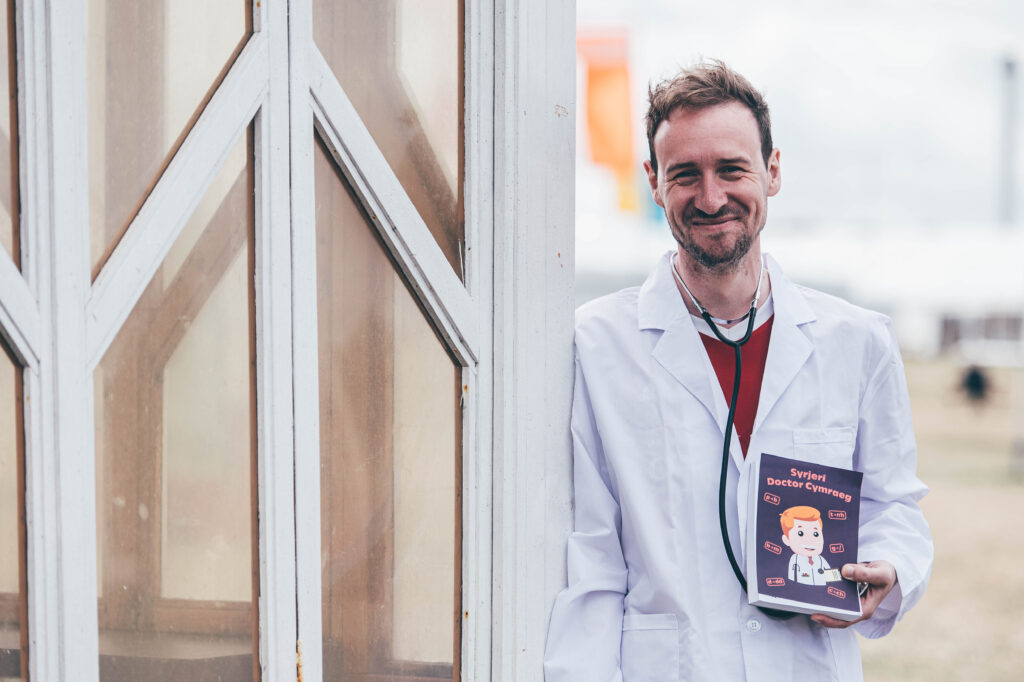
Stephen Rule (Doctor Cymraeg)
A few years ago, a sixth-form student who was learning Welsh told me a story that has stuck with me ever since.
She’d tried to use her Welsh outside the classroom. A perfectly reasonable thing to do after years of lessons. She said something in Cymraeg to someone she knew who spoke it at home.
The response? “We don’t say it like that.”
Now, there are a few ways to read that moment. You could see it as a cultural problem. A bit of gatekeeping. A lack of generosity towards learners.
But there’s another interpretation. What if the student had simply never been taught the kind of Welsh that people actually use? Because if we’re honest with ourselves, that happens a lot.
You’ll often hear the same sentence repeated in Wales. “I did Welsh for ten years at school… and I still can’t speak it.” It’s usually said with a kind of weary certainty, as though the case is closed. But it’s a slightly strange argument when you stop to think about it.
Most of those same people studied maths and science for just as long – if not longer. Yet, very few of them can explain quantum mechanics or solve advanced algebra on a Tuesday afternoon. Nobody treats that as a national failure of mathematics education.
Languages get judged differently. When language learning works, it disappears. It just becomes conversation. When it doesn’t, people remember the awkwardness.
There’s another factor too. Attitudes travel through families. In Coming Home: One Man’s Return to the Irish Language, journalist Michael McCaughan reflects on Ireland’s complicated relationship with its language. At one point, someone involved in Irish-language teaching observes that one of the strongest predictors of a negative attitude towards the language in children is often a negative attitude from parents. Uncomfortable perhaps, but probably true. And it brings us back to the classroom.
An awkward question
I went through this system myself. I studied Welsh throughout my English-medium education schooling. I passed the examinations, did the coursework, ticked the boxes. But, if I’m honest, I didn’t feel genuinely fluent until I arrived at the university. Only then did the language start to feel natural. Only then did it start to feel like something people actually used.
And that raises an awkward question. Why does it sometimes take leaving school before the language finally starts working? I’ve now been teaching Welsh in an English-medium school for over fifteen years. And I’ll be honest about something… It frustrates me.
Not because pupils can’t learn Welsh. They absolutely can. But because the system still too often asks them to approach the language in a way that makes the first steps harder than they need to be.
In many English-medium schools, Welsh is still taught as though the goal is linguistic tidiness. A carefully polished, standardised form of the language. Grammatically neat. Properly dressed. Ready for inspection.
The problem is that this version of Cymraeg – and, indeed, this style of teaching – is often more Victorian than visionary.
It’s the language equivalent of teaching children to swim by explaining the theory of water. Meanwhile, outside the classroom, Welsh lives quite happily in dialects. North-eastern, south-western, the fuzzy bit in the middle. Fast and slow. Formal and gloriously messy. People drop bits. Add bits. Borrow things. Bend things.
Languages do that. All of them. Nobody expects every English speaker to sound like a BBC newsreader before ordering a coffee. But with Welsh, we sometimes act as though the first step must already be the finished product. We quietly hope pupils will sprint before they can crawl, never mind run before they can walk.
The result is a strange situation. Around a quarter of people in Wales can speak Welsh. But a far larger proportion has at least some Welsh from school. That should be a huge advantage.
Instead, many learners come away feeling their Welsh isn’t quite right. Not quite authentic. Not quite ready for public use. So, they stop using it. Which is a terrible waste because the early stages of speaking a language are not supposed to be perfect. They’re supposed to be noisy. They’re supposed to sound like learners.
Bratiaith
This is why I’ve increasingly come to believe we’re approaching Welsh in English-medium education from the wrong end. Rather than starting with the polished version of the language, we should start with the living one. The Welsh pupils are actually likely to hear. Local dialect. Everyday expressions. The things people really say when they’re chatting in a shop or shouting across a football pitch. In other words, what some people dismiss as bratiaith.
That word is often used as criticism. In reality it can be a doorway. A learner who can understand and use informal spoken Welsh has something incredibly valuable: momentum. And momentum is what languages need.
At the moment, though, the system often pulls the other way. Pupils are introduced early on to forms of Welsh that are technically correct but socially rare. Structures that appear frequently in textbooks but far less often in conversation. Then we act surprised when they hesitate to use the language outside the classroom. It’s a bit like teaching someone to drive exclusively on a simulator and then wondering why they’re nervous on an actual road.

If we want Welsh to grow, the early stages of learning need to feel more like the real thing. That means rethinking how we approach Welsh at Key Stage 2 and Key Stage 3 in English-medium schools. It means exposing pupils to spoken Welsh as it actually exists, not just the idealised version found in textbooks. And it probably means something else too. We need examinations that are dialect-ready.
At the moment, many pupils feel they must constantly translate their instincts into something that sounds “correct enough” for the exam paper. That creates distance between the language of assessment and the language of life. A dialect-ready GCSE would recognise that Welsh has always been a language of variety. Not a single uniform voice, but a family of voices.
None of this means abandoning standards. Standard Welsh has an important role. It helps people from different parts of the country communicate clearly. It provides stability for writing and broadcasting. But standards should be destinations, not starting lines. Learners need a way into the language before they’re asked to tidy it up.
And perhaps this is where another small shift needs to happen. It’s just as important to talk about Cymraeg as it is to talk in Cymraeg.
We spend a lot of time encouraging people to use the language, which is absolutely right. But we should also feel comfortable discussing how it’s taught, how it’s learned, and what we want its future to look like.
Because the Welsh language belongs to all of us.
And while many talented people are working hard to support it, it would be optimistic to assume the current system will magically fix itself. Better, perhaps, to keep the conversation going. If we do that honestly and constructively, something interesting might happen.
Instead of producing pupils who feel slightly nervous about their Welsh, we might produce pupils who simply use it. Messily at first. Confidently later. Which is exactly how languages are supposed to grow.
Find out more about Doctor Cymraeg’s books and lessons via his website, or follow him on X and Instagram.
Support our Nation today
For the price of a cup of coffee a month you can help us create an independent, not-for-profit, national news service for the people of Wales, by the people of Wales.



The same problem applies to foreign languages in all schools in the UK. I think language teaching should be based on the spoken language from day one with less emphasis on the written language.
The main problem with teaching children a second language is starting at the age of 12/13 instead of 4 or 5.
Da iawn, wedi’i ddweud yn dda
Does na ddim byd gwaeth ceisio darllen rhywvbeth efo bratiaith. Rydw i’n cofio archebu llyfr un tro, fe wnaeth o wneud i mor flin nes i roi o yn y sbwriel. Oherwydd dydi pobl methu brawddegu ac efo geirfa gwael dydi o ddim yn esgus sillafu sothach. Mae o’n wneud y iaith teimlo’n fudur rhywsut. Bai cyfryngau saesneg dros cymru ydi o.
With this kind of attitude, you will kill the language and people will stop speaking Welsh.
Gweud y gwir o’n i’n ffili darllen Un Nos Ola Leuad ond wi’n diall bod rhaid i’r Gogs ca’l llyfr yn eu tafodieth nŵ.
Os rŷn ni’n pido dysgu tafodieithôdd wrth y plantos fydden nŵ ddim yn wilia’r Gymrâg yn frodorol bydd yn lladd yr iaith (fel y mae, oleia)
It’s great that the language is being taught avidly in school and classes but I think more social groups need to be formed within our communities. Places and organisations where people can go outside class to learn the peculiarities of the language firsthand.
Isn’t that Urdd’s role!!!!!
The biggest enemy of the Welsh language is the Welsh middle class crachach who look down at people ( especially the working class ) who don’t speak like them. Having been through Welsh medium education in a South Wales valleys school and from a working class family who didn’t speak Welsh but decided that they wanted me to receive Welsh medium education , I can say unfortunately that many of my ex fellow pupils won’t speak Welsh because they feel people ( I’m referring here to the Crachach ) will look down at them , and their confidence in speaking… Read more »
Your solution to strengthening a culture and its language is by divisive infighting? Yeah don’t buy it, it makes no sense whatsoever. Try letting go of your baggage and think of doing something more constructive than just fighting and slandering other groups of people.
Crachach is a myth promoted by Neil Kinnock and similar ilk using it to bash Cymraeg. It’s about self confidence. A person correcting my mutations did not stop me siarad Cymraeg.
I studied French at school for nine years, more or less to A level. Sixty years later i still speak French reasonably well, not least because I have French in-laws.
I was extremely lucky because for three years I was taught French by an Englishman who had grown up in France and he taught us French as a living language rather than as a grammar exercise. He even wrote a book for us. He certainly didn’t ignore grammar,,but his lessons were much more enjoyable than lessons from other teachers of french.
I started to learn Cymraeg as an adult in 2002, following the north Wales versions of the Wlpan to Meistroli courses. These were based on what we called ‘iaith y strydoedd’ or the language of the streets. We learned how to use Cymraeg in everyday conversations and so I grew to enjoy and love the language. It was sociable and useful at the same time and it continues to be so. Schools could learn from this.
My niece had just gained a good pass at A level in Welsh. The first thing I said when I saw her was Sut mae pethau? to which she replied that she didn’t understand what I had said. We teach Welsh as a subject to study not as a spoken language
After 4 years of workplace Cymraeg thisarticle hits home.
I think more subtle uses would be a good thing, such as setting self service tills/ machines to default Welsh or making saying “diolch” a common thing. Here in the south east we do have to be a little careful or it starts off the “ramming it down our throats” comments, so subtle is needed.
There will always be those who will launch into the ‘ramming it down our throats’ routine and they will always be wrong. Cymraeg enjoys the support of a consistent 80% of the population, a figure that has been sustained for decades. Welsh medium education in the south east is oversubscribed and more parents would consider Welsh medium, were it a viable option for them. If we feel anything for those sad, often wild-eyed people shouting spittle flecked rants about having Cymraeg rammed down their throats, often at the mere mention of the language, it should perhaps be pity that they… Read more »
The problem with learning colloquial or “street” welsh is that what you learn in ,say, Carmarthen will not be of much use in Caernarvon. As a learner myself, I prefer to learn a standardised “book” form of the language, which gives me a solid base on which I can more confidently build my awareness of local dialects and usages. When I lived in Italy I learnt formal Italian, despite there being a local dialect used in my town which was mutually incomprehensible to those from another town only 12 miles away. I don’t see why we can’t have a formal… Read more »
Infatti David, bravo! Sono d’accordo con Lei. Essere istruito a scuola nella grammatica della sua lingua materna e importantissimo. ~ Welsh is my first language and I am a language teacher of more than 25 years experience, teaching Welsh, French and Italian to adults here in Wales. Like yourself, I have also lived and worked in Italy (Bologna) where I taught English to Italians through the medium of Italian. If you are a mother-tongue Italian speaker (or a mother-tongue French speaker, for that matter), English is not an easy language to learn, so for them it becomes less difficult if… Read more »
Tante grazie- ho insegnato inglese a Imola per alcuni anni negli anni 80’s. Imola isn’t a million kilometres from Bologna! My experience regarding the points you raise were the same as yours; it made for a fascinating time. I never could explain why the adjective comes before the noun in English! Teaching English is a great way to learn the language of the country you are in, I found that my students tended to vocalise the answer to a question in Italian, before giving it in English, so I had a free lesson in Italian at the same time. I… Read more »
But we don’t have a formal, standardised spoken form of Welsh, and that is the problem. For centuries spoken Welsh had no official status and so it was looked after by Wales’ lived communities, often isolated from one another in an age before broadcasting technology so consequently different dialects developed. In any case, far too much is made of the lack of mutual intelligibility between the different dialects. Differences exist, but they are not that great and a little perseverance soon pays off. You could, of course, learn the classical literary Welsh of the Bible, for many centuries the only… Read more »
Yes you are right of course, but for me I find that knowing what the language books say, and comparing that to what people on the street say, is a good way to remember both forms. For example, in Carmarthen you say “sa i’n gwybod” instead of the formal “dw i’n ddim yn gwybod”, and that caused massive confusion for me until I learnt the local form. Now I have no problem with either. I also never understood the sentence tag “do’ve” (that is what it sounded like) until I found, quite by chance, the word “yndefe” (or yntefe in… Read more »
As a former teacher in the Welsh-medium sector, I have the greatest sympathy with the author of this article. Language, if not spoken, is dead. Bratiaith is spoken led-led Cymru. It is alive, bastardised – yes definitely, grammatically incorrect – yes most assuredly. But. The main thing here is that is is alive. If the grammar police have their way, Welsh will be dead by the turn of the next century. We need our young people to embrace it, to be able to express themselves, to be able to speak “age-appropriately”. If bratiaithists get the bug, they will seek to… Read more »
I’ll always remember the time when the Manic Street Preachers album This is My Truth, Tell Me Yours was advertised on a massive hoarding in central Cardiff, but instead of English, the language of the hoarding was Cymraeg, with the title Dyma Fy Nghwirionydd, Dweud Un Ti. Instead of recognising it as a definite shift (an album by a band that sings in English who had been somewhat ambivalent about their Welsh identity previously advertising their latest album at the time in the capital, in Cymraeg) some academic complained about the awful grammar. Sure, it might have been classic Glantafeg… Read more »
All languages suffer from it to some degree, it’s to do with people speaking their chosen language but not reading enough to develop their skills. This means they never increase their vocabulary and are stuck at a certain level. It also happens with the English language as many of those kids speaking txt speak are not able to determine which words form those shortened versions commonly used day to day. It’s why we have adults with reading ages of 8 reading The Sun newspaper and never anything more advanced. Most kids leaving school these days do not have the ability… Read more »
Trist, ond yn berffaith gywir! ~ Sad, but absolutely correct!
You wouldn’t teach an English learner to start saying gonna, dunno and goin t’shop straight off the bat. People need to learn I am going to, I do not know, I am going to the shop to learn structure and grammar, which makes learning easier the long term. Regional expressions can be peppered into learning to keep it interesting but you shouldn’t lead with it. Welsh is highly structured. If you focus on slang first then you will miss out on understanding the structures of the Welsh language. A lot of structure/grammar make languages easier to learn through pattern recognition.… Read more »
100% correct, John! I am a teacher of 4 languages. One of them is Welsh and is my mother-tongue. I learnt 2 of them as an adult. What you have written hits the nail squarely on the head – eloquently. Learning grammar is not fun for most learners, but not learning it leaves a learner with a big handicap. It’s like trying to run and win an intellectual marathon, without going to the trouble of training.
Indeed. Children seem able to soak up a second, third or fourth language easily, I have seen this with kids in other countries when they have friends with different mother tongues. Adults, however, mostly do better with grammar, and seem to prefer the patterns, which then enables them to predict forms which they don’t actually know. It is fascinating, for example, to hear an English child say something like “then he runned away…” because they have learnt the pattern of regular verbs (smiled, talked, walked etc.) and then applied it to irregular verbs. This phase soon passes and they quickly… Read more »
Well said…& very well put indeed…
No. The problem is we’re doing education wrong. We take kids and adults out of the community and stick them in classrooms. Learning Welsh needs to become a shared community activity, because it is in communities that linguistic norms are established and language evolves. Technology and online advice and mentoring can provide all the support necessary.
I agree with a lot of this. But I think the term “Bratiaith” is problematic. By definition, native Welsh speakers cannot be speaking Bratiaith. “Colloquial” may be a better term?
I’ve always referred to them as tafodiaith, dialect, though sometimes bratiaith is the better term when there are too many uneccessary borowings from yr iaith fain.
A base line has to be taught. Otherwise the language will go off in so many different directions no one will be able to communicate at all.
Good article I experienced 2 first language tutors as an adult who taught colloquial Welsh – which was invaluable for work and l passed Canolradd after only 2 years. I then had a break and took it up again this time taught by an advanced learner who only really valued grammatical accuracy. The exams and the wretched course books seemed to have also changed to reflect this right/wrong approach to learning. The result : learners sounding like C19th clergyman, nobody in any of the classes seemed to make any progress at all. Incidentally the WJEC Uwch exam is a cultural… Read more »
Could have been writing about the way English is taught in Japan, a bit like the way I was taught Latin. Many are over obsessed with correct grammar and so fearful of making a mistake and being laughed at that they hesitate to converse. I grew up speaking English to my mother and Welsh to the rest of my extended family, learnt French at school, lived for a while in France, then in Greece where it took me six months to ‘get over the hump’ and not mind if people laughed at my mistakes. In Japan it took me a… Read more »
You hit the nail on the head – learning a language inevitably means making mistakes, and if you are the sort of person who fears being laughed at, you will fail. Ability to laugh at oneself, and be content with losing control, is therefore an essential quality for language learning. I think this is why women are generally better better at languages than men; far too many men are constrained by the macho need to appear always in control and always strong, and never showing uncertainty or confusion.
It’s incredibly frustrating. I have poor Welsh that would be so much better if I ever had the opportunities to use it. I gind listening to Radio Cymru useful as I can usually work out what the topic of discussion is if not the details! Also much Welsh pop & rock uses pretty basic cymraeg. But I wish there were places I could go where it was OK to speak cymraeg badly with people who would help me get better without judging. I occasionally use Welsh on social media or in messages to friends who speak it but haven’t got… Read more »
Heddlu Iaith ❌
Amrywieth Iaith ✅