


Westminster steps back, Wales must step up
Simon Hobson
Last month, the United Kingdom Government pulled its £870 million support for a Mozambique LNG project.
Ministers claimed the decision was about human-rights concerns and regional instability. The Department for Business and Trade led the withdrawal, and UK Export Finance followed. Westminster framed it as a principled stand.
It wasn’t. It was a retreat that leaves the UK weaker abroad and Wales paying the heaviest price.
When the UK steps back, others step in. Those with less transparent human rights laws and democratic accountability, look to fill these gaps. These are opportunities for them to shape Africa, a continent rich in mineral wealth and a young motivated population: the next economic superpower. And neither countries, such as China, nor many of the African leaders, much care about labour rights.
They don’t care about governance. They don’t care about long-term democratic stability. They seek political influence for financial gain and for power. The UK’s exit removes its influence but does nothing to halt the project or improve conditions on the ground.
A wasted opportunity for Welsh engineering
This is not an isolated incident. Successive UK governments have cut overseas industrial projects from their budgets for over a decade. Those projects could have included skills development, structured engineering exchanges, and international work programmes for young people from Wales and across the UK. The opportunity was there. Westminster chose not to take it.
Why Wales needs control over its industrial future
Wales cannot rely on Westminster to act in our interests. Wales needs the powers to shape its economic and industrial strategy, manage immigration, and build international skills partnerships. With the right powers, Wales could: secure overseas placements for Welsh students and apprentices, help Welsh firms win roles in global infrastructure projects, build long-term relationships with emerging economies in Africa. Wales must be able to protect its future. We cannot keep waiting for Westminster to realise Wales exists.
The Senedd must have:
1. Powers over economic and industrial strategy, so Wales can build international partnerships that bring training, investment, and skilled work into our economy.
2. Powers over immigration and skills mobility
Wales needs its own workforce programmes:
a Welsh international skills visa
a Welsh overseas engineering exchange
a Welsh global work placements strategy for all STEM student.
3. The authority to strike bilateral cooperation agreements
Welsh universities, renewable-energy firms, mining-tech companies, and engineering consultancies already operate globally. With proper powers over finance, borrowing, tax, and immigration, Wales could scale those links dramatically.
Wales must stop waiting for Westminster
The Mozambique LNG project decision is a recent example which reveals Westminster’s deep strategic failure. It cannot think long-term about the UK’s role in the world, and it certainly isn’t thinking about Wales. But Wales also needs to take responsibility. We cannot keep seeing risk where other nations see opportunity. The UK’s retreat should spur future Welsh Governments to act internationally, build new alliances, and secure Wales a global voice. Because no one else is going to do it for us.
If Wales wants a global future, it needs global powers
This is not constitutional theory. It is economic necessity. Without more powers: Welsh students will continue losing global engineering opportunities, Welsh firms will remain locked out of international industrial projects, Wales will remain constrained by Westminster’s short-termism.
Wales needs a government that acts as an executive with real authority, not an administrative branch waiting for permission from London. If decisions like the Mozambique LNG project withdrawal continue being made over our heads, without consulting the Senedd, Wales will stay exactly where Westminster wants it: out of sight, out of mind, and out of the conversation.
Support our Nation today
For the price of a cup of coffee a month you can help us create an independent, not-for-profit, national news service for the people of Wales, by the people of Wales.



The UK has ended direct government support for overseas fossil fuel projects -its part of international climate commitments (e.g., Paris agreement). There are indeed human rights and conflict issues in Mozambique also to consider. It’s leadership to step away from such projects, not a sign of weakness
Have I missed something? Simon Hart being very pro Welsh in a way that is independent of San Steffan. I agree with every word he says and he’s gone up in my estimation manifold, chwarae teg. I think he’s absolutely correct
The author is Simon Hobson, not Simon Hart! Two very different people.
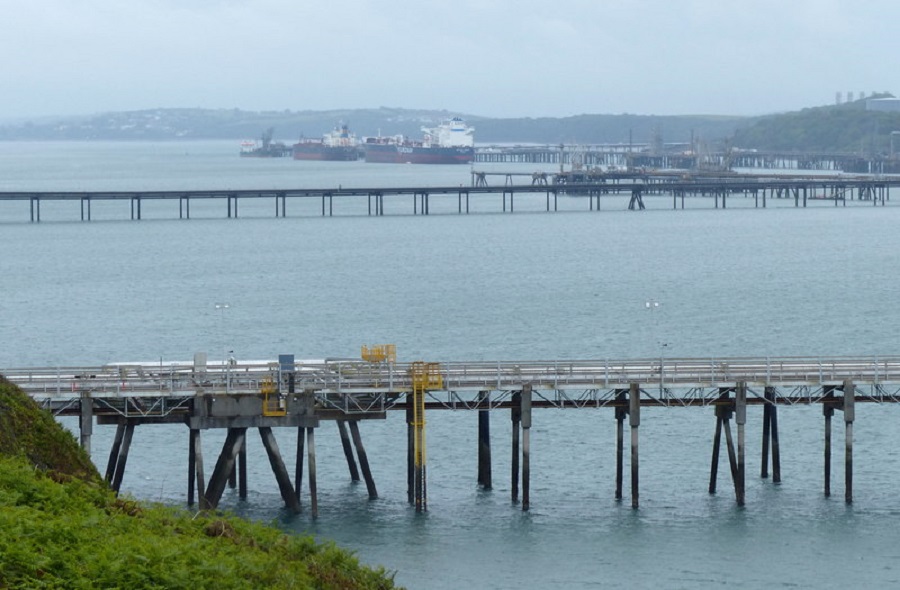
It is ironic that you illustrate the article with a picture of the South Hook LNG terminal in Pembrokeshire. This terminal imports gas from Qatar which meets 25% of the UK’s natural gas needs. This terminal is 67.5% owned by Qatari Energy, a state owned company. The Qatari state is an absolute monarchy – there is an “advisory legislature” appointed by the Emir, and a cabinet he also appoints. Political parties are banned. Why are we being so fussy about who we do business with when it comes to black African countries that have at least a semblance of democratic… Read more »
Hmm..I spent many years in southern Africa and Mozambique is the most corrupt. The government calls their corruption ‘endemic’ in a famous report a few years ago. It’s rife across all public sector. There are hundreds of corruption cases involving bribery, embezzlement and public-procurement fraud and the police are essentially mafia. Google ‘tuna bonds’. It had a brutal civil war for 15 years. It’s very different to compare to Qatar….
I knew a once active participant of the Mozambique Civil War, a real ‘agent provocateur’, it sounded hellish, I think he was proud of himself !
Has Westminster actually delivered itself? Network Rail Consulting is actually small, under 500 staff in an industry that spends billions per year on global rail projects. Welsh Universities can work together and could partner with Transport for Wales (TfW). Yet TfW is not self-delivering rail upgrades, it is partnering with Amey for Cardiff Central station works and Cardiff University has outsourced a key net zero project to a supplier from Holland https://www.arcadis.com/en-gb/news/europe/united-kingdom/2025/9/arcadis-appointed-to-lead-decarbonisation-of-cardiff-university-sites Net Zero is a key area, so why can’t Aberystwyth University’s sustainability team https://cat.org.uk create on its’ own a joint venture with all Welsh Universities and ideally TfW… Read more »
Does anybody in Westminster ever listen to what Wales wants? No to devolving Airport Departure Tax, no to devolving policing and the judiciary, no to devolving the Crown Estate. What do you expect, when you have politicians in Westminster that always put party before country.
The failure to devolve APD is inexplicable. There’s no cost to this, there’s only preventing economic growth.
The old excuse of protecting the Canadian teachers investment in Bristol no longer applies since the Internal Market Act makes it impossible for the WG to inconvenience England in any way.
The way to achieve these goals, for Wales,and future generations, is to make a Declaration of Welsh Independence now.
What a bunch of nonsense. Wales needs less gas not more and it certainly doesn’t need to be funding nations halfway around the world. Wales is not the UK, it’s not England, it’s not London. Quite simply it does not have the financial resources to support other nations. Furthermore, it should absolutely not be supporting fossil fuel projects abroad. This is extremely irresponsible. I could see an argument for exploiting local supplies for local emergency use… but quite frankly we need to move to cheaper, cleaner, renewable energy. Yes Wales needs independence, yes it needs the ability to manage its… Read more »
I’m struggling to understand the issue with the Mozambique project. Are you saying that the WG would have funded it? That’s a lot of coin…