
Westminster’s empathetic dissonance: The gulf between respect and power

Simon ap Gruffydd
There is a profound difference between acknowledging a nation’s aspirations and respecting its right to realise them.
It is what might be described as empathetic dissonance – the contradiction between expressed empathy and actual behaviour.
Westminster speaks of partnership, mutual respect, shared prosperity and a Union of equals. Yet its decisions concerning funding, natural resources and constitutional authority raise uncomfortable questions about the credibility of those sentiments.
This is not about England or its people. It is about Westminster as a seat of power and the institutional interests that might explain its reluctance to relinquish control.
Perhaps the question is not why Wales wants more power, but why Westminster is so determined to retain it.
The recent interventions by Andy Burnham and Stephen Kinnock illustrate this contradiction.
Burnham built his political reputation as Mayor of Greater Manchester by challenging centralised government. Yet he resists transferring responsibility for policing, justice, rail infrastructure and the Crown Estate to Wales.
Kinnock’s defence of that position, invoking the risks of destabilisation, fragmentation and disintegration, raises questions about Westminster’s attitude towards Welsh democratic aspirations.
Why is decentralisation celebrated as empowerment when applied to English regions, but associated with instability when applied to Wales?
And whose interests is the Secretary of State for Wales representing when Welsh aspirations conflict with Westminster’s constitutional preferences?
Respect in words, inequality in practice
The recent revelation that none of the UK Government’s additional £2.5 billion steel industry funding commitment had been allocated to Wales as of 20 October raises serious questions about Westminster’s industrial priorities.
When challenged over this disparity at Prime Minister’s Questions, Burnham cited the £500 million investment in Port Talbot’s electric arc furnace. However, that investment How can Westminster’s commitment to equitable investment be properly scrutinised when questions about funding disparities are answered by highlighting unrelated expenditure?
Then there is HS2, a railway constructed entirely within England but classified as an England-and-Wales project.
Westminster retains responsibility for Welsh heavy rail infrastructure and uses that very responsibility to justify a funding classification that denies Wales direct HS2 Barnett consequentials.
At what point does financial dependency become a consequence of political dependency rather than a justification for maintaining it?
The economics of control
Welsh coal powered Britain’s industrial expansion. Welsh slate roofed buildings across the world. Welsh steel built infrastructure and Welsh water enabled cities beyond our borders to prosper.
Scotland’s oil generated substantial Treasury revenues, while Ireland’s historical experience under British rule included land dispossession and economic exploitation.
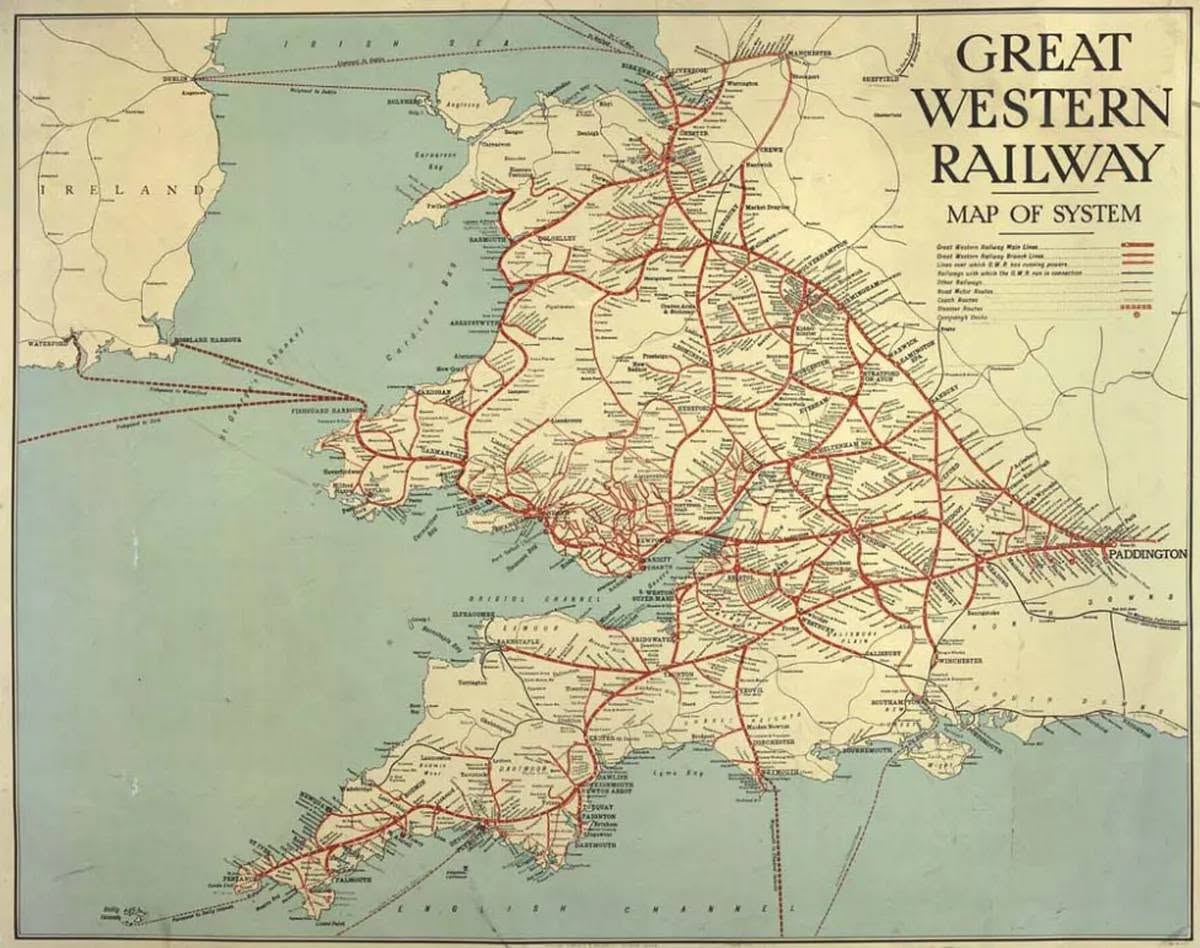
Today, Welsh reservoirs, electricity generation, gas infrastructure and offshore renewable energy opportunities remain strategically important.
From Tryweryn to the Celtic Sea, the resources may have changed, but the fundamental questions remain.
Who controls them? Who profits from them? And what economic interests might explain Westminster’s reluctance to relinquish authority over them?
The myth of the reluctant benefactor
We regularly hear assertions that England subsidises Wales or pays for Scotland.
But fiscal redistribution is not charitable generosity. Welsh citizens and businesses contribute to the UK Treasury. Numerous English regions also receive more in public expenditure than they generate in attributable tax revenues.
A fiscal deficit is not a national balance sheet. It does not comprehensively value natural resources, strategic infrastructure or the economic opportunities associated with alternative constitutional arrangements.
Furthermore, if generations of Westminster’s economic stewardship have left Wales dependent upon fiscal redistribution, should that not invite scrutiny of Westminster itself?
How can an institution use economic outcomes produced under its own governance to justify retaining that governance without examining its contribution to those outcomes?
Would such reasoning withstand scrutiny anywhere else?
Behind closed doors
What conversations take place in Whitehall when the potential break-up of the Union is discussed?
Westminster undertook extensive assessments ahead of the 2014 Scottish independence referendum. What subsequent analysis has been conducted?
Has the Treasury calculated the implications of relinquishing jurisdiction over natural resources? Has Westminster assessed the consequences of having to negotiate access to strategic infrastructure with sovereign governments?

We cannot know what undocumented conversations have occurred or what conclusions may have been reached.
Nevertheless, while the conventional debate concentrates on what Wales and Scotland might lose, where is the equally comprehensive assessment of what Westminster might lose?
Could the economic relationship be considerably more interdependent than the familiar subsidy narrative suggests?
The comfort of an inherited narrative
Britain is no longer the imperial power it once was. Its economy has fundamentally transformed, yet many of the assumptions underpinning its constitutional debate remain remarkably familiar.
When people repeat the subsidy narrative, are they drawing upon comprehensive contemporary evidence or simply repeating an inherited political assumption?
Fiscal redistribution does not confer an entitlement to political control. Nor does historical precedent automatically justify its continuation.
Westminster may genuinely believe that preserving centralised authority serves the collective interest. But who determines that interest, and who benefits from the existing distribution of power?
Has preserving the Union become conflated with preserving Westminster’s authority over it?
Empathy without empowerment
Westminster can celebrate Welsh culture, acknowledge our industrial heritage and express sympathy for our economic challenges.
But recognition is not sovereignty. Consultation is not consent. Empathy is not empowerment.
Perhaps one of the most corrosive aspects of Wales’s relationship with Westminster is the lingering sense of misdirection and subterfuge – that questions are being answered without being addressed, that economic arguments are being selectively presented and that there is more to Westminster’s motivations than it is prepared to articulate publicly.
Whether justified in every instance or not, that perception matters. Trust is eroded when explanations appear evasive, inconsistencies remain unresolved and the institution exercising power resists scrutiny of its own interests.

If Westminster’s intentions are genuinely founded upon mutual respect and collective prosperity, why should greater transparency or a more equitable distribution of authority present such a challenge?
The credibility of Westminster’s commitment to Wales should be measured not by its willingness to acknowledge our aspirations, but by how it responds when those aspirations challenge its own authority.
The fundamental division need not be between the peoples of these islands, but between those who possess political power and those who seek the democratic authority to exercise it themselves.
Perhaps the ultimate manifestation of Westminster’s empathetic dissonance is the gulf between the partnership it describes and the power it refuses to relinquish.
And perhaps the most revealing question remains:
If the Union were being negotiated from scratch today, could Westminster persuade Wales – or indeed Scotland and Northern Ireland for that matter – to accept the terms under which it currently governs?
Support our Nation today
For the price of a cup of coffee a month you can help us create an independent, not-for-profit, national news service for the people of Wales, by the people of Wales.
Get more trusted Welsh news
Choose Nation.Cymru as a preferred source in Google News to see more of our journalism.