

What is ‘England and Wales’?
James Downs, Mental Health Campaigner
Legally, ‘England and Wales’ refers to a shared jurisdiction, that, unlike Scotland or Northern Ireland, remains constitutionally tethered in areas such as justice, policing, prisons, and the broader legal and institutional frameworks that underpin our governance.
Politically, combining ‘England and Wales’ often allows for differences to be glossed over in favour of administrative convenience – from funding formulas and infrastructure planning to spending pledges and policy announcements.
But saying something in the same breath doesn’t make it the same thing. Our two different nations each have their own distinct powers, identities, histories, and needs. The phrase ‘England and Wales’ therefore hides more than it reveals, leaving unanswered questions about the nature of our differences, and how we relate to one another.
“Like Nessa and Smithy”
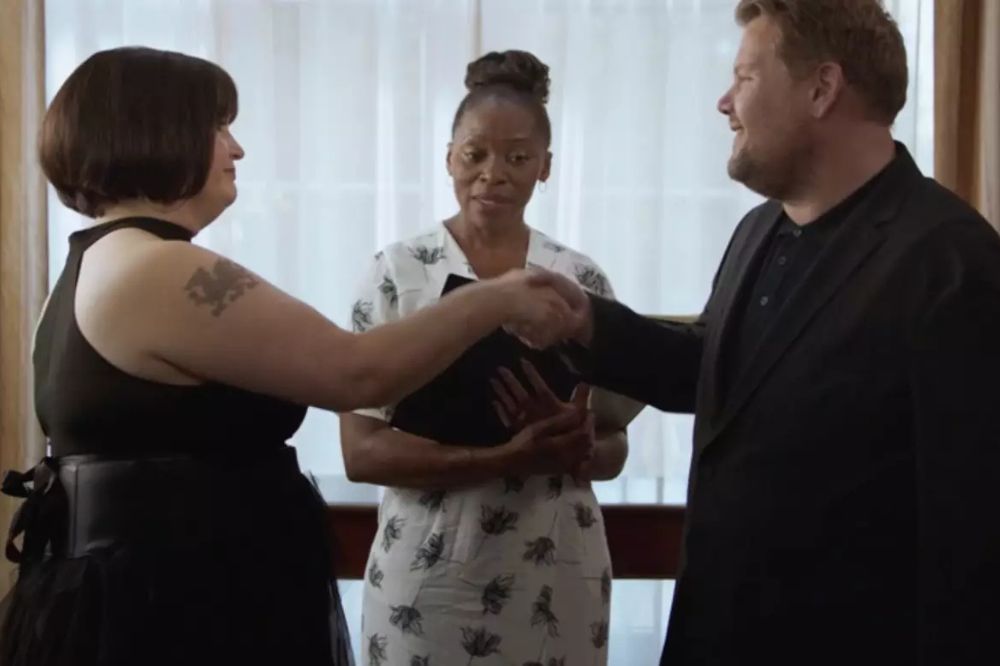
First Minister Eluned Morgan has attempted to explain this relationship – or at least the relationship between the two Labour parties holding power in ‘England and Wales’. Using characters from Gavin and Stacey, she made it clear that they are not one and the same entity:
“There will be times when what’s right for Essex is not right for Barry,” she said. “Like Nessa and Smithy, there will be a bond, but there will also be issues. Where we disagree, we will say it, where we see unfairness, we will stand up for it… I will not hesitate to challenge from within, even when that means shaking things up.”
Morgan’s choice of metaphor might be relatable, but it raises more questions than it answers.

If ‘England and Wales’ are a couple, what kind of relationship is it? Is this a marriage of equals, or one where one partner holds the purse strings and makes most of the decisions for the other? Was devolution a messy break-up that never quite happened, leaving us in a marriage of convenience? Perhaps we in a co-dependent situationship, where neither side knows how to leave?
And what about our communication? Is it passionate, respectful, or resentful? Is it mutual, or one-sided?
What is ‘England and Wales’, really?
For me, the First Minister’s explanation doesn’t quite hack it. We need to look further – not for a grand theory, but for better metaphors. Not for diagnoses, but for rhetorical tools to help us make sense of the unspoken dynamics within this constitutional double-act.
Because if we’re going to keep endlessly saying ‘England and Wales’, we at least need to have an honest idea about what we mean.
Learned Helplessness
The psychologist Martin Seligman described ‘learned helplessness’ as a state in which people, having faced repeated powerlessness, stop trying to change their circumstances because they no longer believe it will make a difference. It’s a way of surviving in an unfair world.
When I look at how successive UK governments have treated Wales, and how we’ve often responded, it’s hard not to see something similar playing out.
Whether it’s the billions lost through the HS2 sleight-of-hand, the refusal to devolve critical powers, or the convenient undeserving of Wales in funding formulas, the reaction from this side of the Severn often feels muted.
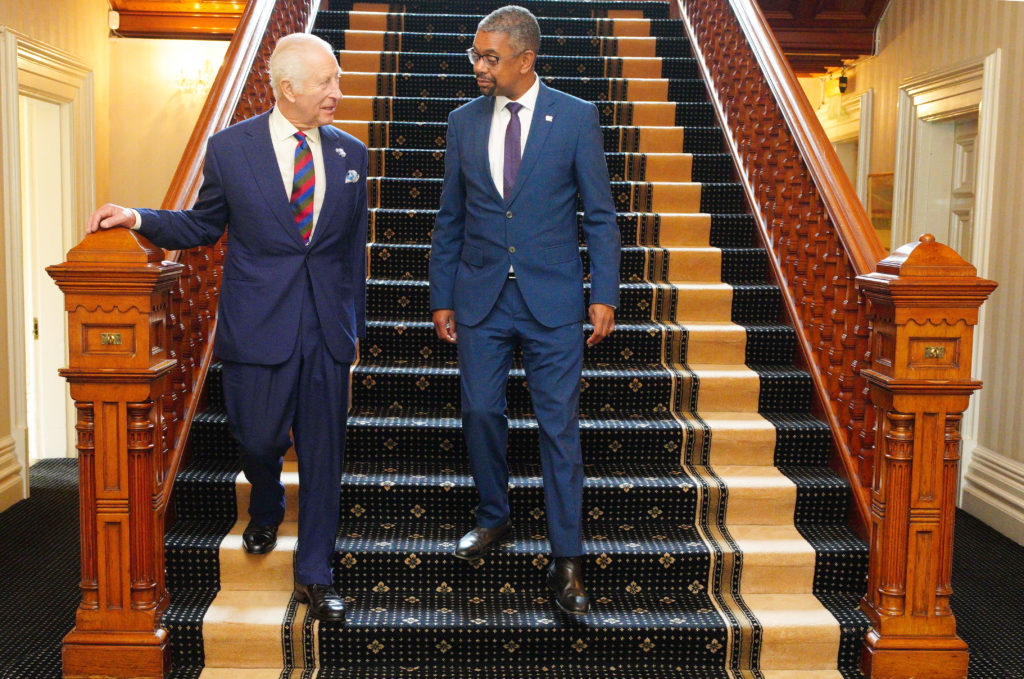
Sometimes we grumble. Sometimes we write letters or opinion pieces for Nation Cymru. But we rarely demand more, and, more often than not, there is no reaction at all. And that, I think, is the point.
However, learned helplessness implies that there was a time before we had learned to give up our needs – when we believed things could be different. That we once resisted, stood up and demanded more – more power, more agency, more of what we thought of as rightly ours. The idea of learned helplessness suggests a process of learning – that something must have happened, over time, for us to lose a sense of our own political agency.
And whilst that may be true, I’m not sure that many amongst recent generations of Welsh people can remember a Wales that truly stood up for itself. The kind of civic confidence that once might have allowed us to draw a line doesn’t feel lost so much as absent. This suggests that, rather than a state of learned helplessness, we now have a form of inherited helplessness – passed down quietly, providing a frame of reference over time for what we can expect, or not expect, from power.
Stockholm Syndrome
Whilst it be an unsettling frame, and one some may well find insulting, Stockholm Syndrome can be a useful rhetorical device for understanding the relationship of ‘England and Wales’, even if we don’t agree with it.
Stockholm Syndrome describes a psychological response in which hostages, held in captivity and deprived of power, begin to identify with their captors. What starts as a survival strategy – aligning with the powerful to reduce harm – can, over time, become a genuine emotional attachment. Victims come to defend those who control them. They internalise the captor’s worldview. Eventually, they may even forget what freedom felt like in the first place.
I believe this speaks to something real in how Wales relates to the British state. Too often, we don’t just tolerate the status quo – we rationalise and defend it. Some of our loudest political voices work hardest to keep things as they are, even when ‘as they are’ means structural neglect. Token projects – a new road here, a train station there – are received like blessings from on high. We go cap-in-hand to Westminster to ask for less than we are owed, as though it is more than we deserve. All the while, inequalities and unmet needs only deepen.
Stockholm syndrome isn’t just about captivity, it’s about consent manufactured over time. When injustice is all you’ve ever known, anything that isn’t openly hostile starts to feel generous. Gratitude replaces agency. You don’t ask for justice when you are thankful for crumbs, or when success is defined in terms of how things could be worse.
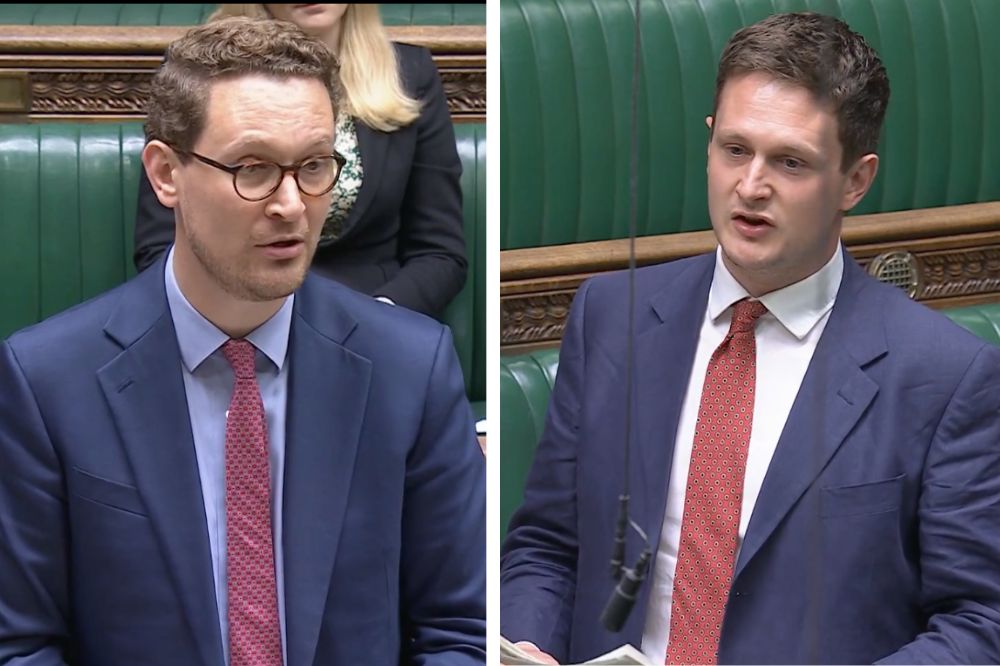
This dynamic was thrown into sharp relief this month when Welsh MP David Chadwick dared to call the UK Government’s approach to rail funding “insulting.” The response from Darren Jones, Chief Secretary to the Treasury, wasn’t denial, but disdain. Speaking in the House of Commons, Jones told Chadwick that he should be “a little bit more grateful.” In doing so, he made it clear that compliance and the performance of thanks is what Westminster expects from Wales. Those of us who make demands risk being slapped down, even if we are only asking for what is rightly ours.
This problem runs deeper than disagreements over policy. In demanding we accept less than we need (and less than others) we have been told we are less important, less worthy, less deserving. In patholigising our resistance, we have been told we are unreasonable to desire autonomy. We may well have come to believe these things as part of psychological capture in which Welsh society has internalised itself as second-class.
This is how subservience is maintained: we are given just enough that Westminster can paint itself as benevolent. We may be told we are getting more than ever before, but that doesn’t mean it is enough, or that it is fair. Those holding the power in Westminster can claim to be offering us a step up, when in reality, the terms of the relationship remain locked firmly in place.
The Illusion of Autonomy
However we define the relationship, it is rooted in an imbalance of power. Take devolution. We are told it represents the will of the people and the transfer of authority. And on paper, it does. But when key powers are withheld, and when Cardiff Bay’s decisions can be dismissed or blocked without consequence, we have to ask what power we really have.
What begins to emerge instead is a form of pseudo-power: a performance of autonomy designed more to pacify than to empower. The Senedd appears central to Welsh political life, but in practice, its authority is constrained by design and its voice is marginalised in decisions taken in Westminster.
This hollowing-out is a dangerous place for any nation to be. It breeds the illusion of progress while ensuring that nothing fundamental shifts. It creates a population just content enough not to rebel, but just powerless enough not to build anything lasting on its own terms. It’s a politics of sedation.
Time to break up, or time to renegotiate the terms of the relationship?
This isn’t about victimhood, or grievance. It’s about recognising a pattern – one many of us feel in our bones, even if we struggle to name it. We are a nation that has been trained not to believe in itself, and that conditioning has consequences.
The good news is that it’s not irreversible. Psychological conditioning can be broken. National confidence can be rebuilt. But only if we start by telling the truth about how things are, how we got here, and what it costs us to remain.
Just because things have always been this way doesn’t mean they always have to be. ‘England and Wales’ may conceal a lot, but within that ambiguity lies possibility: a space to ask better questions, to imagine something different, and to set new terms.
We might not yet have the powers we want, within a relationship of equals. But we already have the power to ask the right questions: where do we go from here? What kind of future do we want? What are we willing to tolerate?
We do not ask these questions enough – but if we’re unhappy with the status quo, we need to start asking them. If we know, deep down, that something isn’t right in how England treats Wales, we have the choice to open a national conversion about why we keep letting it
James Downs is a mental health campaigner, researcher and expert by experience in eating disorders.
He lives in Cardiff and can be contacted at @jamesldowns on X and Instagram, or via his website: jamesdowns.co.uk
Support our Nation today
For the price of a cup of coffee a month you can help us create an independent, not-for-profit, national news service for the people of Wales, by the people of Wales.



When we feel devalued and it is evident now then it is time to go more like Scotland or seek independence.
Separating the UK government from the English administration is the first step to fixing the abusive relationship. The UK PM being the de facto FM of England is a massive conflict of interest. Treasury officials living in London are always going to favour their own patch.
People in Cymru are blinkered to the situation their country is in. I was years ago. For a start I was only taught British (English) history in school. A subtle form of indoctrination. The only way the Senedd to become stronger is through independence. The parliament should take it upon itself to publicize the power it could have, for the benefit of the country, to the people of the country. Hopefully, if Plaid gain power next year that can start happening. To de-indoctrinate ourselves the truth needs to be widely spread and an alternative brighter future laid out instead..
alsolutely that positive case desperately needs to be made, otherwise we might lose the limited powers we do have
I wish to thank the author for this article. The ‘England and Wales’ structure has never been a partnership of equals. The centralised Westminster machine can always override the power of the Senedd in Cardiff but our Senedd can never override the dictate of Westminster not the UK machine. It cannot continue that way. When the Senedd and the Scottish parliament was set up, we failed to consider why England (or its cultural regions) were not also having assemblies. It would have made common sense to decentralise the monster bureaucracy which is the UK state. This is what should have… Read more »
thank you, I am glad it is helpful! I didn’t address what the alternatives might be, like you have, which is also a huge part of the conversation we need (IMO!)
Well thought out and argued article. This should be compulsory reading for all those putting themselves forward to be our potential political representatives.
Thank you! I guess the task for them is to do more than ask the questions I have asked – they need to be able to articulate a vision for the relationship, too!
“Stockholm Syndrome” doesn’t exist; it was created as a diagnosis based on a single case, a case where a hostage thought she was more likely to be killed or injured by the attending police than her captors, and later shown to be sexist nonsense. That aside, suggesting we as a nation should be grateful for table scraps thrown at us with very bad grace while the usual suspects dine in style is the usual English arrogance writ large. We need to stop voting for the status quo and start voting for the only party that will do something about it,… Read more »
Not suggesting Stockholm syndrome is a diagnostic entity, in this context it is only a rhetorical device for analysis
Is the extension of these rather dated ideas from psychology (Seligman’s 1960’s experiments on learned helplessness involved giving dogs electric shocks) to the politics of a nation really valid? If in anyway valid, how did so many nations in the 20th Century emancipate themselves? Were they immune to these phenomena in ways Wales Is not? Do the author’s ideas on Welsh “inherited helplessness” kindle confidence that Wales would succeed as an independent state or imply there is something flaky about the Welsh and maybe something cautionary in the “too small, too poor, too stupid” trope after all?