


What makes a good leader in politics?
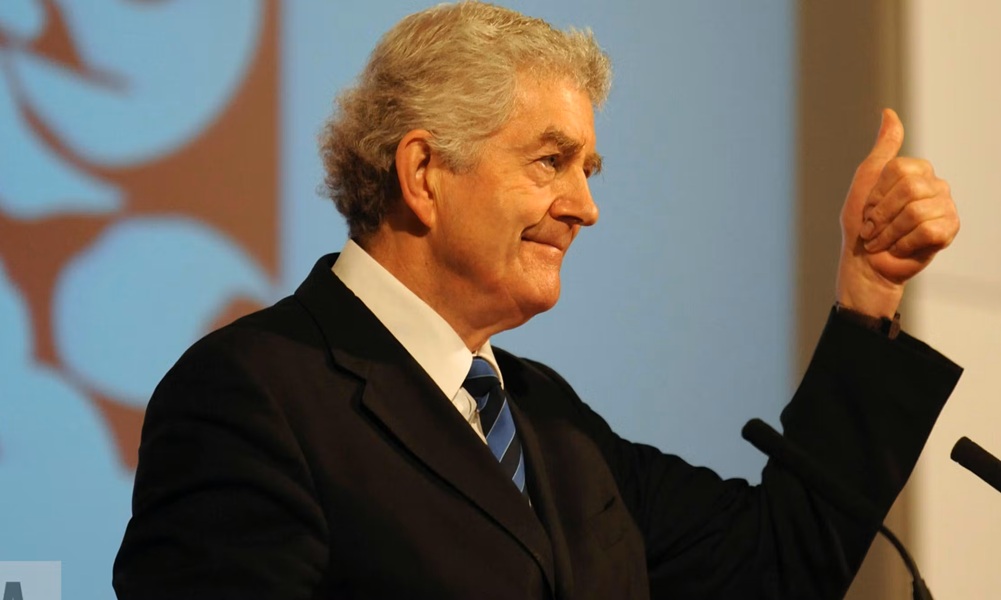
Desmond Clifford
Leadership: you know it when you see it but it’s hard to define. If you could bottle it and sell it, you’d make a fortune. Until someone’s bum is on the chair and doing the job for real, you just can’t tell.
Keir Starmer, many of us thought, would be an excellent leader, but look how that’s turned out. He was a lawyer, the nation’s chief prosecutor, and so good at his job he got a gong. Many of us thought his serious deliberation would translate into good judgement and sound leadership.
Anything but. As the Olly Robbins saga showed, at the first sign of incoming he flaps like a headless chicken and looks for someone to throw overboard. It wasn’t me, Miss! It’s unedifying, and wearisome. It’s no good being a Foreign Secretary manqué if he can’t do the day job.
In 1997 Tony Blair overlooked Rhodri Morgan for the most junior ministerial role in the whole UK Government, junior minister at the Welsh Office, because, basically, he didn’t think he was good enough. Rhodri’s mistreatment at Blair’s hands was a cause célèbre at the time. Blair thought he was too old, too scruffy and too shambolic to be a convincing New Labour minister.
Actually, he may have been right. Politics is about horses for courses. It’s hard to imagine Rhodri doing very well in Whitehall, he was simply too irregular. But as it turned out, the very things which Blair disliked were loved by Welsh voters.
Rhodri’s genuine scruffiness – there was nothing affected about it – was accepted as authenticity. His age was no barrier; Wales has the highest median age in the UK so lots of voters through he was a whippersnapper. And if he was a little shambolic, what could be more Welsh?
In relative terms, Rhodri was wildly popular as First Minister. When he stood down after 10 years his personal ratings were higher than Barack Obama’s at the start of his presidency.
Somehow Rhodri had a persona apart from the party he led so that when Labour dipped, for example at the 2007 election, Rhodri remained personally popular. Some Labour members became fed-up with his aloofness from the party but across wider Wales that was part of his appeal.
It would be overboard to say he was non-partisan, but he didn’t give tuppence for Blair or the UK party and he bravely stuck to his guns in forming the coalition with Plaid Cymru in 2007, facing down Labour’s spluttering grandees.
As a result, and because he was older, he developed a “father of the nation” persona. After he retired from politics, he was given a column in the Western Mail under the moniker “Mr Wales”: it would have sounded utterly ridiculous attached to any name but Rhodri’s.
As a public speaker Rhodri was hit and miss. He was prone to verbosity and used a thousand words when a hundred might do. Talking was sometimes his way of keeping the world at the bay. If he was talking, someone else wasn’t – Pep Guardiola plays football with the same philosophy; if you’ve got the ball, the opposition hasn’t. But on his day, he could be a scintillating speaker: witty, entertaining, knowledgeable.
“Knowledgeable” doesn’t really do justice to it; he was a walking google search engine. He had angry moments, but his temper was generally level, and he had an eye for the absurdities of life. He treated everyone the same – the Queen and prime minister no differently – and had no trace of pomposity.
Before long there will be a statue of Rhodri outside the Senedd, the first devolution era politician to be so honoured.
Authority
Rhodri was succeeded by Carwyn Jones who also served for nearly decade. The two could hardly have been more different and yet Carwyn, too, was a successful leader.
In private Carwyn could be taciturn where Rhodri was garrulous. He was a skilled public speaker, honed through his pre-politics job as a barrister. Courtroom skills also meant he could swallow and regurgitate a detailed brief expertly in political debate, conveying a good sense of authority.
He lacked the breadth of Rhodri’s knowledge base – no shame, everybody did – but was a geek in some areas, notably transport and rugby. Carwyn had encyclopaedic knowledge of bus and train routes around Wales and, as often as not, could you tell you the time of the next bus from Carmarthen to Lampeter.
He was smartly and conservatively dressed and rather formal in his approach, including his relationship with his ministers. He was known as a managerial First Minister and chaired cabinet briskly. He was especially effective in summing up difficult and bad-tempered discussion in a way that made everyone feel there was agreement and harmony.
The public liked his managerial professionalism. There wasn’t much heart-on-sleeve passion in his politics, but he was sensible and methodical. He was disinclined to over-promise and this muted style stood him in good stead – politicians are quick to get carried away and it comes back to bite them.
The public prefers honest appraisal and politics often goes wrong because ministers promised too much to begin with. Examples are Gordon Brown’s “no more boom and bust” (o dear!) and Eluned Morgan’s “partnership in power” (o dear, dear!).
The third and final example from the Senedd is Mark Drakeford. In a way, he was the least likely effective Senedd leader of all, yet there is much more to him than meets the eye.
Professorial
In Senedd history, only Rhodri Morgan was more careless with clothes and image (if this feels unduly personal, I should fess up that I’m not exactly David Gandy myself). He was professorial (he was actually a professor), softly spoken, self-effacing, ideological, stubborn. He’s a decent public speaker but jokes are few and far between and the tone is serious, learned.
His default was set to courtesy, but he was quite happy to get tribal if provoked; his dislike of Conservative ideology is intense and genuine.
Rhodri Morgan was Mark’s great friend and in some senses mentor. While Rhodri was hard to pin down and uncluttered by specific ideology, Mark was deeply ideological. Along with Mick Antoniw, Mark was the most left-wing member of the Senedd, ever.
Mark was Corbyn-ist before it even existed though, unlike Corbyn, he was focussed on community issues and relatively uninterested in foreign global causes. He was conservative, cricket-loving and other-worldly; this masked his real radicalism, and I don’t think most Welsh voters realised just how left-wing he really was.
I mentioned earlier “horses for causes”. When Covid struck Mark Drakeford came into his own. He threw himself into the work, his diligence was unmatched by anyone. He provided calm and clear leadership and through daily press conferences – which attracted enormous TV audiences – he formed a direct relationship with people in their homes.
He provided assurance when the country needed it and without being glib or self-aggrandising. It was a unique leadership performance and earned respect, even from people who didn’t support his politics.
According to the polls, the next First Minister will be Rhun ap Iorwerth of Plaid Cymru or, at a stretch, Dan Thomas of Reform.
Blandest
It’s interesting to note that Reform scoured the country for the blandest, most boring Reform-er they could find. The contrast with Nigel Farage couldn’t be more glaring – even his worst enemies don’t call him boring. But boring is a tactic; they want nothing to interfere with Reform’s bigger aim of getting Farage into No 10.
Rhun ap Iorwerth exudes freshness and energy. He speaks well, he’s personable and is the only candidate First Minister who seems seriously to want the job. Increasingly it looks likely it will be his bum on the seat. Only then will he – and we – find out for sure if, and to what extent, leadership is his thing.
Support our Nation today
For the price of a cup of coffee a month you can help us create an independent, not-for-profit, national news service for the people of Wales, by the people of Wales.
Get more trusted Welsh news
Choose Nation.Cymru as a preferred source in Google News to see more of our journalism.



One feature Rhodri Morgan, Carwyn Jones and Mark Drakeford demonstrated was a willingness to stand up for their vision of what was going to meet the needs of the people of Wales. They all had strong roots here.
I hope that whoever is the next First Minister will follow in their footsteps and make decisions on that basis.
It’s hard to evaluate Rhun’s leadership as so far, like Starmer as opposition leader, he hasn’t had to do much except look plausible, avoid all difficult issues, and watch the government fall to bits. His record suggests that he’s a standard-issue sincere-suited smoothie with a great deal of confidence and not much to be confident about. Despite their differences, Morgan, Jones and Drakeford were all recognisably Labour politicians in a way that the current lot – most of whom plainly joined Labour purely because it was the governing party – are not. Each of them, even Drakeford, now seems like… Read more »
There is only one leadership test that matters. Did they leave Wales a better place than they found it? The voters answer next week is likely to be a resounding “No” after 27 years. Rhodri Morgan in particular had both the strong mandate and the money to bring about positive change; but didn’t use them.