
Where is Wales’ Braveheart? Why the world still ignores Owain Glyndŵr
Antony David Davies
Look across these islands and watch how their legends blaze across the world’s screens.
England has Robin Hood forever loosing arrows through Sherwood. It has King Arthur — riding from Camelot in film after film, so deeply woven into global myth that few even ask where he truly came from.
Scotland’s banners crackle with Braveheart and Rob Roy, turning rebellion into worldwide spectacle. Ireland has Michael Collins — revolutionary, tragic, immortalised by Hollywood.
And Wales?
Wales, land of song and stone, of poets, preachers and fierce hearts, stands strangely silent.
Why is there no great cinematic epic — from Hollywood or even Britain itself — telling the story of Owain Glyndŵr?
For all the quiet brilliance of Welsh drama in recent years, nothing has yet dared to tell this story at scale — and that absence echoes louder with every passing year.
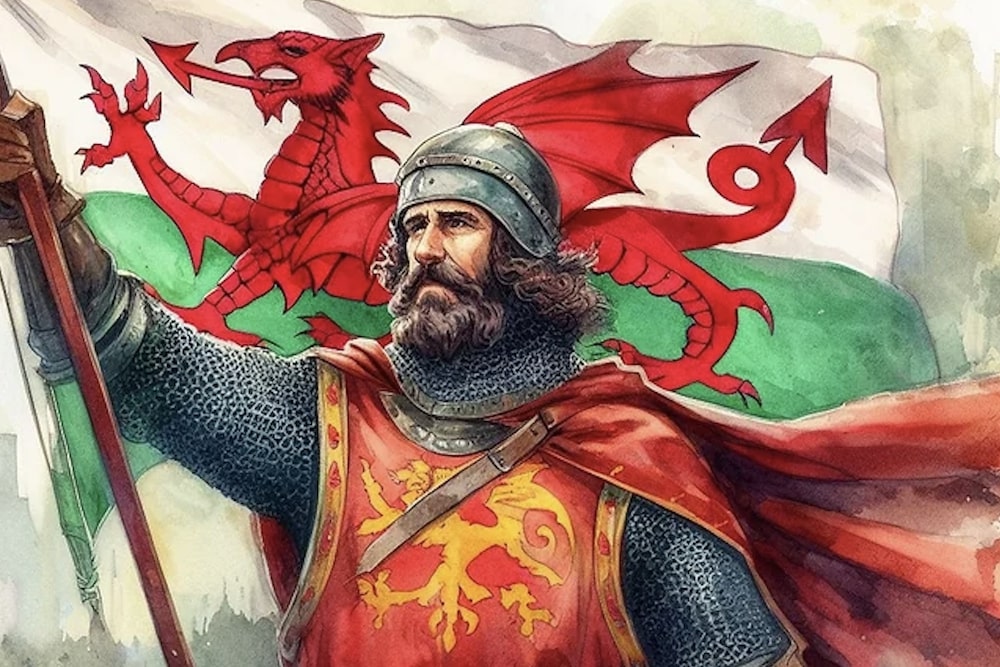
Here was a man who rose from the wooded heart of Wales to be crowned Prince of Wales. Who united quarrelling lords and humble farmers under a single banner. Who torched the Marches, laid siege to mighty castles, and dreamed of a parliament, a university, a church free of foreign bishops. For nearly fifteen years, he defied the greatest power in Europe. And then — almost miraculously — he vanished into legend, never captured, never betrayed, leaving only the prophecy that he would return when Wales most needed him.
Castles ablaze
Picture it on screen: thunder rolling over Glyndyfrdwy as Owain lifts his standard. English armies inching through rain-drenched valleys, harried by guerrilla raids from hawthorn hedges. Castles ablaze against black skies.
A defiant parliament by candlelight at Machynlleth, forging a Welsh future in whispers and wax. And in the final haunting frame, Glyndŵr slipping into the forest, his cloak swallowed by the trees, flames of English garrisons still licking the horizon behind him.
This is a story made for cinema — wilder, sadder, braver than anything yet told.
So why has it never been filmed? Why should Wales always be the chorus in someone else’s epic — and never the hero?
Meanwhile Arthur — whose roots lie not in England at all but in the soil of Wales — rides on, decade after decade, cleansed of his origins. The earliest Arthur was a Brittonic war leader, fighting Saxon invaders on behalf of the ancestors of today’s Welsh. He sprang from the fierce, beautiful lines of early Welsh poetry, and from the enchanted hills of the Mabinogion.
But Arthur was taken. Claimed by Norman kings desperate to drape themselves in legend, by Tudors eager to weld England and Wales into a single story, by Victorians who polished him into a chivalric English Christ-figure. Wales gave Britain its greatest myth — and watched it be repackaged as someone else’s birthright.
Irony
And the irony deepens. Wales — the very cradle of Arthur’s legend — has been used again and again as a filming location for his cinematic reincarnations. From the valleys to the mountains, our landscapes have played host to a version of Arthur scrubbed clean of his Welsh identity — an Anglicanised king draped in English myth.
Our hills are good enough for their legend, but not, it seems, for our own.
We supply the scenery — while others steal the soul.
And so Glyndŵr, who actually lived, who bled and burned for the idea of a Welsh nation, stands in silence.
Why? Is his rebellion too unsettling, his cry for a free Wales too awkward for a British film industry still wedded to old, comfortable myths? Or does the world simply not look to Wales for heroes — content to see us as a choir, a rugby team, a pretty green backdrop to someone else’s legend?
This silence is dangerous. Films like Braveheart or Michael Collins didn’t just entertain — they rewrote how nations see themselves, and how others see them. They gave their people new mirrors, new reasons to walk taller.
So where are our mirrors?
Epic
A Glyndŵr epic could do more than move hearts — it could lift Wales onto the world’s screens, boosting global curiosity, cultural respect, and tourism. It could become a permanent feature of school life — a film children watch year after year, seeing in Glyndŵr not just a rebel, but a leader, a visionary, a true Welsh hero. It would give us — finally — a story we could hand down with pride, a legend we wouldn’t have to borrow or explain away.
Where is Wales’ epic?/
Where is Glyndŵr — our thunder, our heartbreak, our unconquered dream — striding across cinema screens?
It is time Wales stopped waiting meekly.
Time for our writers, our producers, our leaders — and every one of us who cares about this small, fierce nation — to stop treating our stories as footnotes.
To demand that Glyndŵr’s saga is finally told with the raw power it deserves.
Because when a nation lets its heroes fade into silence, it loses more than history.
It loses a piece of its soul.
Wales must not live forever inside someone else’s myth.
It is time to rise, claim our stories, and show the world that the Men of Harlech still stand — unbroken, unbowed, and ready at last to be heard.
Antony David Davies FRSA is a historian of Welsh upland communities, author of Old Llyfnant Farming Families, with deep family roots in Montgomeryshire.
Support our Nation today
For the price of a cup of coffee a month you can help us create an independent, not-for-profit, national news service for the people of Wales, by the people of Wales.



Owain Glyndŵr does not get recognition probably because the English censorship board, or whatever they are called, keep a constant watch on what Cymru does and if they don’t like what they see or read they stop it in its tracks and delete it immediately. Cymru is not allowed to raise from the ashes. How many of us ever studied Hanes Cymraeg/Welsh History as a subject in school? Not many I bet!!
There are libraries and bookshops full of books on the subject and hopefully at least one adult in the family who can read…
Aber do a great mature student Hanes Cymru course…
RIP Coleg Harlech…
The solution is to by-pass England and get Hollywood on board.
Our national identity, culture, history and language has survived because of people such as Owain Glyndwr, despite the censorship and propaganda that comes from over the border. The British Broadcasting Corporation should be prosecuted under the Trades Description Act, such is the extent of their arrogant pro England anti Cymru bias.
We need a concerted campaign to officially replace any reference to the English royal family in our country, such as naming the newer Severn crossing ‘Pont Owain Glyndwr’ rather than something a disgraced politician attempted, which even the outsider Charlie Saxe-Coburg-Gotha admitted he was ashamed of.
I’d have thought Owain would be too far left for you Jonesy
Owain was for his Cymru against the English, I expect he’d also have a dislike for todays polarised pendulum politics, whether is be Loony Left or Nasty Right.
A thousand upticks for this this article – I have long dreamt of a Braveheart style film about Glyndwr (but without the historical inaccuracies). Of course it should be made in Cymraeg, not english. Maybe Michael Sheen could help?
Film it in both languages, so folks such as I, brought up in Saesneg culture can easily learn about their Cymric heritage. No paper trail from Cymru, but I AM A CYMRO!
Agreed. The Welsh characters in a film should speak Cymraeg, the english characters speak english, and so on. Reading subtitles is not that difficult; there were some in Braveheart too. Anyway we don’t have a film yet; let us wait and see.
I thought they meant two separate versions, like Keeping Faith/Un Bore Mercher.
Well, in that case, for historical accuracy, you’d have to have characters speak in the versions of the day. Then you’d need to pick which language you’d want your subtitles to be in. A lot of movie-goers find subtitles hard. I’d love to see a blockbuster film about OG in Welsh, but I’d settle for getting the story out there, getting extracts of our language, our music and possibly our poetry too.
Making it in Cymraeg just limits its reach and means that the only people who will watch it are those who are already convinced.
Attitudes to subtitles are changing. Parasite was a mainstream global hit in its native Korean language. Mel Gibson’s “Passion” made over $600m despite being entirely in Aramaic, Latin and Hebrew. For the diehards it can still be dubbed into a dozen languages which is normal on streaming platforms.
A wonderful rallying call Antony. On Arthur, I recall a TV discussion many moons ago. Someone suggested that Camelot could be Caerleon. The Chair, the populist Richard Madeley, furiously stated “that’s ridiculous”. When it was claimed that Arthur could be Welsh, Madeley interjected with “nobody has ever said that before”. The London audience nodded in agreement. There should be films, stage plays, poetry, and school projects about Glyndwr, and other icons of Cymru. Obviously it would go down like a lead balloon with the Unionists, who want us Welsh to just zip our mouths and meekly accept mega wind turbines,… Read more »
Madeley is an ignoramus who obviously has no idea that Tennyson stayed in Caerleon to write “Idylls of the Kings” based upon the Arthurian tradition.
You were doing well until you got onto wind farms and reservoirs. When Cymru is independent, selling renewable power and water to the english and others will be a major benefit to our economy. Beside, I often walk in the Brechfa forest and I love to see the turbines looming up over the trees; they are beautiful modern sculptures and unlike other means of generating power, they do not take up much land, and could be removed without trace if we find a better way in the future. As you are against them, I suppose you don’t have electricity at… Read more »
I assume those of you downticking my praise of wind farms would prefer an alternative means of electricity generation? So nuclear, gas, oil or even ,god help us, coal? Provided, of course, they are sited a long way from where you live? Thought so.
,
Even if a film was made the industry would probably use anyone except Welsh-born actors who would no doubt refer to Owain Glyndŵr as Owen Glendower.
Only if it was made in english, by an english production company. Surely we could raise the money here?
Because it would show the English for what they are and what they have done to Wales although it happened centuries ago it was an illegal invasion of another country murdering our ancestors and forcing our country to become a COLONY OF england because that is what we are the invasion of Wales is no different to the invasion of Ukraine by Russia both illegal and London government s**g off Russia when they have done it to us
Spot on.
Two main reasons, the USA is ignorant of geography and unlike Ireland and Scotland, Wales is a unknown quantity and therefore as a large part of funding for films is arranged and comes from the USA they immediately think there is no market for a story from an unknown place. Another source of funding has been London and tax avoidance, but the English generally do not like the idea of funding something that potentially will put them in a bad light and therefore see no market for it in England or the USA (knowing that they will be ignorant of… Read more »
Yet Mike Leigh manages to get money for his films. Peterloo was hardly praising the english establishment was it?
Exactly, Wales doesn’t have the ‘brand recognition’ of Ireland or Scotland… remember when Mickey Rourke wanted to change Gareth Thomas’ nationality to Irish for his biopic? Most ‘Welsh’ films are funded by London money and are full of English actors and crew. The Welsh War of Independence is a great story but you can’t just marlet it as a ‘Welsh Braveheart’ and expect people to lap it up. It is frustrating that people know so little about us and our history but these types of films won’t be made in the current financial clkmate… if you want to influence people… Read more »
Glyndwr is not celebrated because his memory is too dangerous. Some years ago a poll was held in Cymru to choose the greatest Welshman in history. Glyndwr came first, with Nye Bevan second. The organisers of the poll decided this was too controversial to announce and made Bevan the winner. Much as I admire the “projectile from the Valleys” who stirred up Westminster and gave us the NHS, this was a craven thing to do. Bevan’s explicit rejection of nationalism was doubtless a factor. Our national hero, who led a rising that threw the Normans out for many years and… Read more »
Exactly.
I was about to add my own comments about that poll John but you beat me to it. The results of that poll were definitely politically motivated by elements of the Welsh Labour party. Yes Bevan should be credited for establishing the NHS, but a national hero to Wales? He favoured over-centralisation and opposed devolution. Every country has a national hero, why is Cymru any different? Nationalism isn’t always a bad thing and those attack Welsh nationalism can be hypocritical by embracing British nationalism.
It is important to distinguish between civic nationalism, (eg Scotland) which is open to the world, welcomes newcomers, and believes in close connections with neighbours (the EU in our case), and the other type, as demonstrated by tired colonialist powers like England. England has not yet gotten over the fact that the empire no longer exists, and they seem to be far too keen to hang onto their first colony, ie Cymru. The sad thing is that independence for Scotland and Cymru, along with the reunification of Ireland, would only be of benefit to the english, once they get over… Read more »
The Labour Party in Cymru have actively done more to damage our culture and language than the Blue Books and the Welsh Not put together. They are British unionist to their very core and have done everything and anything to diminish Cymru. The Labour Party in Cymru are the archetypal fifth columnists – perpetuating British colonial power in Cymru.
For a major epic on Owain Glyndwr to get off the ground and on to international screens, the first step would be for a talented scriptwriter to produce a powerful script. Secondly someone of influence needs to approach the Hollywood Studios or accomplished directors within that media to sell the project and secure adequate funding, it couldn’t be done on a shoestring budget because of the scope of the story. As with the Braveheart production, Ireland could be a cheaper option for studio work than English studios although Cymru has a studio that might be able to cope with such… Read more »
I’m sure Anthony Hopkins could influence the film industry to produce a film. Luke Evans, Ioan Gruffydd or Michael Sheen could star as Owain.
The new Welsh National Theatre is putting on a stage version in November 2026. Start from there? A film would take a big team. Come on, Wales!
To England he is their Achilles Heel to mention the great man when it comes to Wales and England do not like bad publicity
Read the article in Nation Cymru. 29/01/2023 “Viva la revolución: Che Guevara’s surprising Welsh connections”.
Everytime I have traveled abroad particularly to the USA, I have to explain to people that Wales is its own country and not part of England. I don’t think Scottish and Irish visitors ever have this problem. Surprisingly however I have been told by many Americans that they have Welsh ancestry but don’t know anything about Wales. The Scots and the Irish have tapped into their diasporas, Wales has not. An Owain Glyndwr film could do wonders for Wales. Enhance the image of our nation across the globe, boost our tourism industry, even educate our own children about Welsh history.… Read more »
We have a Welsh Government that should be promoting Cymru all over the world.
Rob and Ryan have done more promoting Wrecsam & Cymru than the Welsh Tourist Board.
His is a compelling story for sure – and the fact his fate remains uncertain would certainly make for a excellent movie. But if Owain’s story ever does make it to celluloid lets not use ‘Braveheart’ as a template please – entertaining it may have been but some of its historical inaccuracies were enough to make one wince.
The story of Owain Glyndŵr does work to inspire. From a personal point of view I knew little of this hero until I went back to college and completed an essay on his his persuasive personality and military exploits. Research led me to finally look closer at how our neighbour treats us and the poverty it has created. I had never leaned towards an independent Cymru beforehand now that has all changed. The need for everyone in our country to know the full history of their main hero is extremely important on the road to the independence he fought for.
Good for you. Spread the word as much as possible. It is unbelievable how uneducated the people of Cymru are about their own history. English history has been drummed into us all our lives and it is now time to wake up to the past atrocities inflicted on our country and the Cymry and still continues today but in a more civilised manner.
“Is his rebellion too unsettling, his cry for a free Wales too awkward for a British film industry still wedded to old, comfortable myths?” There’s your main reason for Glyndwr’s no-show in a British movie.
To hell with the British film industry, give it to Hollywood. Have it directed by Tarantino
It would have to be produced by a totally unbiased film maker as a British film maker’s version of what happened would be twisted and influenced in favour of the oppressors of the time. The truth would never be told. It’s akin to the American westerns where the Indians are always the baddies, never the cowboys and soldiers who were stealing the land and massacring the indigenous people.
Mae’n ddiddorol nad oes un sylwad yn sôn am y posibilrwydd o weithio da cwmniau ffilm o rannau eraill o ein cyfandir neu’r byd fel pe bai ffilmiau/ dramau sy’n wneud i’r gynudlleidfa cwestiynnu a meddwl yn ddwys ddim yn cael ei wneud yn ieithoedd sy ddim yn English. Os na fydd y ffilm yn cynnwys sawl iaith (cofiwch fe wnaeth y Ffrancwyr a’r Llydawyr cymrud rhan yn y frwydr) fe fydd hi’n generic – hollywoodaidd/ ffug i bob pwrpas. Roedd Glyndwr wedi treulio amser yn sawl wlad cyn i’r frwydr am annibyniaeth ddechrau ac felly roedd ganddo profiad o… Read more »
King Arthur….English?!?! He (even if he existed) predates the “English” (and the French romantic embellishment) by several hundred years…
Another historical figure that would make a great film would be the story of Gwenllian of Kidwelly who led an army against the Normans who were trying to conquer and colonise the south west. A woman leading an army at the time was unheard of. She was fought with immense bravery, Gwenllian was eventually captured and beheaded by the enemy.
Is t King Arthur Welsh?
Much as we (in Cymru) venerate ‘The OG’, a blockbuster Hollywood film about him is a perennial ‘non-starter’ no matter what ‘Sheen’ you put on it. Modern audiences might prefer to view (and investors fund and stream) film historical epics about Rhiannon (female and name recognition) or The Lost Colony (treachery and treasure) or the 18-19th century settlers in the US (look them up). There are many many documented stories involving the Welsh and it’s diaspora.without having to dive into ancient history or antagonise the saes.
Great article. I remember feeling the same as a young man in Scotland: why don’t we have heroes? Why are our people always portrait in films as supporting characters. If we want to rouse our people to independence we need a hero…and as luck would have it within a couple of years we had Braveheart and Rob Roy…and the drive towards independence accelerated. Wales needs it’s blockbuster, Glyndŵr is also a tale that needs told. Surely, with your links to Hollywood and the wonderful and passionate Welshman Michael Sheen something can be done. Hollywood is looking for stories. Now is… Read more »