


Where’s the Welsh language in cinema?

Nia Edwards-Behi
Though there were pioneers of cinema working in Wales in the medium’s earliest days, it was 1935 before the first Welsh language film was produced, namely Y Chwarelwr (Ifan ab Owen Edwards), and over a decade later came the next: Yr Etifeddiaeth (John Roberts Williams, 1949) and Noson Lawen (G. Mark Lloyd, 1950).
Two decades later, some of the nation’s greats recognised the power of cinema in the fight for language rights and established the Welsh Film Board. Despite their heroic efforts in the ’70s and ’80s – which included producing cult films Gwaed ar y Sêr and O’r Daear Hen (Wil Aaron, 1975 & 1981) – there was little official support for their work.
A century after Y Chwarlewr – filmed in the same area – comes Effi o Blaenau, directed by Marc Evans and adapted by Gary Owen from his stage play, Iphigenia in Splott.
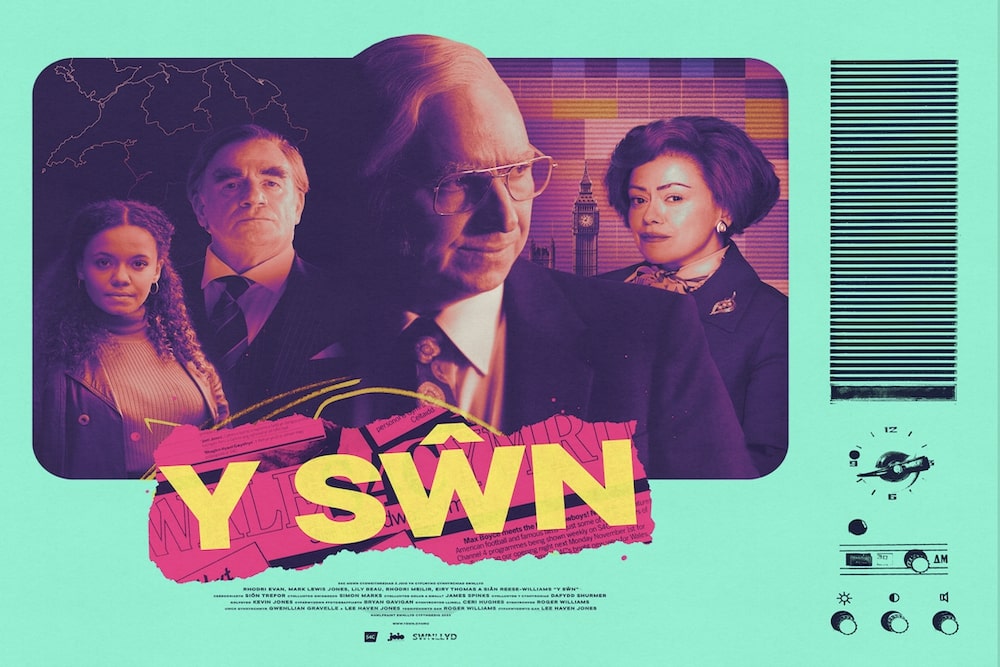
The Welsh language has received some relative prominence on the big screen very recently, thanks in the main perhaps to Gwledd (2021) and Y Sŵn (2023), both collaborations between director Lee Haven Jones and writer Roger Williams. It’s unusual, however, that Effi reaches the big screen less than a year since another Welsh language film – namely Tanau’r Lloer (Chris Forster, 2025). The last time this happened, as far as I know, was a decade ago, with Yr Ymadawiad (Gareth Bryn) and Y Llyfrgell (Euros Lyn); and before that, 2008. It’s very rare to get to see more than one Welsh language film in cinemas in a year, if even that.
Since the arrival of S4C in the ’80s, and official recognition for Welsh language rights, the last four decades have seen what feels like significant screen activity in Welsh. It’s fair to say that the small screen dominates in this regard, whether that’s television, computer or phone.
We’re fortunate in Wales that so many independent cinemas are willing and able to hold special, even one-off, screenings, as this is often the only way to see Welsh language films on the big screen. Rare are the Welsh language films that are widely released, by a ‘major’ distributor.
There is a loss to culture when its imagination cannot be seen on the big screen. For some there might not be a difference between watching a film in the cinema and watching a series on their phone, but that’s a sad perspective. Being able to come together, to watch and listen to ourselves, in the sacred space of the cinema, is an experience that cannot be recreated elsewhere, no matter how good our home entertainment systems.
Without hearing the Welsh language – and all its accents and dialects – in the cinema, an idea grows that there is no such thing as a Welsh language film and that the cinema is not the place for its speakers. There is a cultural void, for us, and for the rest of the world.
I’m not from Blaenau Ffestiniog, but perhaps one of my favourite things about Effi, as well as its gripping story and brilliant performance by Leisa Gwenllian, was how familiar it felt. From the tunnels of the A55, to Victoria Dock, to nain watching Dechrau Canu, Dechrau Canmol, to every single Welshified swear word that comes from Effi’s mouth, the film, despite its tragedy (she’s based on a Greek heroine, after all), is comfortable.
The sheer pleasure of recognising locations, characters, familiar vocabulary in a film is unparalleled. No matter how cynical one gets, the frisson of recognising a little something of ourselves in a film is important. Being able to do that in a cinema full of other people seems even more essential. It creates a temporary community, in the dark, allowing for cultivation, creation, and reinforcement of communities in the light of day.
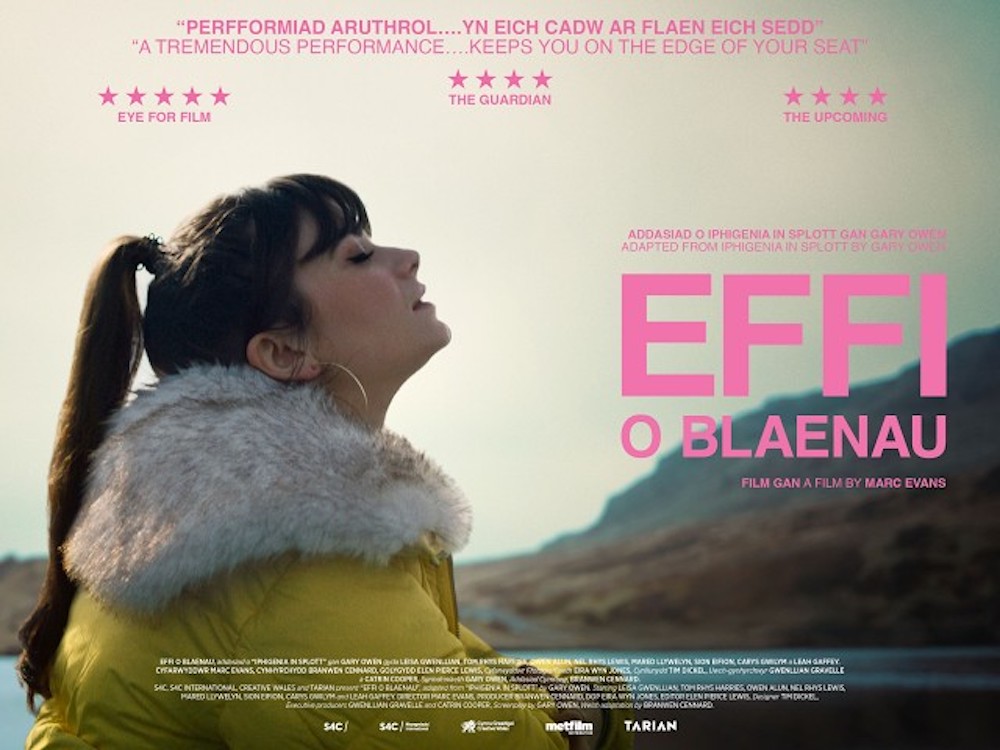
Effi o Blaenau is coming to cinemas across the UK from June 19, 2026, with its Welsh premiere at Cellb on June 17.
The film has various connections to Wales including director Marc Evans, producer Branwen Cennard and a cast featuring Leisa Gwenllian, Tom Rhys Harries, Owen Alun, Nel Rhys Lewis, Mared Llywelyn and Sion Eifon. It was filmed in Blaenau Ffestiniog, Caernarfon, Port Talbot and was funded by Creative Wales and S4C.
This article was commissioned by Film Hub Wales as part of its Made in Wales project, which celebrates films with Welsh connections, thanks to funding from Creative Wales and the National Lottery via the BFI.
About Nia Edwards-Behi
Nia holds a doctorate from Aberystwyth University and works at the Screen and Sound Archive of the National Library of Wales. She is the co-director of the Abertoir Horror Festival, a programmer for the Wales One World Film Festival and contributes regularly to events and publications on film. Throughout her career, Nia has specialised in issues of representation, inclusion, and access.
Support our Nation today
For the price of a cup of coffee a month you can help us create an independent, not-for-profit, national news service for the people of Wales, by the people of Wales.
Get more trusted Welsh news
Choose Nation.Cymru as a preferred source in Google News to see more of our journalism.



‘Eldra’ and the work of Ioan Gruffudd, worth a mention…
Who were these ‘pioneers’, I know but I went to Aber. The effect of the miners institutes ‘talkies’ on the uptake of English that followed, a preamble could have been most illuminating, had space permitted…
There are a lot of Welsh language films that deserve a far wider audience but we just don’t get the oportunity to see them. There is the delightful Gwenoliad about London children evacuated to a small Welsh village in WW2 filmed in Aberllefenni. There are a few that can be found on the internet from both legitimate and other sources.. Hedd Wyn can be viewed for free on the BFI Player website, but that still leaves a lot that are to all intents and purposes inacessible to the vast majority unless they are prepared to traipse to the National Library… Read more »
TV land, Cinema Nation; has there been a proper conversation since Yogi Bear got his electronics degree, I don’t suppose you are related to that great manufacturer…
‘Babel’, one is not entirely of society without a television, I recently found out that an insurance company can renege on a contents policy if one does not posses at least one TV…gospel…plus the only films for getting on forty years I’ve seen at the cinema have been premiers with yours truly in the movie…ha ha ha and still the bastards keep hassling me, you could not make it up…