


Whizz, bang!
Ben Wildsmith
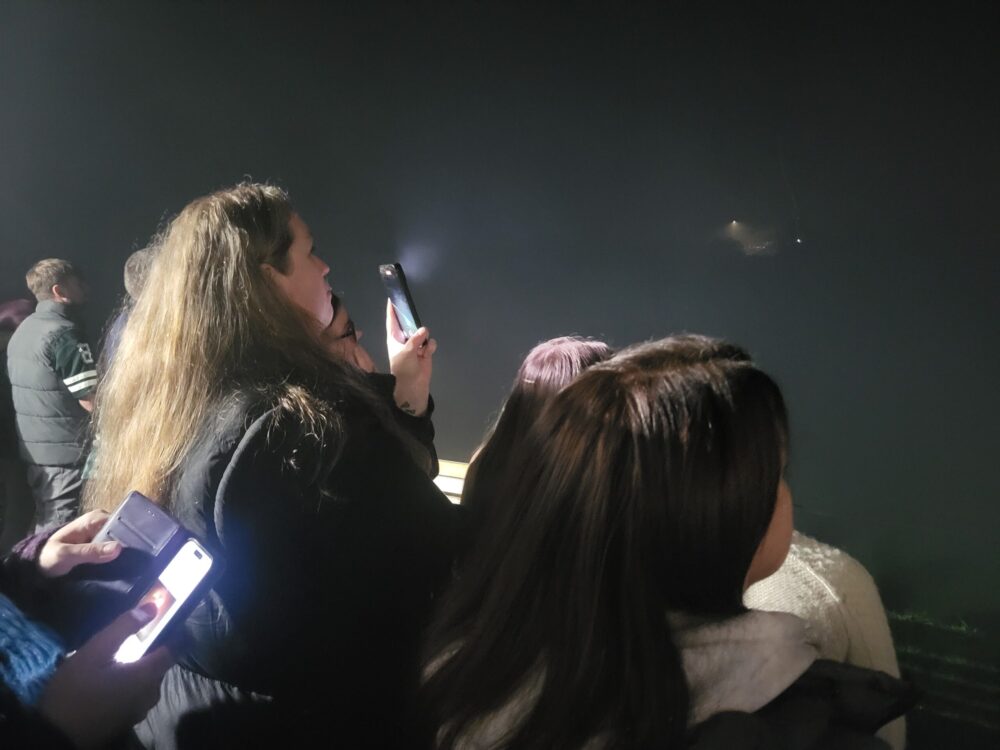
At a fireworks display I attended last night, a contingent of the crowd was filming the sky on their phones. These weren’t little snatches of video to share on social media but the whole 45-minute display.
On Tuesday, I’m off to see Bob Dylan in Swansea. Included with my virtual tickets were instructions about the pouch in which my phone will have to be locked as a condition of attending the show.
Bootlegging Bob Dylan shows is a branch of the music business that has thrived for sixty years, so I doubt that it’s paranoia about that which drove this decision. I’d like to think that kindly old Uncle Bob is trying to save us from ourselves.
Archiving our experiences whilst they are ongoing is part of a new normal that sees us becoming detached from our own lives. I play music onstage myself from time to time and find myself profoundly unsettled by people standing stock still at the front, filming lengthy parts of my performance.
Leaving aside how presumptive and intrusive such behaviour is – they never ask if I mind – it just seems so skewed and weird.
Live music is designed as an immediate experience. In contrast to studio recordings, live shows offer unpredictability. The synergy between performer and audience can push the experience anywhere from exhilaration to absurdity, and that’s the thrill. Happy accidents and mistakes create the moment that audiences are paying for. You can describe it afterwards, but you can’t recreate it.
I can understand why people would want to document a Bob Dylan show they attend. He’s in that category of cultural icons that is almost beyond human. The otherness of someone like him or Madonna turns their every step into a spectacle. So, being in a room with a demigod is a peak experience. I was there…the video confirms in years to come.
But what is the motivation behind filming a nobody like me performing?
When I was a teenager, I had a regular Sunday lunchtime gig in one of the Irish pubs in Birmingham’s Digbeth. The clientele were mainly recent arrivals from Ireland who were working on sites or the roads and living in digs.
There was a sense of community in there that was born of hard lives. Homesick, lonely, and exhausted, these guys came together at the weekends to find a bit of joy in life.
One afternoon, I started playing an old country ballad called ‘Lovin’ Arms’. It’s a lost love song, nostalgic and regretful, that has its protagonist rueing the decisions that have left him too long in the wind, too long in the rain. A mountain of a man, shovel-handed and weather-beaten appeared in the doorway that led from the bar to the lounge where I was singing. He stood there in rapt, silent attention with great, fat tears running down his cheeks and I looked down at my guitar in wonder at what music could do. I’ve never forgotten him.
What would he have gained from filming that song? With a phone between us, reducing the experience to a 6’ x 3’ two-dimensional echo of what happened, would it have happened at all? If other people had been filming in the room, turning the momentary into a permanent record, would he have felt so uninhibited? Would I have been worrying more about how I looked than how I was singing?
He couldn’t have taken that feeling with him in any meaningful sense. Our lives run moment-to-moment, recasting us by experience until who we once were becomes a stranger.
We can’t bottle the fireworks in our life and make them accessible on demand. Like us, they fly, fizz, bang, and fade just once. The trick is not to miss them.
Support our Nation today
For the price of a cup of coffee a month you can help us create an independent, not-for-profit, national news service for the people of Wales, by the people of Wales.


