

Why aren’t we talking more about ClassCharts? Behaviour monitoring and children’s wellbeing in Welsh schools
Daisy Wilson
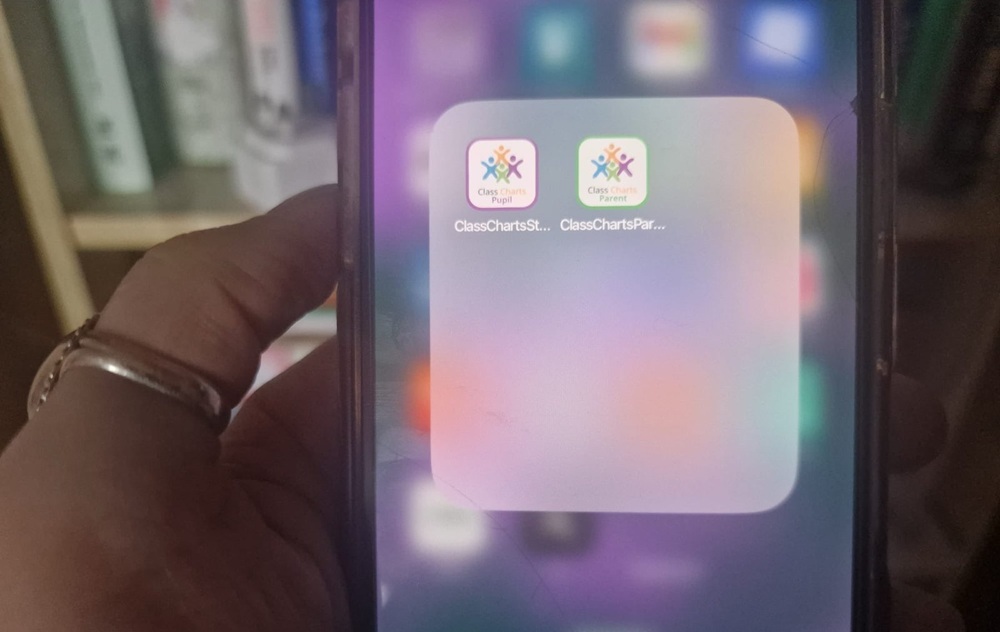
Sitting in a church-based carol service on the 21 December 2025, I became aware of a teenager sitting in front of me looking at their phone. Nothing unusual there of course. However, it caught my attention because what they were looking at was the all-too-familiar ClassCharts pie chart.
Despite the fact this particular pie chart was green, with just a small red wedge, I found it deeply worrying that, out of school and in this environment, the data was clearly consuming their thoughts.
This specific incident made me reflect more deeply on the ClassCharts app over the Christmas period.
Teacher and learner wellbeing has been a priority throughout my professional life and more recently the subject of my academic research. I was a secondary school teacher for 20 years, have four years ITE experience, and am the parent to a year-seven child. This is not a study, but an informed professional reflection grounded in practice, parental experience, and dialogue with families.
When my child started secondary school in 2025, I was apprehensive about the ClassCharts app’s monitoring of behaviour through red and green marks, but vowed to give it the benefit of the doubt.
In those early stages of the academic year, I found the positive feedback helpful in bridging this notoriously difficult transition. Even when the red behaviour marks began appearing, I remained cautiously positive as I felt it allowed us to support our child and identify any barriers to his learning.
I also take my responsibility in tackling poor behaviour and seeking strategies to reduce these, very seriously. For transparency, I should share that my child is neurodivergent, though I have tried to approach this writing through an inclusive lens that extends beyond any single experience.
Behaviour tracking systems have long been used in schools. So, what’s changed? The difference now is that these app-based systems are instant, cumulative, and visible to both children and their parents/carers.
These systems have changed from internal systems to child-facing surveillance. Not only are they easily accessible they also have a degree of permanence, dependent on how schools use them.
They don’t simply record behaviour; they reshape how behaviour is understood. And, whilst my concern in this piece centres on learner wellbeing, I also wonder about the impact on teacher wellbeing.
One parent shared with me that their, normally well-behaved child, had had a momentary lapse.
Without going into detail, they were rushing through a corridor (perhaps the usual stampede to ensure their favoured lunchtime baguette?) which resulted in a collision. I should note, no one was hurt in this incident.
This rightly resulted in a face-to-face apprehending of the behaviour and also resulted in a phone call home. The supportive parent was in complete support of the school and action taken.
However, on arriving home a few hours later, the child discovered they had also been ‘awarded’ a red behaviour point.
Workload
As a teacher not so long ago, my initial thought was for the workload generated. This concern swiftly moved to the child when that parent described the spiralling which then unfolded.
Is this level of reporting really beneficial to anyone?
On the other side of this parents have shared with me the anxiety their high achieving children have shown when given a yellow mark. This is not a colour we’ve experienced, but I hear it is considered a lesser misdemeanour. A ‘warning’ perhaps.
Another family shared an amusing anecdote, in an attempt to counteract the feeling of shame their child felt when receiving their first red mark, they celebrated with a family meal out!
As one parent said to me, exasperated, ‘aren’t children allowed to make mistakes sometimes?’.
On a popular social media platform, a thread regarding similar behaviour apps featured a comment that resonated: “this sounds like absolute hell for a large fraction of students.
In case you don’t remember childhood, imagine if every day your boss called your spouse to report every little thing you did wrong?”
Whilst these examples are quite comical, it’s important to recognise we’re not privy to what’s going on in the homes of each of the learners in a classroom. The home becoming an extension of school discipline carries, in my opinion, some genuine concerns.
From my own research, it seems studies into these apps are limited, not least because they are in their infancy. However, one small study specifically focused on SEND families, raises potentially bigger concerns surrounding the use of these with children with additional learning needs.
Anxiety
This study reflects on anxiety generated in both children and parents alike, along with a misinterpretation of behaviour (N. James, 2024). These examples are not about isolated incidents, but about the cumulative emotional weight of constant visibility and judgement.
Why, then, does this matter so much in the Welsh context? Well, our language around education is about belonging and wellbeing, yet our systems increasingly communicate compliance and deficit.
Attendance is at an all-time low, and our national mission is to build bridges to learning, not barriers.
Shouldn’t we be asking whether constant behavioural monitoring supports engagement or quietly erodes it?
Forty years ago, we rightly recognised the harm caused by corporal punishment in schools, yet we might be sleepwalking into a different kind of punishment culture; one where behaviour is endlessly recorded, colour-coded, and replayed long after the moment has passed.
I believe in forty years’ time we may be discussing the impact of a form of psychological ‘whipping’ of our young people. If we’re serious about wellbeing, then surely we must be brave enough to question not just children’s behaviour, but the systems we have built to manage it.
Support our Nation today
For the price of a cup of coffee a month you can help us create an independent, not-for-profit, national news service for the people of Wales, by the people of Wales.



Can the kids ‘spend’ their ‘social capitol’ in the tuck-shop yet?
Sounds like something from the CCPR!
Use your social credit points to buy some special edition Xi Jumping styled Gummi bears?
*Xi Jinping. Of course if you have one of those Chinese electric cars you should avoid saying mean things about him.
Actually, yes – they can spend points on lunch queue jumps, stationary etc
In some schools, not all.
A very interesting article. I’d never heard of these apps – very concerning.
I’m afraid my response would be to write a competing app targeting the teachers, head and institution itself. Turnabout is fair play, after all. I wonder how many red marks for a wonky tie or terrible parking would it take before the whining started?
Who’d be a teenager nowadays, now that the domineering father has been replaced by the smothering mother? “Don’t do that or you’ll get a good hiding” has become, “It’s OK to do whatever makes you happy, but please don’t do that or you’ll break my heart.”
“I mean in the old days you knew where you were but now they are trying to read your inmost thorts heaven help them.”
(nigel molesworth, wise as always.)