


Why climate change isn’t top of Wales’s agenda and how we change that
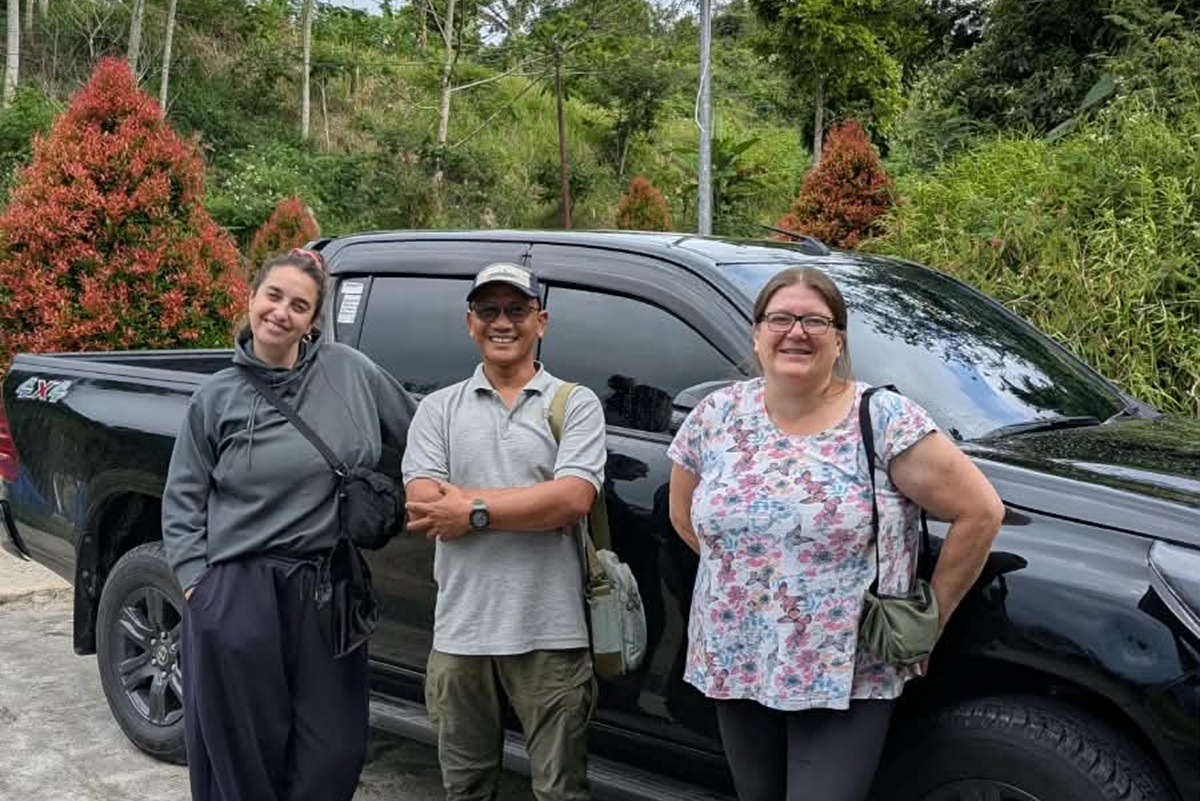
Nicola Pulman, Director of Size of Wales
I had recently returned from visiting Size of Wales’s partners, the Sumatran Orangutan Society (SOS) and TaHuKah, in a 118,000-hectare landscape that is one of the last strongholds of the critically endangered Sumatran orangutan.
Returning to Wales, I was struck again by a difficult question: why, when the consequences are becoming clearer, is climate change still not central to political and business decision-making?
The project in West Toba is one of six projects Size of Wales supports to protect tropical forests. When these territories are combined, their combined area is greater than the size of Wales (that is about two million hectares of tropical forest), thanks to the amazing longstanding support of the Waterloo Foundation.
It is not because people do not care. Wales is a nation with a strong sense of community and a proud record of international responsibility. Yet many people are exhausted by relentless bad news and are understandably focused on the immediate pressures facing their families. Climate change can seem like one more enormous problem competing for attention.
Climate change and the cost of living
In Wales, climate change is sometimes discussed as though it sits apart from the cost-of-living crisis. In reality, the two are increasingly connected. Extreme weather affects harvests, supply chains and food prices. Flooding threatens homes, businesses and public services. Heat places pressure on health, infrastructure and the natural environment.
The effects may begin elsewhere, but they do not remain elsewhere. Our food systems, economies and climate are interconnected. The loss of tropical forests also weakens one of the planet’s most important natural defences against climate change, making the work of the communities protecting them relevant to all of us.
If climate change is communicated only through distant targets, global temperature figures or images of disasters overseas, it can feel remote from everyday life in Wales. But when we connect it with the cost of food, the safety of our homes, the resilience of local communities and the future of work, its relevance becomes much clearer.
A useful lesson from Maslow
Maslow’s hierarchy of needs offers a useful lens through which to understand this challenge. It suggests that people focus first on essentials such as food, shelter, safety and financial security before they can give sustained attention to less immediate concerns.
That is hardly surprising. When someone is worried about heating their home, paying the rent or mortgage, or putting food on the table, asking them to prioritise a threat that is often described as long-term and global is unlikely to work. Politicians, in turn, respond to what voters feel most urgently.
The mistake is to treat climate action as though it belongs near the top of the pyramid: worthwhile, perhaps, but only once our more pressing needs have been met. Yet climate change is already affecting these foundations. It is affecting food, shelter, health, safety and security.
This is why the UK Government’s national security assessment on global ecosystem collapse was such a vital wake-up call. It reminds us that protecting nature overseas, including critical tropical forests, is not a distant, high-minded charity project; it is fundamental to our own national security, food systems and day-to-day stability here in Wales. We do not need to look far to see the connection.
When we experience record heat, summer forest fires and repeated severe droughts right on our doorstep, it shows how the destruction of vital habitats thousands of miles away disrupts global weather patterns and hits home in real time.
This changes how we should talk about climate action. It should not be presented as an additional burden on households that are already stretched, nor as something disconnected from daily life. It should be linked directly to practical measures that make lives safer and better now: warmer and more efficient homes, lower energy bills, secure green jobs, resilient food supplies, healthier communities and stronger protection from the extreme weather that is already knocking at our door.
It is really encouraging to hear the recent UK Government announcement committing to reaching net zero by 2050. In addition, the Welsh Government recently launched Wales’s first Climate and Nature Action Plan which sets a target of net zero by 2040. Things are moving in the right direction.
What forest communities can teach us
In West Toba, forest and community cannot be separated. Local clans have stewarded the landscape for generations, with ancestral relationships recorded through Tarombo – genealogical histories connecting land, lineage and identity. Their knowledge informs patrols and decisions about how the forest is used. Alongside SOS and TaHuKah, communities are mapping boundaries, strengthening land rights and restoring corridors between fragmented habitats.
The people I met were not passive recipients of conservation support. A biodiversity officer monitored camera traps and surveyed wildlife. A patrol member drew on a lifetime’s knowledge of the forest. Women in Sibagindar were exploring beekeeping and the sustainable production of camphor oil as ways to earn a living without damaging the forest. Conservation succeeds here not through one intervention, but through community leadership, secure rights, viable livelihoods, regulation and long-term stewardship.
For us at Size of Wales, these lessons extend far beyond local boundaries. True climate action means ensuring we do not simply offshore our carbon emissions or nature loss overseas. We have a direct responsibility to guarantee that the everyday commodities we import, such as palm oil, soy, coffee, cacao and beef, do not drive deforestation or destroy critical, biodiverse habitats like those in West Toba.
The circumstances in Wales are different, but the underlying principle travels well: people are better able to protect the future when they feel secure, included and empowered in the present. Climate policies, whether in Sumatra or in Wales, will always command greater public support when they are developed alongside communities, protect global ecosystems and deliver benefits people can see and feel.
Wales can lead by making climate action relevant
Wales has already shown that a small nation can influence thinking beyond its borders. The Well-being of Future Generations Act placed long-term global responsibility at the heart of public decision-making, while Welsh organisations and communities have built international partnerships founded on solidarity and climate justice.
But leadership cannot rest on past achievements. It must be renewed by making climate action meaningful in people’s daily lives and by being honest about who bears the costs and who receives the benefits.
The media also has an important role. Climate change should not appear only when there is a summit, a protest or a disaster. Its connection with decisions about health, housing, food, transport, employment and the economy should be made visible throughout the year. That does not mean forcing climate into every headline. It means reporting the full context of the pressures already shaping our lives.
The question is therefore not how to make people care about climate change instead of the cost of living, the NHS or their family’s security. It is how we show that these concerns are connected.
When climate action protects the things people need today, it stops looking like a luxury or a distant obligation. It becomes part of building a fairer, safer and more resilient Wales and fulfilling our responsibility to the communities protecting forests that matter to us all.
Nicola Pulman is Director of Size of Wales. She has a background in wildlife and forest conservation, community development and international partnerships, including working with forest communities in Ghana and Nigeria. Nicola visited Size of Wales’ partners in Sumatra, Indonesia, in September 2026.
Support our Nation today
For the price of a cup of coffee a month you can help us create an independent, not-for-profit, national news service for the people of Wales, by the people of Wales.
Get more trusted Welsh news
Choose Nation.Cymru as a preferred source in Google News to see more of our journalism.



Nicola Pulman puts a stain on her article by endorsing Maslow’s pyramid model. First, history is full of proof that humans do not wait until they are comfortable to engage in cultural activities or moral action. Think of Welsh miners singing their hearts out while facing hunger or hardship. Secondly, she assumes we put personal security first before looking outward at global crises. She then contradicts herself by telling us what Forest Societies can teach us: survival and well-being are not purely individual endeavours; they are inherently communal. Environmental action is often seen as an immediate duty to protect the extended… Read more »
But Wales has historically had a pretty grim climate. The last two summers have been utterly glorious. Yes, it’s a global issue but on a local level climate change has been great. It’s hard to put on a hairshirt.
So if Wales become Net Zero tomorrow, climate change stops does it? Or am I missing something?
No, it doesn’t just stop.
But you already knew that.
And yes, I suspect you are.
I wonder what is the carbon footprint of a trip to Sumatra?