


Why liberalism is essential for a rejuvenated Welsh private sector
David Chadwick, MP for Brecon, Radnor and Cwm Tawe
This year marks a quarter of a century since devolution began in Wales. In that time, much has changed in our politics, culture and communities. Yet on one crucial front, Wales has stood still: our economy.
That weakness underpins the challenges we face as a nation, from low wages and poor health to the persistent gap in living standards between Wales and the rest of the UK. A country with too few thriving businesses will always struggle to fund good public services or cut poverty.
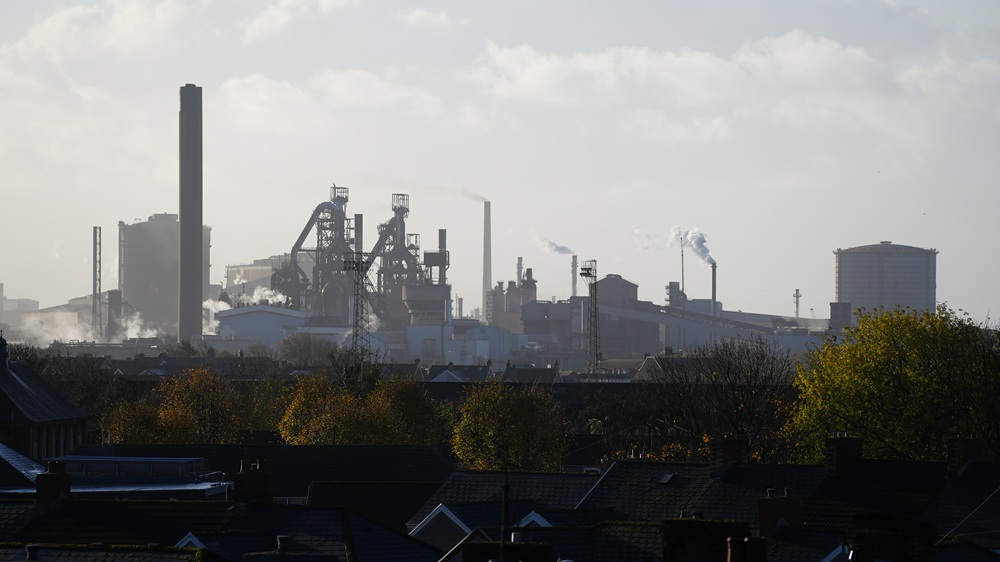
The way forward for the Welsh economy is clear: we must play to our strengths. Not long ago, Wales led in industry, but those sectors have withered despite the pressing need for a manufacturing revival. The closure of Port Talbot’s blast furnaces was symbolic, but it should not mark the end of Wales’ industrial story.
Last year, when parliament was recalled to debate the nationalisation of British Steel: I spoke up for Port Talbot. Scunthorpe received billions whilst Port Talbot received millions. The frustration I expressed was personal: my grandfather worked at the steelworks and later set up his own Waste Management companies. I know what those jobs meant for south Wales, and I fear that the career ladder my grandfather climbed no longer exists.
To rebuild our economy and protect opportunity, we must sustain and grow an industrial base that creates jobs. Welsh-owned engineering firms should be central to both UK and Welsh industrial strategies.
Offshore wind is a vital industry, one that Sir Ed Davey helped create during his time as Secretary of State for Climate Change, but if the government does not move quickly, these opportunities will pass us by. It would be a lost opportunity if this work goes to foreign companies, a betrayal a failing government cannot afford.
While other parts of the UK have attracted private investment and built clusters of innovation, we have been left reliant on the public sector and a narrow base of small firms struggling under red tape and high costs.
Business rates are a prime example. They don’t just affect shops and high streets but also offices, factories and industrial sites. For many employers, rates are one of the biggest costs after wages, yet despite devolution the system remains largely unchanged. Reliefs offer some help to small firms, but there’s little incentive for growing companies or new investors to choose Wales. It’s a tax that discourages the very expansion and innovation our economy needs.
When I speak with businesses, I hear the same refrain: the cost of premises, the difficulty of finding skilled staff, the slow planning system and the lack of clear strategy from government. Wales has talent in abundance, but opportunity too often flows elsewhere. Large firms weigh up everything when choosing a base: access to markets, infrastructure, digital connectivity, regulation and stability. On too many of those counts, Wales is falling short.
If we want to build a confident, prosperous Wales, we need a government that treats the private sector as a partner, not a problem. That is why liberalism, with its focus on enterprise, openness and empowerment, is essential to our economic renewal.
Shifts
The Welsh Liberal Democrats believe five major shifts are needed:
First, reform business rates across all sectors to replace the outdated property-based system with one that rewards investment and productivity.
Second, rebuild our trading relationship with Europe. Cutting red tape through a new customs union would give Welsh exporters and manufacturers the certainty they need.
Third, create a Welsh Investment and Innovation Agency to revive the strategic focus that worked in the days of the Welsh Development Agency, modernised for a high-tech economy. Its mission should be to attract investors and help Welsh firms scale up.
Fourth, simplify regulation and speed up planning so Wales becomes the easiest place in Britain to start or expand a business.
Finally, invest in connectivity, both transport and digital. That means better rail links to English regions, alongside improved connections within Wales itself. Poor broadband and weak 5G still hold back rural areas that could be thriving in the post-Covid world of flexible work.
These reforms are the foundation for rebuilding the Welsh economy. By freeing businesses to grow, we widen the tax base, raise living standards and reduce long-term poverty. A stronger private sector means more successful firms and better-paid jobs contributing to the revenue that funds our schools, hospitals and local services.
For too long, economic growth has been treated in Cardiff Bay as something that just happens in the background while the government focuses on spending and services. But without growth, there is no sustainable way to fund the public sector or tackle the inequalities that scar our communities. Wales does not lack ambition; it lacks opportunity. It is time to unleash it.
Support our Nation today
For the price of a cup of coffee a month you can help us create an independent, not-for-profit, national news service for the people of Wales, by the people of Wales.



Ah welcome to the problem of Council tax, it affects us all. Politically it cannot be changed, the last person who tried was, I believe, Thatcher and she was ousted over it. Fundamental reforms to taxes cannot come without tax cuts and Councils cannot afford tax cuts, therefore the fundamental reform cannot happen, people simply won’t vote for it or anyone that dares to support such change, knowing full well that if there are reforms to tax, that they’ll be used to sneak through increases. Business rates have exactly the same issue and the UK economy is not in a… Read more »
You’re confusing liberalism with libertarianism.
Not sure Ed Davey should be quoted etc under any circumstances. He failed those poor postmasters in the most appalling way.
Ah, the Committe For The Rearranging Of The Deckchairs has gone full windbag. Trying to find ways to get different results from the same conditions!
The problem is the devolution settlement. Devolution created a spending authority with almost half that spending earmarked for NHS Wales. The Welsh Government has gained some limited taxation and borrowing powers, but Westminster still largely holds the purse strings. Same goes for welfare and benefits. This leaves Wales over reliant on inward investment and market forces.
Time for devomax
I read the opinion piece of Mr. Chadwick piece ‘Why liberalism is essential for a rejuvenated Welsh private sector’ with interest. It is right. Wales has suffered too long from economic stagnation: low wages, lost industries, underinvestment, and a weak base for private enterprise. But while the article calls for liberal economic reforms, I fear it misses a more fundamental barrier: the constitutional and fiscal constraints imposed on the Senedd and Cymru by the current devolution settlement. That settlement throttles broader fiscal autonomy: control over currency, full tax autonomy, borrowing on larger or more flexible terms. This limitation of fiscal… Read more »