

Why peatlands are unsuited to windfarm developments
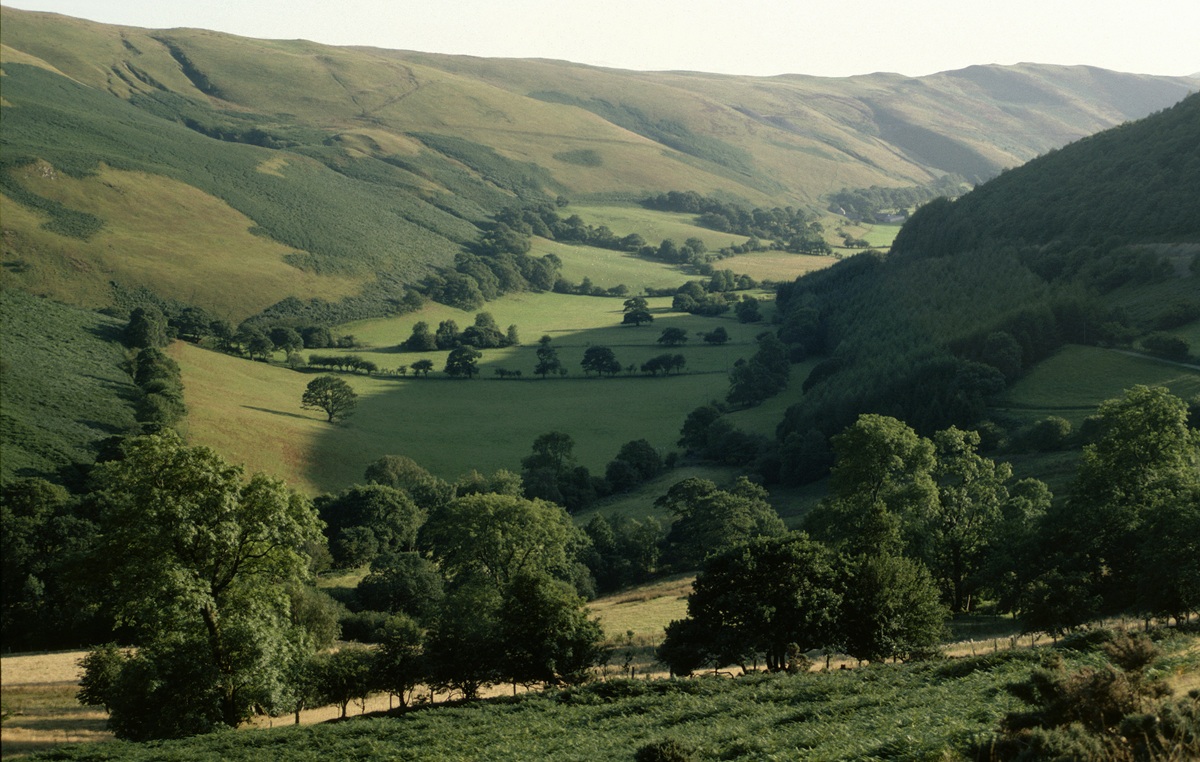
Douglas Lloyd’s explanation of why peatlands need to be protected in his objection to the proposed Lluest y Gwynt wind farm and grid connection.
I have a BSc (Hons) in Environmental Earth Science and have worked in nature conservation and land management for wildlife for over 25 years. I currently work as a Wildlife Trust Officer (Ceredigion) for the Wildlife Trust of South and West Wales.
During this time, I have worked for local authority planning departments, a utilities company and various wildlife trusts. Also, during this time, it has always been presumed that areas containing such quantities of peat and priority habitats would be avoided by developers, as these sorts of developments would never have been approved on such sites, unless they absolutely had to use a specific location.
Sadly, I find myself in the position where there is no choice but to comment on this and other poorly thought through projects in relation to their specific siting.
Developers tend to state that they look at four major aspects when choosing a potential site. These are landowner/land availability, wind availability, grid connection, and highways connections.
Whilst the first two of these are always going to be met in the uplands, and by offering the landowner sufficient money for such a scheme, the remaining two, grid and highways connectivity, can only be met by yet more upland development, in an area unsuited to such major works due to peatland, landscape and ecological constraints.
To put this into context, in a worldwide setting, peat only covers 3-4% of the land surface. In Wales we are lucky to have 11-12% of our land covered with peat and peat soils. But this peat is unevenly distributed, and the most important area is in the Cambrian Mountains.
Despite the National Park status of Bannau Brycheiniog and Eryri, they do NOT contain such an important resource as that in the Elenydd; this is largely due to the greater depths of the Elenydd peatlands on flatter uplands with high rainfall.
Unfathomable
The focus of wind farm developers on the very areas that contain the most peat, a resource of huge importance for CO2 storage, is unfathomable if one accepts the argument that the developers of wind farms are building them to stop dangerous levels of CO2 and excess warming being generated. This simply isn’t borne out by the evidence of their actions. Or to state it simply, there are other suitable areas for wind power that do not contain Wales’ greatest peatland and therefore CO2 storage resource.
The Cambrian Mountains are the largest continuous upland peat massif in Wales. This is important in the context of proposed developments; we are not talking of small, isolated peat sites that can be built between with no damage but a large and continuous area.
A further analysis shows the Elenydd to contain peat deposits that are within the top five in the UK (all sources show that outside of Scotland, the Cambrian Mountains area has the largest peat deposits by volume in Wales and the second largest in England and Wales, second only to the North Pennines).
Peatland backbone of Wales
Yet the Elenydd, unlike all the other areas, has no landscape protection and so is targeted for damage and fragmentation. This is the core peatland backbone of Wales and is irreplaceable. While there has been damage to it from various sources in the past, including drainage for afforestation, attempts at agricultural improvement, and damming for reservoirs, it is still notably more intact than anywhere else in the country.
Further to this, it is unjustified to talk of “damaged” or “modified” peat as if it has a low status and is therefore suitable for development; this is not true from a legal, planning, or ecological perspective and when it is noted that 80-90% of all peatlands in the UK are damaged or degraded then this argument looks even weaker.
In many cases, the applicant’s own evidence confirms that peat is widespread across the site. These are not proposals with minor or incidental peat constraints. Any peat over 50cm is classified as deep peat. Degraded or modified peatland should not be treated as expendable, particularly where it retains restoration potential.
Planning Policy Wales gives considerable weight to the protection of peat resources and requires development to follow the step-wise approach: first avoid harm, then minimise, mitigate, restore and compensate only where appropriate. Where irreplaceable habitats are affected, the policy position is especially stringent.
The issue is therefore not simply whether the applicant can calculate and manage excavated peat volumes, but whether harm to peatland and the natural resources it supports has genuinely been avoided.
Priority ecological networks
It is also worth mentioning that many windfarm proposals are sited within PENs (priority ecological networks) for heathlands and bog. These are regarded as areas with the highest likelihood of achieving quality priority linkages and existing features.
Future Wales Policy 9 identifies national natural resources, including soil carbon, biodiversity networks, upland habitats, and natural flood management. Peat is a key component underpinning all of those resources. Damage to peat therefore has implications beyond the immediate construction footprint.
Future Wales Policy 17 supports renewable and low-carbon energy, but not at any environmental cost. Renewable energy proposals must still demonstrate that they would not have unacceptable adverse environmental impacts.
Peatland habitats are also Section 7 habitats under the Environment (Wales) Act 2016, meaning they are habitats of principal importance for maintaining and enhancing biodiversity in Wales. This reinforces the need for a precautionary approach where peatland resources, peat-forming vegetation or peatland hydrological function may be affected.
Carbon payback is not the same as peatland protection. A wind farm may generate renewable electricity while still causing unacceptable harm to peatland habitat, soil carbon, hydrological function and ecological resilience.
Such developments can be positioned on sites that are not underlain by peat, on better strata for the installation of turbines (non-friable rock types) and without the need for kilometres of access tracks, further damaging our irreplaceable peatlands and their equally irreplaceable habitats and species.
Support our Nation today
For the price of a cup of coffee a month you can help us create an independent, not-for-profit, national news service for the people of Wales, by the people of Wales.
Get more trusted Welsh news
Choose Nation.Cymru as a preferred source in Google News to see more of our journalism.



As a firm supporter of onshore wind development, I have to accept that this is a very well argued and written article. There are going to have to be compromises on both sides and if some peat bogs are utilised then I would expect very significant compensatory investment from the companies in other peat areas in Wales that are desperate for support/repair etc. How any new windfarms are both installed and accessed will also need to be re-visited, to absolutely minimise damage to these precious areas. I cannot see these bogs being avoided as we must maximise potential renewable energy,… Read more »
Your comment regarding D Lloyd’s article can be summarised into” well reasoned but…..”. You try to moderate your frantic loyalty to “onshore wind” yet don’t venture far from your pet solution. There are other alternatives away from what used to be a moderately healthy yet vulnerable natural resource. Advocate those so we enhance the diversity of solutions to the energy”problem”.
I think “frantic loyalty” is a tad unfair. I’d be interested to understand which alternative solutions you are referring to? And to see your reasoned approach to the cost, environmental acceptability and maturity of your proposals? There is a degree of pragmatism required which I think Ian was alluding to in his comment which you seemed to have missed the nuance of. Onshore wind has been evidenced as one of the cheapest sources of energy (solar being the other) and during a period of rapid climate change in a cost of living crisis delivers some of that pragmatic approach. As… Read more »
Alternative solution is clearly: “just build coal power stations and get the kids back in the mines”. 🙂
You must be the local Reform energy spokesman
If ever coal power stations were built and mines reopened in Cymru the only people who should benefit are the Cymry not outside developers. The same should apply to the North Sea gas and oilfield in Scottish waters. The only country to benefit should be Scotland. All the cash flows into the UK Treasury for England to dip their hands into whenever they choose to.
Digging up even more peatland is hardly a cost effective or environmentally robust approach to peatland restoration. There is a huge amount of scope for integrating solar and wind energy into the urban areas with “smart glazing”, wall cladding, rooftop horizontal turbines on high rise buildings, etc, along with diverse hydro and tidal generator systems. Thus you end up with a mix of solutions with some compensating for the periodic downtime of others.
Cherry-picking which renewables you like and dislike is not an option I’m afraid. The climate crisis is real and likely to get a lot worse faster than originally predicted, so we need to maximise home-based renewables and minimise our reliance on fossil fuels ASAP, for more than just environmental reasons.
You do understand that digging up or removing peat bog areas releases thousands of tons of carbon into the atmosphere, the very thing that we are trying to avoid or cut back on, it’s not about cherry picking it’s about finding the right place to put these things, also offshore wind farms produce significantly more electricity than onshore wind farms but less profit, possibly a big reason why businesses want to destroy our landscape and communities.
If you take a look at the NESO series of reports “Future Energy Scenarios” you should quickly reach the conclusion that onshore wind is pretty irrelevant to Wales generating net zero levels of electricity
Wales will need ca 40 TWh by 2050 and will generate 60 TWh from only offshore wind. Onshore wind will contribute about 10 TWh
So offshore is critical, onshore isn’t
The Donald does not like them either
Plenty of oil in the North Sea yet we buy North Sea Oil from Norway.
Still 200 years supply of coal in the UK but Heseltine thought better and ended the coal industry.
We can always follow the example of France where 70% of their energy is Nuclear which produces next to nothing in terms of Co2’s and unlike renewables is 100% efficient and reliable.
We cannot be like France with nuclear as we don’t have …
the Alps for pumped storage and hydro
a synchronous connection to the European grid for “dumping” excess power
enough time or money
We will have some nuclear, but not much
Any spare land farmers and landowners have in Cymru should be used to grow food and rear livestock not wind energy for the benefit of outsiders . If Cymru and England were to fall out big time we would starve as most crops are grown across the border. We need to desperately start providing for ourselves. Farmers should be forbidden to gain financially from wind turbines on precious land. How do the rest of us benefit from these ugly things we have to look at?