


Why Plaid and the Greens need a nuclear rethink before they take power
Nic Conner
If the polls are correct, we are days away from a Plaid Cymru government, potentially supported by the Wales Green Party in coalition.
If this is the case, I urge both Plaid Cymru and the Greens to reconsider their stance on nuclear power.
Neither Plaid Cymru nor the Wales Greens place nuclear anywhere in their 2026 manifestos, which, in policy terms, appears deliberate rather than accidental.
Both set out energy strategies centred on renewables, local ownership and system decentralisation, talking extensively about wind, solar and community energy models, alongside job creation through green investment and infrastructure.
The absence of nuclear sits alongside a wider, established position. The Greens are explicitly opposed to nuclear, while Plaid Cymru’s 2024 general election manifesto opposed new nuclear projects and small modular reactors (SMR’s), citing concerns around cost and delivery timelines relative to renewables.
For those in the nuclear sector, the implications are concerning. The current status quo of either party does not see nuclear as part of Wales’ future energy mix.
As of 29 April 2026, the United Kingdom is importing around 4 to 5 gigawatts of power, including roughly 3 gigawatts from France, predominantly nuclear derived, and over 1 gigawatt from Norway, largely hydro.
We are currently reliant on our neighbours for firm and flexible generation. This is a concern. The United Kingdom needs to strengthen its energy security.
Renewable energy systems require reliable back up or firm power to maintain supply when wind and solar output is low.
In the United Kingdom, that role is currently provided largely by gas fired generation, which exposes the system to price volatility and geopolitical risk given its link to international gas markets.
Nuclear power offers an alternative source of low carbon, dispatchable electricity, and countries such as France have used a nuclear led system to provide a high degree of energy security and relatively stable power prices.
Expanding nuclear within the United Kingdom’s energy mix will support system reliability and price stability, although costs, delivery timelines and financing structures remain key considerations.
The United Kingdom’s nuclear roadmap is intended to strengthen energy security and reduce exposure to volatile gas prices. However, this progress could be at risk.
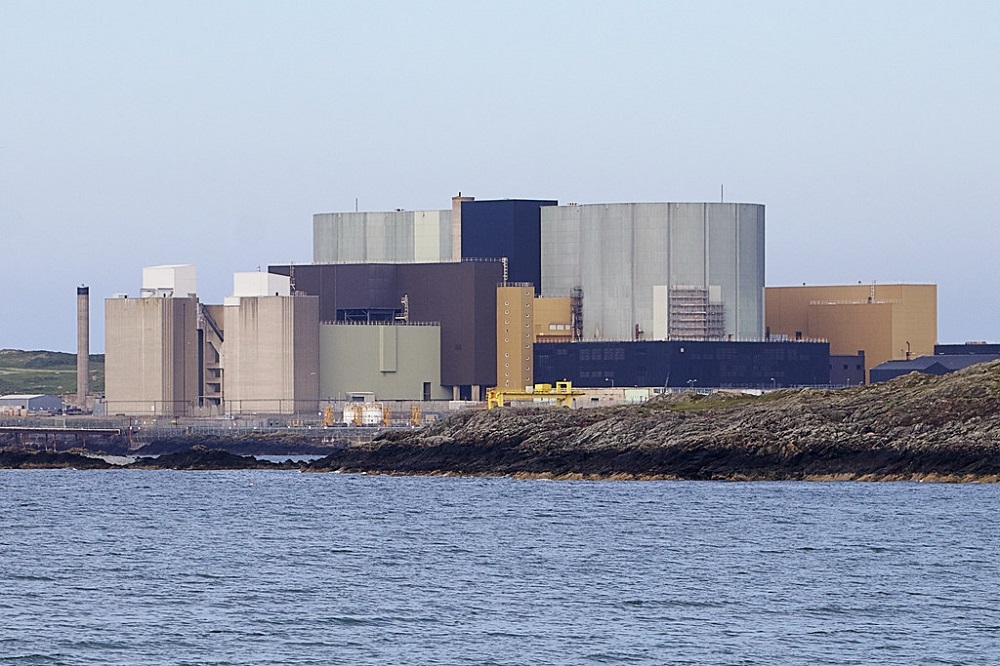
Plaid Cymru and the Greens’ opposition, if translated into government, could mean blocking projects such as the Wylfa power station, which has recently been approved as a SMR manufacturing site.
This could bring around 8,000 new jobs to Ynys Môn and North Wales.
Uncertainty
By not stating support for nuclear in their manifestos or speeches, they risk creating uncertainty at precisely the moment confidence is most needed.
Investor confidence is everything. Capital is mobile. If Wales cannot offer policy certainty, investors will deploy that capital elsewhere, whether in England, Europe or beyond.
Major infrastructure projects like Wylfa depend on long term political stability. Investors will not commit billions where the policy environment is unclear or hostile. Any arrangement that undermines confidence risks sending the wrong signal.
Under a Plaid Cymru and Green arrangement, Wales could follow Scottish Government policy in opposing new nuclear, using devolved planning powers to effectively block projects. If that were to happen, the consequences would extend beyond energy security to jobs, livelihoods and our communities.
Renewables will play a vital role, but they cannot deliver a stable system on their own. Nuclear provides the firm power that complements them.
Skilled jobs
Wylfa could deliver thousands of skilled jobs, billions in investment and long term economic stability, supporting apprenticeships, strengthening supply chains and giving young people a reason to stay and build their futures in Wales.
Virginia Crosbie, the former MP for Ynys Môn, tells the story of visiting Hinkley Point C in Somerset, where she met young Welsh speakers from Anglesey who had moved away for work. They told her how they wanted to see Wylfa developed so they could return home.
For Wales, the case for nuclear is not only economic but cultural. Protecting the Welsh language depends on thriving communities where people can live and work.
The average age in parts of North Wales is well above the UK average. On Anglesey and in Conwy it is around 49, while in Gwynedd it is around 45.
By comparison, in London it is around 35. The population is ageing, and quickly. We need jobs and opportunities to sustain communities and culture.
Too often, young people are forced to leave in search of opportunity elsewhere. Long term investment and quality jobs are essential if Welsh speaking communities are to survive and flourish.
Energy security
From France to the United States, governments are backing nuclear as a cornerstone of energy security and industrial strategy.
Under Plaid Cymru and the Greens, the question is whether Wales will do the same, because even uncertainty could be damaging for the nation.
Nic Conner is the Honorary Secretary of Supporters of Nuclear Energy (SONE), an independent grassroots group advocating for new UK nuclear power to deliver affordable, reliable, low-carbon energy. He is a partner at Parisi Consulting and lives in the Conwy Valley with his young family.
Support our Nation today
For the price of a cup of coffee a month you can help us create an independent, not-for-profit, national news service for the people of Wales, by the people of Wales.
Get more trusted Welsh news
Choose Nation.Cymru as a preferred source in Google News to see more of our journalism.



This seems very dated There are eight SMRs scheduled for Wylfa, with the first by the “mid 2030’s” and the rest “soon after” according to Sir KS Wylfa was selected over Oldbury as it can fit eight whereas Oldbury can only fit five All generation (except wind) over 350 MW is not devolved so irrelevant for the Senedd election Llinos Medi (Plaid MP for Ynys Môn) has been a vigorous champion of Wylfa in Parliament The total amount of nuclear the U.K. needs, and the location of it, will come from the Strategic Spatial Energy Plan currently being developed by… Read more »
Green is faster and more reliable. Faster to supply. Long term employment to boot and a lot safer for the employees. More effort win the PV on roofs, above car parks etc. and linked storage, there are huge benefits but we are held back by fuel lobbies.
Jeff it does not work if the sun don’t shine and the wind don’t blow. And then you need flywheels . And please don’t say batteries because then the costs double.
“Energy security” seems a strange argument for nuclear power in the UK, as uranium is needed to power reactors, and – as far as I am aware – there are no uranium mines in the UK. Even throughout the Ukraine war, Sizewell B is operating on Russia nuclear fuel – as is approximately one third of the EU’s nuclear reactors.
Wind, sun, water, and tides, on the other hand, are freely available to us !
Brian, For every power station the fuel and enrichment are secured before going critical. It is not particularly relevant that fuel is Russian. because the Enrichment companies often substitute suppliers so that transport costs are minimised.
The piece misses the point. Nuclear and SMRs in particular, is being foisted on Wales by the UK government to power the UK. Wales, and that should be the concern of Plaid, has plentiful resources of green renewables and it is those which should be developed. As for jobs, the ‘ many thousands ‘ are in construction, are short term, and will not necessarily be local. The permanent jobs, the skilled jobs, in the low hundreds, will predominantly of Rolls Royce specialists or RR selected contractors. Wylfa is a nuclear industry PR exercise, to promote a technology that no other… Read more »
I think that you will find there several Pacific rim countries very enthusiastic about nuclear power .