


Why Plaid Cymru are wrong to back Armed Forces Day
Adam Johannes
On 27th June 2026, “Armed Forces Day”, a Welsh peace camp pitched its tents outside RAF Lakenheath to oppose the return of US nuclear weapons to Britain.
Imagine the message it would have sent if a Plaid Minister in the new Welsh Government had stood alongside them, in solidarity with those of us who believe Wales should reject the British state’s march towards ever more aggressive militarism and the expansion of an already bloated military budget.
Instead, Deputy First Minister Sioned Williams chose to speak at an Armed Forces Day event in Carmarthenshire.
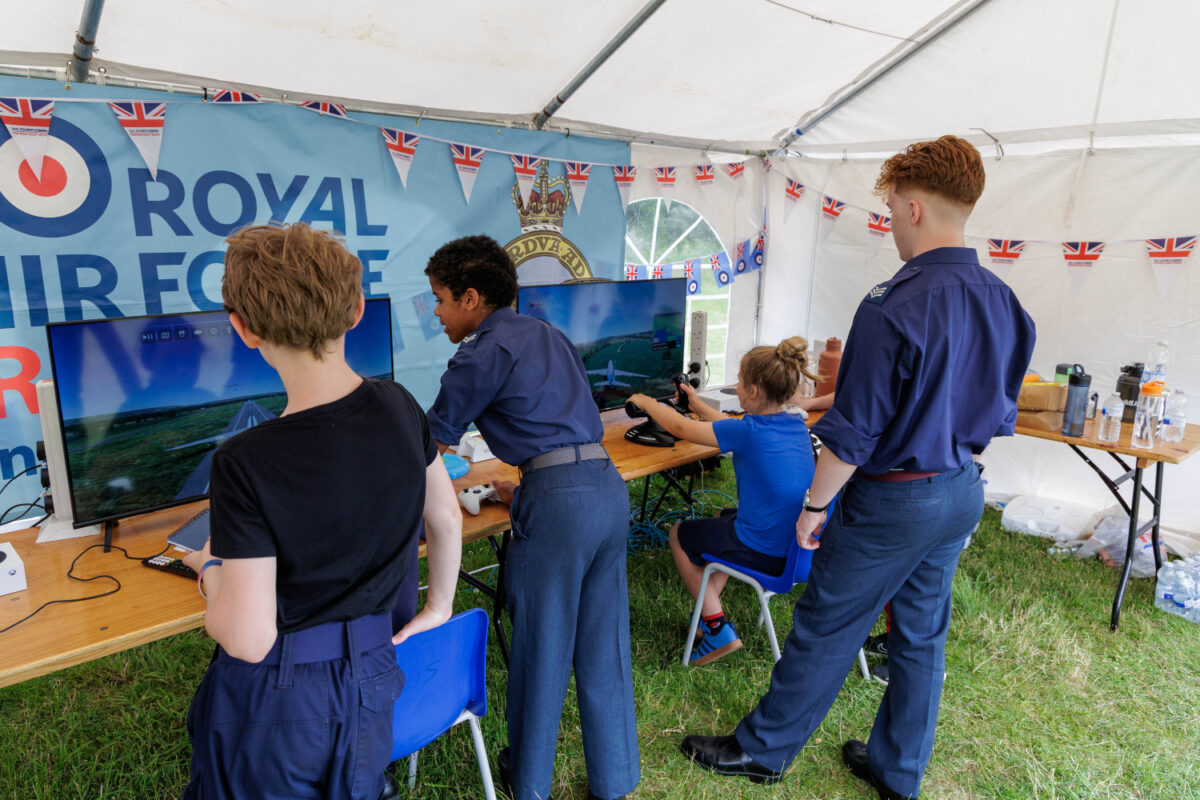
These events celebrate militarism by sanitising the realities of war and repackaging them as family entertainment. Disurbing photographs from the event, organised by the armed forces, Plaid-led Carmarthenshire Council and the Welsh Government, show children encouraged to pose with heavy weapons and dress in military uniforms
At a time when military spending is rising, austerity is being prepared to pay for it, and the drift toward future wars are accelerating, Plaid has a clear political choice to make: will it stand with the anti-war movement, or will it help legitimise the institutions driving that agenda?
Those justifying Plaid Cymru’s leadership support for Armed Forces Day put forward two arguments.
First, they pretend Armed Forces Day is just about supporting veterans.
Second, they claim that if you criticise Armed Forces Day or the growing presence of the military in everyday life, then you must be an absolute pacifist completely against all armed forces.
Political
Armed Forces Day was always political. It was invented by Gordon Brown’s Labour government in response to the deep unpopularity of the Iraq War. Iraq sparked huge public opposition, including the biggest protest in British history. Lots of people were angry about it. Labour lost votes over it.
Military recruitment slumped as working class communities became less willing to provide the cannon fodder for rich man’s wars, correctly seeing that Britain’s wars weren’t about defending their own country, but destroying someone elses. New groups like Military Families Against War started speaking out. More and more people began questioning why Britain always joined US wars.
So the establishment wanted to shift public opinion. They tried to rebuild support for imperialism by focusing on emotional sympathy for soldiers as individuals, rather than questions about the wars they were sent to fight.
That’s when we started hearing a sudden and sharp increase in the word “heroes” being used for soldiers. Military parades through town centres were deliberately increased, and Armed Forces Day was created. It aimed to change how people think about the army, not in any political or critical way, but as something automatically worthy of praise, as an institution we all must reverence. The aim of the day was to push militarism into civilian life to shore up support for future wars.
It was clever propaganda. If the real goal was to support veterans, the entire feel and focus of Armed Forces Day would be different. It would be about significant boosts to public funding for proper housing, jobs, training, mental health support, and ending homelessness among ex-soldiers. You would hear the stories of the lives of veterans after they quit the military and war. Not ceremonies and celebrations.
Now Armed Forces Day is being promoted more than ever. One reason is that the UK Labour government want to manufacture consent for big increases in military spending, and big cuts to pay for it. If you make it a patriotic duty to support the military it makes it harder for trade unions and community campaigns to stand up against the cuts needed to pay for increased arms spending.
One-sided
Armed Forces Day is not a neutral celebration. It was designed to normalise militarism and unquestioning support for Britain’s role in global conflicts. Opposition to Armed Forces Day is rooted in a simple democratic principle that the armed forces, like every other powerful institution, should be open to scrutiny and debate.
The day promotes the idea that the military is beyond criticism, creating a one-sided narrative in which the realities of intervention, civilian suffering and Britain’s wars abroad are rarely examined critically. Instead, young people are encouraged to support values such as discipline, obedience and loyalty, without being encouraged to consider the consequences of placing imperialist violence at the centre of international affairs.
It’s also important to understand that Britain’s military is not just about defence. There’s a lot of military aggression involved. Afghanistan and Iraq were invaded, occupied and destroyed by Britain in alliance with the US for years. Those wars destabilised the world, increased terrorism and made us less safe. Recently Britain’s military has covertly supported Israel’s genocide in Gaza and the US/Israel war on Iran.
Militarism helps dampen down any public questioning of British foreign policy, wars, and arms spending, and encourages us to just accept it all as automatically good. Through militarism, the British state is able to shield itself from public scrutiny and democratic accountability.
The events are marketed as family occasions, with children encouraged to engage with military displays and equipment. The danger is that young people are presented with a sanitised image of the armed forces – one that appears exciting, glamorous and harmless – while the human suffering and moral questions surrounding imperialist wars are pushed aside.
Armed Forces Day provides no space for honest discussions about the realities of military life. Recruitment often targets poorer communities, the armed forces have faced serious concerns around bullying, harassment and abuse, and veterans deserve proper long-term support through the welfare state rather than being left dependent on charity.
Questionable
Our communities have many other things worth celebrating: the solidarity of neighbours, the dedication of nurses, teachers, firefighters, care workers and all those who sustain society every day. These values of cooperation, compassion and collective responsibility deserve far greater recognition.
Rhun ap Iorwerth and Sioned Williams’ embrace of Armed Forces Day, and the Plaid Welsh Government giving public money to events promoting the military, should concern anyone who believes Wales ought to stand for peace.
The use of taxpayers’ money to fund Armed Forces Day events is questionable. Rather than spending public money celebrating militarism, the Welsh Government could invest in anti-militarist festivals that promote peace, solidarity and international cooperation.
Plaid members must challenge their leadership’s embrace of militarism, including support for increasing Britain’s already bloated military budget, and since becoming the Welsh Government already welcoming new arms manufacturers to Wales.
Plaid have managed a remarkable trick of supporting spending billions more on the military, then complaining about the cuts needed to pay for it. It’s like ordering the most expensive meal on the menu and acting shocked when the bill arrives. But the real question is why choose militarisation over people, communities and the living world at all. If you’re a Plaid member, it may be time to ask your leadership to oppose the new global arms race instead of trying to have it both ways.
Support our Nation today
For the price of a cup of coffee a month you can help us create an independent, not-for-profit, national news service for the people of Wales, by the people of Wales.
Get more trusted Welsh news
Choose Nation.Cymru as a preferred source in Google News to see more of our journalism.



Excellent article. Plaid Cymru’s support for British state militarism exposes their pretentions to be a ‘progressive’ party, although I have no doubt many Plaid Cymru members are unhappy about this.
I have issues with some of the rhetoric surrounding Armed Forces Day. However, not being a pacifist (how would that have helped in the fight against Hitler?) and believing that we should support Ukraine against the far-right, thug Putin who is a threat to Europe (unlike Reform UK). Most of the above is wishful thinking. Moreover, if Plaid were to come out against Armed Forces Day it would be political suicide.
Well if we hadn’t fought the first world war and then strangled Germany economically maybe Hitler would not have risen to power. Pacifism is a long term strategy but with the rise in technology unless we seek long term solutions there simply won’t be a long term. Would I send my children and grand children into war to kill other people? No, I would feel like we had failed them terribly – so I remain a pacifist in believing that de-escalation is always the best way and imperialism is the enemy and that it can be defeated without fighting wars.
I’m sure the 60 million or so murdered in the Second World War was a fair price to pay to replace German occupation of Poland with Russian, and the replacement of the concentration camp with the gulag. Likewise the 55,000 Ukrainian troops killed, and 380,000 maimed, after Zelensky shut the border to ensure all able-bodied men would be conscripted into a war they evidently had no interest in fighting. War inevitably makes things worse, as the recent adventures in the Middle East should have taught us, and there is always a better way if only we are prepared to look… Read more »
Wasn’t the “60 million or so murdered in the Second World War” only to “replace German occupation of Poland with Russian, and the replacement of the concentration camp with the gulag” all a direct consequence of the Conservative party appeasing Germany in Munich? Exactly as some would like to do with Russia today.
what about th Nazi extremist that are in the Ukrainian Armed Forces glorifying second world war Nazi collaborators and naming MIlitary Units after them. Also refusing to acknowledge the Volhynia massacre of Polish citizens by the Banderistas.
Without the risk of repeating myself, the reason many Ukrainian nationalists collaborated with the Nazis during the war was because of Stalinist repression in particular the Holodomor genocide. That does not excuse the crimes that followed or justify hero worshipping these individuals. As for far-right elements in Ukraine’s military, that’s because they been fighting a war for their survival and has needed to mobilise every available source of manpower. If Wales or the British Isles were invaded by a powerful adversary then I would be more than happy to have Combat 18, Britain First or White Vanguard sent to fight.… Read more »
Out of touch with the Welsh people on this. The UK is not a militaristic state and the defence budget is not bloated. There is a question over how much of a threat to the UK Russia actually is, but we are also in NATO, parts of which are threatened.
Putin says “Hi!”.
England have already stolen our resources. What would Putin want from Cymru?
The Russian billionaires already control the unlicensed pharmaceutical trade here worth millions so I don’t think they’re too interested in us.
If a foreign power tried to invade the British Isles then I would seriously doubt they would leave Cymru alone simply because it lacked resources.
The forces staff on these events describle them as a jolly or a waste of time. They enjoy the time away from their usual routines but none of those that I’ve spoken to see any benefit to the days.
I’ll admit, I don’t think I’ll ever understand the concept of celebrating someone for a job theyve chosen to do completely off their own backs.
This whole forces celebrating thing just reeks of weird north Korean oddness.
Because when the solids hit the fan and you need someone to defend you, guess who will do it.
Whoever they force to die because politics fails. People were forced to be killed in the world wars, let’s not forget reality.
Really? That is your take?
Mine would still defend you but what they did was for a reason and that is the same reason people stand up to Putin.
Just wondering what the weather is like in St Petersburg today, look out the window for me and tell me.
I for one haven’t bought into The Russophobia of Western MSM. Let’s start with some facts. Recently Zelensky has given an Ukrainian special forces unit the title of Heroes of the UPA. The UPA were responsible for the massacre of 120,000 Polish civilians in WWII. This has caused outrage in Poland especially as Poland has recived nearly 2 Million Ukrainian refugees. Recently in the City of Lvov there have been street clashes between Civilians and The Ukrainian Security Forces over the conscription of Civilians into the present day conflict. The Protesters rightly argue enough is enough and want a long… Read more »
He’s a comic not an historian…
Ukraine is not the only country with far-right groups or people who look up to deeply controversial historical figures. Plenty of Russians still admire Stalin despite the millions who died under his rule. The Holodomor genocide may help explain why many Ukrainian nationalists saw Nazi Germany as the enemy of their enemy. That does not make it right, but history is rarely black and white. My criticism is aimed at Putin’s regime, and not the Russian people. There are plenty of Russians who oppose Putin and support Ukraine’s right to defend itself. Calling criticism of the Kremlin “Russophobia” is no… Read more »
Absolutely agree that it’s a waste of time, given that the Armed Forces have to give up their own time on a Saturday.
Is their job always a choice. In this day of low jobs for NEET and AI takeover, choosing to enlist may be a means to an end. It is shown that in areas of high poverty and low income areas, joining army etc is sometimes the only way and military recruitment often targets these areas and this population for this reason
“A Welsh peace camp pitched its tents outside RAF Lakenheath to oppose the return of US nuclear weapons to Britain. Imagine the message it would have sent if a Plaid Minister in the new Welsh Government had stood alongside them, in solidarity with those of us who believe Wales should reject the British state’s march towards ever more aggressive militarism and the expansion of an already bloated military budget”. Indeed. And it certainly rankles with me that the British state is still coming into Wales and recruiting young men and women (often from economically disadvanted communitues) for its military. As… Read more »
“promote peace, solidarity and international cooperation”
No-one did more to undermine this in recent years than Mr Corbyn. We wouldn’t have Brexit or Trump and the resulting global instability and need to boost military spending had he properly opposed leaving the EU.
Europe needs its own security backet independent of the USA, and I would hope an independent Wales would be part of that bracket. Everyone wants peace, but it’s much easier to advocate pacifism when you have never been in a position where you need to defend yourself, your family or your country, or when someone else is providing the security guarantee on your behalf. The reality is that we live in an anarchic international order. While diplomacy should always be the first option, there will always be times when states have no choice but to defend themselves against aggression. Peace… Read more »
Peace is best preserved when great powers act responsibly to mitigate the effects of international anarchy. That was how we got through the Cold War without nuclear catastrophe despite near misses in 1962, 1983 and perhaps others. Since the collapse of the Soviet Union, the NATO powers have behaved with arrogant recklessness that was bound to provoke a Russian response. Russia remains a nuclear power that is not going to surrender to NATO demands, so we had best find a way to wind down the war in Ukraine before it gets completely out of hand. Macho posturing is not going… Read more »
The Ukrainians want to fight and are winning. We should support their decision.
Some Ukrainians want to fight but many do not, as evidenced by the high level of desertion and draft dodging. After four years of war, most probably want to return to some kind of normal life.
Ukraine is not winning. It is inflicting some damage on Russian cities, Crimea and oil refineries, but it is struggling to halt Russian advance on the battlefield. It has no prospect of forcing a Russian surrender.
Escalating the war as Europe’s leaders would like is extremely dangerous. That is not a moral judgment but a practical one.
Russia is still advancing in a small area of the battlefield, but at half the rate of last year and at terrible cost. Ukraine is bleeding Russia dry, and if it continiues to do this,as well as keep up the pressureon Russia through the selective targeting of military and economic targets in Russia, it’s likely that Ukraine will ‘win’. I don’t see how European leaders are escalating the conflict, but responding to a Russian threat that has been escalating for the whole time the Putin regime has been in control. Tyrants cannot be appeased. Of course Ukrainians want peace, but… Read more »
Curious then that Zelensky shut the border to stop people avoiding the draft. They were leaving in droves until that point.
I don’t think it’s fair to judge Ukraine’s right to defend itself by the fact that some people have deserted or avoided the draft. That has happened in pretty much every war in history, including in Britain during the Second World War. Governments facing an existential threat would often take drastic measures, whether that’s conscription or restricting people from leaving. Personally I would not have fought in the First World War, or in Vietnam if I was an American in the 1960s. But if this was the Second World War, or if we were invaded today by a powerful adversary… Read more »
Entirely possible to advocate for an independent Wales, whilst at the same time celebrating the role of the Armed Forces in doing a good job. Similarly, I hope an independent Wales has the integrity to admit that the NHS is a global joke and needs to be replaced with a combination of private and public investment
Not so in YG today, all went smoothly…!
Yeah I want no part of the far right cult of the soldier. It’s a celebration of militarism, the honouring of mass murder and the ridiculous concept of a “noble sacrifice” for king and country. I support the humans IN the solider suit though. They are victims of this brainwashing too. They spend their lives supporting a political regime that betrays the military contract EVERY single time. This is NOT a land fit for “heroes” (the dead, disabled and mentally messed up victims of military exploitation of the poor and “patriotic”. I will even only wear the WHITE poppy that… Read more »
Read your Bob Dylan, RIP Buffy Sainte-Marie…
So it would be right wing of us to defend ourselves from Putin’s interference, hacking etc, or from the myriad other threats we face? I would suggest that most people don’t celebrate the killing, they celebrate the bravery of those who give their lives to keep us safe.
Gwarthus. Cefnogi byddin y goresgynwyr a’r gwladychwyr. Cofiwch Benyberth. Cofiwch Epynt! Cofiwch Gilmeri!
Those unfamiliar with the history of the past 30 years between NATO and Russia should read NATO’s Bucharest Summit Declaration of 3 April 2008, paragraph 23 of which starts, ‘NATO welcomes Ukraine’s and Georgia’s Euro-Atlantic aspirations for membership in NATO. We agreed today that these countries will become members of NATO.’ Four months later Russia and Georgia were at war. https://www.nato.int/en/about-us/official-texts-and-resources/official-texts/2008/04/03/bucharest-summit-declaration This is not to absolve the Russian government of its responsibilities. I am no fan of Putin. But the tragedy of great power politics is that what is seen as defensive action from one side is inevitably seen as aggression… Read more »
And I’m sure you will agree that both Georgia and Ukraine were free to apply to join NATO of their own volition? They weren’t forced…
You’re missing the point. The voluntary choices of states can pose an existential threat to other states.
Did the US accept Cuba’s willingness to host Soviet missiles? Would it welcome Mexico joining a military alliance with China and Russia and the declared aim of toppling the US government?
If we want to stop escalation towards potential catastrophe, we need to learn the lessons of how we survived the Cold War and avoid provocations.
Irrelevant. Georgia and Ukraine can do what they like. If they want to join a mutually supportive group such as NATO then they are free to do so. What Russia thinks is also irrelevant. They have a right to be independent countries and make the decisions that preserve that independence. If you are a fan of Putin and his heinous attack on Ukraine then good luck to you. We live in a free democracy after all.
Absolute independence is a dangerous myth. Joining a military alliance aimed at a neighbouring country will be seen as a threat and trigger a response. Was the Anschluss a contribution to European peace because Hitler was cheered on entering Vienna? At no point have I said that I support Putin’s war on Ukraine. But nor do I support NATO’s proxy war on Russia. I have from the outset wanted a negotiated settlement. Such a settlement was almost achieved at Istanbul early in the war but was scuppered by Johnson and Biden who wanted to weaken Russia after the US’s defeat… Read more »
Russia and the USA are both armed to the teeth with nuclear weapons capable of wiping out humanity several times over. I don’t think either side has anything to worry about in terms of being invaded by the other. After the Cuban Missile Crisis, both countries understand the concept of Mutually Assured Destruction. On NATO expansion, there are a couple of things worth mentioning. The 1997 NATO-Russia Founding Act, signed by both sides, acknowledged that former Eastern Bloc countries could join NATO, while NATO stated it had no intention, plan or reason to station nuclear weapons in those new member… Read more »
Much of the world, after long experience of colonialism and domination, was from the outset sceptical about NATO moralising about Ukraine, as evidenced by UN votes. The NATO powers then sacrificed all claims to moral superiority by refusing to condemn genocide in Gaza. The war on Iran demonstrates how little the US values national sovereignty. ‘America First’ is at least honest about its intentions. International peace may be a distant dream, but for our survival it is imperative to keep great power conflicts to a manageable level. That requires understanding how the world looks to potential opponents and how our… Read more »
Your hard-headed realism is basically insisting that other countries trade their self determination as to what is best for their people for your personal safety and peace of mind.
In this case an imperialist Russia is the winner.
Presumably you’d annoint other winners and sacrifice other losers as and when required.
Self-determination is always limited by reality. Even the US is finding that out (yet again, as it never seems to learn) in its confrontation with Iran.
No. That is called fascism, authoritarianism etc. Every country has the right to self determination. Wales included.
In an interconnected world no country has an absolute right, or the capacity, to do whatever it likes irrespective of the interests and desires of others. Any more than individuals can act without paying attention to other people.
You can’t backtrack. He is quite correct. Ukraine has the right to self determination away from Russia’s influence, just like Wales will hopefully one day have the right to move away from England’s influence, reinstate ties with the EU etc. It’s exactly the same.
Backtracking? My position has consistently been that NATO has been reckless to discount Russian interests. We have already paid a price for this and risk paying a much heavier one if the war escalates further.
On a shared planet, self-determination can only ever be relative. No country can solve global problems on its own. Geology dictates that Wales and England will need to cooperate whatever the constitutional arrangements.
But Wales still has the right to make its own choices, as does the Ukraine, Georgia etc
Wrong. Countries do not have the right to choose to breach international law or treaty obligations. Having a right does not mean it is wise to exercise that right without regard to the concerns of others. We have to live together whether as individuals or as countries.
Ukraine and Georgia joining NATO does not breach any international law whatsoever.
No, but neither would Mexico joining a military alliance led by China and Russia. That would undoubtedly provoke a reaction from the US, so why was there surprise when Russia reacted to the prospect of NATO membership?
Managing the risks from great power politics is not a courtroom or university debate.
But Mexico would be well within their rights to do so if they felt threatened by Trump’s agressive antics.
Mexico would indeed have a right to defend itself against the US. So does Ukraine against Russia, and so does Russia against NATO. So does Taiwan against China, and so does China against the US. Seeing international relations just in terms of rights can lead to dangerous escalations. How national rights work out in any given situation is often contradictory. One country’s rights often clash with another’s. Geo-political diplomacy can be highly unpleasant but so is war. I see no resolution of the Russia-NATO/Ukraine war except an ‘ugly peace’ that leaves everyone dissatisfied, but is this ‘forever war’ – that… Read more »
Interdependence is not the same thing as subordination. Wales and England would still need to cooperate after independence, it would be in both their national interests to do so, but that does not mean England should get a veto over Welsh decisions. By the same logic, Ukraine can cooperate with Russia without Russia having a veto over its foreign policy or alliance choices. Does Russia’s security concern outweigh Ukraine’s right to determine its own future?
I’m more interested in avoiding military escalation between nuclear armed parties that in abstract rights. Ukraine and Georgia should not exercise rights if doing so threatens global peace, any more than did Austria or Finland during the Cold War. NATO should certainly not be encouraging them to do so. The US and Europe are reluctance to recognise that their global dominance is over. We are back in a multipolar world with a volatile balance of power that has to be managed. International diplomacy is messy and often unpleasant but can’t be avoided. If Wales ever becomes independent, it will find… Read more »
Granted, diplomacy requires compromise and no country exists in complete isolation (with the possible exception of North Korea). But there is a difference between taking account of a neighbour’s concerns and giving that neighbour a veto over your decisions. Austria and Finland chose neutrality during the Cold War. Ukraine has chosen a different path. If Russia’s security concerns automatically override Ukraine’s choices, then sovereignty becomes something enjoyed only by great powers rather than smaller states. In other words, might becomes right. An independent Wales would still have to cooperate with England, but cooperation is not the same thing as subordination.… Read more »
Neither Austria nor Finland had much choice but to except neutrality in the geo-political reality of post-war Europe. The alternative would have been partition, as happened to Germany.
The best protection for smaller nations would be an international order that protected national rights, not military alliances like NATO, inevitably seen as threatening by those they are directed against. You seem blind to the risks entailed in aggressively expanding the borders of such alliances. So were most people in early 1914.
Your solution is to limit the self-determination of others to get the reality you desire.
Putin fans are like that…
No fan of Putin, but I’d rather not blow up the world.
My primary desire is to avoid reckless escalation of conflict between nuclear armed powers. No apology for that.
Ukraine is not a nuclear power.
Ukraine gave up its huge stock of nuclear weapons in return for self determination and Russia giving up a claim to it.
In this conflict Russia is the only country that has threatened the use of nuclear weapons.
No apology for reminding you of that.
Ukraine may not be a nuclear power but NATO has 3 countries which are. Russia has talked about using nuclear weapons. Ukraine, with US help and approval, has attacked a Russian nuclear base destroying several strategic bombers. Can you imagine the US response to a Russian-sponsored terrorist attack on one of its nuclear bases? If conflict is to be managed, we need to think about how potential opponents think. Russian fears about western aggression are firmly founded in history. Many people who comment on this website are obsessed with 1282. Why do you think Russia has forgotten 1242, 1815 and… Read more »
‘Can you imagine the US response to a Russian-sponsored terrorist attack on one of its nuclear bases? ‘
That you liken Ukraine’s action to a ‘ terrorist attack’ indicate clearly to me with whom your sympathies really lie and so direct your opinion on this subject.
Dodging the question. How would the US respond to a Russian supported attack on one of its nuclear bases?
The flaw in that comparison is that Ukraine and Russia are already at war. If Russia attacks Ukrainian airbases, ammunition depots or military infrastructure, nobody calls it terrorism. But if Ukraine attacks Russian military infrastructure, it suddenly becomes terrorism? You keep asking us to see the world from Moscow’s perspective. Fair enough. But why should Ukraine’s security concerns count for less than Russia’s? Historical mistrust works both ways. Eastern Europe spent over 40 years under Soviet domination, and many countries sought NATO membership because of that experience. Even Putin has described the collapse of the Soviet Union as the “greatest… Read more »
Ukraine could not have carried out that attack without US support.
I’m not convinced countries do have an absolute right to join alliances that threaten their neighbours.
International relations are ultimately practical rather than moral. Khrushchev had the good sense to recognise that the US would not tolerate nuclear missiles in Cuba, and Kennedy was willing to withdraw missiles from Turkey in return. Should they instead have insisted on the ‘right’ of Cuba and Turkey to host nuclear missiles and gone to war over that?
Firstly, in response to your hypothetical scenario, it depends. If the US was already at war with the country involved, then an attack on a military base would be considered an act of war rather than terrorism. More importantly, even if such an attack were Russian or Chinese-sponsored, neither the US nor Russia is likely to risk a direct conflict with the other because both understand the consequences of Mutually Assured Destruction. The Cuban Missile Crisis was primarily about the deployment of Soviet nuclear missiles in Cuba, not alliance membership. They are not the same thing. In fact, one of… Read more »
The choices of countries are always constrained by others, and not just in the military sphere. To think otherwise is a nationalist fantasy. Our biggest problems require global solutions. Even the most powerful states are constrained by the wishes and capabilities of others. Think of the US’s repeated failures from Vietnam through Iraq and Afghanistan and now Iran. To think otherwise is hubris. It is no accident that it was in 2008 that the US thought it was OK to say Ukraine or Georgia could join NATO, and to deploy missiles to Poland. Russia was still recovering from its post-Soviet… Read more »
‘is a risky choice’
That countries weigh up against various certainties that accompany domination by a more powerful opponent.
And countries will make their choice such as is available to them but not to match any grand plan for global order that you have come up with.
Of course that doesn’t mean you need stop advising them as to what you think is best.
‘More powerful’ is ambiguous. Russia is more powerful than Ukraine but NATO is more powerful than Russia. Global politics is complicated.
I don’t have any ‘grand plan’. I just think reckless escalation of conflict between nuclear armed powers is best avoided.
I agree that small states face constraints. The question is whether those constraints amount to a veto. You ask whether China would be happy if Taiwan joined a US-led alliance. Probably not. Just as the US would not be happy if Mexico joined a Russian or Chinese-led alliance. But I don’t think the unhappiness of a great power automatically gives it the right to determine the foreign policy of its neighbours. In fact, if you bully or threaten your neighbours, you can hardly be surprised if they seek security elsewhere. Poland, the Baltic states and others joined NATO because they… Read more »
I’m no fan of ‘spheres of influence’ (which need not be geographically close, e.g. the British Empire or the US in the Middle East). But running into the road without checking the traffic first is foolish. It’s not obvious to me that the Baltic states have been made safer by joining NATO than they might have been by a security agreement (and better treatment of their Russian-speaking minorities). Poland’s diplomatic relations with Ukraine have been severely damaged by Zelensky’s naming of a military unit after a wartime Nazi group guilty of genocide. Both Ukraine and Russia have toxic internal politics.… Read more »
If countries are less safe in NATO, then why did Russia invade Ukraine and not Estonia, Latvia or Lithuania? Poland may have disagreements with Ukraine over history, but they are still one of their strongest supporters against Russia. Domestic issues, including the treatment of minorities or controversial historical figures, are matters for Ukrainians and their neighbours to debate. They do not give another country the right to invade. Especially true when the country doing the invading is hardly a democracy, it suppresses opposition and political dissent, and is itself fascist. And with respect, I struggle with the comparison between Europe… Read more »
The expansion of NATO was a deliberate rejection of Gorbachev’s wish for new security arrangements in ‘our common home’. It has made us all less safe and less prosperous.
I have not justified Russia’s invasion of Ukraine, although I have tried to explain it. But we need to drop the myth of Ukraine as some kind of democratic ideal.
The European NATO countries have drifted into escalating their military support to Ukraine to the point of effectively being at war with Russia. It’s just that they prefer to let Ukrainians do the dying.
I grew up as child of the cold war and trust me some of it was not fun. We saw the public broadcast films and they didn’t make for easy sleeping but that’s an aside. There is a book I think it is called “Russia in Flames” it’s well worth reading as it gives a insight in the life of of a KGB Colonel in East Germany at the fall of the Berlin wall and subsequent fall of communist Russia and said Colonels dismay at what happened and his rise to be supreme leader of the new Russian state. This… Read more »
Did the arms race in Europe before 1914 lead to peace?