

Why Plaid Cymru’s plan to ‘make a plan’ might not be a bad plan, after all
James Downs, Mental health campaigner
One of the more predictable criticisms of Plaid Cymru’s programme for the Senedd election has been that there is too much in it about planning, consultation, and asking people what they think.
The plan for the first 100 days of a Plaid government focuses explicitly on preparation and listening, rather than pretending that complex problems can be solved instantly.
It makes sense for this approach to be met with frustration. Wales has had enough of drift, enough of managerial language, enough of strategies that seem mainly to generate more strategies. After a quarter of a century of underachievement, people are right to be wary when politicians offer consultation instead of clarity, or process instead of purpose.
But I think this criticism misses something important. Planning is not always procrastination, and consultation is not always kicking the hard decisions down the road. In fact, a willingness to build policy with people, rather than simply unveiling it to them, may be one of the few genuinely interesting things in Plaid’s approach.
At its best, what some critics dismiss as “planning to plan” could point to something more radical: a shift away from paternalistic democracy and towards a more participatory one.
From doing politics to people to doing politics with them
Paternalistic democracy is the model most of us have become used to. Parties publish manifestos full of promises. We vote. They win. Then they govern on the basis that they know what is best for us because we have already given permission at the ballot box. Even when intentions are good, the underlying logic and structure of politics is still top-down: politics is something done to people, by politicians who supposedly know what is best for those people.
And where has that got us?
It has got us policies that look tidy on paper and unravel on contact with real life. It has got us governments that speak constantly about delivery while losing the confidence of the people expected to live with the consequences. It has got us a political culture in which consultation is often treated as an annoying add-on rather than the substance of democratic legitimacy itself. It has played a role in creating a society where so many people feel they have no voice, or believe there is little point in voting at all. Where democracy is a once-every-few-years event, rather than an ongoing process in which everyone has a stake in shaping what Wales can become.
So perhaps we need something different – not just in who is leading Wales, but in how. Plaid’s willingness to pause, listen, and build policy with people is not necessarily a weakness. It may be the beginning of a better way of doing politics, one that is more suited to addressing the many complex challenges we face as a country.
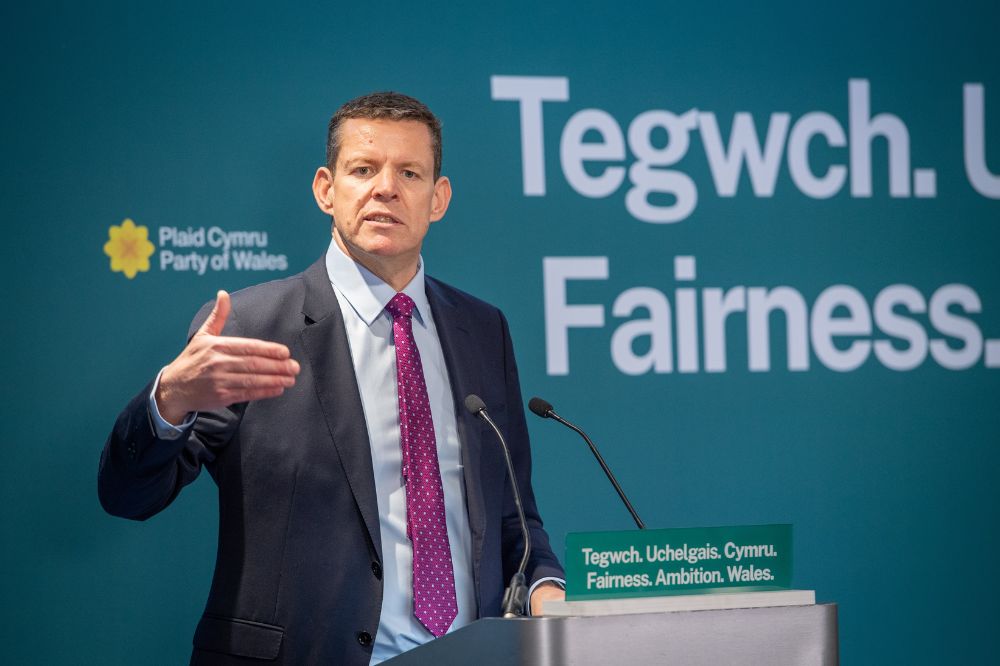
Housing, planning, public services, health inequalities, the future of communities and the Welsh language – these are not matters that can all be solved with pre-determined solutions. They are context-dependent and contested, and they require local knowledge and public debate. Vitally, the people who live with unmet needs in Wales must help shape how those needs are responded to.
In other words, we require a politics that is done with people.
Participation, or tokenism?
Of course, there is a very important caveat here. Consultation is not automatically democratic, and co-producing policies and services with the communities who need them is not automatically meaningful. Much of what is labelled participation is shallow, performative, and designed to legitimise decisions already made elsewhere.
I know this from my own experience as someone with lived experience of mental illness, where I have been asked to contribute to projects with the promise that my voice will be heard, only to find that everything was already decided. I was just there to add decorative quotes to make policy documents and reports feel more “authentic”.
The language of listening has become easy to borrow, even when power has not actually moved into the hands of the people. A current example is the UK Government’s Timms Review of Personal Independence Payment. Officially, the review says it will be co-produced with disabled people, the organisations that represent them, carers, clinicians and others, with lived experience “at the heart” of the work.
But disability campaigners and commentators have raised concerns about whether this is genuine co-production in practice, arguing that disabled people have not been meaningfully involved in shaping the process and terms in the way the language suggests.
This is the danger for Plaid too. It is one thing to say that policy will be shaped collaboratively. It is another to do that in a political system still dominated by hierarchy, where gatekeeping and highly managed forms of consultation are the norm. Real participation is harder than the tokenistic version. It is slower, messier, and more demanding. It requires politicians to surrender some control over the process, too. It requires them to hear things they may not want to hear. It requires them to accept that expertise does not sit only with ministers, advisers, and professional policy-makers.
Learning from other fields
In my own field of healthcare and mental health research, co-production has increasingly become an expectation rather than an optional extra. Co-production can be described as researchers, practitioners, and the public working together from the start to the end of a project, sharing power and responsibility throughout.
One of the reasons co-production matters in research is that it improves what we might call “ecological validity”: the extent to which a project actually fits the realities of the world it is trying to understand or change. It helps us to ask better questions, to notice things that professional expertise alone might miss, and to design research and services that are more usable by people who need them, and more fitting with the realities of daily life.
Policy is not the same as research, but the principle transfers well. Good policy should not just be technically tidy or written with impressive language, it should be responsive to the places where people actually live. It should be shaped by those who understand the practical consequences of political choices, the hidden barriers, and the trade-offs that are often invisible from above.
A different political imagination
“Our plan is to co-produce a plan” is not exactly thrilling political rhetoric. It can sound vague, evasive, and procedural. But that does not make it wrong.
If Plaid means it, they may be offering voters a chance to choose not just who will lead Wales, but how Wales will be led. But a more participatory, co-produced politics is much harder to deliver than to promise. In a political culture still dominated by hierarchy and performative consultation, there is every chance that co-production becomes little more than a better-sounding version of business as usual.
But if it is genuine, then “planning to plan” may not be a weakness after all. It may be the different way of doing politics that we need: one that takes seriously the idea that the people should have a meaningful and ongoing voice in shaping the policies that shape their lives.
James Downs is a mental health campaigner, researcher and expert by experience in eating disorders. He lives in Cardiff and can be contacted at @jamesldowns on X and Instagram, or via his website: jamesdowns.co.uk
Support our Nation today
For the price of a cup of coffee a month you can help us create an independent, not-for-profit, national news service for the people of Wales, by the people of Wales.



The depressing part of politics is that you have to make decisions on who is going to lose out. Politicians always want to tell the people in front of them that they won’t lose out, and create the implication that the loser will be some vague, hypothetical ‘other’, but in Wales this has led to massively overextended public services and insufficient funding and capacity, leading to inevitable failure. The reason why most co-production is pointless is that in an overextended system there is no value in advocating for more to happen without directing where should be deprioritised. You need the… Read more »
Sorry, but I want to vote for someone who knows what they are doing and can confidently give us a plan – now!