


Why Wales should be concerned about radioactive cargoes at sea
Tim Deere-Jones, Marine Radioactivity Researcher and consultant
Highly radioactive nuclear shipments regularly travel close to Wales, but concerns remain over the secrecy surrounding their movements and the risks they could pose in the event of an accident.
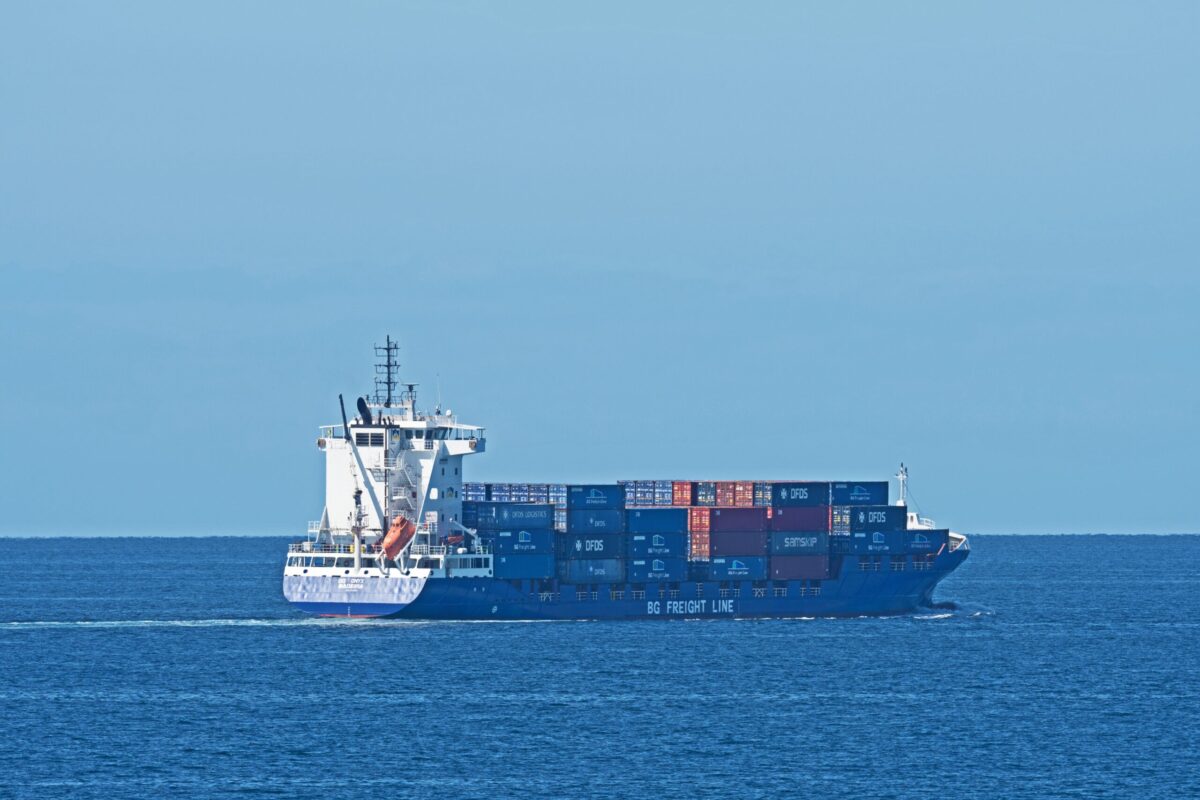
Most of these cargos consist of lower level radioactivity cargos designated as Hazardous IMDG7 which are permitted to be carried on ordinary merchant vessels. IMDG7 cargos include large and bulky consignments of a range of uranium products bound for the nuclear industry and some low-level wastes. IMDG7 materials may also include smaller packages of medical or industrial non-nuclear industry radioactive materials.
There is no legal imperative for shipowners, ship charterers or ships masters to inform the Governments, marine safety/rescue or environmental protection agencies of a coastal state, of the passage through its territorial waters or adjacent sea areas of vessels carrying IMDG7 cargos.
At the other end of the hazardous cargo scale are three UK ships Pacific Heron, Pacific Grebe and Pacific Egret, specially designed and built to carry consignments of highly radioactive cargos of Irradiated Nuclear Fuels (INF), High Level Wastes (HLW) and MOX Mixed (plutonium) Oxide Fuels in similarly specially designed and constructed containers or flasks.
These ships, owned and managed by a conglomerate of nuclear interests including the UK Government’s Nuclear Transport Solutions, the French nuclear company Orano and a consortium of Japanese nuclear companies, are registered to carry INF et al materials, and based at Barrow in Furness, on the Irish Sea coast of England. Their principal purpose is to transport materials across the global oceans, to and from the European nuclear reprocessors at Sellafield, Cumbria and Cap de la Hague in Normandy, France.
It remains unclear, due apparently to “security issues”, if Coastal States and their agencies are informed of the transport of INF/HLW and MOX cargos through their territorial waters or adjacent sea areas. What we do know is, that whenever they are actually carrying those extremely radioactive cargos, they switch off their AIS (Automatic Identification System) transponders and travel shrouded in secrecy about where they are, what direction they are travelling in and at what speed. While this is claimed to be an anti- terrorist strategy, it is relevant to note that it began to be deployed in response to widespread publicity about the voyages and cargos and “shadowing” by Greenpeace activists.
This is a complete reversal of normal practice under International shipping safety legislation. The 2002 International Safety of Life at Sea Convention required that merchant vessels over 300 tonnes on international voyages operate AIS systems in order to ensure that other sea users, search and rescue agencies should know their speed, direction and position.
This data facilitates collision avoidance when radar becomes “confused” by rain squalls, fog banks, islands, peninsulas etc, and also facilitates search and rescue (SAR) in the event of maritime accidents. Sailing “cloaked” with their AIS disabled, when transporting high level radioactive cargos, the INF ships run a much greater risk of collision than vessels fully visible and may delay any necessary SAR action.
Warships
Normally only warships on active duty have the right to “cloak” themselves by disabling their AIS. Pirates and “shadow fleet” vessels trading in sanctioned and illegal cargos are the only other ships that routinely conceal their movements this way.
The three INF ships, despite being cloaked in secrecy when carrying their extremely hazardous cargo, use the normal navigational channels and designated shipping routes when passing backwards and forwards through the Irish Sea, close to, or in Welsh territorial waters.
There are a number of maritime “choke points” close to Wales, where traffic is funnelled into narrow (less than 50 nautical miles wide) passages between Pembrokeshire and southern Ireland and Anglesey/Ley/ Liverpool Bay ports and mid and northern Ireland.
Traffic in the Pembrokeshire choke point is complicated by the presence of relatively heavy oil and gas tanker traffic, and traffic in both choke points are complicated by regular daily cross sea ferry traffic, commercial fishing activity and the traffic into and out of the busy Liverpool docks. The Irish Sea is also regularly used by UK nuclear powered attack and nuclear ballistic missile submarines seeking access to the Atlantic via the Celtic Sea.
Ships carrying both IMDG7 and INF radio-toxic cargoes can’t avoid sailing close to the Welsh coasts, especially when transiting the “choke points” Even if they stay in the busiest sea lanes towards the centre of the Irish Sea they are likely to be no more than 25 miles offshore. While 25 miles offshore may sound like a safe distance, the fact is that this is not necessarily the case when it comes to shipping disasters.
In 1997 a collision between and oil tanker and a chemical tanker off Ostend in the English Channel released around 7,000 tons of toxic vapour to the atmosphere. Subsequently, under changes of wind direction, and over an approximately 50 hour period, the cloud was detected in eastern and central England and eventually Wales.
In all of the areas where it was detected, the vapour cloud caused toxic impacts to residents including skin, eye and mucus membrane irritation and associated breathing problems. Investigators reporting on the event highlighted the potential significance of atmospheric pollution plumes from shipping accidents due to their ability travel considerable distances under the influence of variable winds, while remaining coherent and concentrated enough to have detectable health consequences on far distant communities. This incident provides powerful warning of the potential impacts of a shipboard fire or explosion involving either IMDG7 or INF cargos
Radiological pollution
In the context of the maritime nuclear INF and IMDG7 cargos carried close to, or inside, Welsh territorial waters there should be a major concern about the potential for a range of accident scenarios that might give rise to radiological pollution.
These risks are a major concern given the history of Irish Sea “nuclear vessel” incidents including a catalogue of engine room fires aboard INF carriers, a “near miss” collision event between a Stena Ferry and a UK Nuclear submarine, and an engine room fire which disabled a container ship (MV City of Manchester)carrying 10 tonnes of Uranium Dioxide (IMDG7) and left it drifting for several hours without power in busy tanker shipping lanes off the Pembrokeshire coast before a tug could reach it and tow it into Milford Haven, then a “nuclear free port” in a nuclear free county.
Incidents such as these all have the potential to escalate into maritime disasters involving a range of outcomes including “total loss” sinking of vessel and cargo, breaching of cargo containment and radioactive pollution of the marine environment and fisheries, major shipboard fires generating thermal plumes of airborne radioactive and chemically toxic inhalable micro-particles and vapours.
Dependent on wind direction, sea state, state of tide, and general near-surface water and deep-water movement, each of these scenarios and their many possible variants clearly have the potential to impact Welsh territorial waters and coastal zone aquatic and terrestrial environments, fisheries and coastal zone businesses.
‘Safe Haven’
The “City of Manchester” incident highlights the issue of “Safe Haven” or “Port of Refuge” (SH/PoR) mandated by the International Maritime Organistaion (IMO) in 2023, following a series of major oil spills, in order to ensure that vessels in difficulty and danger had the right to be granted a place of safety where “difficulties” could be remediated and loss of life and pollution prevented or mitigated.
However, this right carries with it a number of extra potential risks because it may well lead to major pollution of the SH/PoR marine and coastal environment and put regional coastal populations at risk of health impacts. No sooner was the IMOs resolution in place than many Sovereign States raised justifiable objections and concerns and a number, finding themselves facing serious shipping pollution incidents off their coastlines, refused to grant SH/PoR rights to the ships involved.
Currently there are no designated SH/PoR along any Irish sea coasts, including those of Wales. This is not surprising given the potential risks of radiation pollution and health impacts to coastal populations, coupled with the enormous expense attached to the provision of radiation protection and response equipment.
Evidence from the history of responses to significant radioactivity leaks to the environment confirms that there is no effective clean up response other than attempts to flush and clean, using water which eventually enters water courses and their marine end point.
Re-concentration processes
Again, the available evidence confirms that radioactivity entering marine environments is subject to a wide range of environmental and bio-magnification re-concentration processes generating radioactivity enrichment factors of up to 26,000, relative to the levels in the ambient water column. As long as high level sources of radioactivity are present in the environment, these enriched concentrations can deliver significant intermediate and long term radiation doses via a range of inhalation, dietary and contact dose pathways to sea users and coastal populations alike.
Research has found Sellafield sea-discharged radioactivity at least 10 miles inland on Welsh agricultural produce, providing evidence that the impacts of a radioactivity release from a shipping accident could extend across the shoreline and penetrate into the terrestrial sector of the coastal zone.
Potential impacts of serious pollution on marine and coastal regions are not restricted to health issues. Economic impacts always follow such incidents. Self evidently, regional fisheries would suffer, as would the coastal tourist trade. Less well appreciated is the fact that, following well publicised marine pollution incidents, agricultural and horticultural produce from regional coastal zones also experiences a consumer boycott.
Vessels of all States have the right of “innocent passage” through the territorial sea of another state. “Innocent passage” is defined as sailing through the territorial sea in a way that is not prejudicial to the security of the coastal State, including any stopping and anchoring necessary to ordinary navigation.
“Innocent passage” implies two important limits to the power of coastal State jurisdiction in the territorial sea: (1) the obligation not to hamper, deny, or impair the right of innocent passage; and (2) the recognition of innocent passage even in the case of vessel-source pollution as long as the pollution is not “wilful” and serious (an act will usually be considered ‘wilful’ if it is intentional or reckless)
Reckless
Arguably, the practice of switching off the AIS system of the UKs INF ships, could be described as intentionally reckless.
The 2006 “Government of Wales Act” definition of “Wales” includes the sea areas adjacent to the Welsh coast as far out as 12 nautical miles measured from coastal baselines. These are the Welsh Territorial Waters where Senedd Cymru has legislative competence and Senedd ministers have responsibilities and powers including marine planning, marine licensing/permitting, conservation, and environmental protection.
The UK 2009 “Marine and Coastal Access Act” reinforced this legislation and established a marine enforcement regime confirming that Senedd Ministers are the appropriate permitting and enforcement authority acting through their Agency: Natural Resources Wales. The Welsh Ministers also have the power to issue “Guidances” on marine issues.
Under international law, within the Territorial Sea, the coastal State exercises full sovereignty over the air space above the sea, over the water column and the seabed.
A coastal State has the right to legislate on matters concerning the safety of navigation, the preservation of the environment, and the prevention, reduction, and control of pollution without any obligation to make these rules compliant with international standards.
Resource use within the territorial sea is strictly reserved to the coastal State. Whether these rights accrue to the Westminster Government or to the devolved Government is a matter for constitutional lawyers, but it is clear that a principle has been established that should allow Senedd Ministers a major say in what happens in, and close to the Welsh territorial waters zone.
Support our Nation today
For the price of a cup of coffee a month you can help us create an independent, not-for-profit, national news service for the people of Wales, by the people of Wales.
Get more trusted Welsh news
Choose Nation.Cymru as a preferred source in Google News to see more of our journalism.


