


Why Welsh Labour suffered a devastating defeat and how it can be rebuilt

Mark Drakeford
I started writing this in the immediate aftermath of the results of the Senedd election. These are my thoughts about the multiple and complex reasons which led to Welsh Labour’s loss and what the party needs to learn from the result and to repair its relationship with the Welsh electorate.
This election was always going to be very difficult. “Time for a change” is one of the most powerful slogans in politics, as Labour found to our benefit in the 2024 General Election.
Each time Welsh Labour won a Senedd election in the devolution era that slogan was played against us in Wales, with a renewed potency. I first heard it from the Welsh Conservatives in the 2003 Assembly election, as it was then.
This time it stuck. One of the kinder things said to me on the doorstep this time, and there weren’t many, was: ‘It’s time you had a rest.’
Being in government means dealing with many intractable problems, in a context not of your own making.
The last Senedd term faced the aftermath of three great crises of our time. Most of it conducted under the chaotic and dismal final years of Tory collapse. All of it shaped by the aftermath of Brexit and Covid.
The term started with a European war in Ukraine; the worst of the ensuing cost of living crisis; and ended with a war in the Middle East.
In an era impatient for any explanation, opposition parties succeeded in portraying the impact of the perma-crisis as uniquely the responsibility of Welsh Labour.
Self-inflicted
Some of Welsh Labour’s wounds were self-inflicted. Vaughan Gething’s short and fraught period as First Minister damaged Welsh Labour’s reputation for stability. It left a Labour Group in the Senedd bitterly divided.
It is hugely to the credit of Eluned Morgan that she was prepared to take on a job she had not sought, and that she held the group together, leading an administration which, to the very last day, provided orderly, responsible and progressive government. Unfortunately, the damage had already been done.
Influenced by the pervasive McSweeney doctrine, the Welsh Labour Party picked the wrong fight, with the wrong people.
Far too often, we appeared intent on placating our enemies and forgetting our friends. Far too much time was spent attempting to court those who were never going to vote Labour, while neglecting or alienating those who might. The opponents were unplacatable and the friends decided they were unwanted and went elsewhere.
In the process, we lost the confidence and the trust of those who, for the first two decades of devolution, had found their natural political home with Welsh Labour. Put simply, for these electors, we were neither sufficiently Welsh, nor sufficiently Labour.
Identities
For 20 years we had succeeded in embodying the sense that to be Welsh and to be Labour were identities which went unambiguously together. We forgot the single most important lesson of the first two decades of devolution – never allow a space to open on the left of politics which could be exploited by others.
Now, with that space ever widening, it was enthusiastically occupied by both Plaid Cymru and the Greens, laying claim to the vacated territory of the Welsh radical tradition.
Sir John Curtice has persuasively demonstrated that every vote lost to other progressive parties did more damage to Labour than the far smaller number of votes lost to Reform.
It was a lesson which was already well known in Wales. Yet it was comprehensively ignored to our enormous cost.
Misty-eyed mythology
One of the most pernicious myths which grips part of Welsh Labour is that a Labour vote in so-called “heartland” areas is somehow more important than a Labour vote elsewhere. Every day this misty-eyed mythology exercises its grip on Welsh Labour thinking is a day lost on the road to recovery.
There is an approach and a winning coalition, which can begin to repair the losses suffered on 7 May. The approach is one which honours our past but is not trapped by and in it.
The coalition is made up of trades unions (and particularly those who work in our public services), the diverse communities of Wales who have every good reason to fear Reform and those urban, progressive voters who opposed Brexit and who want to see an outward-looking, modern Wales, and those who believe in devolution.
All that came explosively to the surface in the Caerphilly by-election. To their enormous credit, the good people of that constituency were determined to resist the media parody of them as Reform fodder. They looked for the best bet to defeat that party and decided it was Plaid Cymru.
In a first-past-the-post election, tactical voting was both understandable and effective. From Labour’s perspective, however, it left two lasting and deeply damaging lessons: first, that Plaid Cymru was the vehicle for defeating Reform more generally, and second that tactical voting was the way to achieve that end.
In the new, proportional system under which the Senedd election was fought that was simply not the case. But this was ruthlessly and successfully exploited by Plaid Cymru to the electoral detriment of Labour.
Keir Starmer
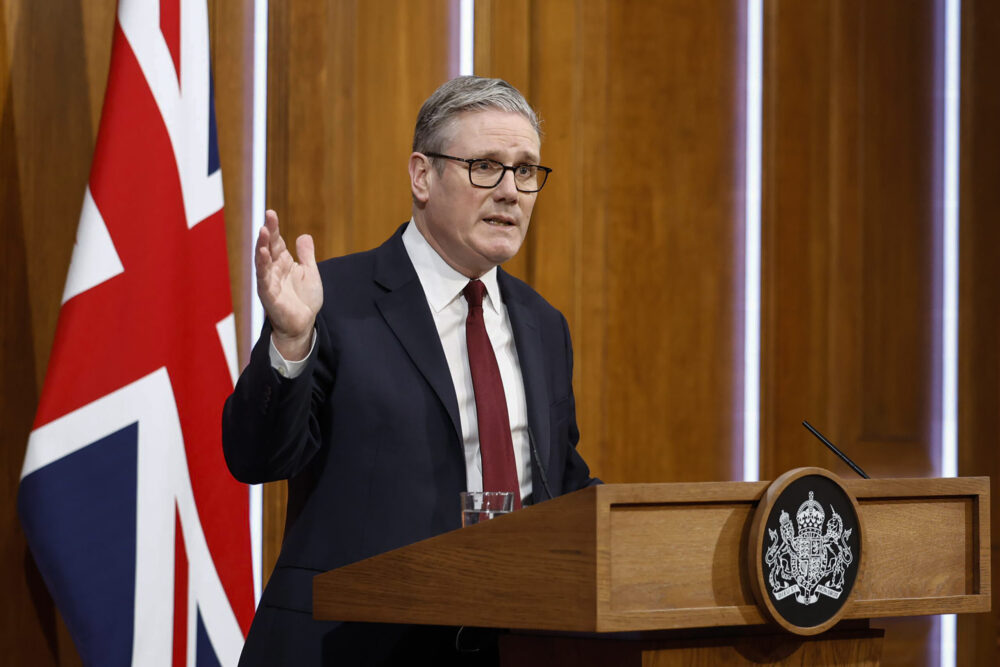
All these factors, real as they are, pale into insignificance, however, compared to the unpopularity of the Starmer government. I say that reluctantly, because it plays into a narrative that replacing the Prime Minister will single-handedly revive the fortunes of the party. I believe it is a necessary condition, but certainly not sufficient on its own.
Anyone who has spent time campaigning in Wales will know that the Prime Minister is, however unfairly, personally hugely unpopular. The weakness of his position means his departure is an essential starting point for any recovery.
The Welsh result was not, however simply a disaster made in Downing Street. The shadow of Gaza – an error-strewn policy made in opposition – hung over this election, undermining our support amongst BAME communities and progressive voters.
The serial abandonment of the prospectus on which the Prime Minister was elected as Leader of the UK Labour Party created accelerating disillusionment amongst party members. When the General Election campaign began with the imposition on local Welsh constituency parties of candidates chosen in London, the toxicity of that decision took that disillusionment to a new and permanent level of harm.
The loveless landslide was fought against a playbook in which campaigns in so called “safe” constituencies were reduced to a cipher with Members of Parliament and activists instructed to leave their own communities to campaign in places with which they had no affiliation.
The process of hollowing out the Welsh Labour Party thus began before, and continued during, the General Election.
As I look back on the most difficult campaign since I first knocked doors for the party in 1974, the memory which sticks in my mind is of a wet and windy morning on an estate where Labour voters made hens’ teeth look plentiful. Five elderly pensioners, of whom I was the youngest, toiled uphill in the teeth of an easterly wind. We were what was left of Welsh Labour’s fabled fighting force.
Winter fuel allowance
The damage continued in office. The decision to remove winter fuel allowance from pensioners proved totemic. It touched a nerve amongst Labour voters in Wales which was raised time and again in doorstep conversations in the Senedd election. The impact was not simply the policy itself – it was the message it conveyed about the sort of Labour Government which had been elected.
At the height of the controversy, I was walking to my constituency office in inner-city Cardiff. I was stopped by a man well advanced in years. He told me that he had been a coal miner and had served in the army. Then he launched into a lament about the new Government. ‘Now, Mark,’ he said. ‘I am a Labour man. And you are a Labour man. But Keir Starmer is not a Labour man. No Labour Prime Minister could ever have taken that help away from a pensioner like me.’
Devolution
I have kept what I regarded as the most fundamental reason for Welsh Labour’s catastrophic result until last. Devolution has been Labour’s project. Devolution is the ground on which Welsh Labour was created. Devolution is the policy which most clearly differentiates the Labour Party from its unionist opponents on the right and its separatist opponents on the left.
Devolution has been the choice of the solid majority of the Welsh population who want Welsh voters to be directly in charge of those decisions which affect only people in Wales, while continuing to remain part of the wider United Kingdom for the purpose of defence, foreign affairs, border security and social protection.
While in opposition Keir Starmer commissioned former Prime Minister Gordon Brown to prepare a report on future constitutional arrangements within the United Kingdom. He endorsed the report and promised its implementation.
UK Labour’s manifesto, at the 2024 General Election contained specific commitment to carry forward the devolution settlement in Wales. But in the two years which have followed, none of that has happened.
At a time when, increasingly, it became imperative for Labour to reassert and refurbish our reputation as the party of devolution, exactly the opposite happened. No meaningful progress on the devolution of youth justice and probation.
No progress on devolution of the Crown Estate. Reform of the fiscal framework which left Wales with less than the Tories had provided to Scotland. Instead, a rampant use of the powers which allow UK Ministers to spend money in devolved areas without the consent of the Senedd and a refusal to consider codification of the Sewell convention which even the previous Conservative government had been prepared to discuss.
Put simply, Welsh Labour went into the 2026 Senedd election with the ground cut from under us. It was simply implausible to argue, as had always previously been possible, that a vote for Labour offered the best of both worlds: a powerful Senedd in a successful United Kingdom. Our unique selling point had been taken off the shelf.
Grounds for optimism
I turn now to the future and to grounds for optimism. The new, proportional voting system under which the Senedd election was fought saved the Labour Party in Wales. Under the new system, Labour received 11% of votes cast and has 11% of the seats in the Senedd. Every first-past-the-post seat held under the previous system would have been lost.
The nine seats won hold the balance between a minority Plaid Cymru administration and a reliable progressive majority. The new Labour group should use its continuing relevance to set a radical agenda. It should, for example, make the earliest possible call for next year’s local government elections to be held under a proportional system. Otherwise, the brutal cull of Labour councillors seen in England on 7 May will be at high risk of being repeated in Wales in May 2027.
Internally, Welsh Labour must wrestle control over greater parts of its own rulebook from the centre. For the party which created devolution, we have been remarkably unwilling to apply the same principles to our own affairs.
If we are to win back the confidence of our own members, they need to know that Welsh Labour means something inside our party, as well as beyond it. Then we must rebuild the coalition which has sustained us in times of success.
There are three key elements to the coalition, each of which will need attention, but not all of which can be achieved simply within devolved responsibilities. First, we must become, visibly and unambiguously, a party of the wider labour movement. Trade union membership is higher in Wales than in any other part of the UK. It was a Welsh Labour Government which put social partnership on the statute book – this remains one of the most significant achievements of Labour in government.
Our trades unions are not simply just another stakeholder, to be consulted when convenient. Public sector workers are the bedrock of electoral support for Labour in Wales, and our manifesto in May’s elections offered tangible benefits to them. Yet, many of them gravitated to other voices. Now, we must win them back.
That’s the work of a four-year term, not a few months. We must work directly and closely with our trade union partners to find the new ideas and to convince trade union members that Labour can be again the best vehicle for their implementation.
Racism
Secondly, we must repair our relationship with the diverse and black and minority ethnic communities in Wales. The harm of Gaza must be mitigated by a different, and ethically driven foreign policy over the next three years. The harm caused by speeches which describe the presence of these communities as turning the United Kingdom into an ‘island of strangers’ cannot be mitigated simply by disowning the phrase, while licensing the Home Secretary to embrace it as an article of faith.
The fear of Reform in these communities is, for very good reasons, palpable. The threat of ICE-style snatch squads on our streets is a real, not a theoretical risk for global majority citizens. They need to know that Labour will never pander to such racism.
In Wales, there is huge anxiety among many communities that the Anti-Racist Action Plan, a keystone achievement of the Welsh Labour Government, will lack supporters both in government and in Labour in opposition.
The work of the next four years must focus on building relationships and insisting that the institutional and policy commitments made to these communities over the last decade are honoured and pursued.
We must be visible in all communities, all year round. Our affiliation with communities must be unambiguous and proud.
Progressive voters
Thirdly, we must turn our policy efforts to reattracting progressive voters who, until 7 May, preferred Labour to any alternative.
The new coalition which Welsh Labour should represent needs, at its heart, those voters who are determined that Reform should never speak for them, who opposed Brexit, who want to see a modern, outward-looking Wales, confident in our own identity and welcoming of others to share in it. These are those fellow citizens who believe that government exists to ensure that markets serve the interests of the people, not the other way around. These are the natural supporters of devolution, who reject nationalism of whatever persuasion.
They want a Labour Party which authentically stands up for Wales and is unafraid to do so when that places us at odds with the UK Government, whatever its political persuasion.
A coalition of this sort would form the core of future support for Welsh Labour; a core around which others would be attracted to our commitment to a radical reshaping of our society in – to echo a phrase – the interests of the many, not the few. While all that must be led by the Labour Group at the Senedd, it cannot rest there.
The future of our party and our movement in Wales will depend on that far wider group of individuals in local government, in the trade unions and in the constituency parties who must be involved in shaping and reinvigorating that future. And that is why, even in these bleak times, it is still possible to be optimistic.
Mark Drakeford was First Minister of Wales and Leader of Welsh Labour 2018-2024
Support our Nation today
For the price of a cup of coffee a month you can help us create an independent, not-for-profit, national news service for the people of Wales, by the people of Wales.
Get more trusted Welsh news
Choose Nation.Cymru as a preferred source in Google News to see more of our journalism.



Wonderfully tone deaf. No mention of us spending the last 25 years plummeting down every league table, be it health, education, the economy etc (you couldn’t even accept Westminster’s gift of the M4 relief road). Extraordinary stuff. You did not one single thing for Wales, any of you. Just go Mr Drakeford, PC is in charge now. Labour is rightly confined to the bin, never to return. Finally we might just have a chance.
Gift? It was borrowed money that had to be repaid with interest out of the health budget.
And would be well under capacity most of the time. Rush hour is very bad right now but that’s only because a lack of viable alternatives to driving that would be much cheaper to deliver.
Completely false. The M4 in that area is constantly rammed and very dangerous. There are no alternatives for freight traffic etc, even commuting to Bristol takes an hour longer at least by public transport.
The M4 in the Brynglas Tunnels area is NOT ‘constantly rammed’ – that is just completely untrue.
Build more roads – get more traffic. That has been proved over and over again.
What’s needed is policies which reduce, not increase, traffic.
You don’t drive do you?
Yes, I do if I have to. But I try to avoid it as much as possible.
Exactly. If you drove regularly round there then you wouldn’t make such a statement.
How come then that when I do drive through that area, outside of rush hour, it’s not ‘constantly rammed’?
So you avoid it because you know the traffic will be bad!! But you still think there isn’t an issue?
Come on – lets have sensible debate. Claiming that black is white is pointless.
Having opinions and expressing them is what forums like this are about. But stating clear falsehoods is to nobodies benefit. The Bynglas tunnels are horrendous – its why they are so famous. Fine to believe that we shouldnt build another road – that’s your opinion. But claiming that there isn’t an issue is just silliness.
Where did I say that there isn’t an issue?
I said that the area wasn’t ‘constantly rammed’ – because it’s not.
It is bad at rush hour and probably Bank holidays and other times when there are a lot of people on the move.
But building a new road will lead to yet more traffic.
We need to provide better solutions.
We need grown up solutions to the problems that actually exist. Pretending that the Brynglas tunnels are just fine is not serious behaviour. Every year we leave the problem to worsen, the more wealth Wales loses.
Newport to Bristol city centre is 33 minutes by rail.
Handy if you live in Newport Train Station and work in Bristol Temple Meads train station… you’ve never commuted across the bridge have you?
Once again someone assuming their experience speaks for everyone.
Think he’s called your bluff. You haven’t have you. No one who has ever tried to commute from South Wales to Bristol by public transport in the morning/evening would say that.
I have, regularly. And I definitely would say that.
The bare bones elephant in the room is that our roads are rammed because a big chunk of the population are precious about their cars and think that public transport is below them.
Commuting to and around Bristol is incredibly cheap, easy and stress free, but people want realise this till they step out of their bubbles.
Agree.
I think there’s a lot of snobbery about public transport – buses in particular.
But, I’m glad to say, on my local route, this seems to be dissolving and all kinds of people, including people who are clearly wealthy enough to own cars and drive, instead use the buses. Just as they do in London.
And I’m always struck by how polite and helpful my fellow bus users are!
Deciding transport policy according to class war rather than economic need is a disaster. Unless we start focusing on economic growth, Wales cannot progress. We cannot just remain a nation that spends English money. We have to get serious ourselves.
Mark Drakeford an archetypal cap doffing, sycophantic unionist who thinks Cymru can’t. Fortunately, there are an increasing number of people who think Cymru can!
I don’t remember him doffing his cap to Johnson.
I remember him and his Welsh Labour chums being complicit in 14 years of Westminster austerity!
Over the years, I had hoped that Welsh Labour might have had its “Dom Mintoff Moment”. Back in the 1950s, leader of the Maltese Labour Party, Dom Mintoff campaigned for Malta to become part of the United Kingdom of Great Britain, Northern Ireland and Malta. He saw the same benefits for Malta as part of the UK as Prof. Drakeford sees for Wales. Then he had an epiphany. He realized “Perfidious Albion” is not a football team!
I can’t believe he doesn’t even mention the disastrous imposition of the 20mph speed limit. However well intentioned, its implementation was a disaster. As far as I and many others were concerned it was the beginning of the end. We implored the electorate to remember it at the next election, and not just vote Labour because ‘I always have’.
Not the only reason but a big contributing factor.
I agree. More than anything, it showed a government out of touch with voter priorities and having no solutions to genuine issues. Of all the huge challenges Wales has to tackle on the economy, health, education etc – Drakeford chose to make his priorities a policy on traffic speeds and a change of voting system. His choices pretty much admitted to the voters that he had no answers to the real problems.
I actually think Labour damaged itself hugely under Drakeford. Under him, Labour turned inwards. The priorities of voters was replaced instead by the priorities of the lanyard wearers in the lecture halls and committee rooms. Ordinary people wanted (still want) an M4 Relief Road but that was taken away. We wanted improvements in education and health, but these were not a priority in Cardiff Bay. Instead, we were given a 20mph policy that nobody had asked for and, regardless of its merits, was on no voters priority list. In addition, we had a change of voting system and 36 new… Read more »
I’m an ordinary person and I definitely don’t want the M4 relief road.
What I do want are policies that prioritise public transport and active travel. Car domination is v expensive for the tax payer and is a very inefficient way of moving people around. Plus safety, noise and the huge amount of space cars take up.
We live in the world that exists not a world which you would prefer to exist. Wales need to becomes a serious nation now. Plaids first challenge is to decide if they are going to lead us into becoming a mature, serious nation or if we are going to continue playing around with luxury beliefs and rely on England to be the grown up and sort the bills on our behalf.
No, we really don’t.
We want people to dump their rather childish car obsession.
It’s all very well to wish for this car free land where we gambol about in wildflower meadows. But in the real world, the Welsh economy needs to be prioritised. I daresay you believe in well funded public services? Unless Wales becomes a serious, wealth creating nation then we can’t afford a welfare state, NHS and everything else we want. If Wales has a future as an independent nation, we cannot continue to ignore our economic prosperity.
Mr Drakeford I think you are looking at the situation from the inside looking out. Labour have had an opportunity for 25 years to show what it was capable of doing. I don’t think that I ever heard a Westminster Labour politician use wales as an example. I kept hearing that all the problems are due to a Conservative Westminster government and things will be different once Labour run the uk. Labour did get into Westminster and I did not see any change. I did notice that Mr Starmer couldn’t spare the time to support you when the chips were… Read more »