


Why, why, why it’s time to give Tom Jones’ Delilah another chance
Stephen Price
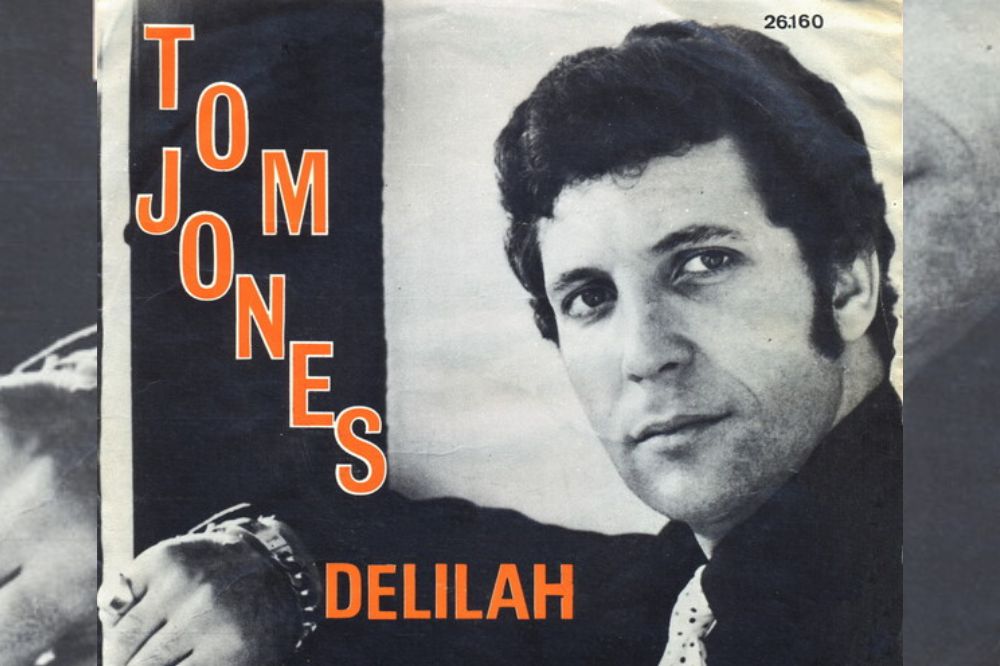
Tom Jones’ eagerly-awaited return to the Welsh capital on Wednesday night made headline-grabbing news across the UK for the legendary singer’s inclusion of Delilah in the setlist.
The singer, 85, headlined Cardiff Castle for two nights as part of a summer of live outdoor shows, taking to the stage to perform beloved songs from his decades-long career as one of the greatest singers to emerge from Wales, with hits including What’s New Pussycat?, Sex Bomb and I’m Growing Old.
However, when Tom addressed his hit track Delilah, which was released in 1968, a vocal minority within the crowd let out a chorus of boos and shouting, reflecting an ongoing debate that a few high profile figures have been having for some time now, while most of us look on as baffled as Tom by the buzz-killing fuss.
Delilah was recorded by Tom Jones in December 1967. The lyrics were written by Barry Mason, and the music by Les Reed, who also contributed the title and theme of the song.
It earned Reed and Mason the 1968 Ivor Novello award for Best Song Musically and Lyrically.
The song tells the story, with details largely unstated, of a man passing his girlfriend’s home after dark, who recognises that shadows at her window are of her having sex with another man.
He is waiting across the street when her lover leaves at dawn. After he confronts her, she laughs in his face. He stabs and kills her, then waits for others (probably the police) “to come to break down the door”.
The lyrics unfold from his point of view, and are filled with his, often contradictory, emotions. He speaks of Delilah in possessive terms, but also refers to himself as her “slave.” He asks her to “forgive” him, presumably in death, but still clearly sees himself as having been wronged by her.
Welsh rugby anthem
Shortly after its release, Delilah became an unofficial anthem in Welsh rugby, and as early as 1971, Max Boyce’s own hit song, Hymns and Arias referenced Delilah’s popularity alongside more traditional Welsh hymns.
The song’s popularity saw it become part of official matchday performances at Wales matches, especially those at the old National Stadium. On 17 April 1999, Jones performed Delilah as part of the pre-match build-up to Wales’ victory over England at Wembley Stadium in the 1999 Five Nations Championship.
The Welsh Rugby Union regularly played the song at the Millennium Stadium before international matches, often displaying the lyrics on large screens, until on 20 June 2003, Senedd Member Helen Mary Jones publicly raised concerns that the song “glorifies violence against women”.
The song’s co-writer, Barry Mason, responded to Jones’ criticism, stating: “It’s sad, isn’t it? She’s being silly. To say fans are wrong to sing Delilah insults their intelligence. Nobody listens to the lyrics.” The Welsh Rugby Union replied that their use of the song was in response to public demand, adding: “Fans sing this song without concern for the lyrics.”
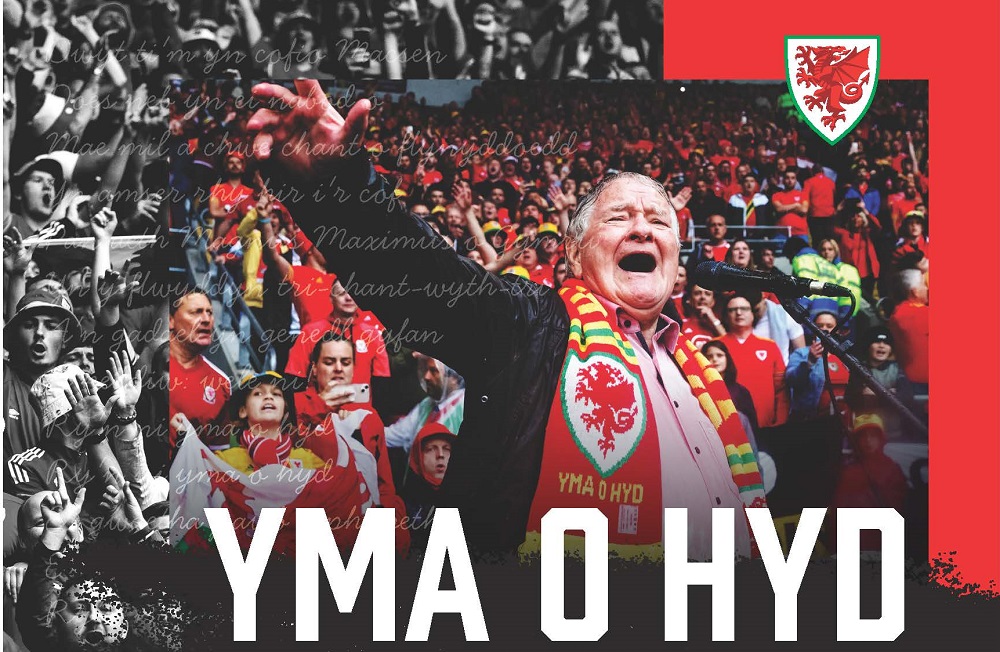
Further criticism of the song’s use in Welsh rugby came in 2014, when Dafydd Iwan wrote an article on the meaning of song lyrics. Iwan noted that choirs and fans inside the stadium would sing Delilah alongside his own folk song, “Yma o Hyd”, and the Christian hymns “Cwm Rhondda” and “Calon Lân”.
Iwan stated that while each song was “great to sing”, the four together formed a strange mix. Iwan’s article stated that while he had written “Yma o Hyd” about the historic survival of the Welsh nation against the odds, Delilah was “a song about murder and it does tend to trivialise the idea of murdering a woman and it’s a pity these words now have been elevated to the status of a secondary national anthem. I think we should rummage around for another song instead of ‘Delilah'”.
A ‘debate’ between journalists and politicians
Iwan’s article led to much ‘debate’ across the UK’s media, in search of hits and no doubt not actually engaging with anyone not in the field of politics or journalism, with The Guardian erroneously reporting that Iwan had called for the song to be banned.
In a BBC interview, Tom Jones responded by saying that the song was “not a political statement” and that “I love to hear it being sung at Welsh games, it makes me very proud to be Welsh that they’re using one of my songs.” The Welsh Rugby Union also responded that they had condemned “violence against women” and had “taken a lead role in police campaigns to highlight and combat the issue.”
However, a spokesman added that the WRU was “willing to listen to any strong public debate on the issue of censoring the use of Delilah”. Comparisons were made to similar themes in other well-known tragedies, such as Romeo and Juliet which had not been deemed controversial. Following these responses, Iwan wrote a letter to the Guardian pointing out their error, adding that “banning songs is not something I would ever advocate.”
In 2015, the Welsh Rugby Union removed the song from its half-time entertainment and playlist for international matches.
The Union again clarified their position on 1 February 2023, prior to the start of the 2023 Six Nations Championship, reiterating that “Delilah” was no longer included in playlists for Wales matches and that guest choirs had also been requested not to feature the song in more recent years.
This announcement was immediately criticised by some, including Wales wing Louis Rees-Zammit, who tweeted: “All the things they need to do and they do that first…” The statement was seen by some as a response to allegations of a “toxic culture” within the WRU, raised in a BBC Wales documentary.
Richard Marx performed the song live in Cardiff the following evening. Marx opened his performance of the song by stating that “I am not remotely minimising violence, or especially violence against women, but there are a lot of things that we all could be doing to help the situation, other than banning Delilah.”
Richard Marx and Tom Jones both defended the song, before performing it in Wales during the 2023 controversy.
The Welsh Rugby Union’s actions were also commended by the Chief Constable of Dyfed–Powys Police, while singer Nick Cave stated: “I can’t get too animated by the fact that Delilah has been banned. I understand there is a principle here, but on some level I like the fact that some songs are controversial enough to be outlawed. It fills me with a kind of professional pride to be a part of the sometimes contentious business of songwriting. It’s cool.”
“Boo, hiss!”
In February 2023, domestic abuse campaigner Rachel Williams told BBC News that educating the masses on violence against women is better than banning Delilah and other similar pieces such as Carmen, Pagliacci, and William Shakespeare’s Othello.
And any supposed controversy hasn’t resulted in Tom removing the beloved song from his setlists.
Before Wednesday’s recital, Jones performed the song as part of three concerts held at Cardiff Castle in July 2023. In the first show, he addressed the crowd with an apparent approval of the WRUs stance: “Who was the man who didn’t want us to sing Delilah? You can’t stop us singing Delilah. He stopped the choir from singing but he didn’t stop the crowd from singing it. And we will keep singing it too!” This was greeted with cheers from the crowd before Jones’ rendition of the song.
One of my major gripes with the ban is the idiocy of the supposed ‘debate’.
I’d be the first to agree with banning a song, or any media, if an actual individual, or a group was being targeted, but how many songs can we list that might also make a banned list?
Infant Kiss by Kate Bush, Little 15 by Depeche Mode and Lolita by Lana Del Rey aren’t in any way, shape or form, ‘glorifying’ paedophilia.
Nick Cave didn’t actually have murderous intentions, or a desire to glamorise murder with Where the Wild Roses Grow or any of his other murder ballads.
From Neil Young’s Down by The River to Taylor Swift’s No Body No Crime, there’s no glorification, no belittling, simply storytelling – something mankind has done since time immemorial.
The list of artists that narrate the unsavoury, from Eminem to Tori Amos, PJ Harvey and pretty much any writer who rejects the ‘I love you, I lost you, now I’m sad’ trope is thankfully too long to list.
It’s art, it’s fiction, it’s absolutely necessary for us as humans to create and to play with ideas, to understand, to innovate and push the bar.
Do we ban all horror films, gory crime novels, plays and productions?
One things that bores me to tears about much modern (and older) music, is the uninventive format of verse chorus verse chorus bridge chorus that is either about falling in love, or breaking up in one form or another.
Music gives us a chance to bring poetry and prose, and ideas, to life. One can inhabit the mind of an animal, a historical figure, the list is endless, one can limitlessly explore, and one can simply have fun.
Delilah as a distraction for actual femicide and abuse of women is offensive and absurd. ‘Banning’ the song has resolved nothing, judging by the number of women who have been killed by their partners this year alone. Nothing at all.
It’s a smokescreen, and its ban is doing nothing for the real issue that those who take performative offence should be addressing.
I’m neither a rugby fan, nor a die-hard Tom fan, but the man is no fool, he’s an extraordinary talent, and to target this one song with such misdirected and misinformed, and frankly fake, offence, is a worrying sign of our times.
Red-penning, venting, quashing and faking outrage for the feeling of control, and to be a saviour for imaginary victims (but really, really, just wanting some power and release).
“Let’s make this about me, I’m not offended but others might be, let me have some limelight on someone else’s coat tails and talent.”
“And don’t even think about having a good old singalong!”
Support our Nation today
For the price of a cup of coffee a month you can help us create an independent, not-for-profit, national news service for the people of Wales, by the people of Wales.



Agree with this. Like any melodrama opera, set in Italy or in the Old West, it is about humans in the raw. Woman takes up with number 2 and taunts number 1. Folly, but it happens and causes danger. We need laws to stop the crime passionel that may well follow and we have them, always have. Man may seek forgiveness, but it won’t of course happen, as he knows. Man with ‘knife in my hand’ is going to hang, no less. Message, what man did to woman leads to ultimate punishment. Not trivial at all. One of the very… Read more »
When I came to Cymru in the 70’s, I quickly became aware of the misogyny that was such a strong element in the culture, and the hypocrisy that went with it. For example, I was told off for swearing within earshot of the dinner ladies in the factory canteen, but on the night shift, when there were no supervisors, someone brought in pornographic films to show in that same canteen. Every worker went to see them – I was the only one that didn’t. I can give other examples. I thought then , and still think, that sexual politics in… Read more »
Tom’s hit song “Green Green Grass of Home” was blatantly advocating the teen-age consumption of Marijuana in Pontypool and beyond. “Its good to toke the green green grass of home etc”. When I first heard this in the 1960s (top ten Welsh radio) I immediately smashed the transistor with one of my pit boots. Jones is shameless in the social havoc he causes, leading our young people to degeneracy and away from the chapel.
I struggle with the word ‘glorification’ in this context … simply because of my interpretation of the lyrics. It is implied that an act of violence has been committed; but isn’t it also implied by the lyric “before they come to break down the door” that the act was addressed (assumption here being the authorities) ? It is the tragic crime of passion parable which has been told countless times before in film / music etc.(as Stephen makes mention of above). The word ‘Glorification’ is , I understand, in praise of something: I cannot see in the lyrics the suggestion… Read more »
No.