


Will £14bn for Welsh rail be enough to save Labour?
Jonathan Edwards
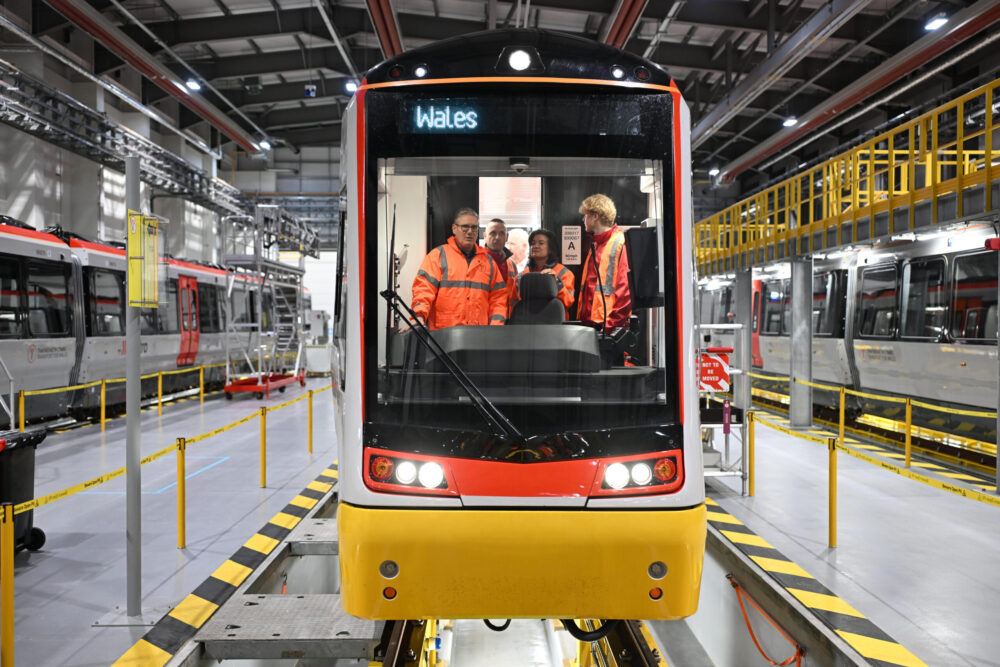
Last week’s Prime Ministerial visit to Wales promising a long-term commitment to fund the modernisation of Welsh rail over the next two decades was a major political victory for First Minister Eluned Morgan.
It is also a victory for those who have campaigned over many years to highlight the inequity that Wales faces when it comes to the distribution of rail infrastructure investment.
After many years of banging my head against Westminster walls, I never thought I would see the day when a UK Prime Minister came to Wales and admitted that our country had been let down by past UK governments and in doing so make a generational commitment to back the long term plan outlined by Transport for Wales (TfW) in their impressive strategy paper ‘Today, Tomorrow, Together: A Vision for rail across Wales and the Borders’.
A major political argument has been won over rail funding (that Wales has been historically shafted), and the debate can now move to ensuring that investment is allocated and spent delivering tangible gains to the people of Wales.
Mandarins in the UK Department for Transport in London probably choked on their croissants when they realised the UK PM was going to effectively say that TfW shall henceforth receive whatever it asks for.
There is no doubt that arguments over HS2 and subsequent projects such as Northern Powerhouse Rail have been a major driving force in the increase in support for Welsh independence and Plaid Cymru’s capture of Labour leaning voters since the last general election.
Labour in Wales can now face the Senedd election with a claim that they have delivered. It is highly unlikely that a Welsh government of another political colour would have secured the political commitments required.
The politics of the announcement means that Eluned Morgan will now be able to say that she has secured an agreement that goes further than the HS2 construction period and exceeds the sums involved.
While I no longer spend my time knee-deep in Treasury documents, £14bn it seems to me is a bigger amount than would come from Barnett consequentials in the event of rail infrastructure investment being devolved. Admittedly I haven’t independently totted up the figures, but it would seem to me that the First Minister is like a poker player raising the stakes.
Labour have set a challenge for Plaid Cymru, and it will be interesting to see how they react.
Big questions
As Plaid activists converge on Newport for their Spring Conference, they have some big questions to answer in several policy fields. The conference will have a very different feel to anything the party has experienced before. Can they make the transition to a party that resembles a government in waiting?
When it comes to the TfW masterplan, do they support the strategy starting with the £445m of rail enhancements concentrated around Cardiff and already allocated in the current UK Government Comprehensive Spending Review (which sets out spending until April 29) or will they scrap work already underway?
If they do support the current plans, what about the rest of the country during their first years in office? If not, what if the purse masters, the UK Government, disagree?
Does Plaid support the 43 schemes identified by TfW ready for development? In what order will they be prioritised.
As a resident of Ammanford, I am personally interested in development project 37. Where would this project lie in the Plaid Cymru list of priorities? If more rail investment can be obtained for Wales directly from the Department for Transport in London, where does this leave the party’s signature policy of devolving rail infrastructure investment?
If Welsh rail investment is concentrated around the capital as currently planned during the first term of a Plaid Government, the party could see its support in the rest of the country collapse.
The rest of the country is crying out for an approach less centred on the capital.
Cynical
While a political victory for Eluned Morgan and the Welsh Government, I am not convinced that the announcement will have much of an impact on the election in May. Voters are rightly cynical about long term promises, and while the plan looks great on paper none of the projects will be operational by the time votes are cast.
However, in the political long game there could be an ulterior motive. Parties that know they are on the way out often like to leave elephant traps for those that are about to replace them. The sort of questions that I asked earlier in the article may well soon be facing a Plaid
Transport Minister in a matter of weeks from opposition politicians and the media and they had better have their answers ready.
The announcement to all intents and purposes means that the next Welsh government, whatever its colour, will be implementing Labour transport priorities. It also means that the Welsh Government has ready-made local campaigns ready for deployment.
If Labour can avoid a catastrophic defeat, the foundations for the counter attack are contained in the TfW masterplan.
Returning to the overall picture, does all this mean that our railways will within a generation resemble something fit for a supposed developed country?
Context
The problem with long term promises in a UK context is that Prime Ministers and governments come and go.
Keir Starmer has had a torrid time as Prime Minister, but he’s not the type of politician who would come to Wales and sell snake oil. The Prime Minister is however staring down the barrel of a gun, as is the First Minister.
The question that follows is will their replacements – and the replacements of their replacements – deliver?
Jonathan Edwards was the MP for Carmarthern East and Dinefwr 2010-24
Support our Nation today
For the price of a cup of coffee a month you can help us create an independent, not-for-profit, national news service for the people of Wales, by the people of Wales.



I wish I was as confident as Mr Edwards the composer of this article, but I just don’t get his feel good vibe . E.g the £445 million will be spread over 10 years, and covers the whole of Cymru and not ” enhancements concentrated around Cardiff”, and there were several stations mentioned by K Starmer that have been previously named as being built, under other proposals, and lastly, this new money is for ” Wales and the borders” and will include money being spent on lines and stations in England. At one point I did think Mr Edwards was… Read more »
The basis of my gripe is, we get money announced for Cymru and it will include parts of England in the spending of it, but will the northern coastal line in Cymru be electrified using some of the £3 billion Manchester is getting, will the vale and Maesteg line be electrified with the money the Leeds to Hull line will get, and will Swansea get any of the Cambridge to Oxford £1 billion upgrade, fat chance.
If Plaid Cymru is elected / leads Senedd after the election I hope that they do not focus on rail growth. For example, North Wales needs well-paid jobs and not faster trains to work in England / more tourists. Wylfa New Nuclear Build needs well-paid design roles. East Anglia’s Sizewell C has a major office in Manchester and is using Liverpool University to support https://www.placenorthwest.co.uk/sizewell-c-launches-8800-sq-ft-manchester-office/ Starmer / Eluded Morgan have not announced and well-paid roles linked to Wylfa Nuclear in Wales / no link to a University such as Bangor – so we can all assume that the roles will… Read more »
I agree that this announcement will have little impact on the result in May (they hardly ever do despite the spin doctors). But I also agree that it puts any incoming Plaid government in a bit of a bind and they will need to be ready with answers. Opposing an unpopular government is easy, actually governing much less so. So, I think we are about to find out how much real depth there is to Plaid’s policy platform.
It’s lies. ;about are promising us stuff. They wont deliver it. Look at how many manifesto promises they broke.
Vote Plaid Cymru
How many people will have heard about it and remember?
Since the early 2000s Cymru has been shortchanged at least £4 billion of rail funding, do you think it will any difference if we vote for the party that enabled this horrendous situation to happen?