


Will we remember them?
Alun Smith
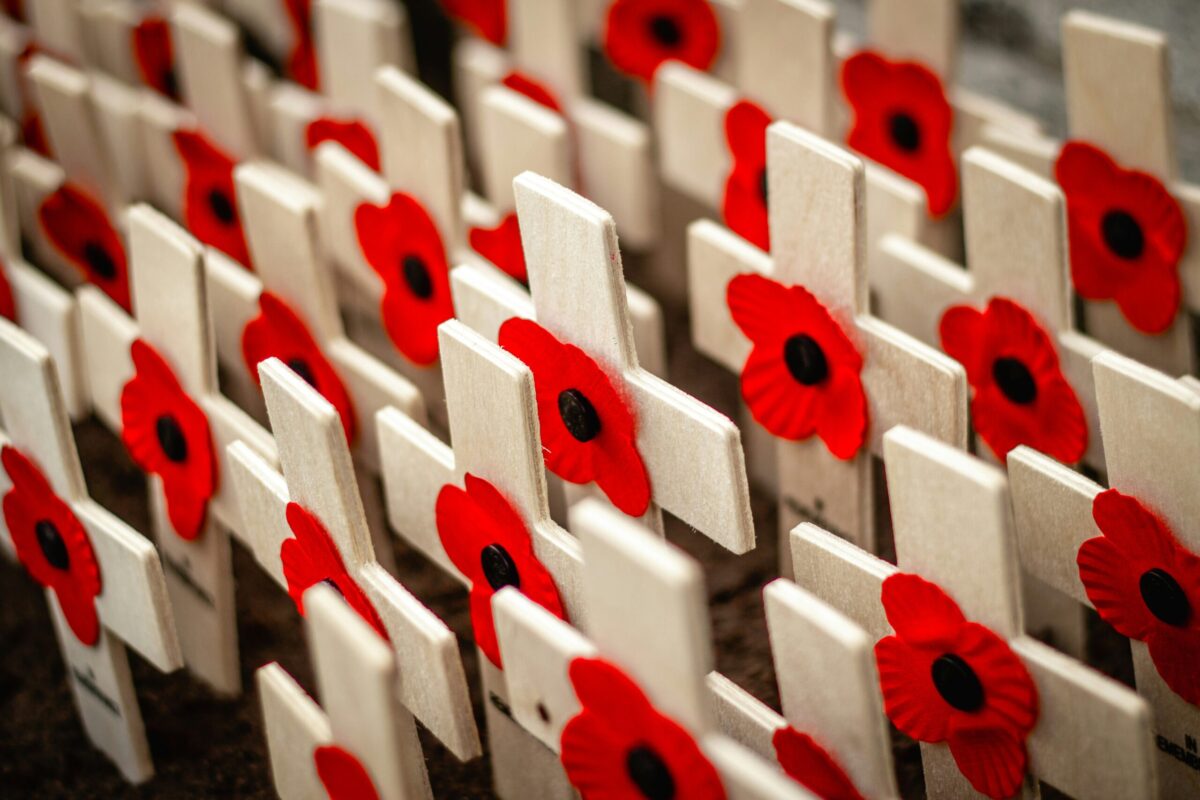
Every year, for as long as I can remember, without fail, I’ve bought and worn a poppy from a registered outlet, where I knew the funds were going to the British Legion, who, I knew, would use the money to look after ex-service personnel.
It was never really a political choice for me; it was just something I did every year to show respect to those who fought for my freedom. For those who fought and fell and for those who fought and survived.
When I was growing up, it was about remembering the ‘Great’ War and about World War Two, whether I was standing there in a scout uniform, or singing “This Is The Army Mr. Jones” on the massive stage of St. David’s Hall.
I don’t mind saying that for most of those years it seemed like a distant past, something that I would never have to engage with on any personal level. I never knew my family so I don’t know if any of them served. I’ve never been connected to it. I just thought I understood the bigger picture from a world perspective. I thought we were remembering ALL of them.
We learned in school about the trenches and the ‘hun’ and we learned about the Nazis and Hitler and how the UK had stood up to fascism and prevailed, at great cost, with great loss. “We will remember them,” says the poem, The Ode to Remembrance. “We won”, I was told. “Remember ours”.
But… how do we remember them? Since the early nineties I’ve been questioning this performative, national obsession a bit more closely. Other countries don’t spend as much time or emotion ‘celebrating’ like we do. So, how? How do we remember them? I understand the ‘why’. I understand and I agree with the ‘why’. Or, at least, I thought I did.
Because it seems to me that more and more, Remembrance Sunday has fallen victim to the same culture-war, capitalistic, pseudo-Christian division machine that many of our other noteworthy dates have done.
We used to celebrate Christmas for a week; now it’s four months. Fireworks were for the 5th of November, now we buy them and use them from the end of October until January the 2nd. We used to ‘remember them’ on one Sunday in November. Now, we’re berated for not wearing a poppy from mid-October. Why?
Particularly in the last decade, the wearing of a poppy and the mourning of the dead have been sullied, used to fuel anger, used as an excuse to further division and further hate.
Eleanor Barton
About five years ago I discovered what I thought was a rather beautiful loophole in proceedings. I found out that someone called Eleanor Barton of the Women’s Co-operative Guild had promoted a white poppy. This was in 1933. It was first proposed seven years earlier by the No More War Movement.
The Women’s Guild was made up of people who had lost husbands, brothers and sons in World War One.
Brilliant, I thought. That aligns much more closely with my feelings about remembrance. I’ll do that. I’ve been called “woke”, “idiotic hippy”, “traitor” and all sorts of other (largely unprintable) things ever since. Even when I’m wearing BOTH a red AND a WHITE poppy. That’s absurd. Particularly when we consider that ‘woke’ is a term that emanated out of the civil rights movement in the US, long after Eleanor Barton and the Women’s Guild first called for remembrance to include a call for peace.
Ridiculous too, because, whenever you see a veteran interviewed about the world wars, or any war, they always, always say the same thing. DON’T DO IT. STAY AWAY FROM IT. TALK INSTEAD.
But we don’t, do we? In the same way that natural disasters don’t push us from fossil fuels and corporate disasters teach us no lessons, we are still far too quick to go to war, any war, rather than just talk about it.
I’ll still wear a red poppy. I still think I should honour those men and women who fought for my freedom but, you know what? I do it now in the belief that the freedom they fought for was the freedom for me to choose. To choose not to fight. They fought for my right to choose peace. So I ask again:
WILL WE REMEMBER THEM?
Will we remember their passion and their ignorance, their terror and their innocence? Will we fight what they fought, with the strength that they brought?
Or will we ever know only our place in the war not yet won? Will we remember not to wear fatigues and not to shoot? Will we remember the sounds of the guns and forget the deaf ones?
Will we remember our brothers, our sisters in the mud, our fathers and mothers and all those precious, precious bloody tears? Will we remember them?
Will we remember all souls? The four-legged souls and the souls of the soil and the leaves? Will we remember them? How will we remember them? Will we believe?
Will we remember them by walking where they walked, talking how they talked, year on year, tear by tear?
Will we remember them by marching in their step, knowingly sliding into their graves?
Will we remember them by falling over the fallen or can we remember them by saving what was once not saved?
Their voices, winging on the winds of time, beg us to honour their memory.
“Remember me,” they cry.
“Remember me, lay down your arms next to me, lay down your song with mine”.
“It is a song of peace, I know, I learned”.
“It is a song of freedom, fragile-earned”.
“Remember me, remember me, remember me…”
Support our Nation today
For the price of a cup of coffee a month you can help us create an independent, not-for-profit, national news service for the people of Wales, by the people of Wales.
Get more trusted Welsh news
Choose Nation.Cymru as a preferred source in Google News to see more of our journalism.


