


Between Bosnias – How Chris Coleman managed to turn Wales around between 2012 and 2014
Leon Barton
With Bosnia and Herzegovina Wales’ opponents for the World Cup semi-final play off in March, previous games against the Balkan nation are brought to mind.
For most Welsh fans, the 2-0 defeat in Zenica in 2015 is, somewhat paradoxically, the happiest memory.
The news coming in that Cyprus had beaten Israel in Jerusalem rendered the result irrelevant. Wales would be going to a major tournament following a 58 year wait. ‘The greatest loss of my life’ said Gareth Bale afterwards.
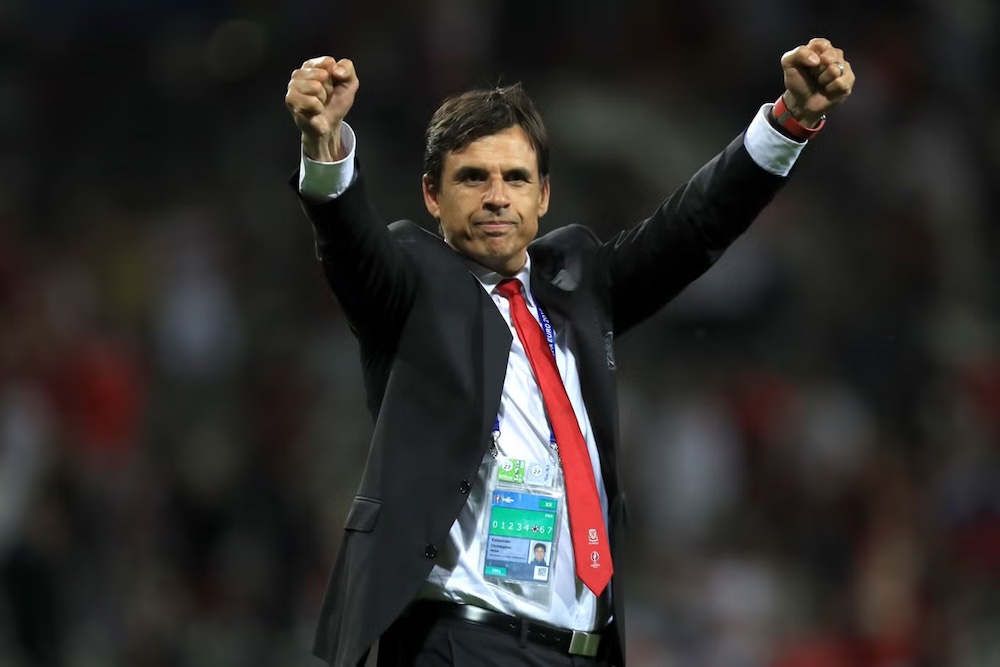
The celebrations that followed, particularly Joe Ledley’s memorable post match dance were utterly joyous. But that magical night was part of a trilogy of games against Bosnia and Herzegovina that serve to map out how Chris Coleman turned things around during his first three years as Wales manager.
The first of the three was a friendly on 15th August 2012, Coleman’s first home fixture in charge of his country. The match was the final warm up for the 2014 World Cup campaign, a campaign which would see the visitors qualify for their first ever World Cup. Bosnia were going places.
Sadly, Wales were heading nowhere. A crowd of only 6000 turned up in Llanelli to see a traumatised young Welsh team still going to terms with the shocking death of manager Gary Speed nine months earlier.
It finished 0-2 but ‘they could have doubled the scoreline, truth be told’ a glum Coleman told the media afterwards. ’If I’m honest we didn’t expect that performance this evening… it seemed low key, we looked disjointed, never got into a flow’.
With tough matches against Belgium and Serbia away to come, ‘we’ve got to be better’ the manager stated. Wales weren’t. In fact, things got even worse.
Another 2-0 home loss followed against group favourites Belgium before Wales headed to the Balkans to face Serbia. The 6-1 loss was one of Welsh football’s most wretched evenings. As was noted at the time, at least when Wales lost 7-1 to the Netherlands 1996, it was to opponents stacked with world class talent.
Serbia were a fairly average side in 2012. Indeed, they had only scored three goals in their previous nine games. But that didn’t stop them toying with Wales in Novi Said like a pitbull with a rag-doll.
Nobody in the Welsh side performed that night but 21 year old captain Aaron Ramsey looked particularly shellshocked.
Glorious
As glorious as it was to see Gary Speed turn Wales around in 2011, the manager also noted a soft side to his young charges when he described them as being like ‘perfect sons in law’. He was clearly expressing a wish to see a greater edge in his players. The kind of edge that was always on show in the opposition when Wales faced streetwise teams like Bosnia and Serbia.
Coleman didn’t try to sugarcoat the performance when he used words like ‘unacceptable’, ‘criminal’ and ‘men against boys’ in his post match comments. The FAW also felt the need to say that the manager ‘must learn’ from the defeat. Only in place for a matter of months, the Swansea native was already under severe pressure and seemingly fighting for his job.
The Wales manager had been reluctant to make changes due to the upturn in results in the final few months under Speed, with four wins our of five and a belief brewing that a proper tilt at qualification was just around the corner. It was also understandable that the manager did not want to be seen as disrespecting the memory of one of his best friends.
But having been humiliated in Serbia, clearly certain things would have to change. Coleman resolved to start doing things his way. Players like striker Steve Morison and defenders Darcy Blake and Adam Matthews were fazed out over the following few months but perhaps most significantly, the burden of the captaincy was taken away from Aaron Ramsey, with the armband handed to Swansea City skipper Ashley Williams.
It wasn’t plain sailing after that. Scotland at home was next up with the torrential rain in Cardiff creating an ominous atmosphere. At first it seemed being stripped of the captain’s armband was affecting Ramsey. His performance was was awful, giving the ball away time after time. Scotland looked to be heading towards a deserved win heading into the closing stages only for Gareth Bale to shift the momentum by winning a penalty that he then coolly converted.
It was Bale’s near-supernatural ability to conjure up match-winning moments which made the difference against the Scots that night, with an outstanding long range winner as the game approached injury time.
Then there was a 2-0 loss in Croatia and a 2-1 win in Glasgow, a game Wales dominated for long periods. It was clearly the best performance under Coleman to date. Had a corner been turned?
‘One step forward, two steps back’, is a phrase that could be said to sum up John Toshack’s six years in charge of the senior side (the ‘senior’ distinction is important, the Wales age-grade sides made giant leaps forward during those years). It seemed the pattern was continuing under Coleman.
Embarrassing
It was Macedonia (the ‘North’ prefix came later) away after that. Coleman didn’t travel to the Balkans with the squad as he’d lost his passport, an embarrassing situation which brought chilling flashbacks of the the shambolic antics which typified the Bobby Gould years.
The performance Skopje wasn’t bad but the result was still a 2-1 loss. Welsh fans serenaded Coleman with ‘Everywhere you go, you always take your passport with you’ to the tune of Crowded House’s ‘Weather with you’. If the manager thought things couldn’t get any more humiliating after the 6-1 loss to Serbia then he was wrong…
Wales then suffered a 3-0 defeat at home to the Serbs which only served to emphasise the nations struggles against teams from the former Yugoslavia. Depressingly, Wales weren’t just losing, but simply didn’t seem able to even compete against the top seeded teams in the group.
They say it’s darkest just before the dawn. Macedonia at home in the next game was when the light finally crept back in with Wales beating a side from the former Yugoslavia for just the second time (the first being the 2-1 win over Montenegro under Gary Speed in 2011).
Aaron Ramsey showed he was getting back to something approaching his best that night with a slice of footballing genius that was to foreshadow his immense impact on the side over the following years. The Welsh winner was all about Ramsey’s pre-assist. With the ball at his feet, he signalled with his hand where he wanted Craig Bellamy to run. Then, having paused to make sure his team mate understood the instruction, he placed an inch perfect pass through to the veteran forward, who squared the ball for Simon Church to tap in and very possibly save Coleman from the sack.
Belgium away was the final fixture in the group, with the hosts having already qualified. 16 year old Harry Wilson was plucked from Liverpool’s youth team to join the squad. Craig Bellamy was not in favour of Wilson being given his debut in the game but Coleman ignored the concerns of his most senior player and brought him on with Wales 1-0 down anyway. Bellamy and Ramsey then combined for a fine equaliser at the death that shocked the partying home support but did wonders to lift Welsh spirits.
The capping of Wilson was another clear example of the new assertive Coleman, a man now backing his own instincts, as opposed to second-guessing others.
Wales finished the campaign in a far better place than where they started it. The much needed win over Macedonia had been followed – not by steps back – but a further step forward considering the chasm the was evident between Wales and Belgium at the start of the campaign. It was a hugely positive night in Brussels.
Between the qualifying campaigns Wales played three friendlies; one draw against Finland, one win against Iceland and one loss, to the Netherlands. Crucially, though, performances had been consistently decent since the loss to Serbia the previous September.
Andorra
Minnows Andorra, surely, would surely provide a chance to maintain the momentum. What followed was one of Wales’ most hard-fought and important wins of all time. Having gone 1-0 down early, Coleman and Cymru were staring down the barrel at 1-1 going into the final eight minutes. A retaken Gareth Bale free kick provided the lifeline. Welsh relief was palpable.
Wales had won but the performance left a lot to be desired. Had the momentum stalled?
And so to October 10th 2014.
Two years and two months after the disappointing loss in Llanelli, Bosnia and Herzegovina visited Wales again, this time with a different mood in the nation. Crucially, Wales didn’t care about being seen as the nice guys any more, with the team giving off the vibe of a bullied kid who’d toughened up, got his black belt, and was finally ready to fight back. (Maybe Coleman had them waxing his car and painting his fence?)
On paper, Wales were up against it. Bosnia were just off the back of an appearance at the 2014 World Cup in Brazil and would have been confident of following up with an appearance at an expanded 24 team European Championships.
The Welsh midfield was decimated by injury, the team’s two best midfield technicians Aaron Ramsey and Joe Allen were missing. Andy King and Jonathan Williams took their places, two players with only tiny amount of top flight and international experience.
Bosnia and Herzegovina were at full strength, which meant Wales coming up against Manchester City’s Edin Dzeko – one of the best strikers in Europe – and Roma’s Miralem Pjanic, one of the continent’s top midfield playmakers.
Yes, Gareth Bale (at that point a double Champions league winner) was fit, but Wales’ star man had to deal with the limpet-like attentions of Everton’s Muhamed Besic, one of the best defensive midfielders in the Premier League at the time.
The record attendance of 30,741 for an international game at the Cardiff City Stadium at least provided a sense of occasion. Supporters band The Barry Horns also made their presence felt. It was perhaps the first time in the modern era when the home support – later to be monikered The Red Wall – would help get the team over the line in a crunch game.
What followed was a hugely absorbing contest between two very good sides and one of the greatest 0-0’s that Wales have ever been involved in.
Watching their team get bullied by streetwise European sides had become a a frustratingly regular sight for Welsh fans. Especially sides from the former Yugoslavia. This was the night the mentality of Wales as a football nation, and in particular, the Welsh fans changed.
With Darcy Blake by this point completely out of the picture, the addition 24 year old battle-hardened Centre Back James Chester was a key factor.
Born in Warrington but with a mother from Rhyl, Chester was one of the few English-born, Welsh qualified players that Brian Flynn, Welsh youth guru between 2005 and 2012, was unaware of (the likes of Ashley Williams, Sam Vokes, Hal Robson Kanu and several others had come into the Welsh set-up thanks to Flynn’s diligence).
Playing for Hull City at that time, Chester was a defender who oozed class, with and without the ball, and, having come through the ranks at Sir Alex Ferguson’s Manchester United, he had the mindset of a winner. A ‘mentality monster’ in modern parlance. He was also physically impressive, with fellow players in awe of the weight he’d lift in the gym.
Playing alongside Ashley Williams, the Bosnia match was only Chester’s 3rd cap, but it was a night he showed Wales fans what he was all about.
The sight of him and Joe Ledley standing up to Pjanic after the Bosnian playmaker had fouled Jonathan Williams was perhaps the game’s defining image. Pjanic had been booked earlier and was actually lucky to not receive a second yellow for the offence. As it was, Chester received a booking for his actions, but it didn’t affect the composed nature of his performance.
Aggression
The controlled aggression shown by the Welsh Centre Backs was noteworthy but Bosnia’s technicians still weren’t to be denied several goalscoring opportunities. Luckily for Wales, goalkeeper Wayne Hennessey was in outstanding form. Although unable to get a game for club side Crystal Palace at the time, the Welsh stopper produced several outstanding saves to deny Dzeko, Pjanic and co.
At the other end, Besic did an outstanding job of curbing Bale’s influence but the the one time he managed to evade the Bosnian’s shackles and fire a fierce shot at goal, Stoke’s Asmir Begovic, diving low to his left, produced an outstanding one-handed save. Watching on, Chris Coleman, thought Wales’ talisman had won the game late on; ‘as soon as it left his foot I said: ‘Goal.’ It was an incredible save’.
At the final whistle, Bale paid tribute to the supporters: ‘We feel like we’ve turned a corner and the fans were absolutely amazing. It was great to have a full house almost and hopefully we’ve done them proud. Probably on another night the last ten minutes is a lot more difficult without a full house and they were unbelievable, true Welsh fans. They pushed us over the line and kept us going for the last 10-15 minutes’.
The so called ‘Red Wall’ may have been conceived four years earlier when Spirit of 58’s Tim Williams produced his first T-shirt, but this was arguably the night the phenomenon entered the world following a long, and at times, traumatic gestation.
It wasn’t just the attitude in the stands that had shifted. That night a more bullish, less hesitant Coleman emerged; a man reaping the rewards for doing things his way following the trauma of Speed’s death and the embarrassments of the 6-1 loss in Serbia and the Macedonia passport debacle.
Understandably, the manager beamed with pride at the final whistle in describing his young side’s fighting qualities: ‘Have we played better football? Yes. But we haven’t fought like that before and put it on the line against a top team like Bosnia. The last time we played somebody like Bosnia was Serbia and we got bullied. But we never got bullied tonight. I’m extremely proud’.
The clean sheet was the first of seven in that ten game qualification campaign. As much as Bale’s goals stole the headlines, this newfound defensive solidity was a key factor in Wales’ successes.
With Cyprus the visitors to Cardiff a few days later, ‘three points on Monday night will make this point look very, very good’, Coleman said. Wales raced into a two goal lead but when Wayne Hennessey made a hash of coming for a cross, Cyprus pulled a goal back just before half time. The visitors hopes increased when midfielder Andy King was sent off at the start of the second half. Ten man Wales then hung on to their one goal lead for a challenging 45 minutes.
The sight of Real Madrid superstar Gareth Bale clenching his fists, roaring into the night sky at the final whistle, after a narrow victory over Cyprus gave fans the impression this campaign might actually be different. As former captain Barry Horne put it on Radio Wales a few days later, ‘that wasn’t for the cameras, it wasn’t for the sponsors… it was pure emotion’.
The game after that was another daunting challenge: Belgium away. ‘We have got to go there and be a bit bolshy’ Coleman told the media. Seeing out another important hard fought 0-0 in the Belgian capital kept Wales on the right track, with the victories over Israel, Belgium at home and Cyprus away putting Wales in a position to qualify with three matches still to play. The first opportunity was spurned with a 0-0 draw at home to Israel.
With just a point needed, Bosnia and Herzegovina away provided the next shot at getting over the line. Zenica’s small ground meant only a few hundred Welsh fans were in attendance. But in a sense that felt right too; that those loyal supporters who’d seen such travails on their travels following the national team should be the ones to celebrate with the players and staff.
A run to the semi final of the Euros was to come, as were more tournament appearances. Much of it can be traced back to the attitude shown that October night against Bosnia in grinding out a goalless draw. The ‘corner turned’ as Bale put it, Wales were finally heading in the right direction.
Leon Barton is currently working on a book about the managers of the Welsh National Team, to be published by St. Davids Press later this year.
Support our Nation today
For the price of a cup of coffee a month you can help us create an independent, not-for-profit, national news service for the people of Wales, by the people of Wales.


