

Ex-Liverpool, Wrexham and Wales defender Joey Jones dies aged 70
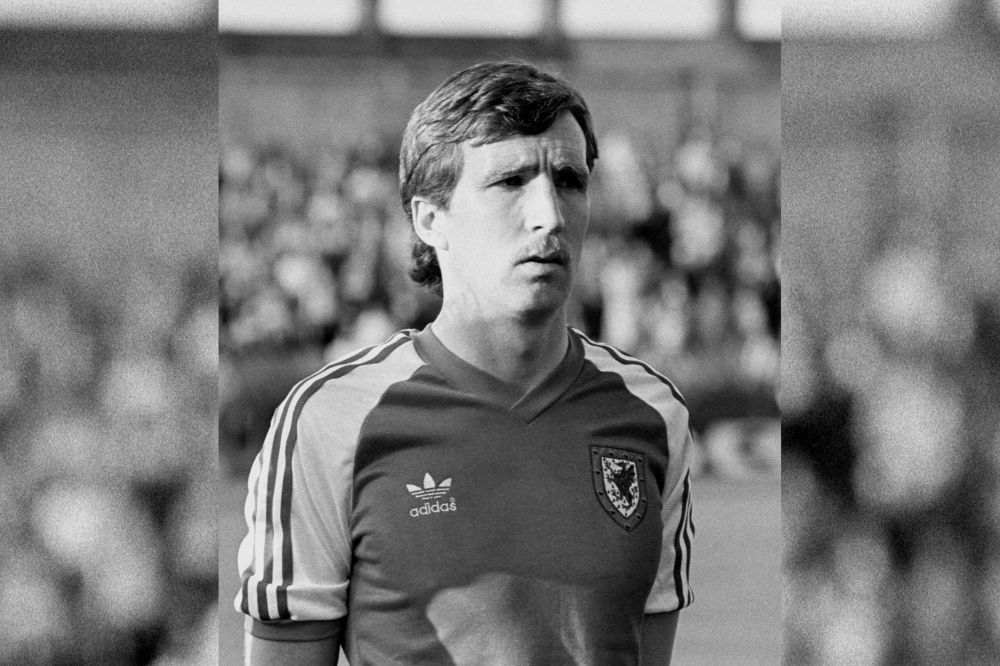
Former Liverpool and Wales defender Joey Jones has died at the age of 70.
Jones played 100 times in a trophy-laden three years at Liverpool, winning two European Cups, a UEFA Cup and a league title in three years.
The Llandudno-born left-back earned 72 caps for Wales, starting and ending his career at Wrexham after spells at Anfield, Chelsea and Huddersfield.
“Soul mate”
Jones’ former Wales team-mate Mickey Thomas posted on X: “This morning I lost my best friend and soul mate, Sir Joey our memories will never fade – Today my heart is broken. Love you Sir Joey RIP. My condolences are with Janice and all the family.”
With Wrexham, Jones won the Welsh Cup and helped the club reach the quarter-finals of the FA Cup in 1974.
There were also tributes on X from former Liverpool stars Jamie Carragher and John Aldridge and Football Association of Wales chief executive Noel Mooney.
Aldridge wrote: “What a lovely man and an inspirational full back who gave his heart and soul in a red shirt and for all the clubs he played for! Our thoughts are with Joey’s family! I’m a lucky man to have met him many times.”
“Joey ate the frogs legs, made the Swiss roll, now he’s munching Gladbach”.
Jones’ contribution to Liverpool was immortalised in the ‘Joey ate the frogs legs, made the Swiss roll, now he’s munching Gladbach’ banner revealed by fans at the 1977 European Cup final victory over Borussia Monchengladbach.
The banner was in reference to victories over St Etienne and Zurich in the quarter and semi-finals.
The 24-foot-wide banner, dubbed the Scouse Bayeux Tapestry, exemplified the regard former Liverpool defender Joey Jones – who has died at the age of 70 – was held by fans.
Strung out in Rome’s Stadio Olimpico before the 1977 European Cup final victory against the German opposition, Jones said the message referencing wins over St Etienne and Zurich made him feel 10 feet tall.
Not that he needed the extra motivation as the fiery Welshman’s full-blooded commitment was never in question – his clenched fist towards the Kop when he ran onto the field became his trademark.
It did get him into trouble on occasions, however. He was accused of inciting a riot when he threw seat cushions aimed at him on the bench back into the crowd after Liverpool’s semi-final win over Barcelona in the Nou Camp on their way to UEFA Cup victory in 1976, while he was arrested twice when playing for Chelsea.
But it was that attitude which endeared him to Reds fans in his 100 games in his three years at the club.
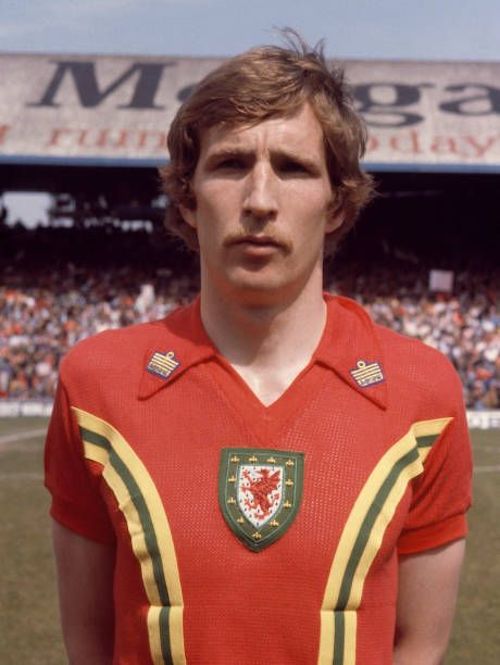
“I guarantee the Germans would have known every player in our team apart from me – just one of the lads who has come off the Kop,” he said of the banner, which after 20 years in his garage is now in Liverpool’s museum.
“I guess that’s why the fans identified with me because I’d give it my all and I was one of them.
“I never considered myself to be skilful but I was the type of player I think any team needs.
“I think as much of that banner as I do the winners’ medal.”
Jones’ mother came from the Toxteth area of the city, his paternal grandmother was a Scouser and he stood on the Kop to watch his heroes.
He never really felt he belonged in the exalted company of a Liverpool dressing room which included the likes of Ray Clemence, Kevin Keegan and Ian Callaghan.
Growing up on a council estate in north Wales, he was taught by nuns in a Catholic school, played for the now-defunct Llandudno Swifts, a club which also started the careers of fellow Wales internationals Neville Southall and Eddie Niedzwiecki, and got into bother with the local ‘Bad Gang Parrots’ gang.
Jones spent “a few weekends” in the local cells and was lucky not to have been sent to a young offenders’ institution – but even signing for his first professional club did not stop unruly behaviour.
“I would be playing in the first team in Wrexham coming back on Mondays with black eyes and everything,” he recalled.
Talent
Jones, who expected to get a job in a factory when he left school, never felt his talent would take him any higher than the Division Three club at the time so when Liverpool came calling, after a swap deal to Sheffield United involving Len Badger and £100,000 fell through, in 1975 he could not believe his luck.
He missed out on a league championship medal in his first season having not made enough appearances but the greatest year of his career was to follow.
Jones was an integral part of another title-winning side, lost an FA Cup final to Manchester United before becoming the first Welshman to win the European Cup – with Wales, for whom he won 72 caps between 1975 and 1986, beating England at Wembley for good measure.
A second European Cup followed a year later but Jones was on the bench, an increasingly common feature that season, and against his better judgement – and not because he accidentally elbowed manager Bob Paisley putting on his tracksuit top in the dugout – he rejoined Wrexham in the summer.
Spells at Chelsea – with whom he won the Division Two title in 1984 despite a daily London commute from Wales – and Huddersfield preceded a final return to Wrexham, where he moved on to the coaching staff.
He had a brief spell as caretaker manager and remained a fixture at the Racecourse Ground even after his retirement, following heart surgery in 2002 and a minor stroke in 2015, he returned as youth team ambassador in 2021.
Support our Nation today
For the price of a cup of coffee a month you can help us create an independent, not-for-profit, national news service for the people of Wales, by the people of Wales.



Very sad news. Good player for Wales in his day. RIP Joey Jones. #Cymru 🏴