


South Africa 43, Wales 0: Springboks cruise past outclassed Wales
Simon Thomas
Steve Tandy’s first season in charge of Wales ended with a contest which showed just how far away they still are from world rugby’s top table.
In truth, they were fortunate that South Africa were some way short of their clinical best, otherwise we would have been heading for a repeat of the 73-0 drubbing from November.
That’s the reality of the huge gulf between these two countries at present – the yawning gap between first and twelfth in the world.
To provide some context, it’s worth remembering that it was not the full strength Springboks team by any means.
They were missing a host of star names and gave Test debuts to four players, including a 20-year-old fly-half with just 58 minutes of senior rugby under his belt.
In fact, there were more caps in the Welsh starting line-up.
On top of that, the performance from the ‘Boks was actually relatively poor by their own high standards.
They were loose, inaccurate and wasteful, a fact demonstrated by them conceding no fewer than 20 turnovers, making numerous handling errors in the sticky, humid Durban conditions.
Yet they were still able to put Wales away in pretty resounding fashion, crossing for seven tries and not leaking a single point.
That makes the aggregate total from the last two meetings between the teams 116-0, which is seriously grim.
But, as I say, it could have been much worse had the ‘Boks produced their A game at Kings Park.
They had the platform to rack up a real cricket score such was their dominance of the set piece and the collisions.
Their scrum is a monstrous weapon and they got on top in that department from the outset with the highlight of their superiority being the huge shove which pulverised the Welsh pack on 13 minutes, leading to a try.
To his credit, Aaron Wainwright performed heroics at the base during the first half to somehow get the ball away under intense pressure, but there was no disguising the brutal demolition job.
The South African lineout was also a smoothly operating machine, with a 100 per cent return, culminating in the final try of the game coming off a maul drive.
Then there was their power with ball in hand, epitomised by the Wiese brothers – Jasper and Cobus – who just smashed their way through, while Player of the Match Paul de Villiers was always on hand to add his yards.
They played a big part in the ‘Boks repeatedly crossing the gain line with Wales just not having the physicality to repel them as they missed 26 tackles.
That takes the total from the last four games up to 123, along with 20 tries conceded.
Had it not been for the uncharacteristic errors from South Africa after they had laid their foundation stones, that try tally would have looked even worse.
The hosts were so much on the front foot that there were limited opportunities for Wales in attack.
But when they did come, it merely served to demonstrate their limitations in that area.
That was particularly the case during a sustained period in the opposition 22 between the 47th and 50th minute.
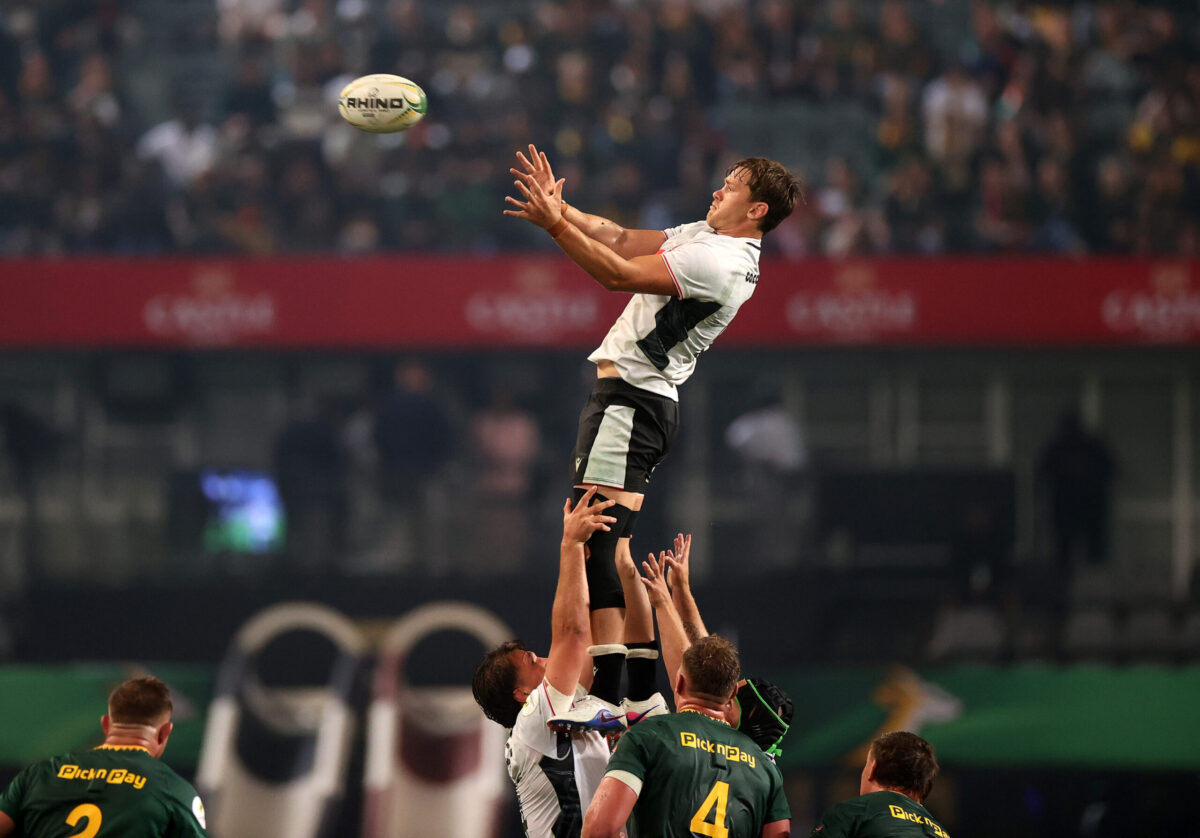
Under Tandy, the lineout maul and the tap penalty have been the primary source of scores, but they didn’t deliver on this occasion.
There was an overthrow at one attacking lineout and then, when the target was hit at another, the resulting maul was halted with relative ease.
As for the tap penalties, they were pretty powder puff without go-to man Rhys Carre on the field, lacking any invention or real thrust.
With neither weapon working, there was no plan C or D, with Ellis Mee losing the ball in going for the corner and Joe Hawkins twice conceding possession, first by kicking it away and then through a spillage in contact.
With that, Wales’ one real passage of pressure came to a damp squib ending.
Over the course of the entire 80 minutes, they made just one line break, as damning a statistic as you can get.
So, here’s the long and the short of it after Tandy’s first 13 games in charge.
Wales are fragile defensively and very limited in attack, while the scrum is collapsible against the top sides.
Moreover, you get the sense that he still doesn’t know his best team, amid continued chopping and changing.
That’s particularly the case in midfield when it comes to the 10-12-13 combination.
At fly-half, he reverted to Dan Edwards after the one game switch to Sam Costelow, while it was all change in the centre, as he returned to the pairing of Ben Thomas and Max Llewellyn which he had employed in the autumn.
That lasted only 40 minutes, with Hawkins replacing Llewellyn which meant you ended up with two playmakers and little in the way of gainline-crossing threat.
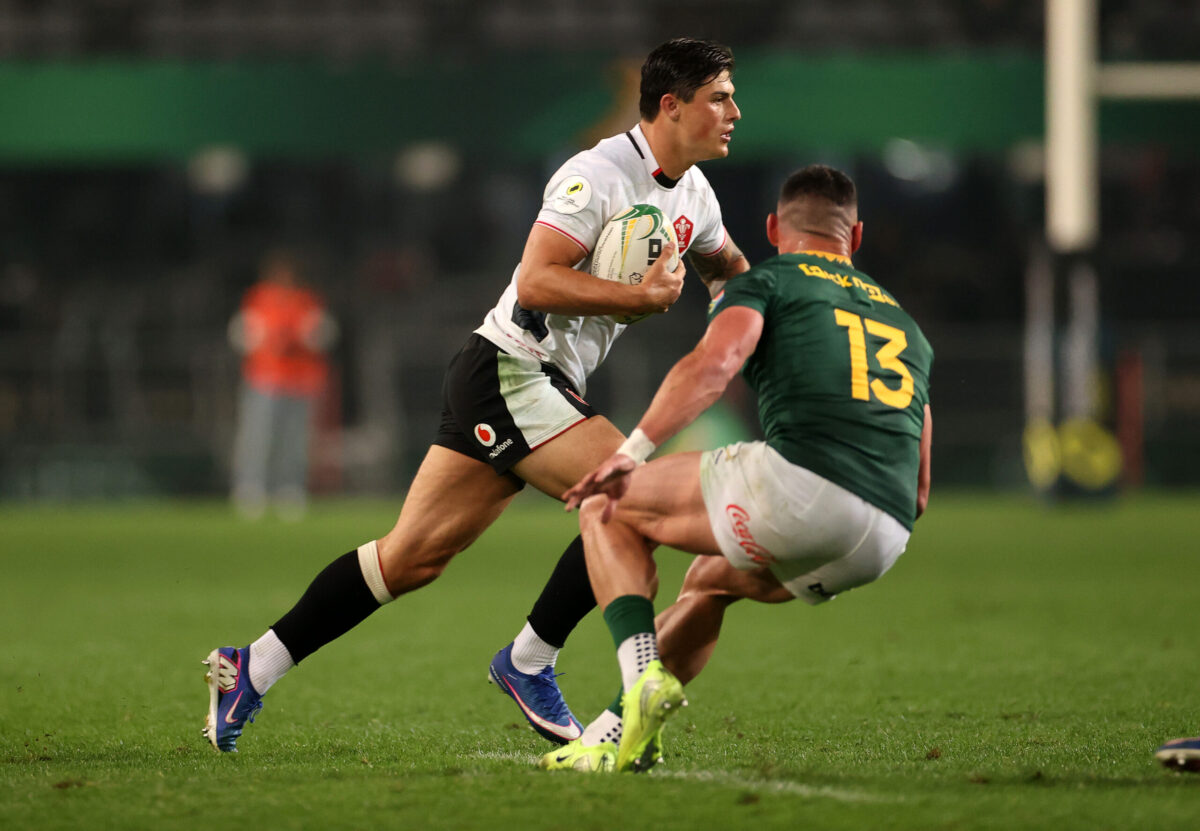
Out wide, Wales are struggling to fully utilise the talents of Louis Rees-Zammit who had very limited involvement in today’s game.
As with the midfield, it’s still not clear what the best back three is, while there’s been a general shortage of ball carrying power in the packs he has picked.
So, just 15 months or so away from the World Cup, there’s still a real sense of flux and instability about this Welsh team selection-wise.
But, above all, physicality remains the biggest issue, right across the board.
Tandy had called for an improvement in that area in the wake of his players being outmuscled by the Pumas last weekend.
Yet, from the outset, it was a similar tale of a muscular mismatch.
Wales fell off no fewer than nine tackles in the first 15 minutes as they rapidly found themselves 14-0 adrift.
The opening try illustrated their porous defence.
First Aphelele Fassi broke a tackle as he launched a counter off a kick receipt, then lock Cobus Wiese made a further dent before his brother Jasper burst between Carre and Jac Morgan and held off two more defenders to touch down.
The second try was again all about power as the Welsh scrum was unceremoniously shoved back over their own line, with the reset seeing Cobus Reinach dart over with the back row having to stay down.
To their credit, the visitors dug in after that nightmare start, but tries immediately either side of the break ended the game as a contest, with backs Jesse Kriel and Jaco Williams profiting from aerial battles being won.
The ‘Boks pulled well clear with three more tries in the final quarter and they will know they left plenty of further points out there.
So, following on from San Juan last week, Wales were on the wrong end of another deeply one-sided contest amid a disappointing end to the season.
In fairness, there have been some strides forward under Tandy during the campaign.
The long wait for a Six Nations win came to an end with the victory against Italy, while there was more encouragement to be drawn from the win over Fiji a fortnight ago.
That’s success versus two teams who lie above Wales in the world rankings, which is not to be sniffed at given the barren run over the past couple of years.
But the last two matches – against Argentina and South Africa – have provided a reality check of just how much work there is still to be done.
When the Nations Championship resumes in November, with home games against Japan, New Zealand and Australia, there really needs to be a return to the upward progress on the graph.
That means deciding on your best team, stiffening the defence and adding a cutting edge in attack.

Tandy acknowledged the gap which needs to be bridged as he reflected on the heavy defeat to the ‘Boks.
“It shows how far we have got to go,” said the former flanker.
“They are a brilliant group to work with, but it shows how accurate and how disciplined you have got to be when you come and play a team like South Africa.
“These experiences are painful, but ultimately we’ve got to take the learnings from them.”
It was left to former Wales skipper Dan Biggar to nail the stark reality of the situation while speaking on ITV.
“It really did look like first in the world versus 12th in the world,” he said.
“That’s not a dig, that’s just a reflection of where the two teams are. South Africa are clearly at one end and Wales very much down the other end, looking to build.”
So, once more, it’s back to the building site.
Support our Nation today
For the price of a cup of coffee a month you can help us create an independent, not-for-profit, national news service for the people of Wales, by the people of Wales.
Get more trusted Welsh news
Choose Nation.Cymru as a preferred source in Google News to see more of our journalism.



For Dewi Lake to claim that Wales is closing the gap with the Southern Hemisphere, is a laughable. What I saw last Saturday was no gap closing, but a chasm widening.
This was South Africa 3rds and they played badly.Say no more.