


The last time three Welsh clubs played in the second tier of English football
Leon Barton
For all the talk about the new Wales shirt looking like a Merthyr pub carpet from 1991, and the Bellamy to Burnley nonsense, there are actually several reasons to be cheerful for Wales fans as we look to the months ahead.
For starters, we’re in Nations League Group A. Yes, the matches are extremely tough but they’re supposed to be; that’s what being in Group A means.
The next European Championships offers an easier qualification path than the World Cup, with second place in the group enough to qualify automatically.
Leeds United, with their large contingent of Welsh players, managed to keep their place in the Premier League and have added King of Corwen Harry Wilson to their ranks. Ben Davies has signed on for another season at Spurs and has played regularly in pre-season under new manager Roberto De Zerbi, and Coventry City left-back Jay DaSilva will play top-flight football for the first time.
But, looking down a step to the Championship – a league described this week by Espanyol sporting director Monchi as ‘one of football’s least understood competitions… a competition with an extremely high level of competitiveness, very good coaches and intense demands’ – there are reasons to get excited too.
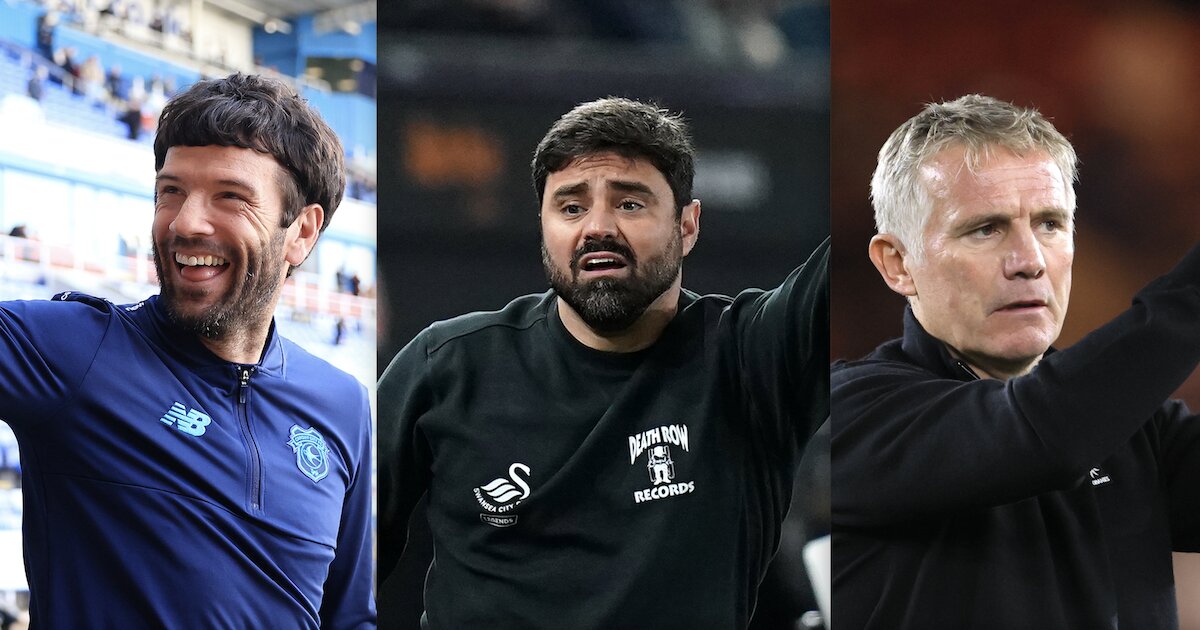
It’s been a mammoth 45 seasons since three Welsh clubs have played together in the second tier of English football, with 2026/27 the first time since 1980/81 that Cardiff, Swansea and Wrexham have all been at such an elevated position in the pyramid.
These are exciting times for Welsh football but hopefully it won’t all unravel as dramatically as it did back in the early Eighties.
By 1985 all three would be back in the bottom two divisions of the Football League, all three staying there for the next eighteen seasons, until Cardiff sealed a dramatic promotion in the League One play-off final against Queens Park Rangers in 2003.
The Bluebirds then managed to stay in the top two divisions for the next 22 years, although only two of those were in the Premier League.
As the pundits often tell us, ‘momentum is everything’, meaning that Cardiff will again have high hopes of competing in the Championship under their highly rated coach Brian Barry-Murphy.
The aim will be to keep the winning habit in order to kick on, and, with a settled squad featuring a number of promising young Welsh international footballers, it feels as if Cardiff fans have more to look forward to than has been the case for a long while.
Treading water
But back in 1980/81, the Bluebirds were treading water under manager Richie Morgan, who had replaced Jimmy Andrews in 1978. Morgan’s first full campaign had gone well but in 1979/80 the Bluebirds had finished 15th in the table and crowds had dwindled to an embarrassing level for a capital city club.
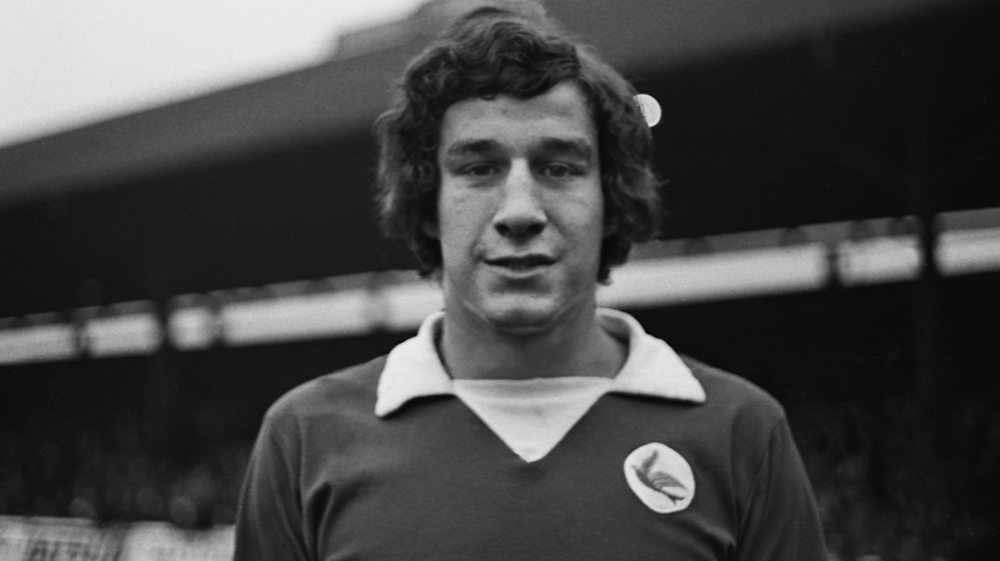
The following season was captain Phil Dwyer’s twentieth year with the club and his long service was rewarded with a testimonial against Stoke City. More than 10,000 fans attended the game, the second highest attendance the club recorded during the season, with only the 21,000 against Swansea higher.
Unsurprisingly, the low crowds meant the club were strapped for cash, and although Morgan remained in charge, financial constraints led to the departure of several members of the coaching staff; a move Dwyer described as ‘foolish’. A 2-1 home loss to Cambridge in front of 4,059 fans in October is probably the day that best illustrates where the Bluebirds were at the time.
The anomaly was that in 1980/81, their record against their fellow Welsh clubs was good, with two 1-0 victories over Wrexham and two draws with the Swans (3-3 at home, 1-1 away).
Talking of stalemates, the 0-0 they managed to grind out on the final day of the season against champions West Ham United (by a whopping 13 points from second place Notts County, in the days when it was still only two points for a win) was the result that ensured they stayed in the division. When they looked down the M4 to Swansea the celebrations were probably somewhat muted though.
Wrexham were also at the treading water stage. Having been promoted in 1977/78 with what the legendary Bill Shankly described as ‘the greatest third division side I’ve ever seen’ there were hopes that the club would push on to the top flight for the first time.
Ambition
The re-signing of Joey Jones from Liverpool for £210,000 showed the club’s ambition. Incredibly, it would remain a club record transfer fee until the Rob/Ryan era, when Ollie Palmer was brought in from Wimbledon for £300,000 in January 2022.
Jones wasn’t the only six-figure signing, with the likes of Mick Vinter (£150,000), Ian Edwards (£125,000), Billy Robinson (£100,000) and Ian Arkwright (£100,000) also coming in; an extraordinary spending spree for the club under chairman Fred Tomlinson.
But as with the Bluebirds, by 1980/81 the club was forced to cut its cloth. Heavy snow led to a number of winter postponements, and gate receipts virtually dried up as a result.
With 38 points, Wrexham finished just two points above the drop zone. Goalkeeper Dai Davies immediately jumped ship for Swansea and manager Arfon Griffiths – in place since 1977 – resigned after disagreements with the board about how the club should proceed. Griffiths was asked to cut the playing staff, his backroom staff and the youth development team to reduce overheads, but instead decided to walk.
The following season, under manager Mel Sutton, the club succumbed to the inevitable with relegation, despite a memorable third-round FA Cup away win at Brian Clough’s Nottingham Forest.
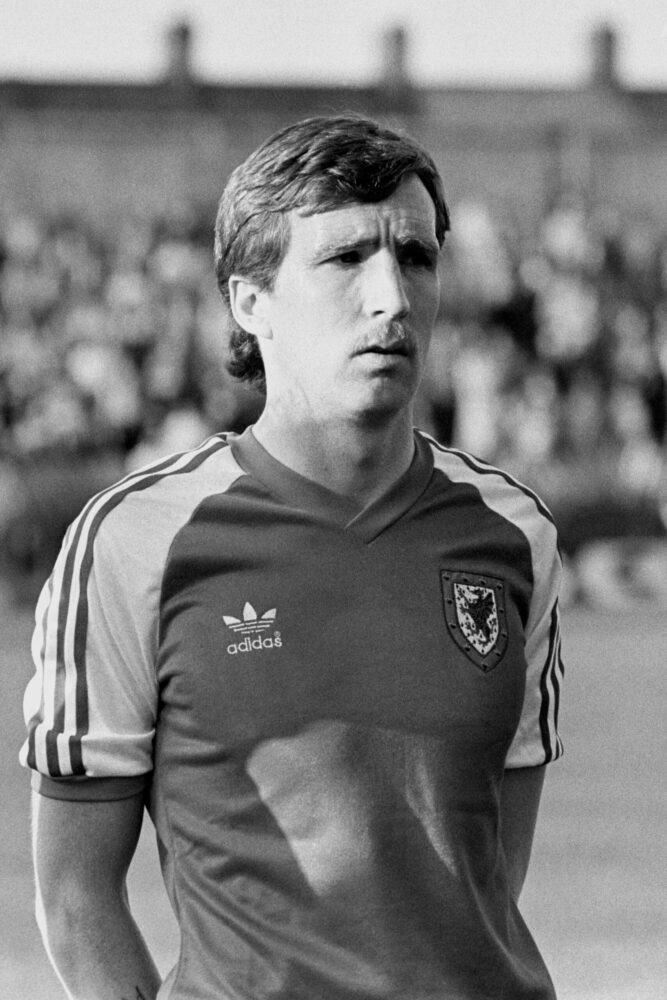
Joey Jones, concerned about losing his Wales place, joined his former Wrexham manager John Neal at Chelsea. The quality was ebbing away from the playing squad and the club were unable to attract local talent, with the area’s top players of the era ending up on Merseyside or in Manchester.
Wrexham’s four-year stay in Division Two was followed by 43 years below that level, with the extraordinary, bolt from the blue Hollywood takeover the spark to take the club back to the second tier once again.
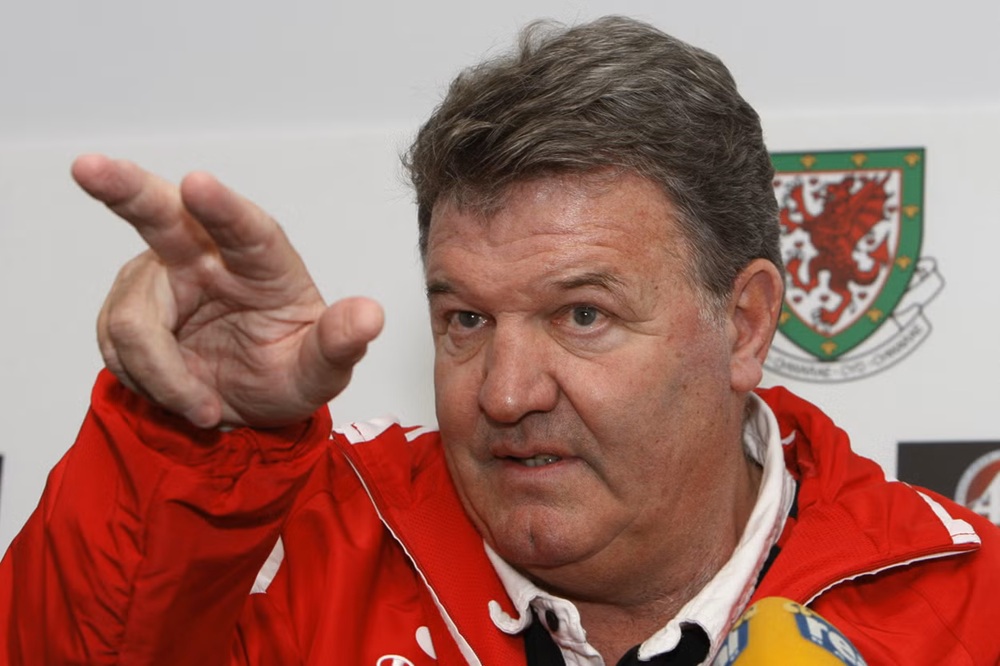
There was to be a major success story for one Welsh club in 1980/81 though, as Swansea maintained their unprecedented success under young manager John Toshack.
Tosh had taken over in March 1978 with the club in Division Four but in line for promotion under manager Harry Griffiths. Despite this, Griffiths was happy to step aside for Toshack, becoming the Cardiffian’s assistant.
Sadly, it was an arrangement that would only last a few weeks as Griffiths – aged just 47 – died of a heart attack before the Swans’ penultimate game of the campaign. Swans won both games following his death to seal a promotion Toshack dedicated to the former manager.
Young Welsh talent such as Alan Curtis, Robbie James and Jeremy Charles became key figures as the club were promoted again in 1979 but the manager was also able to bring in quality experienced players – the Liverpool connection helping him recruit the likes of Tommie Smith, the Anfield club’s legendary defender, and Ian Callaghan, still top of Liverpool’s all-time appearance chart.
The Swans finished mid-table in 1979/80 but the following season they soared, and went into the final game at Preston knowing a win would see them pip Blackburn Rovers to the third and final promotion spot.
Goals from Leighton James, Tommy Craig and Jeremy Charles sealed a 3-1 victory which took Swansea into the top flight for the very first time and relegated their Lancastrian opponents. This win did their south Wales rivals a major favour – Cardiff City finished on the same points as Preston but their better goal difference ensured they stayed in Division Two.
The following season was fairly extraordinary for the club from south west Wales; Swansea finished 6th, still a club record. But the Swans’ success had been built on sand and was far too wrapped up in the Cult of Tosh.
The manager believed he was going back to Liverpool as a replacement for Bob Paisley in 1982, but when that fell through, the Swans’ form fell away and relegation followed. And, after a second successive relegation in 1983/84, the manager left for Sporting Lisbon. Toshack’s Swansea even passed Cardiff as they fell, with the Bluebirds managing to stay in Division Two for another year before being relegated in 1985 under manager Alan Durban.
The Swans’ 21st-century revival was ignited by Brian Flynn’s side surviving a last-day-of-the-season scare when beating Hull City in 2003. Roberto Martinez was in the Swansea team that day and it was under his stewardship that the Swans returned to the second tier in 2008, after a 24-year absence.
High point
The first couple of seasons of the 1980s would be a historic high point for the three big Welsh clubs (sorry Newport fans) but the rest of the millennium would be largely miserable for the two big South Wales clubs.
Brian Flynn would at least spark a revival at Wrexham with promotion from the Fourth Division to the Third in 1992/93, and a number of FA Cup shocks helped put the club from the north east on a firmer footing.
Cardiff City, although also promoted in 1992/93 (as champions), would find themselves bouncing around the bottom two divisions before their dramatic play-off success in 2003. Last season was the only season since that the club has found itself outside the top two divisions.
As for what it meant for the national team to have three Welsh clubs playing at such a high level… history provides promise, but there are also warnings in there.
‘On the verge’
Back in 1981 Match magazine reported that ‘the Welsh squad now stands on the verge of what could be only their second-ever appearance in the finals of the World Cup’ with goalkeeper Dai Davies saying ‘things are looking good for us, and I can assure you that the lads are determined not to blow their once-in-a-lifetime chance’.
What happened? As was always the way in those days, Wales blew their chance of course. Maximum points from the first four games, only two points from the final four meant Wales wouldn’t go to Spain in the summer of 1982.
Floodlight failure at the Vetch Field in October 1981 when Wales could only draw 2-2 with Iceland (having won 4-0 away) was the key night when it all went wrong.
As the Swans fell, so did Wales’ World Cup hopes but during the season of three Welsh teams in the second tier, the national team’s results were outstanding: played seven, won five, drew two, with 11 goals scored and only one conceded.
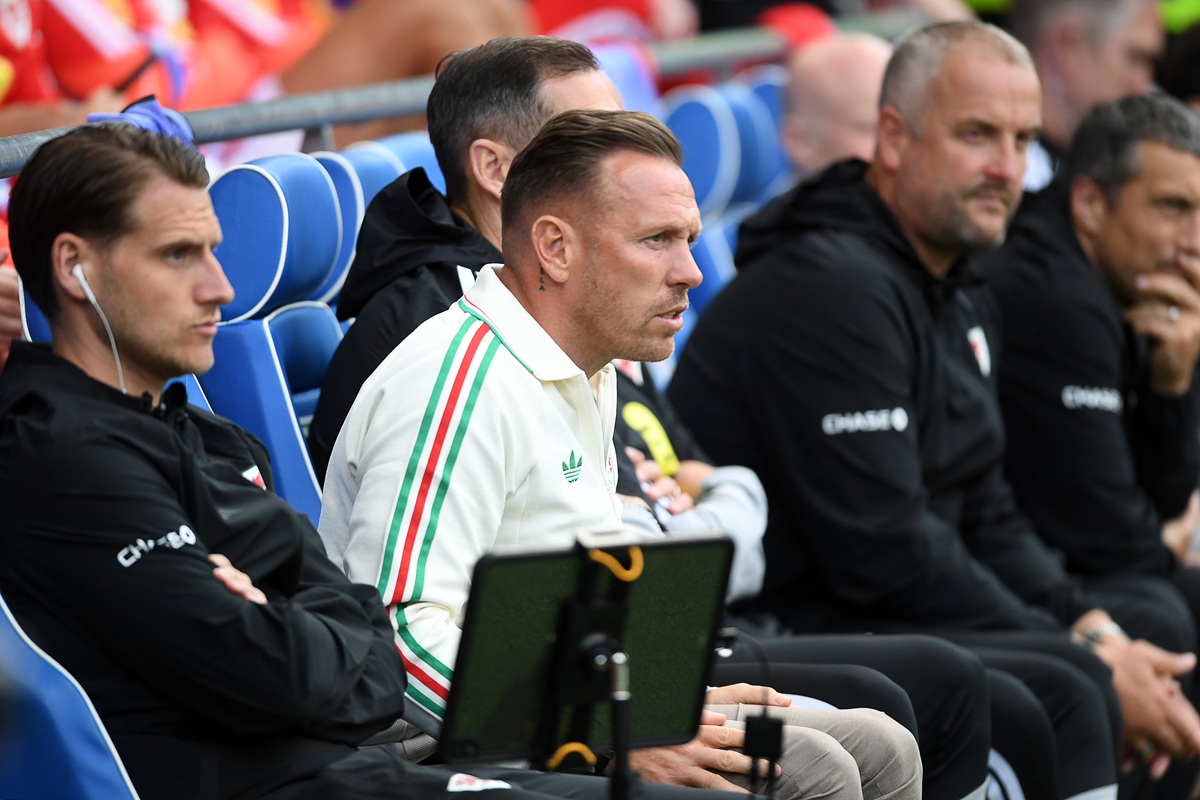
In 2026, Craig Bellamy has a number of youngsters to keep an eye on in Cardiff – Rubin and Joel Colwill, Dylan Lawlor, Ronan Kpakio, Cian Ashford and Isaac Davies. And while Wrexham and Swansea don’t have the numbers of Welsh stars they had in the past, the likes of Kieffer Moore, Nathan Broadhead and Ben Cabango will also be looking to boost their Wales chances by making telling contributions for their clubs.
Three Welsh teams in the Championship doesn’t just offer those clubs the opportunity of reaching the Premier League, it also means the Wales manager will have a greater number of Welsh players playing at a high level to pick from when selecting his Euro 2028 qualification squads.
But please God, no electrical faults to wreck the campaign this time around…
Support our Nation today
For the price of a cup of coffee a month you can help us create an independent, not-for-profit, national news service for the people of Wales, by the people of Wales.
Get more trusted Welsh news
Choose Nation.Cymru as a preferred source in Google News to see more of our journalism.


