


The view down to the Mumbles is always across a sparkling sea
Andrew Hignell introduces an essay by Mark Drakeford from the new book Glamorgan CCC Against the Overseas Touring Teams.
The Extra Test celebrates a bygone era in the history of Welsh cricket, when touring international sides regularly played Glamorgan during their visits to Britain. Those matches offered supporters a rare opportunity to watch some of the world’s greatest players on Welsh soil.
Encounters with the touring teams were often fiercely contested, particularly at St Helen’s in Swansea, where the atmosphere and local passion added an extra dimension to the games.
As the great Australian captain and broadcaster Richie Benaud once observed:
“This match with Glamorgan is like an extra Test in our series on tour.”
The three-day fixtures became a highlight of the summer calendar for Glamorgan supporters, bringing global stars to grounds across Wales and creating memories that still resonate with cricket followers today.
In the following essay, Mark Drakeford reflects on those experiences and the enduring place of Glamorgan cricket in Welsh life.
I’ve always regarded nostalgia as one of the most wasteful of human emotions.
Some things were, undoubtedly, better in the past. But most were not and, in very many ways, to live in Wales in the 21st century is to enjoy advantages and possibilities unimaginable to our predecessors.
Why, then, has cricket always been, for me, an exception to this rule – the only part of my life where the past really does seem always to be bathed in sunlight, where the view down to the Mumbles is always across a sparkling sea, where Robert Croft is always bowling, and Matthew Maynard about to take guard?
Here are just a few reasons.
I recently met someone who is older than myself. It was, I realised, an increasingly rare experience. It means, of course, that there are ever more players who, quite simply, I will never see again. I grew up debating, with myself, whether I wanted to be more like Majid Khan or Roy Fredericks when I came, myself, to play for Glamorgan.
Now, my personal fate was sadly sealed a long time ago. But I also know today that I will never again see a Majid late cut – so late, in fact, that it was surely already in the gloves of Eifion Jones before it arrived at the boundary.
Nor will I again see the sheer bravery of Roy Fredericks, the artistry of Tony Lewis, the speed of Jeff Jones (yes, I did see him play, if only once) and so many others.
Reading through this highly evocative book, however, they live again, across time and geography. I remember being at the Gnoll to watch Merv Hughes while Sophia Gardens has never been more than a few minutes from where I live in Cardiff. But had I remembered that Glamorgan played tourist games in Ebbw Vale?
This book also celebrates the part played in Glamorgan history by the great ground of St Helen’s in Swansea. More nostalgia for me, nostalgia for friends and for family, chosen carefully as the place where my parents would first meet my future parents-in-law, so that if all else failed (it didn’t) at least everyone could talk about the cricket – my mother-in-law the only person I’ve ever met who had seen Don Bradman play in 1948, my father-in-law the President of his local village cricket club.
Walking around the ground, with my father, watching Garry Sobers move unstoppably to his century, with that incomparable combination of grace and power, listening to his nostalgia for Gilbert Parkhouse, Willie Jones and the other giants of his St Helen’s youth.
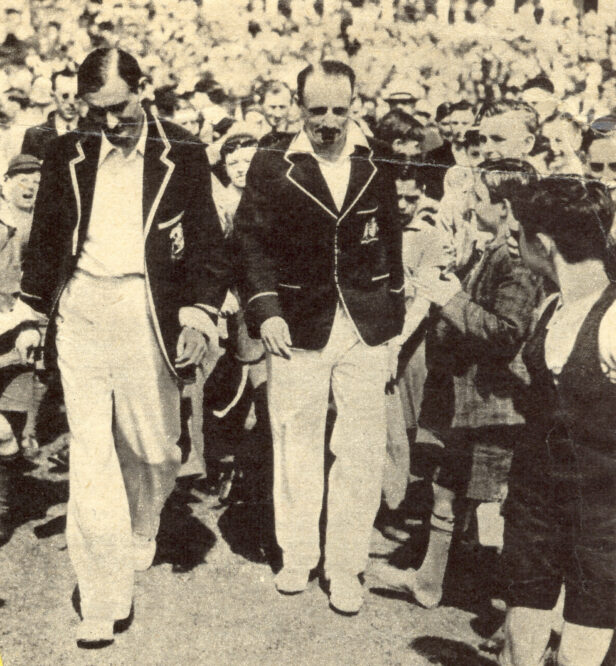
The darker day when he was sure Tom Graveney had winked at my mother, as he made his way back up those long pavilion steps, and which was the source of much merriment between them for many years to come.
As well as regrets for the loss of the giants of the past, there are even more powerful forces at play which explain the exceptional place that cricket memories hold for me.
Growing up in Carmarthen in the 1960s I was never in any doubt but that my own sense of identity was both Welsh and British, but unambiguously Welsh first. St Helen’s was a place where that sense of identity was unconsciously but consistently reinforced. The Welsh language was always to be heard.
The crowd always a living demonstration of the fact that, as my friend and mentor Rhodri Morgan would approvingly point out, Welsh people are born with a deference deficit. A place where you could find yourself sitting next to the Bishop of St David’s at one moment and the friend-of-a-friend on sick leave from the MOD base at Pendine the next.
Curiously, both were wearing collars. The bishop’s, of course, in the line of duty. The friend-of-a-friend because of a stiff neck.
In those far off days, three-day home games were extensively broadcast live on BBC Wales (two cameras to cover the ground; one if the game clashed with the National Eisteddfod).
Throughout the morning, through anxious scanning of the Western Mail, that collar was on and off more often than an Australian drinks carrier, entirely synchronised with the broadcasting schedule. Who could know when the all-seeing eye of the Ministry of Defence might not be focused on Glamorgan?
If to be a young Glamorgan supporter was to learn about the nature of Welsh society and community, it was also to draw on a crowd steeped in knowledge of the game, and hence the place where my own understanding of its skill and subtlety began to take shape.
‘Watch now what he’ll do with this one’. My neighbour was concentrating on the opposition tailender coming in to face his first over from Don Shepherd. ‘Watch how he’ll pitch the ball up to him’. And so he did. For four balls in a row the ball was pitched up and four times the tailender came mesmerically forward in defence. ‘Now watch the next one’, my tutor urged.
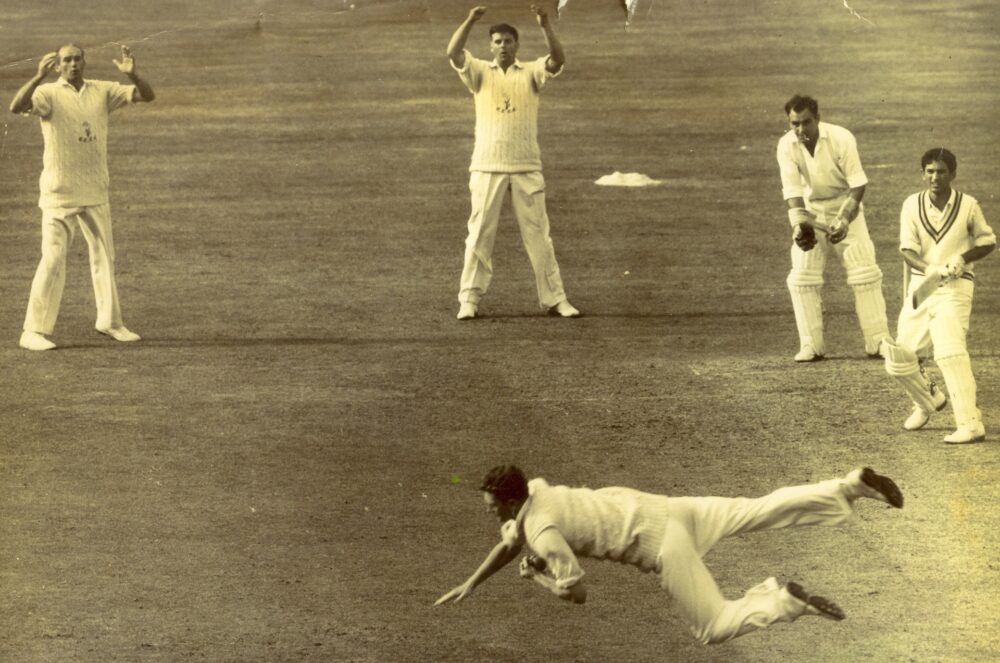
This time the ball came shorter and quicker. Forward came the batter. The ball rose to take the top of the bat, and thence into the omnivorous hands of the unhelmeted Peter Walker. ‘Like a rabbit in the headlights’ said my highly satisfied interlocutor.
From then onwards I’ve always rejected the idea of being a ‘spectator’. The tragic cricket watcher is far more engaged than simple spectating. The rhythms and ebbs and flows of a four-day game, the endless variety of a spell of bowling from Robert Croft, the plot of an innings by Alan Jones, as intricate as the Great Welsh novel: this is how cricket is watched by a Glamorgan connoisseur.
Watching Glamorgan was also a great democratic experience, because Glamorgan crowds, appreciative of the skills and talents of its players were no respecters of hierarchy or reputation. ‘Cheer up’ called one Glamorgan member, as a very distinguished England batsman trudged his way to lunch at the end of a becalmed morning session, ‘at least you’ll never die of a stroke’.
‘What is that noise?’ What is that noise?’, I asked my dad, as a herd of highly vocal donkeys had appeared to invade St Helen’s. ‘Eaw, eaw’: the noise was audible around the ground. My father pointed to a distinguished if ageing international, grazing or fielding in the outfield. ‘They are offering him encouragement’, he said. And, as each ball came near him and he set off in lumbered pursuit, the encouragement grew louder and louder.
If these are some of the impacts of growing up with Glamorgan, then when it comes to the subject matter of this book, the memories are even more intense and perhaps all the more so because this, too, is a land which now belongs in the past.
As anyone who has arrived at this chapter will know, Andrew Hignell has brought all the scholarship for which he is rightly known to this history of Glamorgan’s international exploits.
But I have read books of scholarship on other matters where it is evident that the author has, at best, little affection for their subject. Nothing could be further from the contents of this volume. It is not only Andrew’s astonishing command of his material, but the joy of the experience of watching cricket and the strength of commitment to the fortunes of Glamorgan which shine on every page.
And, for these reasons he, himself, has become part of the history of Welsh cricket. For some of us – many of us, I think – a morning spent in Sophia Gardens is strangely incomplete, without the sound of a lunch time Hignell announcement of scores from around the country, accompanying the opening of flasks and the stretching of legs.
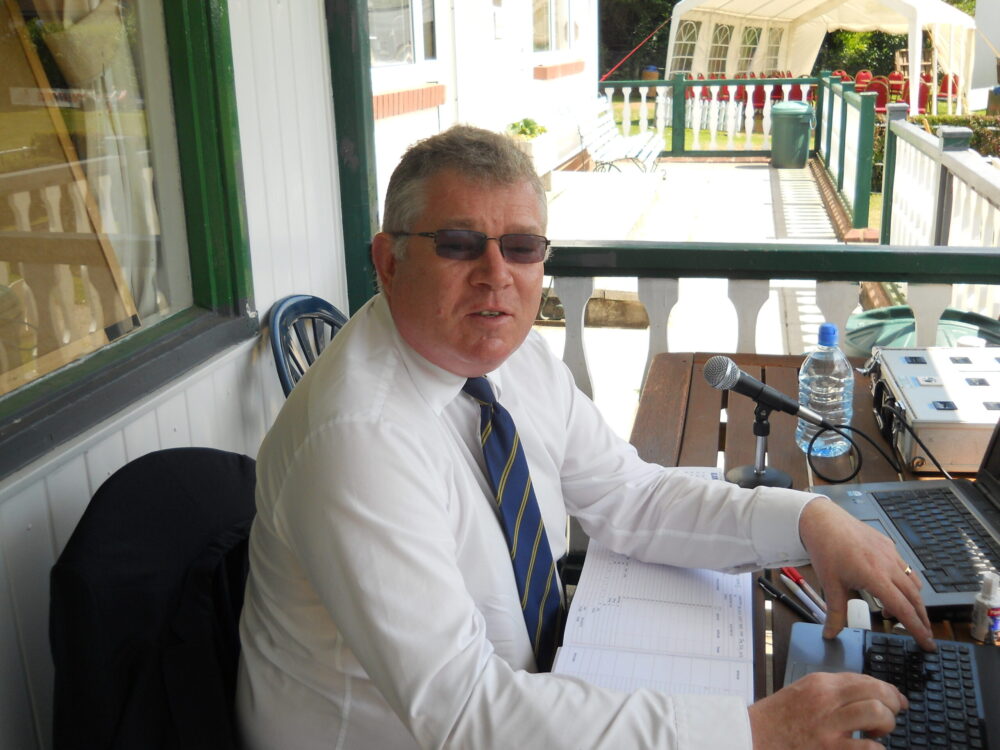
Meticulous and measured, the Hignell announcement pays its listeners the compliment of assuming that the long list of complex numbers which follow are as fascinating to them as they plainly are to their reader.
And, in that moment, the long-time echoes of cricket are there to be heard. Because the scores which today speak of Ingram, Kellaway and Tribe could, so easily have been Alan Jones, Roger Davies, Steve James, Hugh Morris, John Hopkins or the many others whose opening of the batting for Glamorgan have provided other pages in the Hignell histories.
So, to end at the beginning. As I read way through these chapters, I was there again. There in St Helen’s in 1990 to watch sixty-eight runs from the youthful Sachin Tendulkar, before falling to the youthful Robert Croft.
There in Ynysangharad Park in 1996 to watch that dominating Pakistan player, Inzamam-ul-Haq. There in Neath, in 1993, to see Matthew Maynard’s century against the Australians, and Shane Warne take four Glamorgan wickets.
There, perhaps most of all, in 1972, watching a youthful Dennis Lillee running in to bowl from the pavilion end at St Helen’s, his run up seeming to start at the bottom of the pavilion steps and the ball, literally not metaphorically, too fast to be seen even from the Members’ enclosure.
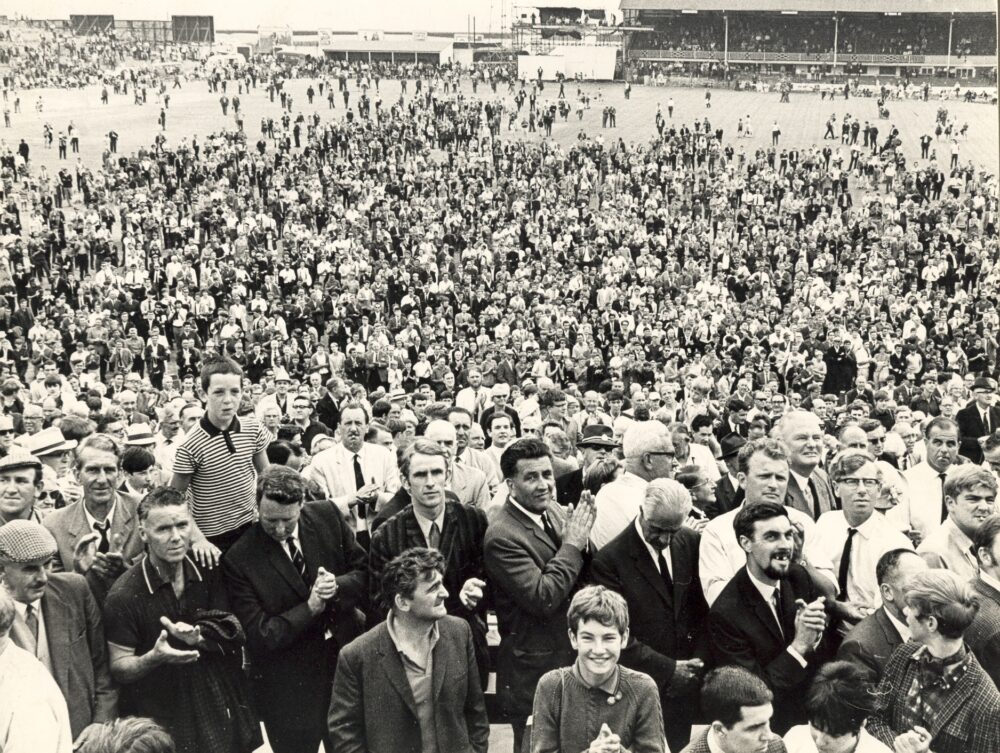
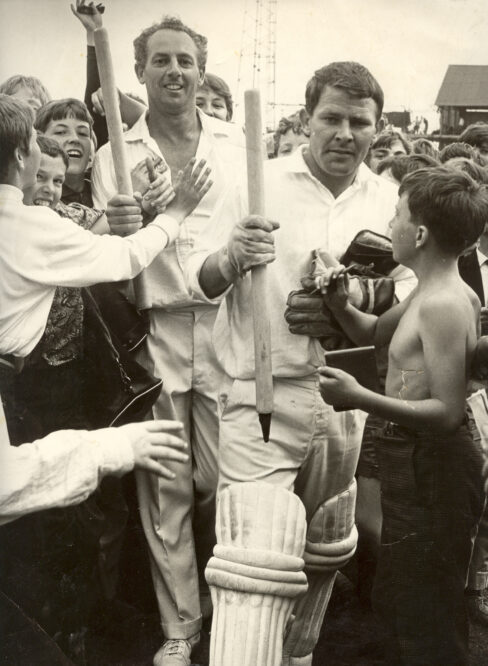
1972, the memories were still warm of Glamorgan’s famous victories against the Australians in 1964 and 1968, the paradigm cases of Welsh cricketing achievement. I saw neither, but heard, many times, from those who, to quote Max Boyce, were there.
However, the story which for me sums up the experience of growing up addicted to cricket in the west Wales of the 1960s and 70s, was told to me by someone who wasn’t actually there at all.
In 1964, by one of those unplanned quirks of the calendar, not only were the Australians in Swansea in the first week of August, but so was the National Eisteddfod. And not simply in Swansea, but in St Helen’s as well.
Walking around the Maes that day, but with a new-fangled transistor radio to keep in contact with the cricket, was a youthful Rhodri Morgan. There was no prouder Welshman, or more dedicated sports fan, and his description, to me, of the mounting excitement, as the noise of the cricket crowd washed over the eisteddfod field was entirely memorable.
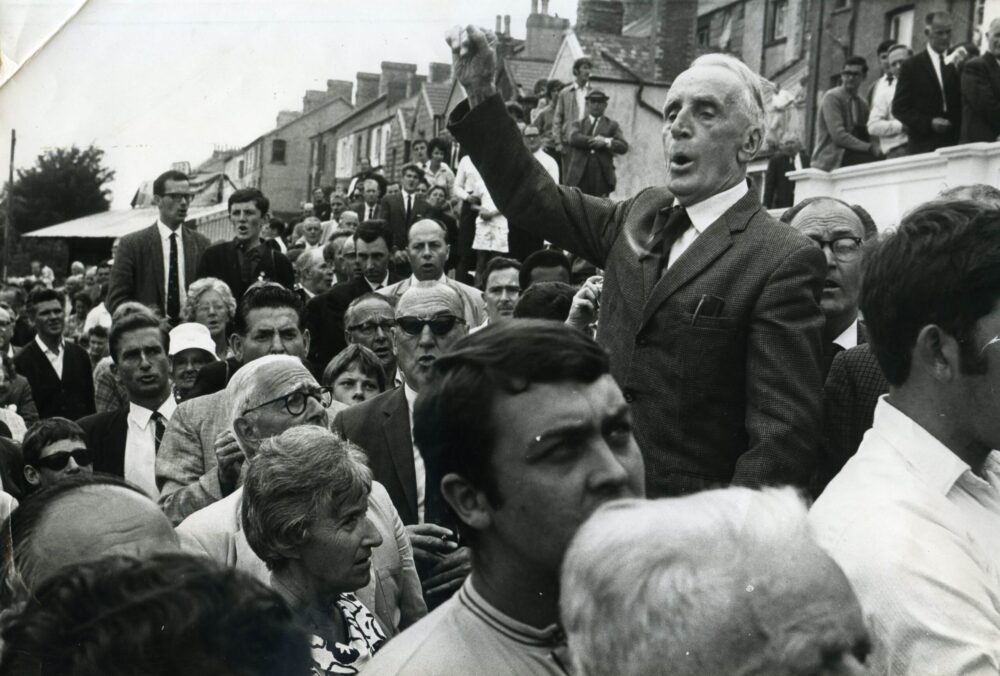
There, in one compressed moment of time, there was a conjunction of sporting achievement and national identity which sums up the experience of being a follower of Glamorgan.
Just one final postscript: today’s international players live out their inevitably-short careers on the global stage. Quite rightly, they need to make the most of those chances, and the livelihoods they support. Their young families have contemporary expectations of involvement in the lives of both parents.
The days of protracted tours, to every part of the country, are over. Yet that does not mean that all is to be lost.
If this is the England and Wales cricket board, then surely some priority might be attached to ensuring that Wales sees its share of international visitors. Wouldn’t it be great if the schedule for international tours included a warm-up match ahead of the Test, ODI or T20 series – that ‘extra Test’ against Glamorgan.
Of course, the best result would be a fixture with the full Test playing squad, but these days visitors come in many different forms – A sides, Academy sides, youth sides. Welsh cricket watchers deserve our chance to see the best from around the world. And then, there would be a second edition of this excellent volume for nostalgic Glamorgan watchers everywhere to enjoy.
Mark Drakeford was First Minister of Wales from 2018 to 2024. He joined the Labour party in 1974. He has been a member of Glamorgan County Cricket Club since 1970.
Support our Nation today
For the price of a cup of coffee a month you can help us create an independent, not-for-profit, national news service for the people of Wales, by the people of Wales.


