


Wales 26, Australia 29: Missed opportunities prove costly for Wales
Simon Thomas
There are always plenty of stats to pore over post-match, but one above all stood out after last night’s close contest at the Principality Stadium.
That was the number of entries into the opposition 22.
Wales made 20 of them and Australia just nine.
Yet the game finished with four tries apiece.
In the end, it was Wales’ inability to take their chances, particularly in the first half, that cost them.
It had been a different story the week before in the historic win over New Zealand when they only made ten 22 entries, yet came away with five tries.
Unfortunately, they couldn’t replicate that clinical cutting edge this time around.
As it turned out, the game was to be decided by that rarest of things these days – a penalty kick at goal, with Carter Gordon’s successful shot seven minutes from time giving the Wallabies enough of a buffer to hold on for the win.
One wonders whether, with hindsight, Wales now wish they had gone for goal with a couple of their kickable penalties rather than repeatedly going for the corner.
But it is very much the way in the modern game and being bold had paid off against the All Blacks.
Moreover, the strategy did deliver three lineout drive tries last night.
On reflection, it’s the other spurned opportunities which they will be rueing.
They will also be left to ponder the fickle nature of sport.
Last weekend, they held the All Blacks up over the line three times amid a monumental defensive effort.
Now it was their turn to be held up past the whitewash on three occasions.
Such are the narrow margins that make the difference between winning and losing in rugby.
Opportunity knocked for Wales, but they weren’t quite able to grab it.
So there will be disappointment within the camp and among supporters that the landmark triumph over New Zealand couldn’t be backed up.
But you also have to put things into a wider perspective.
If you had told people before the autumn that Wales would match Australia for tries and the game would go right down to the wire, they would most likely have taken that.
That’s because it’s a major step forward from where the team was not so long ago.
Progress
Let’s not forget they conceded 50-plus points at home no fewer than four times last season – against Argentina, New Zealand, South Africa and France.
That’s what people had sadly become used to. It had become the norm.
So, against that backdrop, the progress in a relatively short space of time has been pretty significant.
Clearly, the bar of expectation had been raised hugely by last week’s first victory over the All Blacks in 73 years.
That saw ticket sales go through the roof, with a crowd of 66,307 turning up yesterday.
They would have taken their seats buoyed by that totally unexpected triumph and hoping to see another big scalp claimed.
So there will have been frustration that the chance went begging.
But listening to the conversations on leaving the ground provided an insight into the prevailing mood.
Yes, there was disappointment, but there was no real disquiet and certainly not the despair and desolation that was evident for most of last season.
What was apparent was how much it means to people to see Wales genuinely competing on the international stage once again.
There was a real fear that they were going to be consigned to the status of easybeats and life as a Tier Two nation.
But this autumn campaign has changed the narrative and provided new hope.
Wales are back mixing it with the big boys and it’s great to see.
The fact they will be so annoyed to have lost to the Wallabies speaks volumes for the strides that have been taken in just a matter of weeks.
It’s plain to see the public are buying into the revival with a tremendous atmosphere generated once again yesterday.
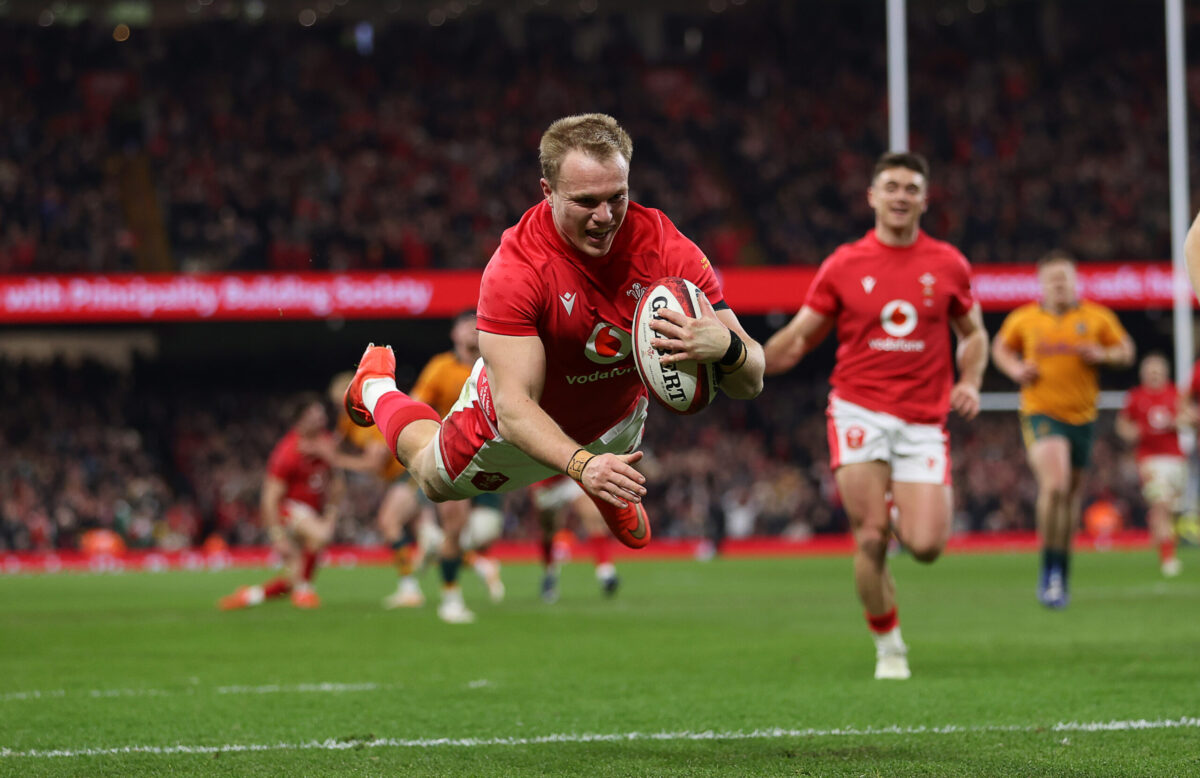
That was especially the case when they practically took the roof off on 55 minutes as Wales went in front with a very special try.
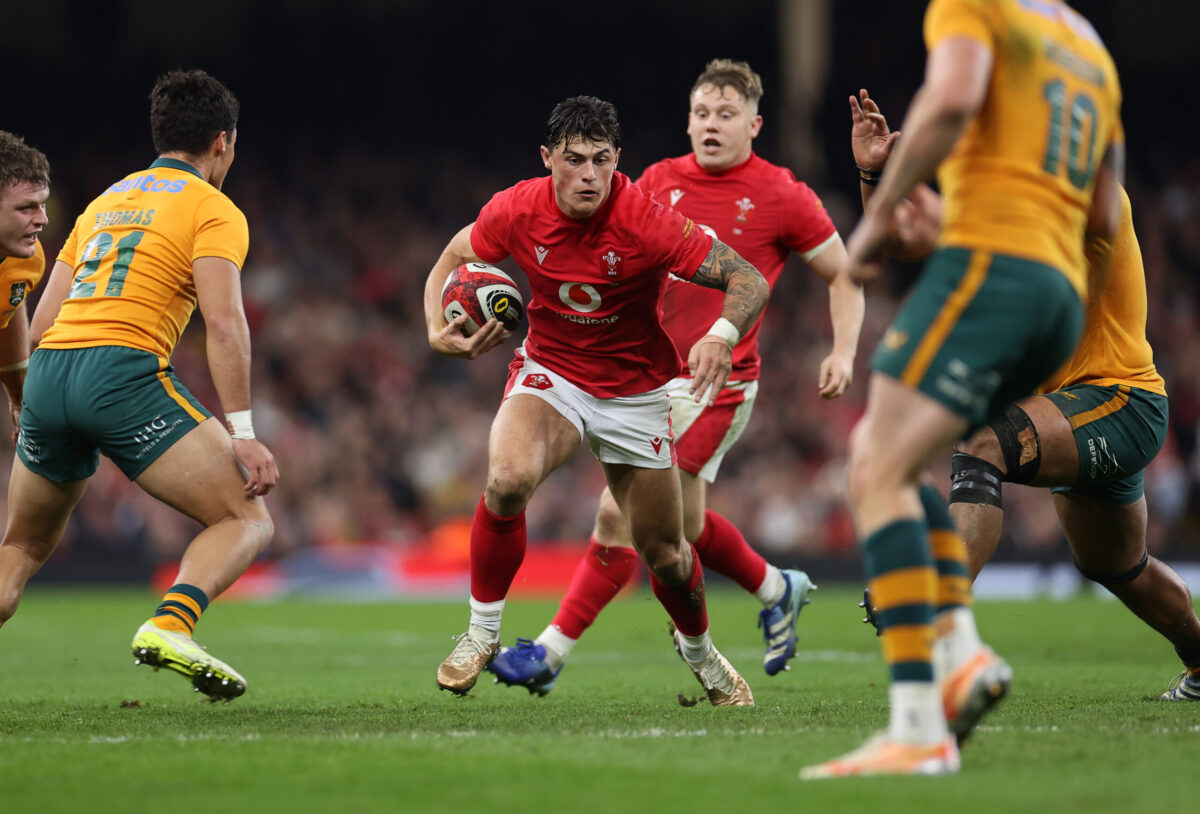
One of the big pluses of this campaign has been Louis Rees-Zammit’s return to his razor-sharp best and he provided further proof of that with the stunning part he played in the score.
Receiving the ball out on the left midway inside his own half, he appropriately enough produced a piece of magic to cast a spell on Harry Potter.
Stepping in and then out, he scorched past the former Leicester winger and eluded the clutches of the diving Joseph-Aukuso Suaalii before finding support from Josh Adams, who sent Blair Murray away to the line.
It was a special score that had the crowd on their feet and dreaming about another memorable win over a southern hemisphere big gun.
In the end, it wasn’t to be. The Wallabies’ sustained pressure saw them regain the lead, and this time they were not to relinquish it.
Overall, it’s a case of what could have been for Wales as we return to the subject of those missed opportunities.
Close calls
As you go through them, it’s a tantalising tale of close calls and nearly, but not quite.
The tone was set in the opening ten minutes as the hosts came away empty-handed from three close-range lineouts.
Off one, Rees-Zammit just lost control of the ball as he went for a spectacular one-handed finish in the right corner.
Off another, Dewi Lake was held up over the line as he broke off a driving maul.
The pattern continued as the half moved on.
On 24 minutes, it was Tomos Williams’ turn to be held up beyond the whitewash after Jac Morgan had escaped down the blindside off a lineout.
That was soon followed by a 12-phase attack petering out as Aaron Wainwright was felled by a big hit from the excellent Harry Wilson and Taniela Tupou got over the ball to win a relieving penalty.
Then, on the half hour, after Alex Mann had driven through off yet another attacking lineout, Archie Griffin’s pass from the base of a ruck went to ground rather than to hand.
Wales were banging away at the door, but couldn’t prise it open.
In sharp contrast, Australia had just two entries into the opposition 22 in the first half and scored off both of them.
First, tighthead prop Tupou hit a lovely line to storm over and then hooker Brandon Paenga-Amosa rounded off a lineout maul.
That second score summed up the half as it came after Wales had been on the attack, only for Sam Costelow’s offload to be intercepted by Suaalii.
Rees-Zammit showed great pace to run the centre down, but gave a penalty away attempting to add a jackal and the resulting kick to the corner culminated in Paenga-Amosa pouncing.
That made it 12-0 and Wales badly needed a score before the break.
Filename:
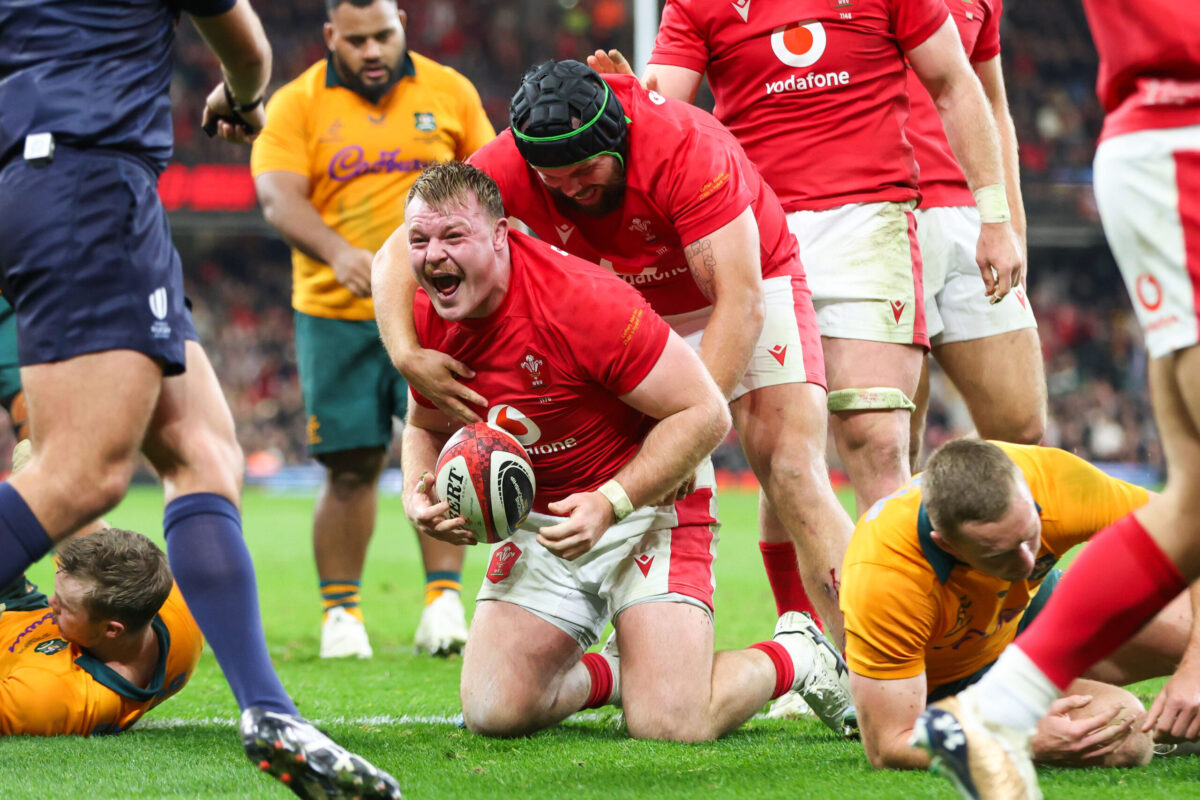
Finally, it came as Lake responded with a driving lineout try of his own as two backs joined the maul – as was to be the case for all of the hosts’ three tries from that area.
That cut the interval deficit to 12-7, but that was still a poor return for Wales given their dominance of the half and in the end it cost them dear.
They were to have far fewer opportunities after the break, with the Wallabies enjoying a much greater share of possession and territory.
Key moments
But there were still a couple of key moments where 22 entries failed to deliver.
The visitors had extended their lead early in the second half when dangerous winger Max Jorgensen crossed after winning an aerial contest.
Wales replied with a second Lake maul try and that mesmerising Murray score before the Wallabies went back in front as centre Len Ikitau struck.
With the game in the balance, it was then all about who could secure the spoils in the final quarter.
Wales were to have another big opportunity 12 minutes from time after Rees-Zammit cut his way into the 22.
But, when the ball was moved left, Murray was stopped in his tracks by opposite number Tom Wright and then Taine Plumtree overran a pass from Reuben Morgan-Williams.
The chance was gone and Australia soon stretched their advantage to eight points through the boot of Gordon.
Wales were to have one final sequence in the scoring zone and did eventually strike when replacement hooker Ryan Elias added a further lineout maul try.
But it had taken a couple of minutes to come, with Wainwright the third player in red to be held up over the line just beforehand.
That meant Wales only had time left for one more play to try and conjure up the winning score.
Setting off from near their own line, they gave it their best shot, but it wasn’t to be as the ball went forward from Eddie James as he took a well-timed tackle from Filipo Daugunu.
That was that, with French referee Luc Ramos blowing up for full time.
In the final analysis, it was a really close contest between two well-matched sides.
Clinical
But Australia just about deserved their win for being more clinical in attack and both resolute and astute in defence, putting their bodies on the line – over the line – and negating Tomos Williams’ lethal long passes with their outside blitz.
Their bench also made a difference, with the likes of Fraser McReight and Angus Bell adding some valuable quality.
As for Welsh individuals, No 8 Wainwright was the stand-out performer, leading the carrying (15) and tackle stats (19), while Rees-Zammit and Murray were real threats in the back three.
Not to be in the end, but another step on the journey and confirmation that there has been definite progress this autumn with one more appointment – Japan at Twickenham – to come next Saturday.
Support our Nation today
For the price of a cup of coffee a month you can help us create an independent, not-for-profit, national news service for the people of Wales, by the people of Wales.
Get more trusted Welsh news
Choose Nation.Cymru as a preferred source in Google News to see more of our journalism.


