


Turmoil in Tunis
Leon Barton
Remarkably, tonight’s fixture against Ghana at the Cardiff City Stadium will be only the second time Wales have met African opponents, 28 years on from the last time time we were pre-World Cup friendly fodder for opponents from the continent. ‘Fodder’ being the operative word.
‘I regret that the match turned out easier than we expected. The Welsh should have provided a good rehearsal for facing England, but they were far worse than we had hoped’ was Tunisia manager Henryk Kasperczac’s withering assessment of his opponents following a 4-0 victory.
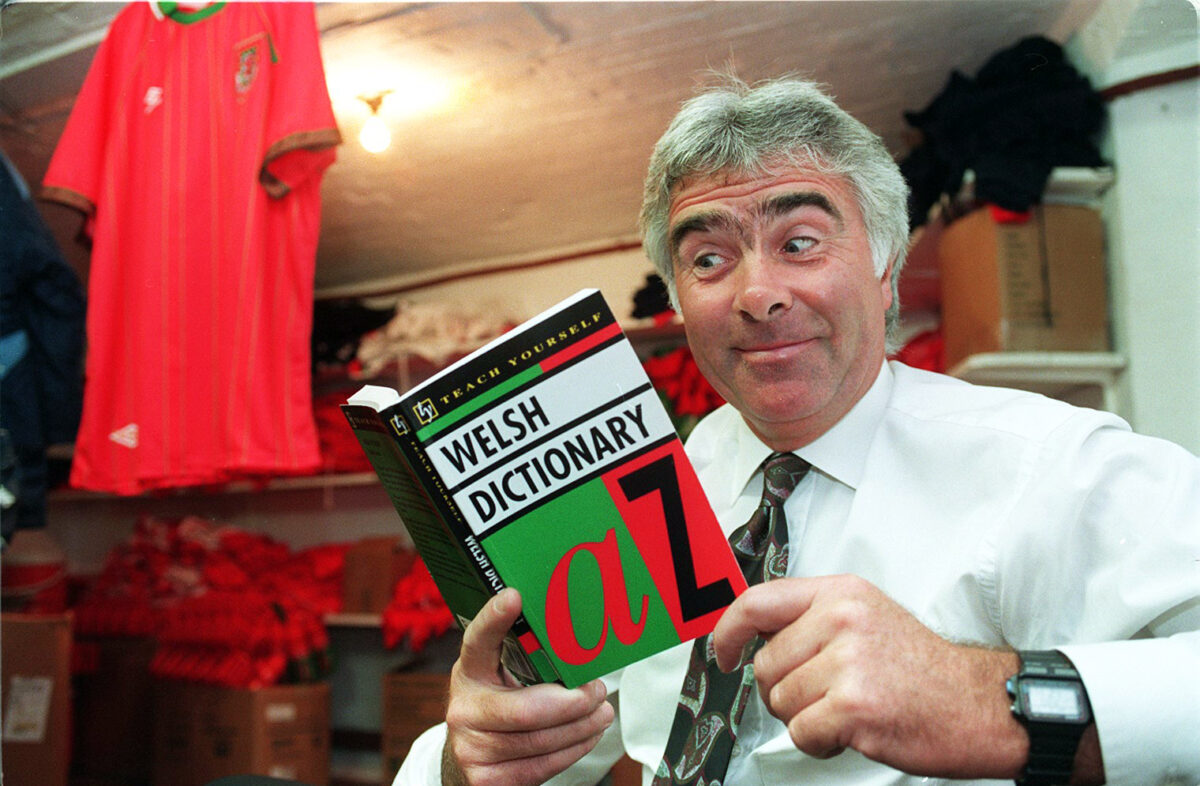
In a performance described as ‘hapless’ and ‘supine’ by The Independent, the unmotivated Wales players put in a display of shocking passivity under manager Bobby Gould, by then in charge for three years.
Gould, who prior to 1995, had had no experience whatsoever of international football, as a player, coach or manager, resided over a reign that was marked by a lack of organisation, both on and off the pitch.
Wales’ first – and so far only – visit to Africa didn’t go well from the start, as young striker Simon Howarth recalled. ’We moved hotels as the first one was a total shambles, and had to train without balls. That kind of thing happened in Wales camps back then.’
But, as journalist Huw Davies put it in FourFourTwo magazine ‘Wales were quite capable of disturbing their own preparation’ anyway: ‘When Gould announced he’d picked the same side that had beaten Malta two days earlier, the unused Robbie Savage complained that he had sacrificed a holiday in order to watch from the bench. Gould changed his mind and the team, accommodating Savage awkwardly at wingback’.
Although the starting elevens formations matched up, according to the Independent, Tunisia’s ‘fluid 3-5-2, with Skander Souayah and Ferid Chouchane launching passes like quarterbacks, had Wales chasing shadows from the start’.
After 18 minutes a long ball should have been dealt with by Chris Coleman but having bounced into the path of Imed Ben Younes, the Tunisian forward stroked the ball past the inexplicably positioned goalkeeper Andy Marriott in the Welsh penalty box.
Badra’s second goal was a fine strike from distance but the space he found himself in owed much to Wales’ passive play in midfield. 2-0 down at half time, captain Gary Speed turned on his manager.
Howarth was stunned but conceded ‘Speedo was totally right. It was about standards. Words were exchanged between senior pros and Gould.
Sat there as a young lad I was shocked and embarrassed at it all. Gould was good with me but he lacked the correct manner to get the best out of big players. He wanted the Wimbledon siege mentality but he had some of the best Welsh players of their generation.
He named set pieces after Wimbledon players and asked Speed and Saunders if they could do what Laurie Sanchez or Vinnie Jones could’.
Talking of set-pieces, the third Tunisian goal was an abysmally defended header from a corner. It was a goal which begged the question, if Gould’s Wales couldn’t even defend high balls into the box properly (high balls at set pieces being Wimbledon’s main weapon in their shock 1988 FA Cup victory) then what exactly was the point of him being in charge?
On 83 minutes, 17 year old Wolves reserve Ryan Green, whose call-up was described by Ryan Giggs as a ’typical Gould stunt’, allowed a tame cross to bounce up onto his arm for a penalty, duly tucked away by Badra.
It was Green’s second and final cap. Still, he held the record as Wales’ youngest player for eight years until Lewin Nyatanga made his debut on St Davids Day 2006, also a game in which Wales were chosen as opponents for a team about to face England at a World Cup (Paraguay.. it finished 0-0).
At full time, Gould claimed there was nothing to be ashamed about as Tunisia were a good team, which 18 year old Craig Bellamy, on his first trip away with the senior team, recalled brought another furious tirade from Speed.
‘He said Tunisia weren’t anywhere near to being a good team… that we hadn’t been organised, lost possession too easily, were too easy to play against. We had played like a pub team and that Gould had set the country back years.. he was spot-on’.
It seemed Wales’ top players had lost patience with Gould by then, something the fans could certainly relate to. ‘Bobby Gould must go’ sang the Manic Street Preachers, changing the chorus to their hit song ‘Everything must go’ at Radio One live event in Cardiff later that summer.
In Tunis, before leaving the changing room, Gould asked if anyone else had anything to say. It was left to John Hartson to provide some comic relief.
Slumped in the Tunis heat, the sweat-soaked, beetroot-coloured, 14 and a half stone striker had a question for the manager…’Yeah boss… why did you take me off?’, he asked, apparently in all seriousness.
Speed’s prediction that Tunisia would be on the first flight home from the World Cup in France was proved correct.
England beat them easily 2-0 and they picked up only a point with a 1-1 draw against a Romanian team who were already through and resting players as a result.
Gould fought on for another year but it was another 4-0 defeat in sweltering heat – this time a Euro 2000 qualifier in Italy that proved to be the end. Another half-time bust up proved a bust-up too far, the manager telling the BBC’s Rob Phillips that he’d already come to an agreement with the FAW to vacate his position during his post-match press duties.
The resignation was frankly a relief to everyone. And so, four years on from his appointment, the self-styled ‘Gouldfather’ vacated the role he should never have been in in the first place.
‘His heart was in the right place’ said Phil Stead, author of ‘Red Dragons- the story of Welsh football’. It’s just that, in the words of Elis James ‘you don’t want your manager to be a quirky character when you’re losing 4-0 to fucking Tunisia. I think it’s fair to say he had a personality clash with an entire country’.
Support our Nation today
For the price of a cup of coffee a month you can help us create an independent, not-for-profit, national news service for the people of Wales, by the people of Wales.
Get more trusted Welsh news
Choose Nation.Cymru as a preferred source in Google News to see more of our journalism.


