

Wales vs England – a brief history of a 146-year rivalry
Leon Barton
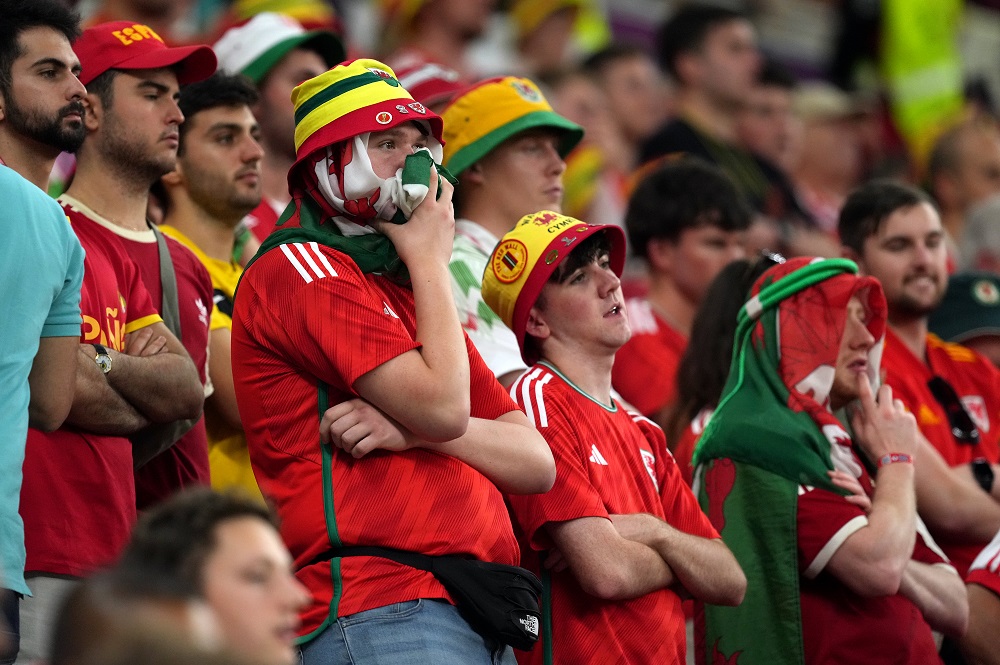
Wales meet England for the 105th time on Thursday, hoping to record what would be just the fifteenth victory in the 146-year history of the fixture. There have been 21 draws and a massive 69 defeats in that time. Gulp.
In truth, the result of Thursday’s friendly doesn’t matter, with a much, much bigger game against Belgium to come on Monday. I’d take a decent performance with a narrow defeat ala September 2011 right now, as long as no key men get injured. As a friendly, just a few days ahead of a massive World Cup qualifier, it’s unlikely to be a game that sticks long in the memory. That’s unless Wales win of course..
Here I look back on some of the most memorable and/or significant occasions that the two sides have met.
18th January 1879, England 2 Wales 1
Fewer than one hundred people watched Wales first ever game against England at the Kennington Oval, now famous as a cricket ground. Due to bitter infighting between Football Association of Wales founder Llewelyn Kenrick (who played in several of Wales’ earliest fixtures and was a ‘dashing and brilliant’ defender according to one writer) and several Welsh clubs (Bangor had left the FAW to form the North Wales Football Association, along with Caernarfon, Conwy and Llandudno) the selection comittee was led by George Bayley, chairman of Oswestry. He chose nine Oswestry players, six of those born in England.
England’s William Clegg arrived late, which meant Wales were only up against ten men for the first twenty minutes. Even so, the team went down to a 2-1 defeat in the London snow, athough they weren’t helped by the referee – one S R Bastard – disallowing a late equaliser to award Wales a free kick instead.
A few weeks later Oswestry lost to Wrexham, an upset which the Wrexham press delighted in, having been scathing of the recent international between ‘England and Oswestry’.
The following year, Wrexham hosted the next England versus Wales fixture, suggesting a certain amount of harmony had been restored. Wales still lost, this time 3-2.
26th February 1881, England 0 Wales 1
Mr Bastard was in charge again for Wales’ first ever victory, not just against England, but over anyone, which took place in,of all places, Blackburn. This time it was Wales who started the game a man short before Welsh player William Owen noticed a strange sight: ‘We had been playing for some time when I saw what I thought was a spectator breaking into the field and making a violent attack upon Marshall and Rostrom, the English right wing. Upon close inspection I found it was Llewelyn Kenrick of Ruabon. He was dressed in long tweed trousers with ordinary boot and a smart Oxford shirt’. Kenrick had only been there as a spectator, having retired from playing by that point.
John Vaughan of Ruabon Druids (also known simply as ‘Druids’) scored the game’s only goal.
The following year Wales hammered the English 5-3 at Wrexham’s Racecourse, Ruthin Town’s William Pierce Owen grabbing two of the five.
26th March 1900, Wales 1 England 1
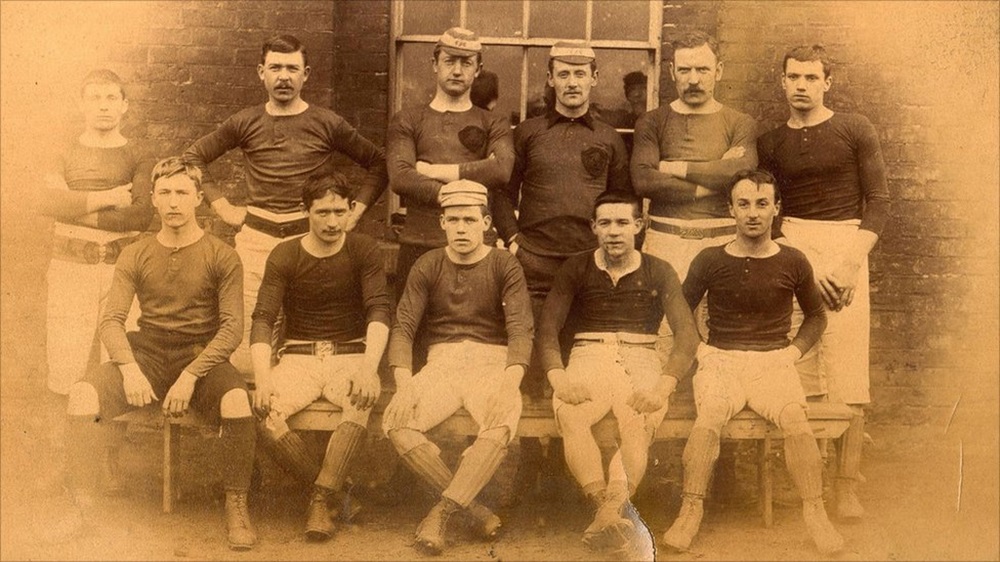
The first Wales game to be held in the south of the country took place at Cardiff Arms Park, with Billy Meredith scoring to earn the Welsh team a celebrated draw.
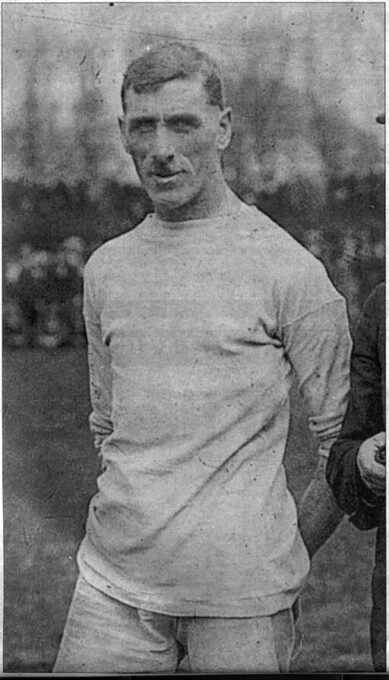
Meredith, from Chirk, on the Shropshire/Wales border, made his Wales debut in 1895, aged twenty, and was to become football’s first superstar. He was a working class hero at a time when the game was being wrestled from the class of privately educated ‘gentlemen’ who had codified the game in the 1860s.
A former miner, his habit of playing with a toothpick in his mouth was to help spread his fame as much as his footballing prowess, being, as it was, a gift for cartoonists of the age. He played with distinction for both Manchester clubs, first City, then United, before returning to City in 1921 at the age of 47, and playing on for a further three years.
18th March 1907, England 1 Wales 1
Twenty three years after it’s institution, Wales won the ‘Home Championship’ title for the first time and Billy Meredith was at the heart of it. In the three games, he scored against Ireland in a 3–2 victory and captained Wales to a 1–0 win over Scotland and 1–1 draw with England at Craven Cottage, home of Fulham. Manchester City forward Lot Jones, also from Chirk, was the scorer against the English and Scots.
Wales didn’t secure the title until the April though, after England and Scotland had played out a 1-1 draw at St. James Park, Newcastle (England needed to win by two clear goals to take the title from Wales).
Goalkeeper Leigh Richmond Roose described the day as ‘something of an anti-climax, being as we were scattered into all corners of the land… denied the opportunity to rejoice together as one’.
The FAW did host a banquet for the twenty-one players who’d played for Wales in the tournament two weeks later and every player was presented with a commemorative medal made of Welsh gold.
15th March 1920, England 1 Wales 2
This was Billy Meredith’s final international game, and, after 25 years of sterling service and an incredible 48 caps (only 3 international fixtures per year in those days), the 45 year old finally tasted victory England. Goals from Stanley Davies and Richard Richards at Highbury in London saw Wales beat England for the first time since 1882. Unsurprisingly, Meredith is reported to have broken down, overcome with emotion at the final whistle.
5th February 1936, England 1 Wales 2 and 17th October 1936, Wales 2 England 1
1936 is the only calendar year in which Wales have beaten England twice, both games finishing 2-1, the first at Molineux, Wolverhampton and the second Ninian Park, Cardiff.
Wales took the ‘Home Championship’ title four times in the 1930s which makes you wonder what might have happened had they taken part in the 1938 World Cup in Italy, a tournament won by the hosts.
But in 1928 Wales, along with all the other UK football associations, had resigned from FIFA, the game’s governing body, in protest at FIFA’s demands that expenses be paid for players competing at the Olympic Games. The original associations still believed there was a place for the amateur game and objected to the ruling: ‘The great majority of the associations associated with FIFA are of comparitively recent formation and as a consequence cannot have the knowledge that only experience can bring’ they had argued, somewhat snidely.
22nd October 1938, Wales 4 England 2
They might not have gone to the Word Cup but Wales did beat England handsomely in 1938. The final England versus Wales fixture to take place prior to the Second World War was held at Ninian Park, in front of 55,000 spectators. Although Stanley Matthews and Tommy Lawton were on the scoresheet for England, Dai Astley scored two and Bryn Jones and Dai Hopkins grabbed one each to seal the win for Wales.
15th October 1949, Wales 1 England 4
The first ever World Cup qualifier to be held in Britain (it had been decided that the Home Internationals would double as World Cup qualifiers in the year ahead of the tournament, with the top two going though)
Expectations were high, a huge crowd of over 60,000 turned up at Ninian Park for the tie.
‘Beat England today and you’ll be well on the road to to Rio, with a chance to win the championship of the world!’ FAW head Milwyn Jenkins told the players.
But many of Wales’ first choice players were refused permission to play by their English clubs. A Welsh team featuring seven Division Two players went down 4-1 to an England side containing such legends as Billy Wright, Tom Finney, and goalscorers Jackie Milburn (3) and Stan Mortenson (1).
Wales then lost 2-0 to Scotland at Hampden and could only manage a 0-0 draw against Ireland in Wrexham, much to the disappointed of captain Walley Barnes: ‘At seasons end, far from earning a trip to Rio, we found ourselves in a sorry plight. We were wooden spoonists in the international tournament. What can I say?… we had plenty of talent, as we frequently showed. And heaven knows, we tried! I’ve yet to play for a Wales side that didn’t do it’s darndest to win from the first to the last whistle’.
Although Scotland finished second in the Home Internationals, they didn’t take up their place at the tournament in Brazil. In fact, so many teams pulled out that the planned 16 team tournament took place with only 13.
22nd October 1955, Wales 2 England 1
Having beaten England four times in the 1930s, Wales had to wait another seventeen years to taste victory over the big boys from over the border.
Ahead of the game striker Trevor Ford recalled that ‘for the first time that I can remember we actually had a pre-match tactical talk’.
Mel Charles, younger brother of John, was also in the team having been called up for Wales for the first time earlier that year: ‘The side would be picked by a comittee of selectors. The first you heard whether you were in or out was when you listened to the radio, usually during the nine o’ clock news on a Monday or Tuesday morning’.
With Walley Barnes having been appointed as the ‘team manager’ for the trip to play Austria in Vienna the previous year, the players expected a similar appointment to be made for the home internationals, as Ford recalled: ‘When the Welsh team was selected for this match it was noticeable that no team manager had been appointed and the players were naturally wondering why. We were not left long in doubt for when we reported at the Angel Hotel…it was clear that in addition to being captain of the side, Alf Sherwood had been given instructions to take charge of our programme with the assistance of Welsh team trainer Eddie Nash. ‘Chase until you drop’ was what Alf Sherwood said at one of our meetings. This we were all pledged to do. At our final tactical talk that evening we decided on man-to-man marking.’
Use of the pronoun ‘we’ suggests that no one man was responsible for the teams tactical approach. This inclusive attitude appeared to be paying dividends when Wales opened the scoring late in the first half through Derek Tapscott. Two minutes later, twenty year old Cliff Jones, winning only his second cap, headed Wales further ahead.
Early in the second half a John Charles own goal brought England back into the contest and in all likelyhood tactics flew out of the window in the ensuing battle in which, acccording to Trevor Ford, ‘both sides went for the ball with murderous verocity’.
They saw it through, and Wales had their long awaited win. The players duly celebrated the occasion, none more so than Ford; ‘that night, at the bar of the Park Hotel, I’m afraid I fell from grace!’.
Meanwhile, as well as starring for Swansea Town, Cliff Jones was a couple of years into his apprenticeship as a sheet metal worker at the the Prince of Wales Dry Dock: ‘On the Monday morning after scoring the winning goal against England I clocked on at 7:30am. As I walked in, all my workmates were there and they gave me a massive cheer. It was an unbelievable moment, something I’ll never forget. Then I was met my Dai Vaughan, my foreman, who greeted me with: ‘Well done on Saturday Cliff but now there’s your tools, you’ve got a proper job of work to do. Get on with it!’
Truly, they were different times…
24th January 1973, England 1 Wales 1
When people recall England’s failure to qualify for the 1974 World Cup, it’s usually the 1-1 draw against Poland that comes to mind… television pundit Brian Clough describing Polish goalkeeper Jan Tomaszewski as a ‘circus clown in gloves’, before Tomaszewski went on to play the game of his life and all that.
But England had already drawn 1-1 at Wembley in that campaign, having come up against a determined if limited Welsh side with a sprinkling of star names, among them captain Mike England of Tottenham and goalscorer John Toshack of Liverpool. It was though, twenty year old Burnley winger Leighton James who caused England the most problems in the opening half hour of the game, running at the likes of Bobby Moore (winning his 99th cap) and coming close with a couple of efforts from distance. Having terrorised England’s defenders down the left wing, he then set up Toshack’s opening goal following an excellent dart down the right and a pinpoint centre. Penny for England manager Sir Alf Ramsey – who famously didn’t like wingers much – thoughts at that point…
England came back into it but found Welsh keeper Gary Sprake in fine form. Defender Norman Hunter beat his Leeds teammate Sprake with a powerful left foot drive towards the end of the first half, but Wales held firm in the second period to deny England the win. The final whistle was met by a cacophony of boos from the English fans.
Wales manager Dave Bowen described it as the happiest night of his career but vacated his position the following year. 1974 also saw England’s World Cup winning manager Sir Alf Ramsey sacked.
31st May 1977, England 0 Wales 1
Leighton James scored with a penalty after being brought down following a mix up between English defender Emlyn Hughes (who’s Welsh rugby playing father had moved to Barrow to play League) and goalkeeper Peter Shilton, but the most dramatic moment of the evening had occured ahead of kick off.
Anthems ahead of international fixtures were in their infancy back then and when the Welsh players heard that the FA would be playing God Save the Queen but had refused a request to also play Hen Wlad Fy Nhadau, they decided to make their feelings known. Led by inspirational captain Terry Yorath, they all stayed in line for several seconds after the English players had broken at the end of the anthem, a course of action met with boos from the crowd. This was the backdrop to an excellent performance, which yielded a deserved win.
Englishman Mike Smith was the man in charge for Wales’ first ever victory over England at Wembley. 48 years on it remains Wales’ only victory over England at Wembley that didn’t involve a last minute Scott Gibbs try.
17th May 1980, Wales 4 England 1
With Mike Smith having gone to Third Division Hull City because they were able to pay a better wage than Wales, Mike England returned from a playing spell in the USA to take over. His first game couldn’t have gone much better. A 4-1 win on a beautiful May day in Wrexham with Leighton James again starring. England had actually taken the lead before Mickey Thomas, Ian Walsh, James and an own goal gave Wales a record win over the neighbours to leave England (Mike, that is) delighted. ‘He must have been thinking, this job’s easy!’ quipped midfielder Brian Flynn.
England had only just got back to Wales and was staying with his parents in Deeside at the time, which is where he celebrated that evening with a Chinese takeaway.
2nd May 1984, Wales 1 England 0
Ruabon, Welsh football’s birthplace, is also the birthplace of the goalscorer on the most recent occasion England beat Wales, just the 41 and a half years ago. Twenty year old debutant Mark Hughes nodded in after being found from a free kick taken by Manchester United teammate Alan Davies. Davies, tragically, would take his own life eight years later.
This was part of the very last edition of the ‘Home Internationals’, as England and Scotland wanted to play ‘bigger’ football nations. Ironically the tournament in ’84 was won by Northern Ireland. With Wales runners up.
It would be twenty years before the Welsh and English would face off again. Mike England is the only Wales manager to have recorded more than one victory over England, and, with his appearance in this match, the late, great Joey Jones became the first Welsh player since the Second World War to be on the winning side against England three times (he also played in ’77 and ’80).
6th September 2011, England 1 Wales 0
A European Championship qualifier which Criag Bellamy recalled fondly last week even though he didn’t play in the game due to suspension: ‘I don’t like defeats but watching the team play the way they did was one of the proudest I’ve been, I remember Speedo (manager Gary Speed) on the side with his chest up and I was like ‘wow’. To watch the group of players go to Wembley and dominate the way they did – and they really did. Earnie missed a chance but we played the way he [Speed] wanted to play. That to me always burns and I’d love to have that moment, but with a result going our way.’
A first-half winner from Ashley Young settled a tight affair, but only after Robert Earnshaw missed an open goal and a late chance to snatch a draw, after being set up by Darcy Blake. Blake was outstanding that night, keeping England’s star man Wayne Rooney quiet. Sadly, his 14th and final cap came the following year and he was basically done as a professional at the age of 25, after failing to commit to the fitness and lifestyle levels required.
It may have ended in another defeat but this is by some distance the best Welsh performance against England since 1984.
16th June 2016, Wales 1 England 2
It says much about Wales’ appalling record against England that even the greatest Welsh team of all time couldn’t do what Iceland did and beat – or even draw against – an English team being managed by Roy Hodgson.
This European Championship match in Lens, France, was the first time the two sides had ever met at a tournament, although the quality of the game failed to live up to the occasion.
Gareth Bale’s long distance free kick at the end of the first half had sent Welsh fans into raptures but in England dominated the second period after susbstitute Jamie Vardy had equalised, even if they had to wait until injury time for Daniel Sturridge to win it.
29th November 2022, England 3 Wales 0
Six years after that European Championship match, Wales and England met at a World Cup for the first time but unlike in Lens, Wales went into the game with very little confidence or belief, having played poorly against the USA and Iran in the first two games.
Still, the team managed to hang in during the first half, getting to the break goalless.
To tell the truth, I’ve never seen the second half of the game and never will – my four year old son was sick at half time and I had to look after him. I wasn’t bothered though, as I couldn’t see any way that Wales would go on to win and it came as no surprise to later read that Marcus Rashford(2) and Phil Foden had eased England to victory.
Gareth Bale’s final appearance in professional football could be seen as a sad farewell but, unlike so many Welsh greats – Southall, Rush, Giggs etc – at least he got to play in a World Cup. Craig Bellamy has the chance to get there as a manager of course.
Sources:
Red Dragons – The Story of Welsh football by Phil Stead
Football Wizard – The Billy Meredith Story by John Harding
Lost in France – The remarkable life and death of Leigh Richmond Roose by Spencer Vignes
Captain of Wales – Walley Barnes
I Lead the Attack – Trevor Ford
In the Shadow of a Giant – Mel Charles
It’s a Wonderful Life – Cliff Jones
Leon Barton is currently working on a book about the managers of the Welsh National Team, to be published by St Davids Press next year.
Support our Nation today
For the price of a cup of coffee a month you can help us create an independent, not-for-profit, national news service for the people of Wales, by the people of Wales.


