

Welsh rugby legend David Bishop reveals all in explosive new autobiography
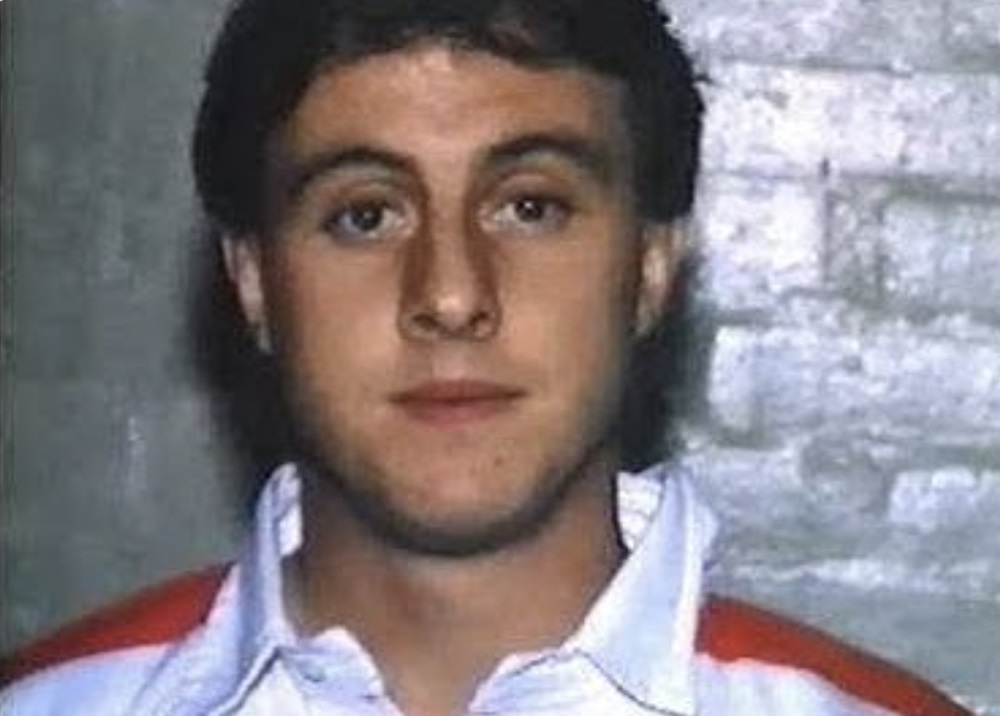
For decades, Welsh rugby fans have been clamouring for David Bishop to write his autobiography. Now, with his 65th birthday fast approaching, he finally reveals all – after an explosive career and an even more remarkable life.
In The Bish, published on 10 October, Bishop angrily lifts the lid on the infamous Jarman incident, 40 years after the punch which saw him cop an unprecedented WRU ban. For reasons that have never been fully explained, this became a cause celebre in the media and effectively ended his Wales career, while other more serious incidents continued to go unpunished.
There is much more besides in an extraordinary account of his rollercoaster playing career and tumultuous life off the pitch, but the events of 23 October 1985 and their aftermath played a pivotal role in shaping his life. The incident still keeps him awake at night 40 years on.
In a frenzied, no-holds-barred, anything-goes Gwent derby at Newbridge, Bishop – frustrated by Newbridge forward Chris Jarman, who had been “putting it about” throughout the match – finally ended up punching the big lock, who was helped off with what he claimed was a broken cheekbone.
That set in motion a chain of events that resulted in Bishop immediately being banished from the national squad for 11 months, a police inquiry that saw him arrested and sentenced to prison, and – despite successfully taking his case to the Court of Appeal – the WRU then imposed a further 11 months’ full suspension. He was persona non grata, the antichrist of Welsh rugby.
Yet the game in Wales at this time was absolutely awash with similar incidents. Punch-ups, dangerous eye-gouging, headbutts and vicious kicking went unremarked and largely unpunished. Thuggery and violence were routine, with the culprit – if identified – perhaps getting a month’s ban.
Newbridge themselves comfortably topped the list of offenders in the foul play league, with nearly twice as many spendings-off between 1980 and 1986 as Pontypool, who nonetheless were always painted as the villains by the WRU and most of the Welsh media.
Establishment clubs like Newport and Llanelli also led charmed lives with little to no comeback after their misdemeanours. At a match just a month before the Newbridge affair, referee George Crawford had marched off in disgust, accusing both Bristol and Newport of street fighting, and a few weeks later Newport were also involved in ugly running fights in a high-profile match against Fiji.

Infamously, some years earlier, a Llanelli forward had virtually scalped England lock Chris Ralston while playing at Richmond, leaving him needing 32 stitches, but went unpunished. No hue and cry, no witch hunt.
Bishop, though, seemingly found himself held to account for the accumulated sins of Welsh rugby.
Pontypool coach Ray Prosser said of Bishop’s ban: “I’ve seen worse than the Jarman ‘incident’ in hundreds of games from hundreds of players.” Pooler teammate Eddie Butler added, “David Bishop singlehandedly carried the weight of the nation’s attention on foul play. There lurked throughout the land a horde of players guilty to a man of sins far more heinous than the punch thrown by David Bishop.”
So what made the Bishop case so very different? Why was he immediately installed as public enemy number one?
Was it the west Wales-dominated WRU trying to belittle and clip the wings of Pontypool? They had become the flagbearers of rugby in east Wales but stood accused by some of debasing the game with their physical approach, which contrasted, allegedly, with the beautiful game produced by Wales in the Seventies and the style supposedly adopted by the big clubs in west Wales.
Or was it the WRU reaching a tipping point with the embarrassing avalanche of violence in the Welsh game, and deciding that the chance to make an example of an ex-jailbird from Pontypool – the club painted as the pantomime villains of Welsh rugby – was a heaven-sent opportunity? The WRU had a number of influential policemen on their committees. Were other forces at work?
“You could drive yourself insane trying deal with the WRU around this time,” reflects Bishop. “If you asked supporters from that period who the dirtiest players in Wales were, I doubt if anybody would even have me in their top 20. In my entire senior career, I had one sending-off, against Saracens for over-vigorous rucking. I was at the sharp end and can’t recall a single game when I wasn’t punched, kicked or tackled ridiculously late. Yet I was the villain, apparently.
“There’s no question that there was a massive amount of score-settling going on between the WRU and Pontypool. But it was the sheer bloody hypocrisy that stuck in the craw. You’d think Pooler were the only team who’d ever thrown a punch or trampled on a player in Wales… It was all Pontypool’s fault, apparently – we alone were the boil on the backside of Welsh rugby that had to be lanced.”
The Bish by David Bishop (£22, hardback, Y Lolfa) is officially available from 10 October, but advance copies will be on sale at a series of launch events in Pontypool on 4 October. David Bishop will be doing a series of in-person events around south Wales this autumn to talk about the book, his career and his life.
The Bish is available to pre-order HERE
Co-author Brendan Gallagher, an award-winning sports journalist, was the ‘Pontypool man’ for the South Wales Argus and South Wales Echo in Bishop’s Rugby Union heyday between 1985 and 1988. A graduate of Hayter’s sport agency, he was a sports correspondent, columnist and feature writer at the Daily Telegraph for almost 20 years and has covered 45 sports in over 50 countries, focusing especially on rugby, cycling, athletics, basketball and all things Olympics. He has also written official histories of the Rugby World Cup, the Giro D’Italia and Great Britain’s involvement with the Olympics, and is co-author of autobiographies from Brian O’Driscoll and cycling legends Nicole Cooke and Bradley Wiggins.
Support our Nation today
For the price of a cup of coffee a month you can help us create an independent, not-for-profit, national news service for the people of Wales, by the people of Wales.



There is another reason to the disgraceful treatment of Dai Bish…he was the best scrumhalf in the UK by a country mile. Unfortunately Robert Jones had tight relations with certain members of the WRU including one family member.
Has a lifelong supporter of Pontypool…we were a robust side who would take NO nonsense!!!
If we had a pack to play 9 man like Pooler in club rugby I’d pick him, but that element had gone from our international game so we had to move it, with a no hesitation fast pass.
Unfortunately family connections are not always avoidable in such a small country, but TopCat captained us from 9 and coached us in the 70s, so I doubt he would affect national team selection.
What did cause many problems for Bish were the off field stuff, the selection of Craig Bellamy for the foreword sums up the attitude towards law and order!