

When Brian Clough nearly became Wales manager

Leon Barton
There is a Clough connection with Wales of course in that Port Talbot’s Michael Sheen famously portrayed the man known semi-affectionately as ‘Old Big ‘Ead’ in the 2009 film The Damned United, Tom Hooper’s dramatisation of his infamous 44 days in charge of Leeds United in 1974.
But it might have been so much more….
At the end of 1987, Wales manager Mike England, who had been in charge since the start of the decade, was sacked by the FAW. His firing came as a result of four successive failures to qualify for tournaments, each one as ludicrous as the last.
The campaign to reach the World Cup in 1982 began with four straight wins but a 2-2 draw to Iceland at home proved costly, floodlight failure at The Vetch breaking Wales’ concentration and allowing the visitors back into the game. Wales failed to join England, Scotland and Northern Ireland in Spain after only picking up two points in their final four games.
1984 was possibly the most absurd near miss considering Wales were heading to the Euros in injury time of the final group game between Bulgaria and Yugoslavia. A draw, or one goal Bulgarian win would be enough to see them through. With that game 2-2 in the 92nd minute Yugoslav defender Radanovic headed home to leave Wales, and England, crestfallen: ‘I have never felt so disappointed. We were 40 seconds away from qualification. There is no more to say’.
The 1986 World Cup qualifiers began with two disappointing losses before an unexpected run of three wins on the trot, against Iceland and Spain at home and Scotland at Hampden Park. A win in the fixture at home to Scotland would would seen Wales progress at the Scots expense but with nine minutes to go, the visitors were awarded a dubious penalty and Wales were knocked out once again.
Euro 1988. Wales needed just one win from the final two games to reach West Germany. The problem was, both matches were on the continent and Wales were generally awful away from the UK in those days. Losing to the Laudrup-inspired Danish Dynamite team wasn’t a shock but going to Czechoslovakia to face a team out of contention in front of a disinterested crowd of only 6,443 was a different matter. Wales dominated, chances were missed, the Czechs scored two without reply and Mike England got the bullet.
The FAW had had enough of the hard luck stories and decided it was time to get a proven winner in. Chances weren’t being taken, they were going after the big guns. One name on the wish list was Bob Paisley, three times a European Cup winner with Liverpool, and the man who signed Welsh talisman Ian Rush from Chester City in 1980. But Paisley wasn’t to be tempted out of retirement so other targets came into view.
Due to his extraordinary success, not to mention his talent for self-publicity, Brian Clough was possibly the famous name in British football at the time. A two time League Championship winner with unfashionable Derby County and Nottingham Forest, even more impressively, Clough has taken Forest to two European Cups in a row in 1979 and 1980. But those successes might never have happened if he’d been awarded the job he really coveted; manager of England. Clough had been turned down for the job by the FA in 1977. Why? The man himself said he was ‘sure the England selectors thought if they took me on and gave me the job, I’d want to run the show. They were shrewd, because that’s exactly what I would have done’.
At Forest, Clough was King. ‘I dictated most of what happened’, he said, revelling in the feeling that the higher-ups were fearful of upsetting him.
Nevertheless, international management was an itch that had gone unscratched, and knowing by the late-80s that he would never get the England job, he was more than prepared to consider other offers. ‘My ambition to take over a national side was such that I was prepared to take over in Malaysia, Mexico or even Outer Mongolia, provided that the terms and conditions were right’.
The FAW made their move. ’After England barred my way to international management the Welsh reopened the door… on meeting their FA officials in Birmingham I nearly snatched their hands off. I accepted and was thrilled to do so. I can’t promise to give the team talk in Welsh but from now on I shall be taking my holidays in Porthcawl and I bought a complete set of Harry Secombe albums’.
Comedy quips aside, you can see why the job would have been appealing.
Exciting
This was the Welsh team of Ian Rush and Mark Hughes, one of the most exciting strike partnerships in international football at the time. Young forward Dean Saunders was starting to make a name for himself too. Everton defender Kevin Ratcliffe had captained the club to four major trophies in the previous four years, including the League Championships of 1985 and 1987.
Fellow defender Pat Van Den Hauwe had also been part of those triumphs and their teammate for club and country Neville Southall was considered by many the greatest goalkeeper in the world at the time. The versatile Dave Phillips had won the 1987 FA Cup with Coventry, Robbie James and Peter Nicholas were proven performers in the top flight. There was plenty of quality for Clough to work with, and he made it clear he wanted the job. So why didn’t it happen?
Rumours swirled around that Forest’s manager was using the FAW’s interest as leverage to strengthen his position at The City Ground. These rumours were denied by Clough who later claimed ‘several misconceptions have been spread around in attempts to find a dark hidden reason why I never did begin’ although he did admit it was ‘true that a drama was being enacted closer to home’.
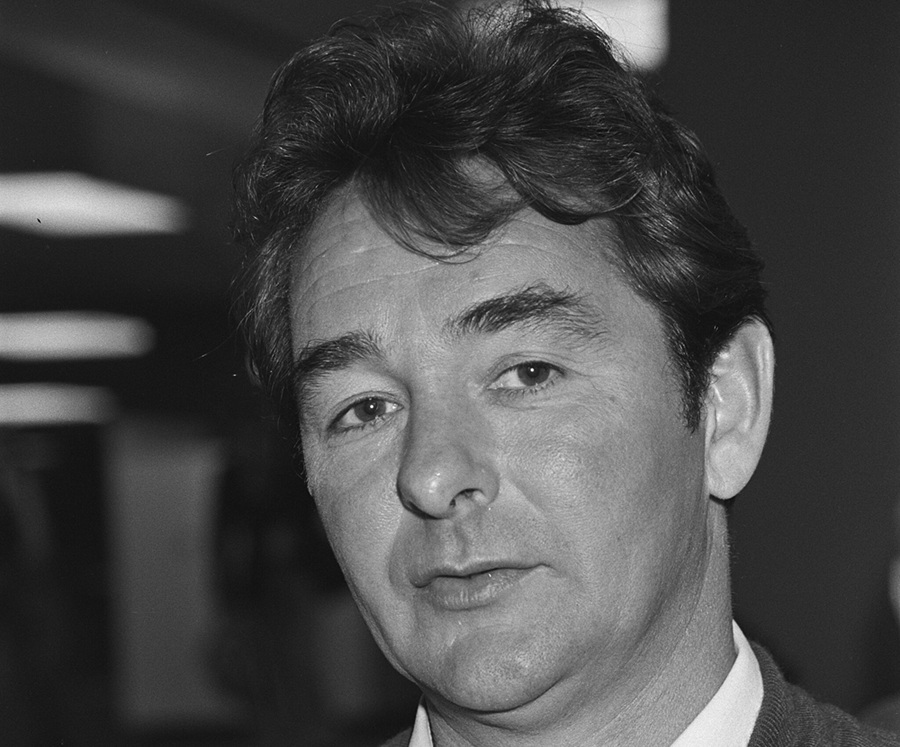
‘I wanted Alan Hill, who was working for Notts County at the time, to come and work with me again in charge of Forest’s youth recruitment. It is also true that I wanted Hill working alongside me with Wales. I detested Notts County chairman Derek Pavis and he knew it. For years he was a director at Forest but he had been voted off the board by shareholders responding to my better judgement. He was to sell his builders merchants business for several million pounds and took over at Notts County. The simple assumption, wrongly made, was that I used the Welsh offer as a lever to to dislodge Hill from Meadow Lane and install him at the City Ground. The switch was made much to Pavis’s annoyance of course and finished up costing Forest the best part of £20,000 as an out-of-court settlement with our neighbours across the Trent’.
‘Serious’
But, Clough said, ‘that was hardly the object of the exercise’, insisting that he ‘wanted to be a national team manager. I was ready to do it too – I have never been more serious about anything in my life. It wasn’t England but it was international management and I would’ve made a better gaffer anybody the Welsh have appointed since. I would’ve done the job on a part-time basis with Alan Hill and I believe to this day but I could’ve done it in tandem with my job at Forest. Although the Welsh board invited me to take over full-time I told them the job could be done part time…’
At first, according to Clough, Forest Chairman Maurice Roworth was happy for his manager take up the FAW’s offer. ‘He seemed to think that the prestige of employing the Welsh manager would be good for Nottingham Forest but then the doubts crept in. Roworth came back to me and said “we’re not sure you could do two jobs at once. your priority has to be with this club“. What he was really saying was “we don’t want you to take it and I’d tell you not to take it… if I dared”.’
A stand-off began, although Clough accepted Forest ‘did pay my salary, they were my employers and between them they were getting brave enough in the boardroom to raise some resistance to my plan’.
The FAW had not given up hope though. 28 year old Norwich City midfielder/coach David Williams took charge for one friendly fixture against Yugoslavia in March 1988.
The situation was an annoyance to the players, with Ian Rush sounding particularly exasperated. ’It’s obvious he’s not going to come, so why wait? Something must be sorted out, it’s no good having different managerial teams all the time. It’s so unsettling’.
Then Swansea City manager and former Wales captain Terry Yorath then got three games in the summer of ’88 as the stand-off continued.
He first was a 4-1 loss in Sweden, before victories in Malta and, impressively, Italy put the former captain more firmly in the frame to take over.
Clough was admitting defeat by this point too. ‘There was no chance of my resigning from the club and telling the people of Wales I would go full time so I reluctantly decided not to go at all. There have been times since when I wished I had pushed it to the limit despite the reservations of the directors, and taken the job part time anyway’.
Instead, Yorath got the job and was a popular choice among both the players and fans.
Alcoholism
As for the question of whether Clough would have made a good Wales manager, obviously we’ll never know. By that point, alcoholism was taking a grip. A few months on he was in trouble after striking Forest fans who’d invaded the pitch following a 5-2 League Cup win over Queens Park Rangers. He was fined following a media furore, but even after this incident, Clough eventually came up smelling of roses. After he’d offered to resign, Nottingham Forest’s manger got the following reply from his Chairman:
‘Dear Brian,
On behalf of my board of directors I am writing to inform you that we are not prepared to accept your resignation and I would be obliged if you could arrange to meet me to discuss an extension to your contract…’
In this regard at least, Roworth was smart. Especially in one-off games, Forest, and Clough, were still a major force.
The club won the League Cup in 1989 and 1990 and when Manchester United’s severely under pressure manager Alex Ferguson drew Forest in the FA Cup 3rd round of 1990 it was a huge story as, in Ferguson’s words, Clough’s team was ‘probably the best cup side in the country at the time’. United’s unexpected win was a major turning point for their manager.
But was Clough starting losing it as the booze took hold? Well, his signing of young Irish midfielder from Cobh Ramblers in 1990 by the name of Roy Keane showed his judgement couldn’t have been that impaired. Taking Forest to the 1991 FA Cup final was a significant achievement too. It’s a trophy they might have won if the referee had held his nerve and shown Paul Gascoigne a red card for his infamous early challenge on Gary Charles in which the Spurs star injured himself. Instead, Terry Venables was permitted to make a substitution, and Tottenham took the trophy after extra time.
That proved to be a last hurrah. Clough’s drinking was spiralling and the chaos behind the scenes at Forest wasn’t helping. Roworth resigned in 1992 when it emerged that he was being investigated for fraud.
Having announced his intention to quit at the end of the 1992/93 season, Forest were relegated, a nightmare end to an 18 year period that had largely been fairytale-like. Clough later admitted the drinking caused his judgement to be impaired by then.
By the time his 1994 autobiography was published, Roworth was behind bars.
‘Just think, I responded to the doubts of the chairman who eventually went to prison for fraud, taking more than £100,000 of my money with him. What a game isn’t it? Wales, thanks for the offer, thanks for the chance England wouldn’t give me – I should’ve taken you up on it’. Roworth was sentenced to four years for conspiracy to defraud and multiple counts of theft, totalling approximately £1.5 million.
Clough died in 2004 at the age of 69.
What might have been remained mere speculation for the man himself. ‘I will never know what kind of national team manager I would have made’ he said, before adding, with typical modesty, that he could only ‘assume that I would have been among the best’.
Leon Barton is currently working on a book about the managers of the Welsh National Team, to be published by St, Davids Press later this year.
Support our Nation today
For the price of a cup of coffee a month you can help us create an independent, not-for-profit, national news service for the people of Wales, by the people of Wales.


