

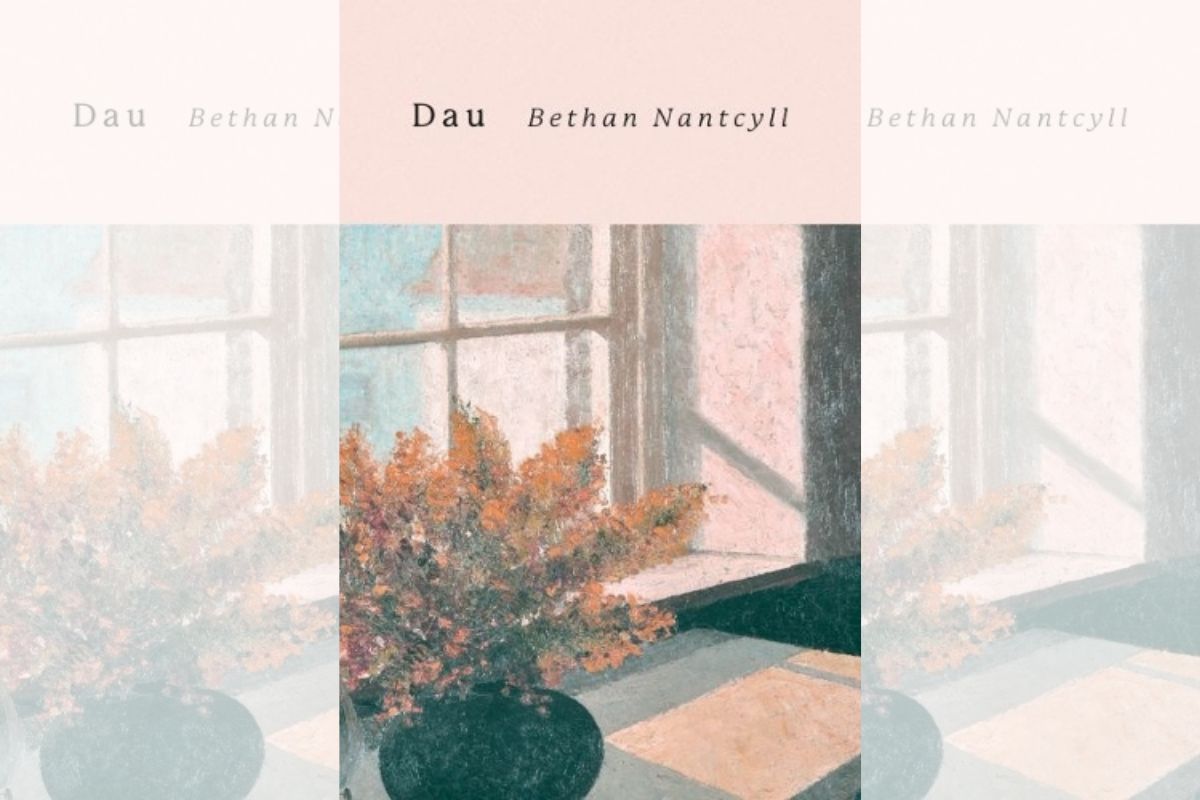
Book review: Dau by Bethan Nantcyll
Jon Gower
We continue our reviews of books shortlisted for the Wales Book of the Year award for 2026. This time we consider one of the titles in the Welsh language fiction category.
You can vote for the People’s Choice award here.
This debut novel has a superb sense of place as befits a writer whose upbringing on an Eifionydd farm is evident in her name, like, say her fellow writer Bethan Gwanas. The cast of characters here is the same: there’s Magi Ifans y Derwin, Mr Davies Fron Ola, Pritchard Hafoty and Sarah Huws y Ffridd, the names running through them, if not like a stick of rock, then certainly into and through the marrow of their bones and that for successive generations.
The novel spindles principally around the lives of two characters, being a pair of twins, Wiliam and Gwen Huws who have been well night inseparable in Y Nant until Gwen is taken into a home. Bereft, alone, Wiliam struggles to find consolation in his days, even though there is tight-knit solidarity around him in the community. He finds the silence suffocating, especially the sort that settles after the busyness of Christmas. On his regular walks he finds he is having to stop more often to take his breath. Age is there, as certainly as rain clouds.
It’s a community where people have often lived in the same home for half a century or more, and if someone takes an interest in someone else’s affairs it’s not by dint of nosiness but rather because of genuine concern. It’s similar to the author’s own home, where she had brought up two girls, somewhere she intends to stay.
Wil and Gwen’s deeply rural community is changing, the chapel congregation in Libanus dwindling until you can count the Sunday faithful on the fingers of one hand. But some key events remain much as they ever were – the sometimes testing birth of children and animals, the deaths and burials and the rituals attendant on them. And there is one constant, the effect of the weather from flailing wind to biting frost and the slow but steady turning of the seasons.
When Wiliam decides it is high time that his sister returned home it involves starting a parade of social workers and various people scrutinising the suitability of a house which is pretty spartan. There’s the ‘oil stove in the kitchen for both cooking and hot water, and open fire in the small and big parlour.’ The questions intrude. Do they have central heating? Will the door frames be too narrow for his sister’s needs? And for the carers when they come in turn?
Unexpected brutality
Running in tandem with this story is a tale of young love, although that is soon shredded by a brutal sexual assault, which seems even more brutal for its appearance in a work so generally quiet and nuanced. It isn’t the only dark act, because there’s also a poor woman drives to her wit’s end and then beyond, whose only recourse is to take her own life. There are hidden secrets, discrete as a song thrush nest hidden among hedge leaves. And we can contrast the rhythms of life in the open air with Gwen’s world of tedious confinement, of fleeting relationships with nurses, of lying abed..
Clear prose
‘Dau’ came close to winning the Prose Medal in the National Eisteddfod in Rhondda Cynon Taf and you can easily see why. There is a pellucid clarity to the prose and the countryside setting in evoked with quiet authority, so that we see the patterns of the farming year in authentic detail and feel all manner of weather on our skin. It’s a tender story, gracefully told, with characters you feel close to, concerned about them as you would be about your own family. That is a novelist’s skill right there.
Dau by Bethan Nantcyll is published by Gwasg y Bwthyn and is available from all good bookshops.
You can vote for the People’s Choice award here.
Support our Nation today
For the price of a cup of coffee a month you can help us create an independent, not-for-profit, national news service for the people of Wales, by the people of Wales.
Get more trusted Welsh news
Choose Nation.Cymru as a preferred source in Google News to see more of our journalism.


