


Book Review: Lobsgows: Cariad y Cymry at fwyd by Ruth Richards
We continue our reviews of books shortlisted for the Wales Book of the Year award for 2026. This time we consider one of the titles in the Welsh language Creative Non-Fiction category
You can vote for The People’s Choice award here.
Ant Evans
I feel it’s a safe assumption that food in Wales isn’t solely about the essential action of eating in order to fuel out bodies. Nostalgia certainly plays a part.
For instance, the standout memories of going to visit my late great Aunty Eirlys and Uncle Jac are of sitting down with tea and a slice of home made bara brith.
And then there’s looking at the handwritten recipe book that was gifted to me by my late mother. My favourite book on my bookcase without doubt. Not only for the recipes included, but also because it allows me to gain some comfort from reading my mother’s handwriting. Nostalgia is a potent drug!
Within Lobsgows: Cariad y Cymry at fwyd (the love of the Welsh for food), Ruth Richards not only takes the reader on a trip down memory lane but also discusses some of the earliest Welsh cookbooks and what we grow here.
Like any good Lobsgows (also known as cawl), Richards tells us this book is a homely mixture of familiar ingredients designed to stir memories and make the reader’s mouth water.
Richards emphasises however, that she’s not much of a cook, or social historian. This perhaps is an advantage, in that this book is, in my view, so much more accessible to all sorts of readers as a result. indeed. Richards also notes this is not an autobiography, though personal memories are prominent in this book. The author explores Welsh food history from the first Welsh language cookbook at the end of the Victorian era to the end of the twentieth century, illustrating the changes which occurred to our eating habits and kitchen utensils in this period.
The opening chaper (Lobsgows) is very much a love letter to the dish named both in this chapter and the title of this volume. To this reviewer’s surprise (every day’s a school day) there are many northern European equivalents with similar sounding names. Lapskaus (Norway), lapskojs (Sweden), lapskoussi (Finland) skipperlabskovs (Denmark) and labskaus (Germany). Richards also mentions how we all have our ideal versions of the dish, suggesting that each lobsgows takes on elements of the person who prepared it, which would explain the individual ideals.
Out of his depth
In the following chapter, we get something of a history lesson. The reader is taken back to the Victorian era and introduced to Thomas Thomas. The Wesleyan Minister seemed a little out of his depth when it comes to writing a cookbook.
Richards suggesting that his instructions in Llyfr Coginio a Chadw Tŷ (A Book of Cooking and Housekeeping) ranged from completely unclear to laughably specific. Which is a fair point. I mean, who needs instructions on how to make a ham sandwich?
Another point raised was how Thomas didn’t seem to understand his target audience. Being frugal for the wives of farmers, quarrymen and miners is somewhat different to being frugal for the middle class, with quite a few recipes being translated from Mrs Beeton’s Book of Household Management.
Unsurprisingly perhaps, Llyfr Ryseitiau fy Mam (My Mother’s Recipe Book) was probably my favourite chapter. I very much empathise with the author in this chapter, for reasons mentioned at the beginning of this review.
The recipe book Richard’s inherited from her mother is almost a history book, containing recipes over the course of sixty years, from the 1960s to the third decade of the twenty first century. More than the recipes, Richards discusses the childhood memories she has of her mother preparing them; from chutneys to jams.
The author states that, much as she would like to attempt her mother’s lemon cheese recipe, she daren’t, in case it turns out like scrambled eggs. There are some recipes which Richards does regularly turn to however, such as cheesecake made with Philadelphia cheese. Personal memories and quotes e.g. of Christmas pudding which came out “like bricks” add to the reader’s enjoyment of this chapter in particular, as well as the book as a whole.
Greediest
In closing Lobsgows: Cariad y Cymru at fwyd, Richards tells us that she was the amongst the greediest of the world’s children.
Paradoxically however, despite her mother’s best efforts, she had no interest in cooking for many years, until going to university. The recipe book the author had with her at the time, was far from the best, and her eyes were opened to the “hierarchy” which existed amongst recipe books, and friends led her out of the gastronomical desert she occupied at that time. Though she admits that roughly a quarter of what she ate at university was proper food, which makes her mother’s concern understandable.
However, it was being invited to attend an International Women’s Day celebration, where attendees were invited to bring a dish which reflected their cultural background (having been unsuccessful at taming some Brownie mix at the last minute) that Richards gives the reader a message which, if nothing else, should absolutely be taken away from this volume.
Preparing food for others isn’t just about being kind, but a basis for the kind of understanding and respect which is rapidly vanishing.
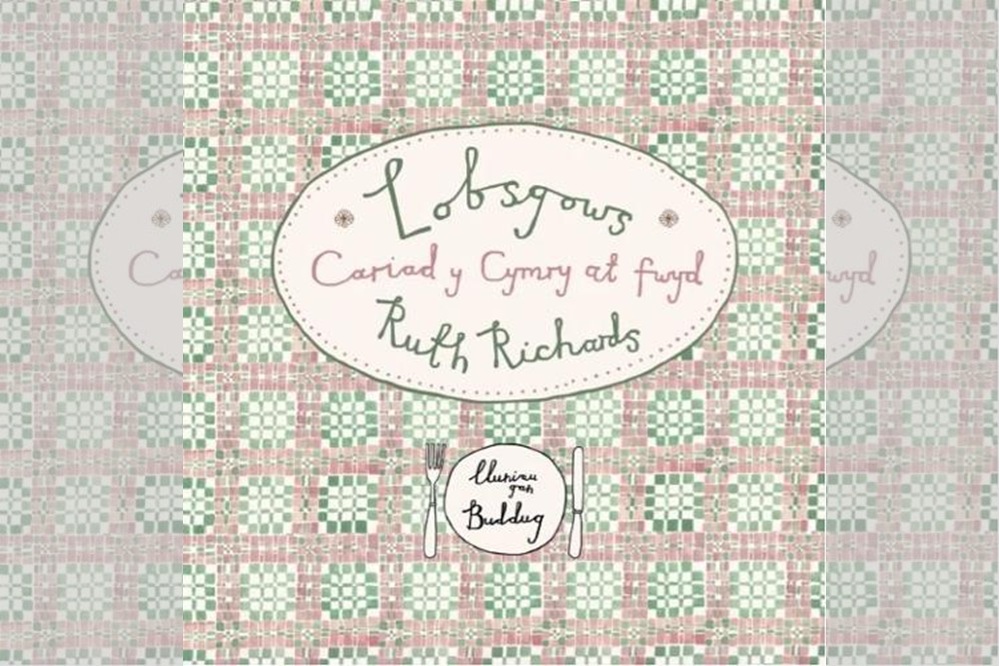
I can’t possibly end my review of this wonderful book without mentioning the eye catching illustrations provided by Buddug Humphreys, which themselves have been drawn in such a way as to feed into the feeling of nostalgia and warmth, which is present throughout this book. Images of rice pudding and Bara brith make me feel especially nostalgic.
Lobsgows, Cariad y Cymry at fwyd, is a nostalgic trip down memory lane and very educational (from the Victorian Llyfr Coginio a Chadw Tŷ to Amser Bwyd (Time for Food). The latter, Richards tells us, being easier to follow, though the recipes date from a time of poverty and hardship.
In addition, this is a very pleasing book to look at. Indeed, here you have a book which you can judge by its cover! If you haven’t read it already, you absolutely should.
You can vote for The People’s Choice award here.
Support our Nation today
For the price of a cup of coffee a month you can help us create an independent, not-for-profit, national news service for the people of Wales, by the people of Wales.
Get more trusted Welsh news
Choose Nation.Cymru as a preferred source in Google News to see more of our journalism.


