


Book review: Mae by Mererid Hopwood
We continue our reviews of books shortlisted for the Wales Book of the Year award for 2026. This time we consider one of the titles in the Welsh language Poetry category.
You can vote for The People’s Choice Award here.
Ant Evans
Rydw i=I am
Rwyt ti=You are (informal/singular)
Mae o/e=He/it is
Mae hi=She/it is
Rydan/Rydyn ni= We are
Rydach/Rydych chi (formal/plural)
Maen nhw= They are
The present tense of the verb “To be” might be an unusual way to begin a poetry review. However, the reason I’ve done so is to highlight the meaning of “Mae”, the title of Mererid Hopwood’s 2025 volume of poetry & indeed the name of the opening poem.
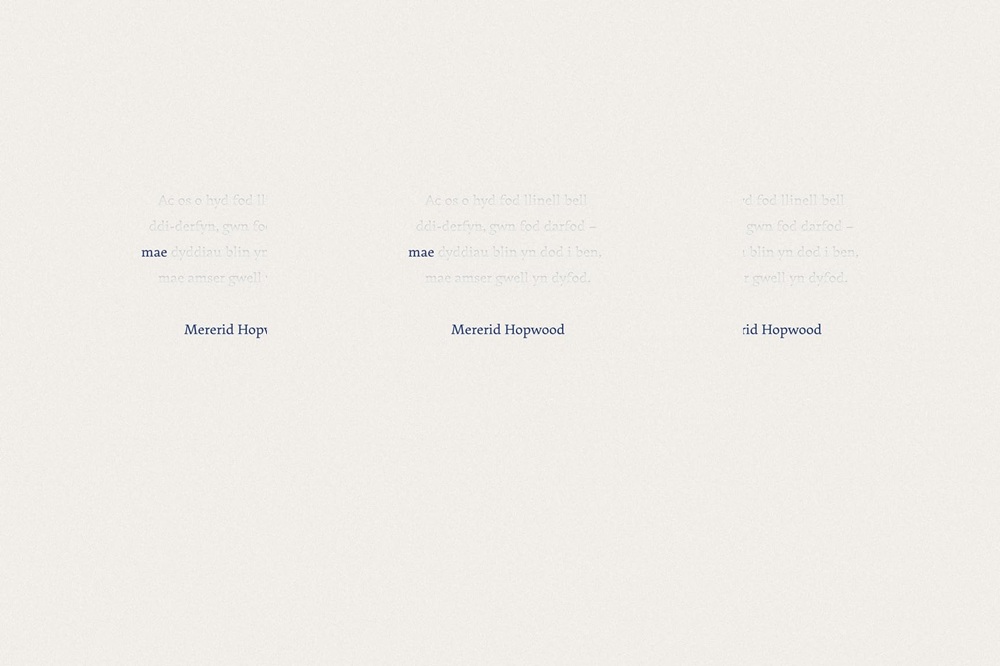
Being partially sighted, I hadn’t initially noticed that the entirety of the final verse of Mae had been included on the front cover! But rather than begin at the end, let’s look at the poem in its entirety.
Hopwood tells us in notes at the end of the volume that “Mae” came to be following a request from S4C, following the announcement of the first Covid lockdown in March 2020.
The reader is also informed that the poem was recorded by Georgia Ruth and Iwan Hughes for a film by Griff Lynch, Kreu Media Ltd. The first two thirds of the lines in “Mae” begin with Mae, highlighting how often it’s used in everyday language:
Mae dail y coed, mae border bach,
mae murmur yn yr awel,
mae un friiallen fach ar lawr,
mae cân am benrhyn tawel.
Mae parabl plant, mae munud fach,
mae llun y gallwn glywed,
mae ifanc, ffôl mae Elen fwyn,
mae aros ac mae myned.
Mae dau gi bach, mae tiwn Sam Tân,
mae môr a phadell ffrio,
mae Mistar Duw, mae gwely gwag,
mae ‘O na bawn ni yno’,
Mae paid bod ofn, mae calon lân,
mae cwm lle’r wyt ti’n Arglwydd,
mae man lle oeda’r haf yn hir –
mae teyrnas diniweidrwydd.
Mae ger y ddrws a blodau tlws,
mae eiddil heb eiddilwch,
mae pishyn, pishyn, fenws fain,
mae tacsi i Gwm Tawelwch.
Mae carreg wen, mae cysgu’r nos,
mae eto’r teim yn tyfu,
mae ji ceffyl bach mae camfa wen,
mae esgid fach yn gwasgu.
Mae dawns y glaw, mae’r nosy n hir,
mae cloc y tipian araf,
mae pen y lôn, mae cael yn ôl,
ac wedi’r awr dywyllaf
dros gymoedd cul a moelni maith,
dros greigiau pen y mynydd,
drwy niwl y wawr…mae haul ar fryn –
daw dydd, daw bore Newydd.
A thrwy’r holl ymynysu hwn,
mae calon Cymru’n curo,
a’i phobl, fel y tir dan draed,
drwy’r saib yn ailegino.
Os oes o hyd un llinell bell
ddiderfyn, gwn fod darfod –
mae dyddiau blin yn dod i ben,
mae amser gwell yn dyfod.”
“The tree’s leaves are, the little border is,
there is a whisper in the breeze,
there is one little primrose on the ground,
there is a song about a quiet peninsula.
There is the chattering of children, there is one little moment,
there is a picture we can here,
there are the young, the silly, the kindly Elen,
there is waiting and there is going.
There are two little dogs, there’s the Fireman Sam theme tune,
there are the sea and a frying pan,
there’s Mistar Duw, there’s an empty bed,
there’s ‘if only I was there’.
There’s don’t be scared, there’s the pure of heart,
there’s a valley where you’re in charge,
there’s a place where the summer goes on and on –
there’s the kingdom of innocence.
There are by the door and pretty flowers,
there are the weak without weakness,
there’s the lovely, lovely, slender Venus,
there’s a taxi to Cwm Tawelwch.
There’s a white stone, there’s sleeping overnight,
there again the thyme is growing,
there’s ji ceffyl bach, there’s camfa wen,
the little shoe is tightening.
There’s the dance of the rain, the night is long,
the clock is slowly ticking,
there’s the end of the road, there’s having been returned,
and after the darkest hour
over narrow valleys and extensive nothingness,
over the stones of the mountain’s peak,
through the misty dawn…the sun is on the horizon,
a new morning and a new day shall come.
And through all of this self-isolation.
Wales’ heart is beating,
and her people, like the land underfoot,
through this intermission are regerminating.
If there is still one faraway endless
line, I know there is an end,
arduous days are coming to an end,
better days are coming.”
Mae isn’t the only poem in this volume which takes the reader back to 2020 by any means.
2020
Galwad nos Sul y Mamau, 2020 (A Call on the night of Mothering Sunday, 2020) very much struck a chord with this reviewer, not being able to call my mother.
Having been advised to self isolate following a hospital appointment pre official lockdown, it didn’t sit right with me, not being able to visit my late mother’s final resting place and have one of our (one-sided) chats. But, I knew deep down that she wouldn’t want me to do anything she’d consider foolish, so I consoled myself with that.
This poem has stood out to me, and I can see myself returning to it in future.
Rôl diwrnod heb gawodydd,
clyw’r dail yn croniclo’r dydd,
mae trydar anghyfarwydd
crin y gwyll am roi croen gŵydd,
a’r haul hwyr am roi ar led
stori yr ailystyried –
addunedau geiriau gwâr,
sibrydion sobri adar.
Y min hwyr hwn, oedwn ni
i ofalus aildafoli;
a bydd, fe fydd ailfeddwl
wedi hyn am ruthro dwl
ddoe ddwethaf; mynd yn ddoethach
hyd y byd, yn araf bach
fydd raid, a rhywfodd rodio’n
dawel iawn ar hyd y lôn.
Ond heno, clychau tyner
cân y Sul sy’n cynnau sêr
un enw all ein cynnal
drwy fyd chwim, di-ddim, di-ddal
ein hofn ni; digyfnewid
yw’r llais all dawelu’r llid;
galwa hi dros bellter gwlad
a chei awr yn ei chariad.”
After a day with no rain,
listen to the leaves as they chronicle the day,
the miserly unfamiliar
twittering of twilight will give you goosebumps,
and the vanishing sun will spread
the story of reflection –
the words of kind resolutions,
whispers which cause birds to become serious.
This late evening, we shall pause
to carefully reassess;
and yes, there will be a rethink
after this regarding the other day’s
senseless rushing about; around the world
we must, gradually
become wiser, and somehow roam
very quietly along the path.
But tonight, it’s kind bells
the song of Sunday which
keeps stars burning
there’s one name which can keep us going
through this rapid, trifling world, without a break
our trepidation; the voice
which can silence the ferocity;
call her no matter the distance
and you can spend an hour in her love.
Pacifism
In addition to writing from the heart, Hopwood’s pacifism is clear to see in this collection, too. I particularly enjoyed reading Colomen Heddwch (The Dove of Peace)
Bydd gryf fel craidd dy blufyn – caria’n llwyth
yn ystwyth, ac estyn
dy gân i dala ni’n dynn
yn dy olau dielyn.”
Be strong like the shaft of your feather – carry our load
swiftly, and spread
your song to catch us tightly
in your light which knows no enemy.
There are plenty of poems in this collection which have made me stop and think. “Briwsion” (Crumbs) is a good example.
As much as I’ve had misgivings about keeping birds in a cage for a while (to paraphrase something I once read in a book called Parrotlopedia “No matter how much space we give them, it can never be enough”) is keeping goldfish (setting aside the ethics of winning a live animal as a prize) in a tank any different? The below has certainly given me pause for thought:
Fe’m hennillaist.
Gwobr gysur am fethu’r bull’s eye.
Ac wedi ‘nghario bob cam o’r daith,
fe’m harllwystaist i’m cartre newydd
a’m cadw, heb fod yn y golwg nac o’r golwg chwaith.
A heb fod yn gwybod yn saff,
rwy’n amau ‘mod i’n gaeth,
er nad oes rhaff
na bariau na chlo
na drws na tho
yn fy myd.
A heb fod yn siarad dy iaith,
rwyt ti’n amau ‘mod i’n fud
yn fy chwythu-cusanau a’m swildod i gyd.
Ac weithiau, pan fyddi’n cofio amdana’i,
mae tap ar y ffenestr yn gwneud yn siwr
‘mod i’n codi a diolch
am dy ddyrnaid
briwsion
ar wyneb y dŵr.
You won me.
The consolation prize for missing the bull’s eye.
And after carrying me each step of the journey
you poured me into my new home
and kept me, not seen but not out of sight either.
And without being completely sure,
I suspect that I’m trapped,
Though there’s no rope,
no bars nor lock
no door nor roof
in my world.
And not speaking your language,
you think that I’m mute
blowing kisses at me, though I’m shy.
And sometimes, when you remember me,
a tap on the window makes sure
that I get up and thank you
for your fistful
of crumbs
on the surface of the water.
Mae is a collection of poetry which truly has something for everyone. From heartfelt tributes, to currant affairs and things to give the reader pause for thought, Mererid Hopwood’s collection is truly excellent, and I’d very much recommend you pick up a copy.
Mae by Mererid Hopwood, is published by Barddas and is available here and from all good bookshops.
You can vote for The People’s Choice Award here.
Support our Nation today
For the price of a cup of coffee a month you can help us create an independent, not-for-profit, national news service for the people of Wales, by the people of Wales.
Get more trusted Welsh news
Choose Nation.Cymru as a preferred source in Google News to see more of our journalism.


