

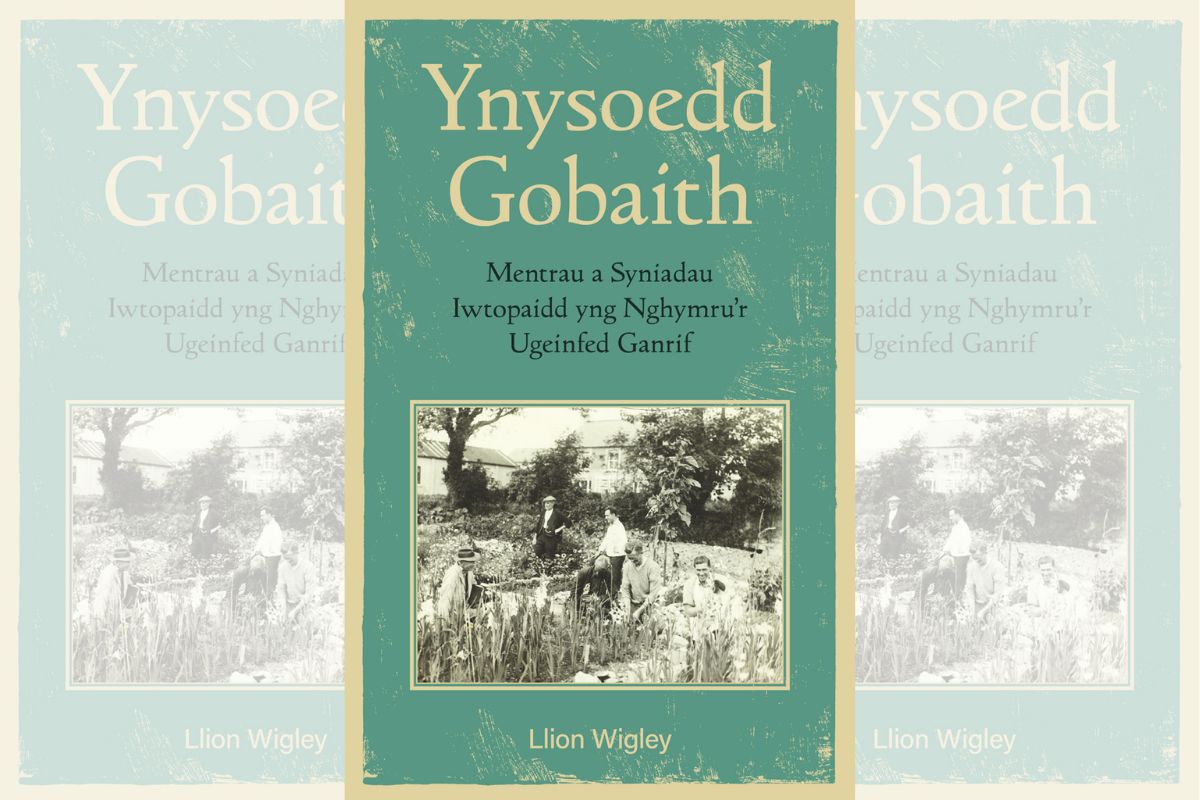
Book review: Ynysoedd Gobaith by Llion Wigley
Jon Gower
We continue our reviews of books shortlisted for the Wales Book of the Year award for 2026. This time we consider one of the titles in the Welsh language non-fiction category.
You can vote for the People’s Choice here.
The islands of hope in the book’s title are places where people tried to create a better society in twentieth century Wales, charting a small archipelago of ideas arranged thematically under four principal themes, namely housing and town planning; work and leisure; prisons and the justice system and pacifism and non-violent protest.
Garden villages
This impeccably researched volume opens with the garden village movement that rooted in places such as Rhiwbina in Cardiff, Barry and Wrexham with offshoots in Machynlleth and Burry Port. Here houses for working class families were designed with space and greenery in mind and were built at a time when people such as Alwyn Lloyd were arguing for more creative planning. ‘To be really effective, Town and Regional Planning should…be more than mere machinery, codes regulating the number of houses to the acre, road widths and so on. They should possess imagination, be in fact “civic design.”
Ideas in action
Wigley then turns his attention to utopian ideas put into action by the Quakers between the wars, including creating gardens and a swimming pool in Rhosllanerchrugog and the conversion of an old brewery in the Vale of Glamorgan into accommodation for a range of visitors including ‘all sorts and conditions of unemployed miners, old soldiers, young toughs, Communists (and) Chapel Deacons…’
Quaker furniture
The Quakers’ pioneering work in Wales’ also included projects in the country’s highest town, Brynmawr and this at a time of raging unemployment. Here they tried to ‘work out the conditions of the good life’ as they sought ways to create employment opportunities for those out of work in factories making furniture and shoes. The experiment worked and a co-operative ethos meant that employees were also shareholders, giving them skin in the game.
The justice system
The books then turns to prison reform and ponders ideas such as decarceration with profiles of such progressive thinkers and doers as Merfyn Turner. Turner, with his barrister wife Shirley opened a hostel for former prisoners called Norman House in north London: the first of its kind in Britain. This social experiment stood for involvement. ‘We who live and work there are not social surgeons who diagnose the illness and prescribe the remedy. Neither do we at the other extreme, as some critics suggest, condone criminal behaviour, unless by condonation is meant an acceptance of the offender as he is while offering him and ourselves the chance, through living together, of becoming something better than we are.’
A provision such as Norman House certainly seemed to be necessary. In the early 1950s, some 40% of recidivist prisoners, that is those who had re-offended, were homeless. Turner had realised that people on the edge of society needed, in Jeremy Sandford’s words ‘charity, and as adults confined in many ways to the role of children, the only thing that would really help them was an artificial family which would replace the one they never had.’
Welsh prisoners
This chapter also looks at the work of Rhondda magistrate Lleufer Thomas, who favoured probation over imprisonment and often paid people’s fines out of his own pocket and documents the experiences of prisoners from Wales in prisons such as Wormwood Scrubs and Dartmoor, which were not fit for purpose in the mid twentieth century and are still in use today.
The final section of the book details the pioneering efforts of Dr Gwenan Jones and others in promoting pacifism between the two world wars and details the contributions of the 1700 Welsh women who became conscientious objectors during the enforced conscription of the Second World War, of whom 500 went to prison for their beliefs.
Hippie Wales
A more recent period of utopian thinking in Wales is chronicled in a brief account of hippies in rural Wales, including the coming of communes such as Selene in the sixties along with the Hindu and multi-faith community at Skanda Vale in Carmarthenshire; a Sufi grouping near Knighton Powys; the ‘Divine Light Mission’ in Llandysul and Aberystwyth and the ‘New Atlantis’ hippies who settled in the former quarrymen’s cottages in Nant Gwrtheyrn on Llŷn before it eventually became the National Language Centre. Wigley also examines the reception of folk seeking enlightenment and magic mushrooms by the existing rural communities where they settled, including unexpected benefits such as a surge in pupil numbers in countryside schools such as Penuwch in Ceredigion which helped stem a definite decline.
Many of the ideas and idealists in Llion Wigley’s consistently thought-stimulating book were seemingly powered both by optimism and a desire to create a better society. By presenting a wide range of utopian projects all across Wales the volume is a sure antidote to our rather septic times.
Ynysoedd Gobaith: Mentrau a Syniadau Iwtopaidd yng Nghymru’r Ugeinfed Ganrif is published by the University of Wales Press and is available from all good bookshops.
Support our Nation today
For the price of a cup of coffee a month you can help us create an independent, not-for-profit, national news service for the people of Wales, by the people of Wales.
Get more trusted Welsh news
Choose Nation.Cymru as a preferred source in Google News to see more of our journalism.


