

England-based company growing thousands of ‘giant’ American trees in Wales
Stephen Price
A company headquartered in Greater Manchester is in the progress of planting thousands of giant North American coniferous trees – the largest trees on earth – in two locations in Wales as part of a ‘global carbon capture project’.
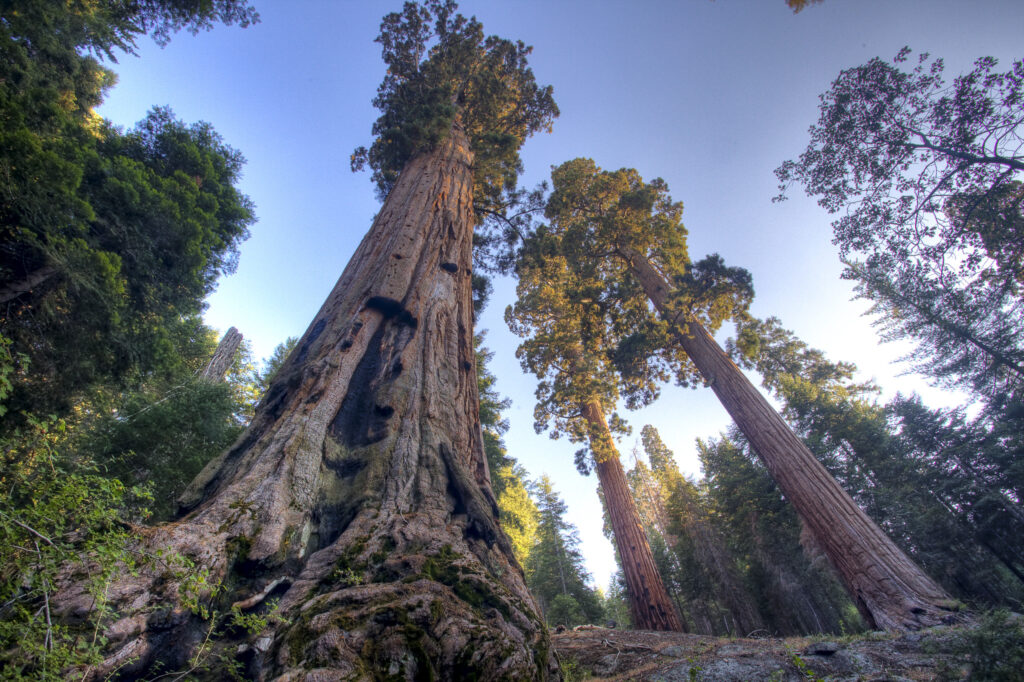
The Giant Sequoia is the world’s largest tree species, as well as the fastest growing conifer. Famous sequoias have grown up to 300 feet tall, 36 feet wide, with volumes over 1400 m3, and are known to be as much as 3500 years old.
A Sequoia Grove can capture as much as 10x more CO2 per acre than a natural UK woodland over the period of 100 years, increasing over time. Each Sequoia is planted on a 100m2 plot together with 3 native UK species to promote biodiversity.
Giant sequoia trees were once a feature of the UK pre-Ice Age. Because of this, they grow well in many areas of the UK and aren’t considered an invasive species.
To grow these trees and “help fight climate change”, the team at The Great Reserve, previously operating as One Tree, One Life is buying land in the UK that reflects the sequoia’s native homeland. This project is called The Great Reserve and aims to create sequoia groves across the UK that will act as carbon sinks.
The Great Reserve currently has three sites in the UK – one in Hampshire, England and two in Wales, on the outskirts of Abergavenny and Brecon, which allow supporters to ‘Adopt a Sequoia’ for £1,2750.oo or to pay a monthly subscription of £15 spread over 85 months.
Abergavenny’s location, named Graig Syddi – a 70 acre plot – was marketed for £150,000 before being snapped up by The Great Reserve.
Planting is said to be 95% complete, with the company calling it “previously felled coniferous commercial woodland that we will be replanting with a mix of Sequoias, nurse crop conifers, and native broadleaves.”
The company aim to plan 1540 Giant Sequoias on this location.
Brecon’s location, Pen y Wern, aims for a more modest 517 Giant Sequoias, and planting is 100% complete.
The land is described as being previously felled woodlands: “The soil is superb and we anticipating excellent growth of trees planted in 2020/21. Native trees planted together with the Sequoias were a mix of Silver Birch, Oak, and Rowan.”
View this post on Instagram
Each sequoia is planted on a 100m2 piece of land, along with three species of tree that are native to the UK. which The Great Reserve say is to promote biodiversity and ensure that species which call the UK their home and feed on native species, still have the resources they need to thrive, while the sequoia absorbs carbon dioxide from the atmosphere and stores it.
Henry Emson, founder of One Life One Tree told The Telegraph: “The climate in the UK is very good for them.”
“We haven’t had one failure, they’ve all taken off. Sequoias are peaceful giants … They have been here for 160 or more years already and they are not a problem with native species.”
Under threat
Sequoias are now on the IUCN Endangered Species Red List. Over 95% of their original numbers were logged for timber harvesting over the past 200 years. More recently however the impacts of climate change have been diminishing their numbers, which now stand today at an estimated 70,000.
Superheated wildfires caused by drought and excess forest debris are able to penetrate their thick red bark, causing fatalities of as many as 10% of their number per year.
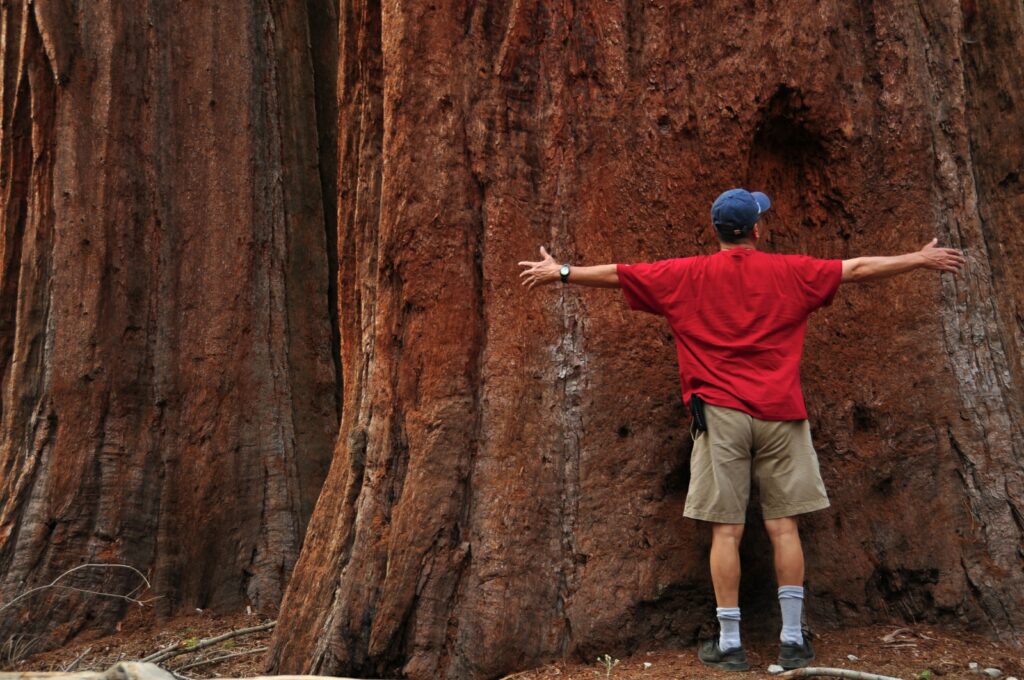
Efforts to protect the old growth trees in their native US habitat are extensive, but the situation is challenging and not likely to improve according to The Great Reserve’s founder.
The Great Reserve’s aim is to “create a safe haven for the species in the UK by planting and protecting young Sequoias, to become the old growth groves of the future”.
Greenwashing
Unlike Stump Up For Trees, which has planted half a million native broadleaf trees on Bryn Arw, also near Abergavenny, The Great Reserve’s primary focus is a conifer which doesn’t grow naturally in the UK – and there is also growing suspicion of outside companies buying land in Wales for ‘green’ purposes, with little benefit to or involvement from local communities – especially considering the lifespan of trees can be over two thousand years, forever altering the local woodland makeup.
With many people concerned about the fact that the trees aren’t native to the UK, the website’s FAQs section shares: “Our primary goal is to create a network of old growth Giant Sequoias in the UK to replicate what few are left in their native habitat in the USA.
“Effectively an insurance against the worsening impacts of climate change that has brought about droughts, superheated wildfires, and greater bark beetle fatalities. Sequoias were native to the UK pre-Ice Age. More recently they returned here during the Victorian period by those facinated by their size and magnificence. We now have many thousands of Sequoias in the UK and they have proven to be entirely non-invasive.
“We get asked regularly about why we are not planting exclusively native species. Our response is that we are facing a very real climate emergency caused by an increasing amount of CO2 in the atmosphere. We need to find a response to this escalating issue that is in proportion to the cause, the mass burning of fossil fuels.
“There is currently no industrial viable solution on offer, so we must turn to nature and plant trees. The primary resource that trees use up that is in scarce supply is land, or more accurately land with owners who are willing to give up any commercial use and dedicate their asset to tree planting for carbon capture. As land is the limiting factor for tree planting, we must plant trees that are the most efficient at carbon capture per acre.”
View this post on Instagram
They add: “The species most capable of carbon capture per acre is the Giant Sequoia, due to its massive volume accumulated over time. Even over a 100 year period, a Sequoia grove can capture in the region of 10x more CO2 vs. a native tree woodland. We are not ignoring the plight of native trees, we care deeply about them and would never cut down or harm a native woodland. In fact we plant three native trees for each Sequoia at our sites to promote biodiversity.
“Oak is our predominant tree of choice given it supports more biodiversity than any other native tree. Two little known facts are that Giant Sequoias were once native to the UK pre-ice age, and they do not propagate in the UK due to a lack of wildfires needed to open their seed cones. They are totally non-invasive for that reason.
“Bottom line is the world is heating up at an alarming rate. That in itself is a major threat to UK native woodlands. Our project is a response to today’s climate emergency by unleashing the power of the most mighty CO2 capturing tree on earth, that not only removes CO2, but holds onto it for over 1000 years.
“We care deeply about native trees, but we also care about our planet, and this is our way of doing the maximum to save it, and the diversity of species and ecosystems that it supports. We are looking big picture, and long term.”
“To put this in further context, according to Timothy J. Fahey, professor of ecology in the department of natural resources at Cornell University, “An approximate value for a 50-year-old oak forest would be 30,000 pounds of carbon dioxide sequestered per acre,”. That is 15 tonnes. By comparison a Giant Sequoia grove will be closer to 200 tonnes over the same period, using UK growth rates seen in Sequoias that have been in the UK for over 150 years.”
Support our Nation today
For the price of a cup of coffee a month you can help us create an independent, not-for-profit, national news service for the people of Wales, by the people of Wales.
Get more trusted Welsh news
Choose Nation.Cymru as a preferred source in Google News to see more of our journalism.



Excellent, let’s do something for carbon capture. But as the article states we are being exploited by outsiders so they can keep their industries going. Whilst the woodman in Wales waits a thousand or more years before felling. This is exploitation. Wales and Scotland already are far more forested than England but we have these companies buying up viable farms just to grow trees.
If we are going to plant trees let the offset benefit local industry not from outside. This colonial exploitation.
As an aside spotted flycatchers seem to love sequoias.
I’m part of this project and just want to flag that we only buy previously felled mono-culture timber plantations (usually sitka and douglas fir), and plant three natives for every sequoia on our sites. We would never buy a local producing farm and turn it into a sequoia grove, for all the obvious reasons. Thanks.
I didn’t think it was legal to clear fell a site that large without replanting. Otherwise it’s just asset stripping
The reason why Giant Sequoia trees are not native to the British Isles but were prior to the ices ages is because the climate back then was very different to what it is now. This is no reason to introduce an invasive non-native species to Wales, no more than Rhododendron or Himalayan balsam, which we spend cash trying to eradicate. All plants absorb CO2. This is a silly stunt in the form of land acquisition. A kind of open zoo for weird plants and needs to stop. Get your grubby paws off Wales by rattle of sponging tins in the… Read more »
Sequoias are not considered invasive because they cannot reproduce here without wildfire to open cones
This is true for the odd specimen tree. However, any plantation of a number of them together would present that possibility. We do have sporadic wildfires in Wales in dry summers. It’s the plantation of a close knit woodland of such trees that provide the fuel for this to occur. As you note, the dropped needles, oily, are flammable and they reproduce by that means.
Don’t encourage the fire arsonists.
https://nation.cymru/feature/the-devastating-consequences-of-wildfires-in-wales/
Actually the climate is going back to be more like before the Ice Ages, due to anthropogenic climate change, with the most likely analog being the Middle Miocene 14-17 million years ago. The Miocene: The Future of the Past
Its not being done solely for carbon and certainly not for spectators – but for species preservation (IUCN Red List). As for their carbon capture abilities – they far exceed any other natural solution per acre by a massive margin. That is not a suggestion to plant them everywhere – just that as part of an effort to provide a safe haven for their future survival they also have additional purpose.
See Leighton Hall Estate, Welshpool…
Presumably there’s no way to prevent these trees being cut down for firewood when the company goes bankrupt, but the companies that used them to greenwash their CO2 production won’t have to undo those emissions.
Once we’ve planted out our target number of Sequoias we will convert the project into a charity – owing the land and ensuring long term protection for the trees. We’d do it sooner but we’d be unable to sell carbon to corporate clients if we did, which is how we fund the project. Try not to be too cynical – some of us are trying to do some good…
Great Britain’s wildlife is approaching an irreversible crisis point. If this helps then I’m totally on board.
Only native trees support indigenous wildlife. From mosses to insects, worms, fungi, birds, ferns and mammals. A non-native species creates a wildlife desert. We already see the damage to our native environment with forestry plantations of Douglas Fir (also from the western Americas) and Norwegian Spruce. They damage our natural eco-system. Plant native broad-leaf deciduous trees instead, our own temperate rainforest.
Which is why we plant 3 natives for every Giant Sequoia, and only plant on previously felled monoculture timber plantions – so as to improve the ecology of the site vs. what is there at time of planting.
I wonder if they tried getting permission to plant them in the Cotswolds, Surrey, Hampshire etc. We are becoming a dumping ground between pylons, solar panels, wind turbines etc. and now trees, not ordinary trees but bloody giant ones. If Cymru had asked for them we probably would not have had them!
Or Uganda
They’ve been in Wales for over a 100years several on the Wye Valley walk. The anti business answers of some respondents is a little disturbing. Wales need more money ideally from Welsh businesses prospering but don’t mind if they’re English Scottish or Irish
When it comes to tree planting and its role in mitigating climate change, there’s a lot of greenwash sloshing around and a lot of people looking for dosh with kudos. Many argue what we really need is less “drill baby drill”, less built-in obsolescence and more renewable energy and upcycling. Yes, a mature Redwood tree contains a lot of organic carbon slowly accumulated into wood during a long lifetime of photosynthesis. But more carbon could be sequestered with faster growing trees or other vegetation which gets harvested then turned into construction or other material followed by rapid replanting of the land.… Read more »